Clan Mellon
also Mac Mellan, O'Mellan
Ulster Scot banking dynasty that ran America's Treasury under three presidents.
- Origin
- Scotland
- Famous bearer
- Thomas Mellon (1813-1908), judge and founder of T. Mellon & Sons bank
- Register
- Scottish clan
Ranked of all time
The 10 Most Powerful Scottish Clans of All Time
The seat of Clan Mellon
Seat vacantChief
No one leads the Clan Mellon community yet. When the movement opens, you can stand for its leadership, or help elect whoever does.
Current mission
No shared goal set yet. Once Clan Mellon has leadership, it sets the public focus: a restoration, a gathering, a real-world project that helps its own.
The Mellon clan is being rebuilt. Join the waiting list for the movement today, and you help decide who leads it and what it does.
Help rebuild the Mellon clan →What does the Mellon name mean?
From the Gaelic 'Maol' or 'Maolán', meaning tonsured one or devotee, an ecclesiastical byname originally borne in both Scotland and the Gaelic north of Ireland. The Mellon line of historical significance is the Scotch-Irish or Ulster Scot branch from County Tyrone, descendants of Scottish Lowland Presbyterian settlers planted in Ulster from the early 17th century. The family emigrated to America in 1818 and founded one of the central financial and industrial dynasties of the United States.
The history of Clan Mellon
The tonsured one, and a name two peoples carried
The name goes back to the Gaelic maol or maolan, the tonsured one, a devotee: an ecclesiastical byname rather than a trade or a landholding, and one borne in Scotland and in the Gaelic north of Ireland alike. The Irish patronymic Mac Maolain threw off a long line of anglicisations from the root forenames Maelan, Maolain and Meallain, among them MacMullan, McMullen, MacMoylan and McMellon. Mac Mellan and O'Mellan are recorded as forms of the name.
In Ulster the two streams ran together in the written record and never fully separated. Mac Maolain was borne by several unrelated Gaelic kindreds, in Breifne, Mide, Brega, Connacht and Ulster, and one authority on the name notes that the arrival of Scots-Irish McMillans who took up the Irish form McMullen makes the native and the incoming lines hard to tell apart at all. The Mellons whose history follows were on the incoming side of that confusion: Lowland Presbyterians with an already fixed hereditary surname, the practice in Lowland Scotland since roughly 1400, farming an Irish townland.
Planted in Tyrone
The 1603 Union of the Crowns coincided with the end of the Nine Years' War in Ireland, and land confiscations followed in 1608. The Plantation of Ulster set out to settle Scots and English Protestants on what had been the most Gaelic province in the country, partly to quieten western Scotland by draining men out of it. Existing owners often supported the process: in 1607 Sir Randall MacDonnell settled three hundred Presbyterian Scots families on his own land in Antrim, and the 1609 Statutes of Iona pushed from the Scottish side.
The Mellons were farmers of that long settlement, at Camp Hill Cottage in Lower Castletown, County Tyrone. Andrew Mellon and Rebecca Wauchob were working that ground into the 1810s, Scotch-Irish Presbyterians several generations in, carrying a Scots household name on an Irish hillside.
Londonderry to Baltimore in the brig Bethel
Archibald Mellon emigrated in 1816 and set up in Westmoreland County, Pennsylvania. Two years later his son Andrew followed with his family, among them Thomas, born at Camp Hill on 3 February 1813 and five years old at the crossing. They sailed from Londonderry to Baltimore in the brig Bethel and settled a small farm at Poverty Point, near Pittsburgh.
Thomas was raised on that farm and schooled at the country log-school and then at the Pittsburgh Academy. What turned him against farming was a book: he read Benjamin Franklin's autobiography as a boy and decided on law and the city instead. At twenty-three he worked his way through Western University of Pennsylvania, taking his degree in 1837.
145 Smithfield Street, January 1869
He read law in Pittsburgh, was admitted to the bar in 1839, and through the 1840s and 1850s built one of the most successful conveyancing practices in western Pennsylvania, working the land titles, mortgages and small commercial loans of the fast industrialising Allegheny valley. He put his fees back into real estate and into private loans secured on industrial property, so that when he was elected to the Allegheny County Court of Common Pleas in 1859, at forty-six, he was already a man of substantial means.
He served ten years on the bench and left the court in 1869. In January of that year, in his fifty-seventh, he opened T. Mellon and Sons at 145 Smithfield Street, Pittsburgh, with his eldest sons Thomas Alexander and James Ross as junior partners. Half a lifetime of conveyancing came before the first day's banking, and it shaped everything the house afterwards did.
Lending against coke ovens and bridge contracts
The bank's method was the conveyancer's method turned to credit. It lent only against tangible industrial collateral, knew personally every borrower in the Allegheny valley, and held its loans on its own book rather than passing them on. That was a slow way to grow and an unusually hard one to break.
Through the 1870s and 1880s, as Pittsburgh became the steel and coke capital of the United States, the bank financed Henry Clay Frick's first coke ovens, Andrew Carnegie's early bridge contracts and a long roster of Allegheny iron, coal and glass concerns. By the 1890s it was the central credit institution of western Pennsylvania. In 1887, at seventy-four, Thomas retired from the active partnership and handed the house to his second son, Andrew William Mellon, then thirty-two. He died at Pittsburgh on his ninety-fifth birthday, 3 February 1908.
Gulf Oil, aluminium, and eleven years at the Treasury
Andrew, with his brother Richard Beatty Mellon (1858–1933), took the firm from a Pittsburgh private house to a national power. Around it they founded Gulf Oil in 1901, the Aluminum Company of America in 1907 and Union Steel, and built controlling or substantial interests in Koppers, New York Shipbuilding, Carborundum, Pittsburgh Coal and McClintic-Marshall Construction, with weighty holdings besides in Westinghouse Electric, the H. J. Heinz Company, U.S. Steel, First Boston and General Motors.
Andrew served as United States Secretary of the Treasury continuously from 1921 to 1932, under Harding, Coolidge and Hoover: the longest tenure in the office in American history except Albert Gallatin's. The Andrew Mellon Building and the Andrew W. Mellon Auditorium in Washington both carry his name. He gave the nation the building and the founding collection of the National Gallery of Art.
Four branches out of one Pittsburgh bank
The family divides into four branches, descended from Thomas Alexander Mellon Jr, James Ross Mellon, Andrew William Mellon and Richard Beatty Mellon. William Larimer Mellon Sr (1868–1949) was a founder of the Gulf Oil Corporation. Richard Beatty's son Richard King Mellon (1899–1970), financier, general and philanthropist, provided the funding and much of the leadership for the first Pittsburgh Renaissance, the postwar rebuilding of the city, and founded the Richard King Mellon Foundation.
Andrew's son Paul Mellon (1907–1999) was a philanthropist, an owner and breeder of thoroughbred racehorses, and one of the great American art collectors of his century: he founded the Yale Center for British Art at New Haven and gave the East Building of the National Gallery in Washington. William Larimer Mellon Jr (1910–1989) founded the Albert Schweitzer Hospital in Haiti. Beyond Yale, the family's patronage reached the University of Pittsburgh, Carnegie Mellon University and, in art, the University of Virginia.
Camp Hill Cottage, and the name on the buildings
Mellon Bank merged with the Bank of New York in 2007 to form BNY Mellon, one of the largest custodian banks in the world. The Andrew W. Mellon Foundation remains among the largest American grant-making philanthropies. Carnegie Mellon University, formed by the 1967 merger of the Carnegie Institute of Technology and the Mellon Institute of Industrial Research, carries the family name beside that of Andrew Carnegie, a close associate of the Mellons and once a borrower from their bank.
The cottage at Camp Hill in Lower Castletown where Thomas Mellon was born is preserved as the Ulster American Folk Park, the central monument in Northern Ireland to the Scotch-Irish emigration. That is the shape of the whole story: a Tyrone farmhouse at one end, and at the other a bank on Smithfield Street, an oil company, an aluminium company, the United States Treasury and a gallery on the Mall in Washington.
Champions of the Mellon name
The bearers whose lives are inseparable from this surname. Each has their own page, biography, achievements, geography, connection to the family.
Also found in
The Mellon name has substantial historical presence beyond Scotland. See it on Ireland.
The castles of the homeland
The great strongholds of the homeland, look one up, see what it looked like in its prime, and recreate it to explore.
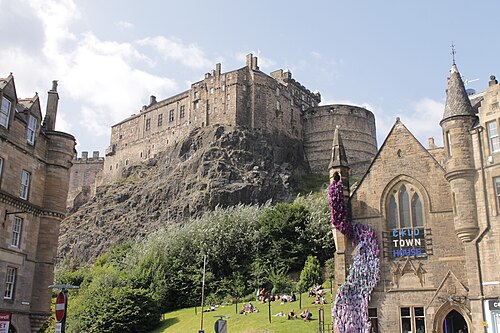 Edinburgh CastleRestored · prime 1520
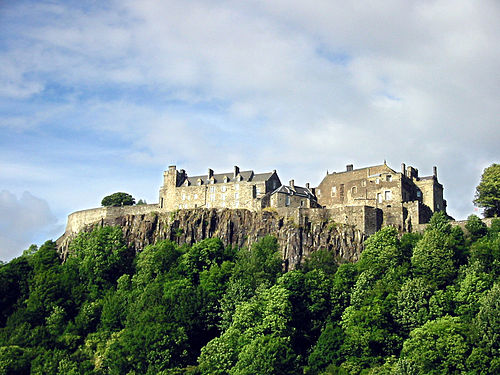 Stirling CastleRestored · prime 1542
 Glamis CastleStill standing · prime 1900
All castles in Scotland → · Strongest castles in Scotland → · Castles of Europe
Play As Your Clan
Hold a real castle against whatever you choose to send at it, take a ship out in her own service years, or stand at the shoulder of someone the record remembers. The chronicler sets the scene; the deeds are yours.
Notable bearers of the Mellon name
- Thomas Mellon (1813-1908), judge and founder of T. Mellon & Sons bank
- Andrew W. Mellon (1855-1937), US Secretary of the Treasury 1921-1932, founder of Gulf Oil and ALCOA
- Richard B. Mellon (1858-1933), Mellon Bank president, Andrew's brother and business partner
- Richard King Mellon (1899-1970), industrialist and Pittsburgh civic leader
- Paul Mellon (1907-1999), philanthropist and art collector, founder of the Yale Center for British Art