European family heritage
Your name’s past is written. Its next chapter is yours.
Learn your family’s true history, create your own alternate history, or conquer for your clan.
Start with your family name
Or explore England · Ireland · Scotland · Wales · the full catalogue.
Experiences
Choose your experience.

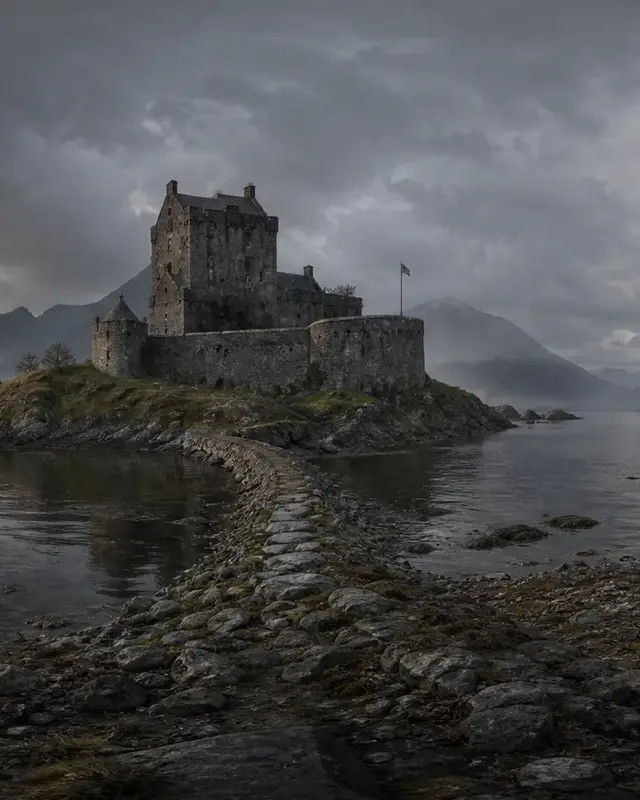
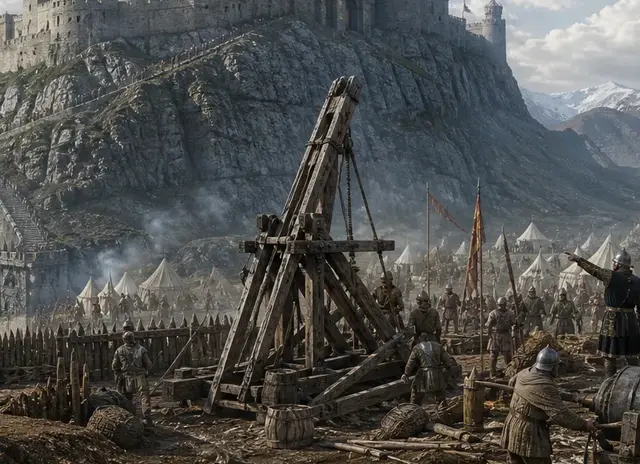
Castles of Europe
Seen a castle? See it in its prime.
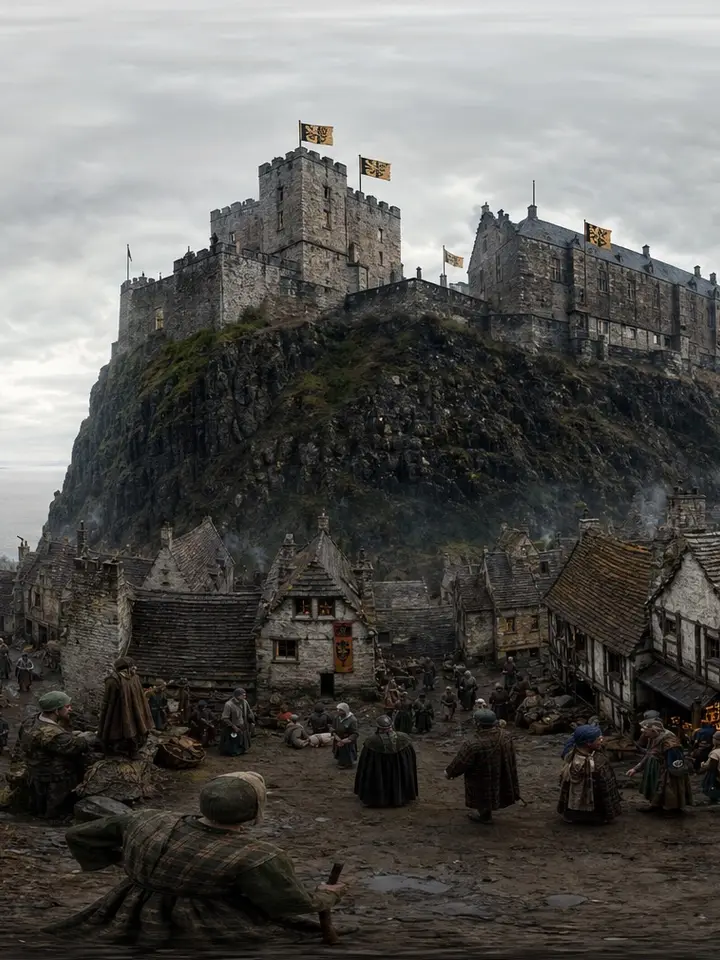
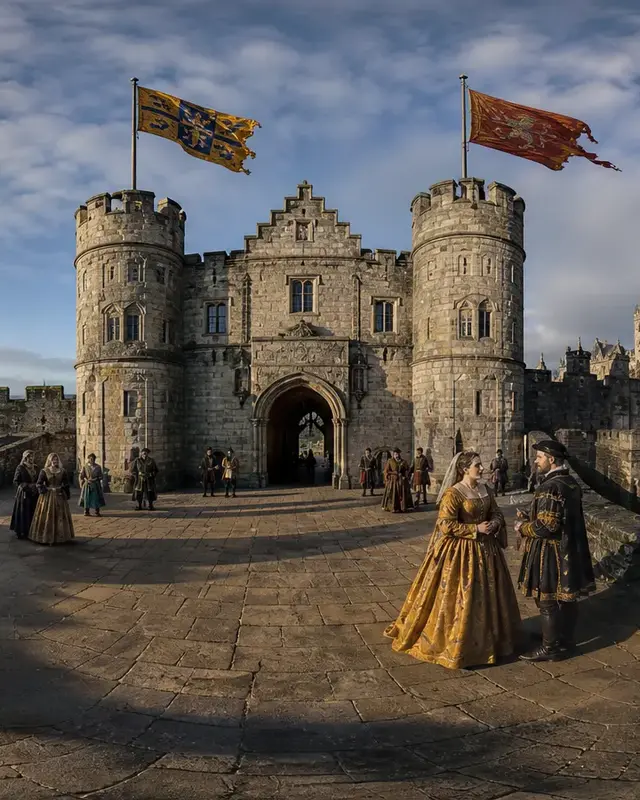
Neuschwanstein, Eilean Donan, Stirling, Kilchurn. 2133 castles across Europe, each with its history, the families that held it, and what it looked like when the fires were lit. Rebuild one with AI and explore the halls, the towers and the armoury.


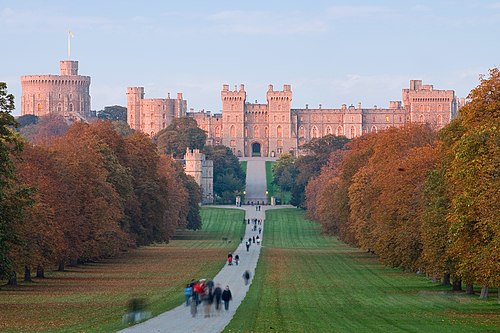

New · Historic Cities
Explore a great city in another century.
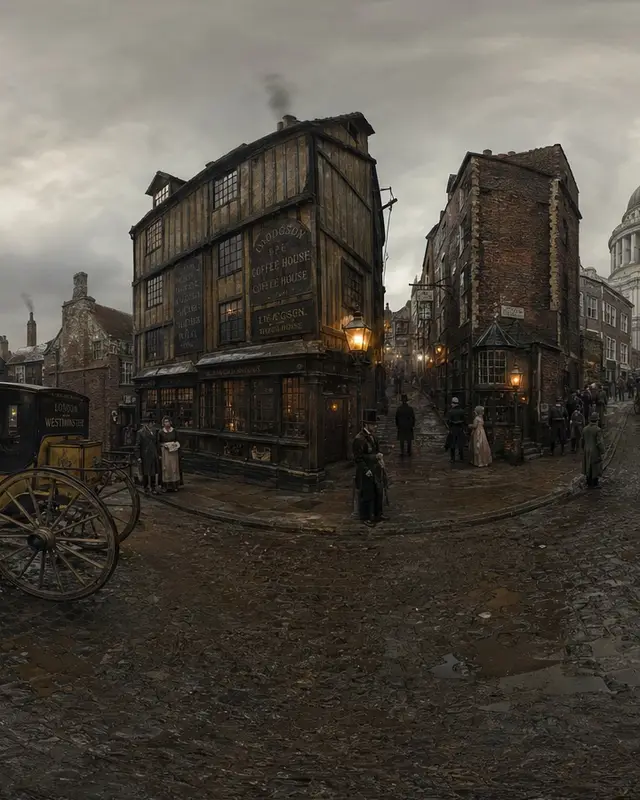
Roman London, Viking York, Shakespeare’s London, Canaletto’s Venice, 161 famous cities, each rebuilt street by street at the turning points of its life, 14-39 scenes deep with the famous interiors included.


New · Landmarks of Europe
Recreate any landmark in Europe, from the Colosseum to Pompeii.
The Colosseum, Versailles, Pompeii, the Acropolis. 999 of Europe’s most visited landmarks, each recorded as it stood at its peak. Rebuild one with AI and step inside the halls, stands and streets no photograph can reach.


Historic Places, Rebuilt · free to explore
Ready-made photoreal reconstructions are free in your browser: Inverness on the eve of Culloden, Nelson’s flagship at Trafalgar, the Cardiff coal docks at their height, each rebuilt as it stood in its prime.
Explore the free reconstructions →Clan & Surname Map
Every surname is a story on a map.
Behind almost every family name there is a trail, a craft, a nickname, a river crossing, a patron saint, a migration, and very often a corner of ground where the name first stuck in the parish book. We tie each line to the atlas so you can see where that history sits in the real landscape, from shire to coast.
Open the clan map →The next chapter
A name was once how people looked after their own.
Clan Rising is the record of where every name came from, and the start of building that working clan again. Organised, families did what none of them could alone. They backed each other through hard years, found the newcomer work, crossed oceans together and held the line on the far shore. Two centuries of enclosure, emigration and the city thinned that structure out. The name survived it. The work it did is the part we are rebuilding.
Find your people.
Everyone who carries your name, in one place.
Elect your leadership and chiefs.
Every clan chooses its own leaders, stand for a role yourself, or vote on who takes it.
Deliver shared goals.
Real-world projects that make members’ lives better now.
Standard-bearers
Featured families
Turner
The lathe.
Elgar
Malvern Hills in orchestration.
House of Hanover
“Nec aspera terrent”, Difficulties do not deter us
Royal house of Britain, 1714-1901, the dynasty of empire.
Simpson
Simon's son, Tyne to Tees, and the Edinburgh obstetrician of chloroform.
Clan Ross
“Spem successus alit”, Success nourishes hope
The promontory clan, earls of the North.
Clan Fraser
“Je suis prest”, I am ready
Of Lovat, 'I am ready'.
Clan & Castle Rankings
The most powerful clans, ranked.
Editorial power rankings, scoring sustained political, military and economic power across each nation. Start with the all-time leaderboard, end with the houses still rising today.
Clan Legends
Stories worth knowing
Bruce and the spider
c. 1306Clan Bruce
In 1306 Robert the Bruce was crowned King of Scots and lost two battles within four months. Excommunicated by Rome, his wife and daughter taken, three of his four brothers executed by the English king, his sister hanging in an iron cage on the wall of Roxburgh Castle, he disappeared into hiding through the winter. The Scots cause was a fugitive in a coastal cave. By tradition he watched a spider try to swing a thread of web across a gap, fail six times, succeed on the seventh, and took it for his answer. The truth attested in chronicle is leaner: a king at the end of his options went back into the field, and won.
The Massacre of Glencoe
1692Clan MacDonald
In late 1691, the British crown demanded every Highland chief swear loyalty by the first of January, on pain of fire and sword. The MacDonalds of Glencoe missed the deadline by six days through no fault of their own. In response, the government quietly authorised the destruction of the family. For two weeks 120 government soldiers under a Campbell captain were billeted as guests in MacDonald longhouses, eating MacDonald food and playing cards with their hosts under the unbreakable Highland code of guest-right. Before dawn on the thirteenth of February 1692, the captain received written orders to fall on the village. What followed is remembered as the worst breach of guest-right in British history, and the reason the MacDonalds will not sit at table with a Campbell to this day.
Bosworth
1485House of Tudor
Henry Tudor was a Welsh-born exile of the Lancastrian line, raised in Brittany on a French pension, the holder of a tenuous claim to the English throne through his mother Margaret Beaufort. By the summer of 1485 Richard III's two-year reign was visibly thinning at the top: the boy princes were dead in the Tower, the great Yorkist magnates were drifting. On the seventh of August 1485 Henry landed at Mill Bay near Dale in Pembrokeshire with two thousand French and Welsh exiles. He marched up through Wales under the red dragon standard of Cadwaladr, picking up men. On the twenty-second of August he met Richard on the field at Bosworth in Leicestershire. Within four hours of first light he was crowned King of England on a low rise above the field with a battle-circlet taken from his enemy's helmet.
The heart of Bruce
1329–1330Clan Douglas
In June 1329 Robert the Bruce lay dying at Cardross. He had vowed years earlier to take the cross to the Holy Land, but the Scottish wars had kept him from it; on his deathbed he asked that his heart be cut from his body, embalmed, and carried on crusade in his place. The man who took the charge was Sir James Douglas, his closest companion in arms, called Good Sir James. Douglas wore the heart in a silver casket on a chain at his neck the next year, through France and Spain and into a foreign battle on the Andalusian frontier, where what he did at the head of a Castilian charge became the founding act of the Douglas line.
Flora MacDonald and the prince
1746Clan MacDonald
In June 1746, two months after the disaster of Culloden, Charles Edward Stuart was a fugitive in the Hebrides with a price on his head of thirty thousand pounds, the largest reward of the eighteenth century. Government patrols closed in around him on the islands of South Uist and Benbecula. The plan that came to him through an Irish Jacobite officer was to disguise him as an Irish spinning-maid and put him on a boat to Skye in the household of a young woman with a militia pass. Her name was Flora MacDonald. She was twenty-four years old. She had no political stake in the rising. The crossing made her name a synonym for the lost cause for the next two centuries.
Macquarie founds Sydney
1810Clan MacQuarrie
On the first of January 1810, on the quayside of Sydney Cove on the east coast of New South Wales, Major-General Lachlan Macquarie, forty-seven years old, the Ulva-born former Black Watch officer of the American, Indian and Egyptian campaigns of the British Army, took up the governorship of the British convict colony of New South Wales (established as a penal settlement at Sydney Cove on the twenty-sixth of January 1788, on the First Fleet landing). Macquarie inherited a colony of about eleven thousand convicts and free settlers in a state of near-mutiny (his predecessor Governor William Bligh, the Bligh of the Bounty mutiny of 1789, had been deposed in the Rum Rebellion of January 1808 by the New South Wales Corps under Major George Johnston). Over the twelve years of his governorship (1810–1821), Macquarie rebuilt Sydney from the disorganised convict-camp of 1810 into the coherent colonial city of 1821: he laid out the Sydney street-grid that still defines the modern central business district, commissioned over two hundred public buildings (the Hyde Park Barracks 1819, the St James's Church 1822, the Macquarie Lighthouse 1818), founded the Bank of New South Wales in 1817, built the Great Western Highway over the Blue Mountains in 1814–15 (opening the Western Plains to grazing-agriculture for the first time), established the policy of encouraging emancipated convicts (emancipists) to take government office on the merit-of-service principle. He is, by every careful judgment of Australian historians (Manning Clark, John Ritchie, Anne-Maree Whitaker), the foundational governor of the modern Australia and the most influential governor of any nineteenth-century British colony. His treatment of Aboriginal Australians, particularly the 1816 Appin Massacre on the Dharawal country south of Sydney, is the contested aspect of his legacy.
Alexander Hamilton and Aaron Burr at Weehawken
1804Clan Hamilton
By the spring of 1804 Aaron Burr, Vice President of the United States, had been politically blocked at every turn by Alexander Hamilton's correspondence and was running for the governorship of New York with no chance of winning. After a public letter quoted Hamilton as having spoken of him with what was glossed as a "more despicable opinion", Burr demanded retraction. Hamilton refused. They met on the duelling-ground at Weehawken on the cliffs above the Hudson on the morning of the eleventh of July 1804. Hamilton, by his published note left with his counsel the night before, had decided to throw away his fire and discharge the pistol harmlessly. Burr, who knew nothing of this, took an aimed shot. The ball entered Hamilton's right side just above the iliac crest, fractured the second lumbar vertebra and lodged in the spine; he died at two o'clock the following afternoon at the home of his friend William Bayard on Greenwich Street, Manhattan. He was forty-seven years old. The duel ended Burr's political career and made Hamilton, in death, the founding figure of the financial system of the United States.
Patrick Hamilton at St Andrews
1528Clan Hamilton
Patrick Hamilton, son of Sir Patrick Hamilton of Kincavel and Catherine Stewart (granddaughter of James II), was twenty-three or twenty-four years old when he was condemned for heresy at St Andrews on the twenty-eighth of February 1528, in a court convened by James Beaton, Archbishop of St Andrews. He had been to Paris and to Marburg and had read Luther; he had returned to Scotland in 1526 and had taught the new doctrines openly. The court found him guilty in the morning. He was burnt at the stake at the gate of St Salvator's College that same afternoon. The wood was wet, the wind was off the sea, the executioner had to be sent to the priory for more powder. The fire took six hours to consume him. Knox, writing his History thirty-eight years later, gave the phrase: the reek of Master Patrick Hamilton has infected as many as it blew upon. The Scottish Reformation, by the careful judgment of every later historian of it, has its first and longest fuse here.
The Earl of Erroll at Harlaw
1411Clan Hay
On the morning of the twenty-fourth of July 1411, on the rising ground above the head of the Garioch, twenty miles north-west of Aberdeen, the Lowland-Norman levies of Aberdeenshire and Angus, under Alexander Stewart, Earl of Mar, met a Highland-Hebridean army of about ten thousand under Donald, Lord of the Isles, in the most consequential battle fought in north-east Scotland in the post-Bruce century. Donald had been pressing east for the earldom of Ross. Mar's hastily levied army of three thousand had three of the great Lowland constables on the field. The High Constable of Scotland, Sir Gilbert Hay of Erroll, son of the second Lord of Erroll, in his fifty-first year, in his hereditary office and on his own ground, held the right wing of Mar's line. The action was, by every contemporary account, fought to a standstill on the strath of Harlaw at the cost of about a thousand dead a side. Donald withdrew north-west overnight; Mar held the field. The Lowland-speaking belt of Aberdeenshire and Angus would not be reabsorbed into a Gaelic west again. The Hay tradition has it that the day held because Erroll held the right.
The Black Dinner
1440Clan Douglas
On the twenty-fourth of November 1440, the sixteen-year-old William Douglas, sixth Earl of Douglas, head of the Black Douglas line and the most powerful subject in Scotland, was invited with his younger brother David to dine in the great hall of Edinburgh Castle in the presence of the ten-year-old King James II. The dinner was hosted by William Crichton (the Lord Chancellor) and Sir Alexander Livingston (the Custodian of the Castle and the King's tutor), the two regents who effectively ruled Scotland during the king's minority and who had been alarmed for two years at the rising power of the Douglas earl. By the tradition of the next century, told in the chronicles of John Major and Hector Boece, a black bull's head was brought in on a silver platter as the principal dish, the symbol in fifteenth-century Scotland of imminent execution. The two Douglas brothers were seized at the table, given a hasty trial in the courtyard, and beheaded on the spot. The political effect was immediate: the Black Douglas eclipse, the rise of a new (and deliberately diminished) Douglas line under the eighth Earl. The Black Dinner is the most consistently remembered episode of medieval Scottish political violence, has produced two surviving children's rhymes (one in the eastern Border tradition, one Aberdeenshire), and was deliberately referenced by George R. R. Martin as the structural model for the Red Wedding in A Storm of Swords.
Inverlochy
1645Clan MacDonald
On the night of the thirty-first of January 1645, after a winter march of thirty-six hours from the south end of Loch Ness through Glen Tarbet and the high pass of the Lairig Leacach, James Graham, Marquess of Montrose, with the Highland-Irish brigade of Alasdair MacColla MacDonald and a force of about fifteen hundred men of the western clans, came down at first light on the second of February, the morning of Candlemas, on the Campbell army of Archibald Campbell, eighth Earl of Argyll, encamped under the walls of Inverlochy Castle at the head of Loch Linnhe. Argyll had three thousand men. The day broke in heavy frost. The Highland charge took the Campbell line in flank and rolled it down the loch shore. Argyll was put aboard his galley and rowed for Inveraray. Fifteen hundred Campbells died, by the careful estimate of the modern historians of the action, in two hours. The MacDonalds of Clanranald, of Glengarry, of Keppoch, of Glencoe, fought beside MacColla in the centre. The single most consequential reckoning between MacDonald and Campbell of the seventeenth century was won that morning by Montrose's tactical genius and the Highland charge in winter, fifty years and ten days before Glencoe, and reads, in Highland MacDonald memory, as the inverse of Glencoe.
The National Covenant in Greyfriars
1638Clan Henderson
On the afternoon of the twenty-eighth of February 1638, in Greyfriars Kirk in Edinburgh, the Scottish nobility and gentry gathered to subscribe a four-thousand-word document called the National Covenant, drafted by the Edinburgh advocate Archibald Johnston of Wariston and the Leuchars minister Alexander Henderson, in the third month of the country's open resistance to the Caroline-Laudian Prayer Book that Charles I had attempted to impose on the Kirk by royal warrant. The Covenant was signed by some four hundred men in the kirk that afternoon, and laid out on a flat tomb-slab in the kirkyard for the remainder of the burgh to subscribe over the next several days. Many signed in their own blood. The document was then carried in copy through every shire of Lowland Scotland, and was, by the spring, signed by the great majority of the country's adult male Protestant population. The Covenant became the constitutional pivot of the next half-century of Scottish history: of the Bishops' Wars of 1639–40, of the alliance with the English Parliament in 1643, of the Westminster Assembly, of the long defeat at Dunbar in 1650, and of the political identity of Presbyterian Scotland for two hundred years afterwards.
Famous People by Surname
Notable champions
Robert the Bruce
Clan Bruce
The Scottish king who won his country its independence at Bannockburn and carried the Bruce name to the throne.
Flora MacDonald
Clan MacDonald
The twenty-four-year-old South Uist woman whose courage carried Bonnie Prince Charlie to safety across the sea to Skye, and whose name has stood for fidelity ever since.
Alexander Graham Bell
Bell
The Edinburgh teacher of the deaf who gave the world the telephone.
Adam Smith
Smith
The Kirkcaldy customs officer's posthumous son who wrote The Theory of Moral Sentiments and The Wealth of Nations and founded modern political economy.
Sir Walter Scott
Clan Scott
The Edinburgh advocate who invented the historical novel, recovered the lost Honours of Scotland for the nation, and cleared a fortune in debt as a point of honour.
Neil Armstrong
Clan Armstrong
The Wapakoneta boy of Border-Scots ancestry who flew his first aeroplane at fifteen and stepped onto the Moon at thirty-eight.
Michael Collins
Collins
The west Cork revolutionary whose intelligence war broke the British administration in Ireland and whose negotiation won the Irish Free State.
William Marshal
Marshall
The landless knight who became the most celebrated soldier of his century, served five English kings, witnessed Magna Carta, and as Regent for the boy Henry III won the war that saved the English crown.
George Eliot
Evans
The Warwickshire land-agent's daughter who translated the German biblical critics, edited the Westminster Review, and wrote Middlemarch, The Mill on the Floss and Daniel Deronda as the foundational moral-realist novelist of the Victorian English language.
Richard Llewellyn
Llewellyn
The author of How Green Was My Valley, the south Wales coal-valley novel that became the foundational popular fiction of Welsh national identity, sold seven million copies, and won the 1942 Best Picture Oscar in John Ford's adaptation.
Gabriel Byrne
Byrne
The Walkinstown plumber's son who taught archaeology and Spanish before turning to acting at twenty-nine, played Tom Reagan in Miller's Crossing and Dean Keaton in The Usual Suspects, and the psychiatrist Paul Weston for forty-three episodes of HBO's In Treatment.
Alan Bennett
Bennett
The Leeds butcher's son whose Beyond the Fringe broke open the post-war British comedy stage, and who went on to write the Talking Heads television monologues and the prizewinning The History Boys across a sixty-year working life.