Clan Duncan
also Donnchadh, Mac Donnchaidh
The brown warrior, Duncan the king and the Robertson sept.
- Origin
- Perthshire, Scotland
- Motto
- Disce pati
- Famous bearer
- Adam Duncan, 1st Viscount Duncan of Camperdown (1731–1804), admiral, Battle of Camperdown 1797
- Register
- Scottish clan
The Duncan arms, crest badge, tartan, banner and country

Crest badgeDuncan-crest-badgeSketraw · CC BY-SA 3.0 
TartanDuncan tartanMicheletb · CC BY-SA 4.0 
TartanDuncan Tartan- Ancient“Ancient” colours: the softer shades vegetable dyes produced. The same pattern, not an older one.ChrisDuncan42 · CC BY-SA 4.0 
Coat of armsArms of DuncanBorne by the Duncan line, one branch of the name rather than all of it.Eccekevin · CC BY-SA 4.0 
Coat of armsArms of Duncan, Viscount DuncanBorne by Viscount Duncan: the ennobled line of the name, not the name at large.MostEpic · CC BY-SA 4.0 
BannerDuncan BannerSketraw · CC BY-SA 3.0


- Crest badge: The chief's crest inside a belt and buckle: the badge a clansman wears to show whose following he is in.
- Tartan: The checked cloth the family is known by.
- Coat of arms: Granted to an individual and inherited down that one documented line. These are the arms of particular families of the name, not of everyone who shares the surname.
- Banner: The standard flown to muster the name in the field.
What is the Duncan clan tartan?
Two Duncan setts are shown above, one of them the same pattern in “ancient” colours, the softer shades vegetable dyes gave. They are not rival claims to be picked between; they are different records, and different weaves, of the same family cloth. A sett is the block of coloured bands the cloth is built from, repeated in both directions; the whole plaid is that one square enlarged.
Almost no clan tartan is medieval. Highland dress was proscribed from 1746 until 1782, and when it returned it returned as ceremony rather than everyday cloth, so the surname-to-sett map was fixed after the break, by the Bannockburn weavers’ pattern books, the royal visit to Edinburgh in 1822, and the Vestiarium Scoticum of 1842. The Duncans wore tartan long before any of that. What the registers fixed was which one. Nobody polices any of it. Wearing the Duncan sett declares allegiance to the name, not descent from any particular line of it.
CoreHistoric reach
The seat of Clan Duncan
Seat vacantChief
No one leads the Clan Duncan community yet. When the movement opens, you can stand for its leadership, or help elect whoever does.
Current mission
No shared goal set yet. Once Clan Duncan has leadership, it sets the public focus: a restoration, a gathering, a real-world project that helps its own.
The Duncan clan is being rebuilt. Join the waiting list for the movement today, and you help decide who leads it and what it does.
Help rebuild the Duncan clan →Motto
Disce pati
“Learn to endure”
What does the Duncan name mean?
From the Gaelic Donnchadh ('brown warrior'), the personal name borne by Duncan I, King of Scots (c.1001–1040), the Duncan murdered by Macbeth in Shakespeare's play (and, less dramatically, in real history at Bothganowan in 1040). The name was widely current in mediaeval Scotland and produced both the patronymic Duncan and the cognate Donaldson. The Duncans of Lundie in Forfar (later Earls of Camperdown) were the principal Lowland-aristocratic line; the Highland Duncans were associated with the Robertsons of Atholl, who claimed descent from the same royal Duncan.
The history of Clan Duncan
Donnchadh, the brown warrior, and a king killed at Bothganowan
The name is the Gaelic Donnchadh, read as 'brown warrior': donn, 'brown' or 'dark', an element carried also in the name of the Gaelic god Donn, joined to a second part read as 'chief' or 'noble'. It was borne by Duncan I, King of Scots (c.1001–1040), the Duncan whom Shakespeare has murdered by Macbeth and who in the less dramatic record died at Bothganowan in 1040. The personal name stayed current in mediaeval Scotland, was borrowed into English and Scots alongside Kenneth, Donald and Lachlan, and there hardened into a hereditary surname.
In Gaelic the patronymic is MacDhonnchaidh, 'son of Duncan', and the clerks who had to write that down in Scots were defeated by it: the same name reaches the present as MacConachie, MacConkey, MacConochie, MacDonough and Donohoe as readily as the flat English Duncan and Duncanson. Where the surname turns up in County Sligo it anglicises the Irish Mac Donnchadha or Ó Duinnchinn, 'descendant of Donncheann'. The Duncan motto is not the clan's Virtutis gloria merces but the plainer Disce pati: learn to endure.
Stout Duncan of Dunkeld, who hid a king after Methven
The first recognised chief of the kindred was Donnchadh Reamhar, Stout Duncan, son of Andrew de Atholia, Andrew of Atholl. He was a minor landowner and leader of a kin-group around Dunkeld in Highland Perthshire, and the tradition of his people is that he supported Robert I through the Wars of Scottish Independence and looked after the king after the Battle of Methven in 1306, when Bruce was a fugitive in his own country. The clan asserts that Stout Duncan's relatives and followers, not yet known by any Robertson name, stood with Bruce at Bannockburn in 1314.
Two accounts of where he came from compete. One makes the founding Donn(a)chadh the second son of Angus MacDonald, Lord of the Isles; the other makes the kindred lineal descendants of the Celtic Earls of Atholl, whose progenitor was King Duncan I himself, and the Collins Scottish Clan & Family Encyclopedia supports the second. Neither can be pressed hard. The progenitors of Scottish clans can rarely be authenticated further back than the 11th century, and continuity of lineage generally cannot be traced until the 13th or 14th, which is to say, until the surname itself was settling.
What is not in doubt is what his descendants were called. In Gaelic they were Clann Dhonnchaidh, the Children of Duncan; in Scots and English they were the Duncansons. Stout Duncan is believed to have been killed at the Battle of Neville's Cross, and is said to lie in the parish church of Dull, near Aberfeldy. Members of the Clan Donnachaidh Society excavated inside the now redundant church there and failed to find evidence of that grave, though they uncovered other burials and early mediaeval carved stones.
Cattle, the sheriff of Angus, and a reputation for raiding
In 1394 the kindred fought a pitched clan battle against Clan Lindsay, with Clan Ogilvy, hereditary sheriffs of Angus, drawn into it during a cattle raid on Angus. Sir Walter Ogilvy was slain in the fighting. Clandonoquhy, as the record-keepers spelled them, had rather a reputation as raiders and feuders in late mediaeval Scotland, and the awkward fact of their history is that their chiefs were at the same time loyal to the Bruce and Stewart kings whose peace the raiding broke.
Behind such raiding lay a real quarrel about what land was. Clanship held two ideas of heritage at once: dùthchas, the collective right of clansmen to settle territory in which their chiefs customarily gave protection, and oighreachd, the estate defined by Crown charter and owned by the chief in his own right. Where charter and custom did not match (and in Perthshire, hemmed by Stewarts, Lindsays and Ogilvys, they often did not), the outcome was feud.
Robert Riabhach Duncanson and the hunt for a king's murderers
James I was murdered at the Blackfriars Dominican friary in Perth, and the killing incensed Robert Riabhach (Grizzled) Duncanson, fourth chief of Clann Dhonnchaidh and a strong supporter of that king through his reign of 1406 to 1437. He went after the regicides himself. Sir Robert Graham and the king's uncle, Walter Stewart, Earl of Atholl, were run to ground hiding above Invervack in Atholl, taken, and handed to the Crown.
What followed was ordered by the murdered king's widow, the regent Joan Beaufort: both men were tortured to death in the Grassmarket in Edinburgh, by one account with considerable savagery. The reward came from the next king. On 15 August 1451 James II granted the fourth chief a crest of a dexter hand upholding an imperial crown, and the arms carry beneath the shield a third supporter of a kind almost unknown in Scottish heraldry: a savage man in chains, for the taking of Graham.
The same king erected the clan lands into the Barony of Struan, a wide country taking in Glen Errochty, both banks of Loch Tay and the ground around Loch Rannoch: Loch Raineach, the loch of bracken from which the kindred drew its plant badge. Robert Riabhach died in 1460 of wounds received in battle. It is in his honour that the chiefly line thereafter called itself Robertson, and the men who kept the older Duncan and Duncanson forms of the very same patronymic became, in the language of the heralds, a sept of the clan they had named.
Invervack burned, Lude torched, and a prison on an island
The chiefs' original seat was Invervack, lost in the civil war: the castle burned by Cromwell's forces and many of the family records burned with it, which is why so much of the kindred's mediaeval history survives as assertion rather than charter. Mount Alexander, another early seat of the chiefs, was eventually replaced by Dall House. Lude Castle, held from at least the 17th century, was torched by Cromwell's men in 1650 after Alexander Robertson of Lude had fought for Montrose at Tippermuir in 1644.
Auchleeks was held from the 1530s, later replaced by a mansion, and sold out of the family in 1962. Strangest of the group is Eilean nam Faoilaig near Kinloch Rannoch, a castle on an island in the loch held by the Robertsons of Struan, used as a refuge when the country outside was hostile and as a prison when it was not. The ruin at Dunalastair, regularly pointed out to visitors as a clan castle, has no connection to the kindred whatever: the earlier house on that ground was sold by the then chief in 1853.
The burial place was Struan (Gaelic Sruthan, 'streams'), a parish church of early Christian origin dedicated to St Fillan, where the Errochty Water meets the Garry. Many of the mediaeval chiefs lie there, though not one of their monuments has survived; the present building went up in the early 19th century and the foundations of its predecessor can still be traced in the churchyard. Later chiefs were laid in a vault at Dunalastair. The kindred's gathering tune is Thàinig Clann Dhònnchaidh, and its slogan Garg 'nuair dhùisgear: fierce when roused.
The Duncans of Lundie and a Dundee boy rated midshipman at fifteen
The Lowland line of the name sat in Angus, at Lundie. Adam Duncan was born in Dundee on 1 July 1731, the son of Alexander Duncan of Lundie, a provost of the burgh, and of Helen Haldane. He went to sea in 1746 at fifteen, rated midshipman aboard HMS Shoreham under his kinsman Robert Haldane, and learned his trade in the long mid-century wars against France and Spain rather than in any schoolroom.
Made lieutenant in 1755, he was at the capture of Goree off the African coast in 1758 and in 1762 at the reduction of Havana, the largest amphibious operation of the Seven Years War, where he commanded a division of the storming party. He was a man of remarkable physical presence, well over six feet, even-tempered, trusted by the lower deck, and slow to be promoted in a navy that rewarded interest quite as much as merit.
Post-captain in 1761, he then spent much of the next thirty years ashore on half-pay, as many capable officers did in the long peace. He married Henrietta Dundas in 1777, a connection that set him beside the political family then rising to control Scottish patronage. Promotion came with age: rear-admiral in 1787, vice-admiral in 1793 as war with revolutionary France broke out, and in 1795, at sixty-four, the North Sea fleet, the station charged with watching the Batavian Republic's ships behind the island of Texel.
Two ships bluffing a fleet, and eleven taken at Camperdown
In the spring of 1797 the seamen of the Channel and North Sea fleets rose in the mutinies of Spithead and the Nore over pay, provisions and the brutality of certain officers. Duncan's ships at Yarmouth went over to the mutineers one by one until he was left with two loyal vessels: his flagship HMS Venerable and HMS Adamant. With those two he sailed for the Texel and lay off the Dutch coast through the crisis, signalling to an imaginary fleet over the horizon so the Dutch admiral would believe the British line of battle was still at sea in strength.
The bluff held. The Dutch did not come out, the invasion did not sail, and by the autumn the mutinies had been settled and the fleet had returned to his command. On 11 October 1797 Vice-Admiral Jan de Winter brought out sixteen Dutch ships of the line at last, off the village of Kamperduin between Texel and the Hague. Duncan came down on them in two columns, cutting the Dutch line and forcing the close, ship-against-ship action in shoal water at which the heavier British gunnery told.
The fighting was among the most savage of the whole French war; the Dutch, kinsmen of the British in seamanship and in stubbornness, did not strike easily. After three hours eleven Dutch ships had been taken, De Winter's flagship Vrijheid among them, and De Winter was a prisoner aboard the Venerable, where Duncan received the surrendered sword with courtesy and said he was sorry to take the sword of so brave a man. The threat of a Dutch landing in Britain or Ireland was ended, and he was created Viscount Duncan of Camperdown.
He hauled down his flag in 1800 and died suddenly at Cornhill-on-Tweed on 4 August 1804, on the road home from London; he was buried in the family vault at Lundie in Angus. What the name keeps of him is not the peerage but the shape of the thing: a Dundee captain left with two ships in the worst mutiny the Royal Navy had known, who held the mouth of the Texel on a bluff and then came back and broke a battle fleet.
Geillis Duncan in 1591, and Henry Duncan's savings bank
Geillis Duncan, a Scottish maidservant, was accused of witchcraft and died in 1591, and the strange side of the name did not end with her, since Helen Duncan (1897–1956) was a Scottish medium. Between those two dates the name ran through the sober Scottish professions as thoroughly as the strange ones. Henry Duncan, a minister, founded the first Trustee Savings Bank; William Duncan (1717–1760) was a Scottish natural philosopher and classicist; Mary Lundie Duncan (1814–1840) was a Scottish poet and hymn-writer, and Kath Duncan (1888 or 1889–1954) a Scottish communist activist.
The sea kept its hold on the name: Henry Duncan (1735–1814) was a British naval officer, Gordon Duncan (1899–1941) a Scottish flying ace of the First World War; and Dundee kept its hold too: John Duncan (1949–2022) played for Dundee and Tottenham Hotspur, and C Duncan is the Scottish composer whose debut album Architect was nominated for the 2015 Mercury Prize.
Assisted passages, and the name in Burra, Ottawa and Washington
The kindred's country did not keep its people. The Statutes of Iona of 1609 obliged clan chiefs to live in Edinburgh for much of the year and to educate their heirs in the English-speaking Lowlands, ruinously expensive in a largely cashless Highland economy, and pushed them towards treating their land as a commercial asset rather than a social system. From the 1770s the tacksmen (the middle tier who allocated the runrig strips, lent seed-corn and arranged the droving of cattle to the Lowlands) were squeezed out, and many emigrated rather than take the new terms. After the rising of 1745 the clan lands themselves went into the Forfeited Estates, and most were only returned in 1784.
Then came the clearances, and after them assisted passages paid by landlords who found a one-way fare cheaper than another cycle of famine relief. Canada took them first and Australia later. In South Australia, Walter Hughes Duncan (1848–1906) was a pastoralist and MHA for Burra and Sir Walter Gordon Duncan (1885–1963) a pastoralist and MLC; Leslie Duncan (1880–1952) was a newspaper editor and politician there, and Walter Leslie Duncan (1883–1947) an Australian Senator for New South Wales. Sara Jeannette Duncan (1861–1922) was a Canadian author and journalist, and Kirsty Duncan (1966–2026) Canadian Deputy Leader of the Government in the House of Commons. In the United States, Charles Duncan Jr. (1926–2022) was Secretary of Energy from 1979 to 1981 and Arne Duncan Secretary of Education from 2009 to 2015, while John Duncan Sr. (1919–1988) and his son Jimmy Duncan held Tennessee's 2nd congressional district between them from 1965 to 2019.
Champions of the Duncan name
The bearers whose lives are inseparable from this surname. Each has their own page, biography, achievements, geography, connection to the family.
Historic Places, Rebuilt
Explore the streets and seats the Duncan name knew, rebuilt with AI as they stood in history.
The castles of the homeland
The great strongholds of the homeland, look one up, see what it looked like in its prime, and recreate it to explore.
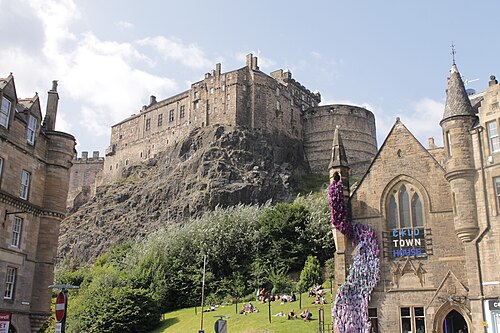 Edinburgh CastleRestored · prime 1520
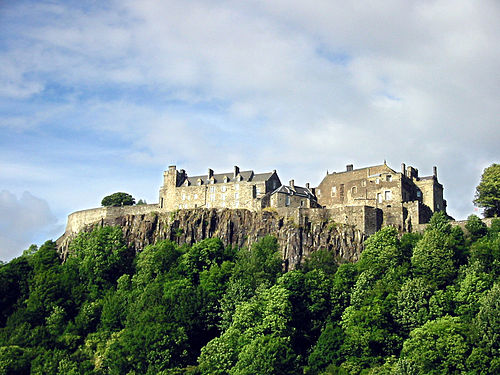 Stirling CastleRestored · prime 1542
 Glamis CastleStill standing · prime 1900
All castles in Scotland → · Strongest castles in Scotland → · Castles of Europe
Play As Your Clan
Hold a real castle against whatever you choose to send at it, take a ship out in her own service years, or stand at the shoulder of someone the record remembers. The chronicler sets the scene; the deeds are yours.
Notable bearers of the Duncan name
- Adam Duncan, 1st Viscount Duncan of Camperdown (1731–1804), admiral, Battle of Camperdown 1797
- Isadora Duncan (1877–1927), modernist dancer
- Lindsay Duncan (b. 1950), Scottish actress