Clan Hay
Hereditary Constables of Scotland, second only to the crown.
- Origin
- Perthshire, Scotland
- Motto
- Serva jugum
- Famous bearer
- Sir Gilbert Hay (d. 1436), companion of Joan of Arc
- Register
- Scottish clan
The Hay arms and country
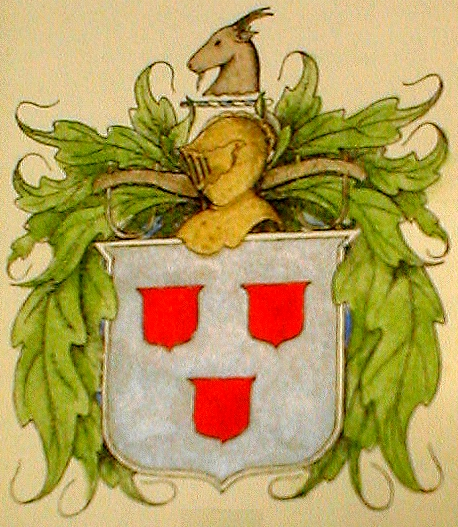
Coat of armsHay armsRichard Augustus Hay · Public domain

- Coat of arms: Granted to an individual and inherited down that one documented line. These are the arms of particular families of the name, not of everyone who shares the surname.
The seat of Clan Hay
Seat vacantChief
No one leads the Clan Hay community yet. When the movement opens, you can stand for its leadership, or help elect whoever does.
Current mission
No shared goal set yet. Once Clan Hay has leadership, it sets the public focus: a restoration, a gathering, a real-world project that helps its own.
The Hay clan is being rebuilt. Join the waiting list for the movement today, and you help decide who leads it and what it does.
Help rebuild the Hay clan →Motto
Serva jugum
“Keep the yoke”
What does the Hay name mean?
From the Norman princes de La Haye, who came to England with William the Conqueror in 1066.
The history of Clan Hay
Two beginnings: a Norman hedge and a Perthshire ploughman
The surname is territorial and Norman, from the villages called La Haye in the Cotentin Peninsula of Normandy: haia, a hedge, modern French haie. It can also mean a stockade, though that corner of Normandy is bocage country, laced with centuries-old interlocking hedgerows. De la Haye contracted in Scots and English to Hay and was rendered into Gaelic as Garadh. The Gaelic form MacGaradh has less standing: George Fraser Black held it an invention of John Hay Allan, who also called himself John Sobieski Stuart and produced the dubious Vestiarium Scoticum.
Against that quiet etymology stands one of the best-known origin traditions in Scotland. Hector Boece gave the first written account in his Scotorum Historia of 1525, and John Burke's Peerage of 1832 carried the version most readers know. In the reign of Kenneth III, anno 980, the Danes had broken the Scots at Luncarty near Perth and were cutting down the fugitives when a countryman and his two sons blocked a narrow pass through which the beaten army was pouring. Brandishing his ploughshare and shouting that help was at hand, the old man turned the rout: the Danes took the three of them for a fresh army and fled. At a parliament at Scone the king gave him as much land on the Tay in the Gowrie as a falcon would fly over before settling, six miles of it, afterwards called Errol, and arms of argent, three escutcheons gules, for the three fortunate shields of Scotland.
The battle is not pure invention. Walter Bower, writing his Scotichronicon around 1440 and so well before Boece, calls it 'that remarkable battle of Luncarty, in which the Norsemen with their king were totally destroyed'. Around 1791 the Reverend Moncrieff, contributing to the First Statistical Account, watched the last burial mounds opened on the reputed field and recorded ashes and bones with weapons and bridles, though no archaeologist ever examined them. The place names hold the memory too: the site lies in Redgorton parish, red fields, and the Danes are said to have been turned at Turnagain Hillock.
The rest is another matter, and the family's own historians have never pretended otherwise. Sir James Balfour Paul pointed out that armorial bearings did not exist in Scotland until long after 980, and Cosmo Innes added that surnames did not either, and that Hay is a Normandy place name. Even the king is wrong: Kenneth III reigned from 997 to 1005, while 980 falls in the reign of Kenneth II. What is certain is that the Hays built their symbols on the tradition. The motto is Serva jugum, keep the yoke; the crest a falcon volant; the badge mistletoe; and three cattle yokes are carved about Delgatie Castle for the farmer and his two sons said to have broken a Danish raiding party at Cruden Bay.
William de Haya, cup-bearer to two kings
The documented family begins with William II de Haya, the first Hay on record in Scotland. He is found at the Scottish court in 1160 and served as cup-bearer to Malcolm IV and then to William I, who made him the first Baron of Erroll. His wife was Eva of Pitmilly, and his father, William I de Haya, had married Juliana de Soulis, sister to Ranulf I de Soules. William II died soon after 1201 and was succeeded by his eldest son, David.
The link back to Normandy was pinned down by Wagner around 1954, and the evidence is heraldic. David de Haya sealed a charter around 1230 with argent, three inescutcheons gules: a silver field carrying three smaller red shields, the identical arms the Earl of Erroll bears today. They look nothing like the arms of the de La Haye of England, but they match those used by Jean de La Haye-Hue in Normandy between about 1368 and 1375. La Haye-Hue, now La Haye-Bellefond, lies just across the small Soules River from Soulles, seat of the Soulis family, and the Soulis name, rare in England, appears with the commoner Hay in the records of Dover castle in the early 13th century.
David de Haya married Helen, a daughter of Gilbert, Earl of Strathearn, and the Erroll succession ran through their son Gilbert, Sheriff of Perth before 1262, appointed one of the regents and guardians of the young Alexander III, and married to Idonea, daughter of William Comyn, Earl of Buchan. A second son, William de Haya, obtained from his brother Gilbert in 1235 a grant of two carucates in Errol called Leys, confirmed in 1451 by William, Earl of Errol, to Edmund Hay of Leys, the lineal descendant of the man who first received it. That branch became the Hay-Balfours of Leys in Perthshire and of Randerston in Fife.
Bannockburn, Slains and the Constableship of Scotland
Nicolas de Haya of Erroll was Sheriff of Perth before 1288, and he came to terms with Edward I, swearing fealty on 12 July 1296 and being summoned to the English king's parliament at St Andrews in 1303 and 1304. His four sons divided their energies between church and war: Nicolas was parson of Fossoway and then Dean of Dunkeld, John parson of Erroll, Gilbert took Erroll itself, and Hugh de la Haye of Locharwart became one of the companions of Robert the Bruce, taken prisoner at the Battle of Methven.
Gilbert de Haye had sworn the same oath at Aberdeen in 1296. In 1306 he joined Bruce and never left him, and he was with the king at the victory of Bannockburn in 1314. The English crown declared him a traitor for it. Bruce rewarded him with a charter over the lands of Slains in Aberdeenshire and with the office of Constable of the realm of Scotland, and in 1320 Gilbert set his name to the Declaration of Arbroath.
Both grants outlasted the men who made them. The Constableship became hereditary and is still held by the chief, carrying precedence in Scotland second only to the royal house, which is why the Hay chiefs are styled Hereditary Constables of Scotland rather than by their earldom alone. The Slains charter moved the family's centre of gravity to the north east for good, and Delgatie, near Turriff in Aberdeenshire, was stripped from Henry de Beaumont, Earl of Buchan, after Bannockburn and given to the Hays. Aberdeenshire, Banffshire, Moray and Nairn remain the heart of Hay country, with further concentrations around Perth, in the Borders and in Shetland.
The Earls of Erroll, from Harlaw to Flodden
The Hays of Erroll were a power in eastern Aberdeenshire from the 14th century, and the crown recognised it formally in 1453, when James II created Sir William Hay the first Earl of Erroll. The clan's best-known battle story, told on this site as the Earl of Erroll at Harlaw, belongs to 1411, before the title itself existed. Muchalls, whose lower course is a Romanesque 13th-century tower built by the Frasers, passed to the Hays in the 15th century, probably in the same transaction as the lands of Ury in 1413.
Not every Hay of that century served at home. Sir Gilbert Hay, who died in 1436, was a Scottish knight who fought for Joan of Arc during the Hundred Years' War.
Flodden in 1513 cost the family dearly. Clan Hay suffered very heavy casualties in the battle, which killed a great proportion of the country's fighting men. William Hay, 4th Earl of Erroll, died that year, and John Hay, 2nd Lord Hay of Yester was killed in the battle itself. The earldom passed on through the 5th and 6th Earls to George Hay, 7th Earl of Erroll, and the numbered succession runs on from there to the 24th Earl of today.
The Reformation earls and the cliff at Slains
When the Reformation came the Hays did not follow it. They stayed Catholic, and that made them natural allies of Mary, Queen of Scots, who appointed George Hay, 7th Earl of Erroll, Lord Lieutenant of all central Scotland. Francis Hay, 9th Earl of Erroll, a convert to Roman Catholicism, joined a brief rebellion in 1589 alongside the Earl of Huntly and other Catholic nobles, and was drawn into a conspiracy with Philip II of Spain to unseat Elizabeth of England and bring James VI into the Catholic church. The defeat of the Armada left the plan with no army behind it.
The old fortress at Slains, built in the 13th century by the Comyn Earls of Buchan and rebuilt in the 15th as a five-storey oblong keep with a landward defensive wall added in the early 16th, was the centre of all this. In January 1593 the Earl was reported to have entertained so many English and Scottish Catholics in one of its towers that he was put to great expense by it. The castle was partly destroyed in 1594, blown up under the supervision of the king himself, and the Earl went into exile. What survives above Collieston is a stretch of tall ruined wall on the cliff edge.
The family's answer was to build again, further up the same coast. New Slains was raised for Francis Hay, and most of its fabric belongs to one sustained campaign between 1597 and 1664: mortared rough granite and medieval brick, set on the North Sea cliffs with a natural abyss to the west serving as an impassable moat. The chiefs of Clan Hay held Slains from 1597 to 1916, and in 1837 the house was refaced in smoother granite and remodelled as a Scots Baronial mansion. It stands roofless now above Cruden Bay. Bram Stoker set The Watter's Mou' and The Mystery of the Sea in this landscape, though the claim that he conceived Dracula on first sight of Slains is a modern invention.
Yester, Neidpath and the Tweeddale Hays
The southern Hays are a story in their own right. Neidpath, above the Tweed a mile west of Peebles, was probably built by Simon Fraser of Oliver Castle between 1263 and 1266 while he was High Sheriff of Tweeddale. The barony passed to the Hays in the early 14th century through marriage to the heiress Margaret, daughter of the sheriff's son, Simon Fraser of Oliver and Neidpath, and the archway still carries the goats' head of the Hays beside the strawberries of the Frasers.
Yester in East Lothian, on a barony first called Yestred, from the Brythonic ystrad, a strath, became the principal seat. Its strangest survival is the Goblin Ha', a great subterranean cavern that the chronicler Walter Bower recorded in the 15th century as being locally thought the work of magical artifice. John Hay of Yester was created a Lord of Parliament in 1487, the first Lord Hay of Yester. The 4th Lord defended the castle against an English force in 1547, was captured later the same year at Pinkie and held three years in the Tower of London before his death in 1557. In 1646 the 8th Lord was raised to the earldom of Tweeddale, and the 2nd Earl was created Marquess of Tweeddale in 1694.
The name reached title and land in other corners of Scotland. George Hay was Lord Chancellor to Charles I and 1st Earl of Kinnoull, and Dupplin Castle above Strath Earn came to the family after that grant, rebuilt around its earlier tower in 1688 and rebuilt again by William Burn between 1828 and 1832. James Hay was created 1st Earl of Carlisle and died in 1636. In Galloway the Castle of Park near Glenluce, begun in 1590 and finished by 1599, was known as Park Hay and was used by the family until Sir John Dalrymple-Hay sold the Park estate in 1875. Duns Castle in Berwickshire was bought in 1698 by William Hay of Drumelzier, son of John Hay, 1st Earl of Tweeddale, and has stayed in that family ever since.
Montrose's chief of staff and the Jacobite countess
The civil wars found the Hays on the king's side. James Hay led his men as Royalists against the Covenanters at the Battle of Aberdeen in 1644 and won the day. Sir William Hay of Delgatie served James Graham, 1st Marquis of Montrose, as chief of staff through the campaign fought for Charles I, and paid for it: he was captured, imprisoned and executed in 1650. The judgement of the next decade was that he had been right, and after the Restoration of 1660 he was given a state funeral.
Loyalty to the Stuarts outlasted their throne. Lady Catherine Carnegie, wife of Gilbert Hay, 11th Earl of Erroll, took part in the rising of 1689. After the Act of Union in 1707 the Hays were openly sympathetic to the Jacobite cause, and the clan came out in both 1715 and 1745. Charles Hay, 13th Earl of Erroll, received the Order of the Thistle from James Francis Edward Stuart, the Old Pretender, an honour in the gift of a king across the water and worth nothing at all in London.
When the 13th Earl died in 1717 the Erroll succession came to heiresses, and the earldom went to his sister Mary, 14th Countess of Erroll, who died in 1758. She is the most striking figure of the family's Jacobite century: she used the ruins of Old Slains as a meeting point for Jacobite agents, and it was she who personally called out Clan Hay for Charles Edward Stuart. The youngest of the heiresses married the Earl of Kilmarnock, and it is through her that the present line of the Earls of Erroll descends.
The name in the wider world
The Hays kept their footing in Scottish public life after the Stuart cause was done. Charles Hay, son of John Hay of Cocklaw, was raised to the bench as Lord Newton in 1806. Andrew Leith Hay (1785-1862) was a Scottish soldier, politician and author, and Sir John Dalrymple-Hay, 3rd Baronet (1821-1912), a British admiral. In the twentieth century the name turns up in letters and on stage: Ian Hay, the pen name of the schoolmaster and soldier John Hay Beith (1876-1952); the Scottish novelist John MacDougall Hay (1879-1919); the historian Denys Hay (1915-1994); and Will Hay (1888-1949), British comic actor.
Emigration carried the name everywhere the Scots went. John Hay (1838-1905) and Marion E. Hay (1865-1933) were American politicians, Mary Garrett Hay (1857-1928) an American suffragist and Helen Scott Hay (1869-1932) an American nurse. Wellington Hay (1864-1932) was a Canadian politician and Bill Hay (1935-2024) a Canadian ice hockey player; Danny Hay (born 1975) played soccer for New Zealand; Louise Hay (1935-1989) was a French-born American mathematician. Colin Hay (born 1953) is a Scottish-Australian musician and Barry Hay (born 1948) a Dutch one, which is a fair map of where the name went.
The champion of the name on this site is David Hay, born on 29 January 1948 in Paisley, Renfrewshire. He came through into the great Celtic side of the late 1960s and early 1970s under Jock Stein, a hard, composed, reading midfielder whose coolness in the tackle earned him the nickname the Quiet Assassin, and he played for Scotland at the 1974 World Cup, where the side went home unbeaten and out only on goal difference. In management he did it twice over: the First Division and promotion with Motherwell, then the league championship in 1985-86 back at Celtic with the Scottish Cup in 1985, and later the Scottish League Cup in 2004 with Livingston, a young West Lothian club of a size that does not usually win anything.
At the head of the name stands Merlin Sereld Victor Gilbert Hay, 24th Earl of Erroll, Lord Hay, Lord Slains, Baronet and Chief of the Name and Arms of Hay, who holds the Constableship that Robert the Bruce granted to Gilbert de Haye after Bannockburn. The arms are still argent, three escutcheons gules: three shields on silver for a ploughman and his two sons who very probably never existed, carried by a family whose real history never needed the legend.
Champions of the Hay name
The bearers whose lives are inseparable from this surname. Each has their own page, biography, achievements, geography, connection to the family.
Castles the Hay held
Strongholds this name held for a decade or more, look one up, or rebuild it to explore.
- Lickleyhead Castle
Owned by the Hays at the end of the 17th century.
- New Slains Castle
Home of the Hay Earls of Erroll, a power in eastern Aberdeenshire since the 14th century; built for Francis Hay, 9th Earl, and remodelled in 1837.
- Yester Castle
The barony has stayed with the Hays ever since it passed to them, Lords Hay of Yester from 1487, Marquesses of Tweeddale from 1646.
- Neidpath Castle
Held by the Hays from the early 14th century until the bankrupt 2nd Earl of Tweeddale sold it in 1686.
- Muchalls Castle
Held by the Hays from the 15th century, probably from the 1413 Ury transaction.
- Old Slains Castle
Held by the Hay Earls of Erroll in the 16th century; partly destroyed in 1594 after the 9th Earl's Catholic rebellion.
- Duns Castle
Held by the Hays of Drumelzier since 1698, when William Hay, son of the 1st Earl of Tweeddale, acquired the manor.
- Dupplin Castle
Fell to the Hay family after the grant to Charles I's Lord Chancellor, the 1st Earl of Kinnoull.
- Castle of Park
Used by the Hay family until Sir John Dalrymple-Hay sold the Park estate in 1875.
- Delgatie Castle
Given to Clan Hay, later Earls of Erroll, after Bannockburn in 1314.
Castles that share the Hay name
The same name on the map, look one up, see what it looked like in its prime, and recreate it to explore.

All castles in Scotland → · Strongest castles in Scotland → · Castles of Europe
Play As Your Clan
Hold a real castle against whatever you choose to send at it, take a ship out in her own service years, or stand at the shoulder of someone the record remembers. The chronicler sets the scene; the deeds are yours.
Notable bearers of the Hay name
- Sir Gilbert Hay (d. 1436), companion of Joan of Arc
- William Hay, 1st Earl of Erroll (d. 1462)