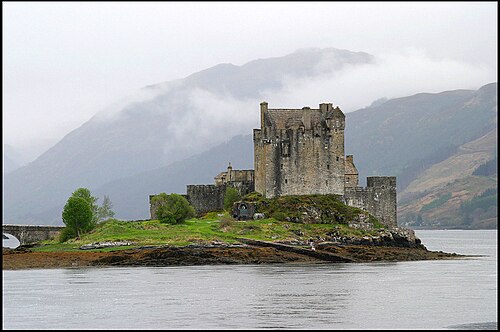
Scotland · Still standing
Duns Castle
Duns Castle is a historic house in Duns, Berwickshire, whose oldest element is a Norman keep or pele tower from around 1320. The building was expanded and remodelled into a Gothic-revival castle by James Gillespie Graham between 1818 and 1822 and remains a private estate with public parkland and lakes.
First raised
1816
Its prime
1822
Today
Still standing
As it stood in 1822
What Duns Castle looked like in its prime.
L-shaped ashlar stone castle with a dominant central entrance block flanked by square and round towers topped by crenellated parapets and short cylindrical turrets. Pale buff sandstone walls punctured by tall pointed-arched and mullioned windows and vertical window bays; a deep-set arched main doorway sits beneath a projecting entrance bay. The roofline is broken by battlements and low chimneys; the house stands behind a low stone boundary wall opening onto parkland and two small ornamental lakes.
Its story
The story of Duns Castle.
The Randolph Grant and a Contested 1320 Keep
The oldest part of Duns Castle is a keep or pele tower supposedly built in 1320 on lands that Robert the Bruce granted to Thomas Randolph, 1st Earl of Moray. Little else is known of its early history, and architectural historians have assessed the surviving portion claimed to date from 1320 as fifteenth- or sixteenth-century work instead; the original structure may have been razed by the English in the sixteenth century, possibly during the Rough Wooing of 1545, when the nearby town of Duns was burned to the ground. After Randolph's death in 1332 the manor appears to have passed to Patrick V, Earl of March, and following the Battle of Halidon Hill the next year, Edward III of England granted it to Thomas de Bradestan; it changed hands several times afterwards.
The First Bishops' War and the Hay Purchase, 1639-1698
During the First Bishops' War in 1639 the castle housed General Alexander Leslie, 1st Earl of Leven, whose army was quartered nearby and blocked the English from advancing into Scotland; neither side wanted to fight, and negotiations led to the Pacification of Berwick that ended the war. Sir James Cockburn of Cockburn bought the estate and burgh of Duns from Hume of Ayton in 1670, and in 1698 the manor was sold to William Hay of Drumelzier, son of John Hay, 1st Earl of Tweeddale; it has remained in that family ever since.
Gothic Remodelling, 1791-1822
The old keep was incorporated into an L-shaped house at an unknown date; the building was remodelled soon after the Hay purchase, then again between 1791 and 1798 by the architect John Baxter. Between 1818 and 1822 James Gillespie Graham transformed the house into its present Gothic-revival castle, with interior woodwork carved by the sculptor John Steell during his apprenticeship.
Listed Status and the Duns Castle Nature Reserve
Duns Castle and most of the structures on the property are Category A listed. The estate's public parkland includes two man-made lakes, the Hen Poo and the smaller Mill Dam, which together form the Duns Castle nature reserve, and the castle continues as a private estate available for weddings and corporate functions.
Step inside
6 places to explore in 1822.
The record describes 6 distinct spots at Duns Castle, including 1 interior: entrance hall with carved woodwork. Create your own photoreal reconstruction and explore every one, more scenes means more rooms, more angles, and more of the place to stand in.
Build Your Own Castle
Recreate Duns Castle with AI to explore it.
The artist rebuilds it as it stood in 1822, a photoreal reconstruction that belongs to you alone. Pay with coins, no subscription needed.
Recreate this castle →Defend this castle →Whose castle
Clans who held Duns Castle.
The families that held Duns Castle for a decade or more across its history, follow a name to its clan.
From the archive
Duns Castle on paper: the measured plan and period views.
The survey plan and photographs below are the ground truth this page's reconstructions are checked against, drawn and photographed while the castle was still a working garrison. Every image is public-domain or openly licensed, with its source named.
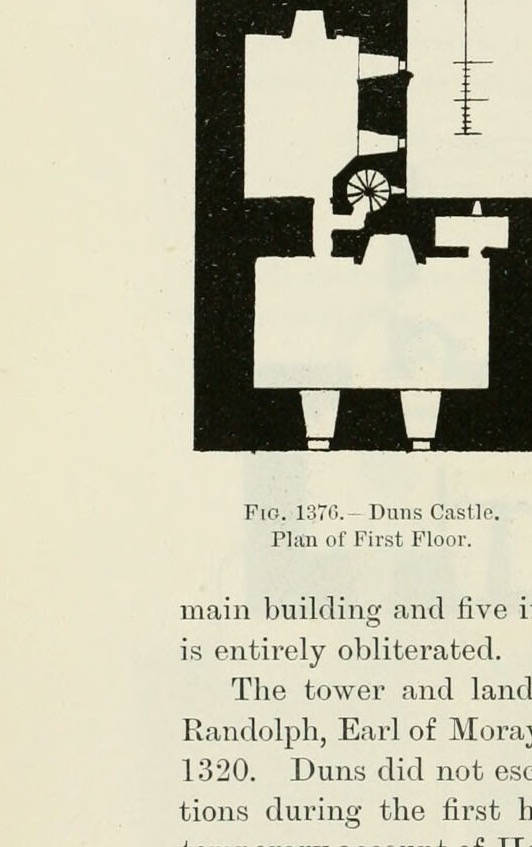
Fig. 1376. Duns Castle. Plan of First Floor.
1892 · MacGibbon & Ross, vol. 5 (1892)
Public domain