Clan Gow
also MacGowan, MacGown
Smiths of Clan Chattan, and the Prince of Scottish Fiddlers.
- Origin
- Perthshire, Scotland
- Motto
- Touch not the cat bot a glove
- Famous bearer
- Neil Gow, fiddler and composer
- Register
- Scottish clan
The Gow tartan and country

TartanGow tartanMicheletb · CC BY-SA 4.0

- Tartan: The checked cloth the family is known by.
What is the Gow clan tartan?
One Gow sett is recorded, and it is the swatch above. A sett is the block of coloured bands the cloth is built from, repeated in both directions; the whole plaid is that one square enlarged.
Almost no clan tartan is medieval. Highland dress was proscribed from 1746 until 1782, and when it returned it returned as ceremony rather than everyday cloth, so the surname-to-sett map was fixed after the break, by the Bannockburn weavers’ pattern books, the royal visit to Edinburgh in 1822, and the Vestiarium Scoticum of 1842. The Gows wore tartan long before any of that. What the registers fixed was which one. Nobody polices any of it. Wearing the Gow sett declares allegiance to the name, not descent from any particular line of it.
The seat of Clan Gow
Seat vacantChief
No one leads the Clan Gow community yet. When the movement opens, you can stand for its leadership, or help elect whoever does.
Current mission
No shared goal set yet. Once Clan Gow has leadership, it sets the public focus: a restoration, a gathering, a real-world project that helps its own.
The Gow clan is being rebuilt. Join the waiting list for the movement today, and you help decide who leads it and what it does.
Help rebuild the Gow clan →Motto
Touch not the cat bot a glove
What does the Gow name mean?
From the Gaelic 'gobha', armourer or blacksmith. The son of the smith is 'mac gobhann', anglicised as MacGowan.
The history of Clan Gow
Gobha: the man who held the fire
Gow is the Gaelic gobha, armourer or blacksmith, worn to one syllable by English-speaking clerks. Its fuller form is mac gobhann, son of the smith, which came into Scots as MacGowan and MacGown. Highland surnames are overwhelmingly patronymic, but Gaelic drew as freely on occupation. Gow does not say whose son a man was; it says what he did at the fire.
Naming a man by his craft stayed ordinary speech in Gaelic districts long after fixed surnames arrived: Donchadh Clachair, Duncan the stonemason, was an Auchindrain man in Argyll who died in 1937, and Ailean Cocaire was Alan the cook at Ormacleit Castle. Where such a byname stuck to a family that kept the trade, it hardened into a surname. The smith had a god of his own in the Irish cycles, Goibhniu of the Tuatha De Danann, whose name simply means smith.
The Crooked Smith on the North Inch, 1396
The oldest thing a Gow can point at is a fight, and it comes down as tradition rather than as record. At the trial by combat fought on the North Inch of Perth in 1396, the hero of the day is said to have been the Gobha Chrom, the Crooked Smith, small in stature, bandy-legged but fierce. The Gows are counted part of the Clan Chattan confederation and carry its motto, Touch not the cat bot a glove: a warning rather than a boast, the wildcat being safe to handle only while its claws are sheathed.
A confederation is how a trade name comes to sit inside a clan. A Scottish clan was never simply a body of blood relations; it grew around a territory and took in dependent families of other surnames who looked to the chief as protector, bound in by marriage, by tenancy on a laird's ground whether related or not, and by bonds of manrent. The smith belonged not as a cadet of the chiefly house but because he was indispensable.
What the fire asked of him
The medieval world counted blacksmithing among the seven mechanical arts, and before industry a village smithy stood in nearly every town, usually at its centre. Its material was wrought iron, very low in carbon and threaded with up to five per cent of glassy silicate slag. That slag made it tough and rust-resistant, and at welding heat melted into a glass that sealed the surface against oxidation. Its fibres also ran stronger along the length than across, so a smith forging a tool that would take stress had to know which way the metal lay.
He judged heat by colour: iron glows red, then orange, then yellow, then white, and bright yellow-orange is forging heat. Forge welding demanded the near-molten yellow-white and a reducing fire, great heat with almost no oxygen at its heart. Heavy work took two men, the smith tapping the spot with a small hammer while his striker, usually the apprentice, brought down the sledge on it.
Iron under the horse, and the armies that moved on it
Nailed iron shoes were not ancient. One of the earliest came out of the tomb of the Merovingian king Childeric I, who reigned from 458 to 481 or 482; Adrien Quinquin found it in 1653 and Jean-Jacques Chifflet wrote it up in 1655, noting that the iron fell apart as he cleaned it, though he drew it first. Then the trail goes cold: Carolingian capitularies specify in detail what a summoned horseman must bring and never mention shoes.
Shoeing was the smith's work until it split off. By the reign of Edward III farriers were a separate calling: a London ordinance of 1350 named them and capped their charges at what they took before the pestilence, placing the trade as independent by 1346 at the latest. The same statute made the court's shoer of horses, the ferrour des chivaux, an office sworn before judges. The army Edward took into France in the first phase of the Hundred Years' War travelled with a baggage train carrying its own forges, so the Sergeants-Farrier could shoe in the field.
The armourer's half of the word
Gobha means armourer as readily as blacksmith, and the difference mattered. A blacksmith worked the whole range of iron, weapons and tools and agricultural implements alongside gates, railings and cooking utensils, while an armourer specialised in personal armour, above all in plate.
The English records of the trade show what the word meant to the people who first used it as a name. In 1346 Edward III appointed Katherine Le Fevre to keep up the king's forge within the Tower and carry on its work at the wages pertaining to the office. Alice la Haubergere, whose byname is simply mail-maker, owned an armour shop in Cheapside in the early 1300s. Armourers remain the oldest trade in the British Army.
The weaver's son at Inver
Niel Gow was born on 22 March 1727 at Inver in Perthshire, two miles below Dunkeld on the Tay, the son of a weaver. He taught himself the fiddle by ear on a borrowed instrument from the age of nine, took his first paid engagement at thirteen, and by his late teens was the dance-fiddler of the upper Tay.
In 1745, at eighteen, the Duke of Atholl's household retained him as house fiddler, with a small house and croft at Inver and the brief of playing the Blair Castle entertainments. He held it for sixty-two consecutive years, to his death in 1807: the longest single house-musician's appointment in Scottish music. A ducal house took on a weaver's boy from a village down the river, and kept him for life.
He sat twice for Henry Raeburn, at sixty in 1787 and at sixty-three in 1790. The first, in the National Gallery of Scotland, shows him with the fiddle on his knee and the look of a working musician between tunes; the second, bow on string in mid-stroke, hangs at Blair Castle. They became the foundational image of the Scottish fiddler, and that image is no laird or soldier but a tradesman's son with an instrument.
Eighty-eight tunes that became a repertoire
He composed slowly, at roughly two pieces a year, and about eighty-eight survive. They reached print in the Collection of Strathspey Reels of 1784, published by his son Nathaniel, and in the volumes his sons brought out across the 1790s and 1800s: Loch Erichtside, The Athole Highlanders' March to Loch Katrine, and some seventy strathspeys, reels and jigs still in the ceilidh repertoire. Niel Gow's Lament for the Death of His Second Wife, written in 1805, remains the most quoted lament in Scottish fiddle music.
The publishing mattered as much as the composing. Nathaniel Gow ran a music-publishing house in Edinburgh that put his father's work into international circulation, so tunes made for dances in a Perthshire glen travelled anywhere a printed collection reached. Niel played his last engagement at an Atholl ball in October 1806, at seventy-nine, and died at Inver on 1 March 1807. He is buried at Little Dunkeld under a slab carved with a fiddle, and the country called him the Prince of Scottish Fiddlers.
The Nith, the tartan trade, and why so many carry it
The name holds other ground, with nothing on record joining it to Perthshire. In the south-west there was a Clan MacGowan, an Irish-Scots kindred documented in the 1300s around the River Nith in Dumfries and Galloway; Clanmacgowin of Stranith appears in the mid fourteenth century, when Donald Edzear obtained the captainship from David II. One tradition traces them to an Irish sept descended from Aonghuis Goighne, a legendary king of Ulster, principal people of Ulidia until English invasions in the twelfth century drove them into Donegal, Leitrim, Sligo, Cavan and Scotland. Another attaches the Kirkconnel McCowans, among whom Robert the Bruce raised a company in the upper Nith, to Owen the Bald, king of the Strathclyde Britons, killed in 1018.
Those strands cannot be neatly reconciled, and honest sources say so: Galloway drew no firm line between McOwen, McEwen, McCowan and McGowan, and spellings were not fixed until late. One warning is worth the money it saves. The sept lists clan societies use today largely date from the nineteenth century, when societies and tartan makers linked as many surnames as they could to a clan whether or not a connection existed: Miller was given to MacFarlane, Taylor to Cameron, Mason to Sinclair. Gow's own tie to Clan Chattan rests on the North Inch tradition rather than on a charter. Even so, the same fact governs Gow as governs Smith, the most common surname in the United States: every settlement needed a man at the forge, so the byname was coined wherever there was one.
Champions of the Gow name
The bearers whose lives are inseparable from this surname. Each has their own page, biography, achievements, geography, connection to the family.
Historic Places, Rebuilt
Explore the streets and seats the Gow name knew, rebuilt with AI as they stood in history.
Historic Places, Rebuilt · New
The old castle above the River Ness, the market cross and the seven-arched bridge, on the eve of Culloden.
Historic Places, Rebuilt · New
The great castle guarding the Great Glen, newly granted to the Grants of Freuchie, whole above Loch Ness.
The castles of the homeland
The great strongholds of the homeland, look one up, see what it looked like in its prime, and recreate it to explore.
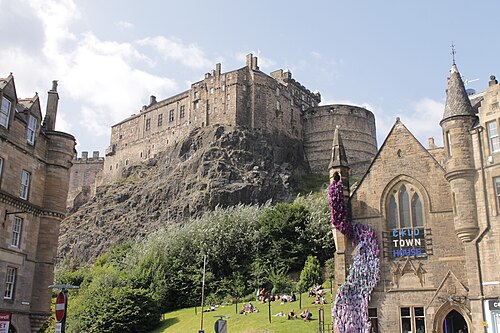 Edinburgh CastleRestored · prime 1520
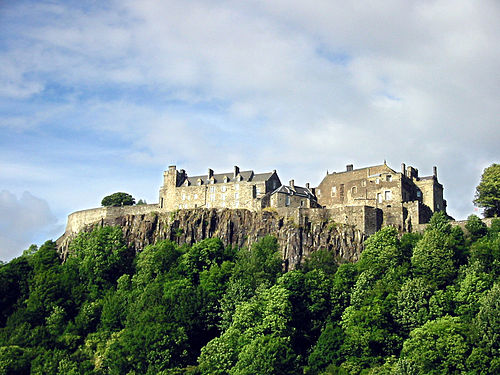 Stirling CastleRestored · prime 1542
 Glamis CastleStill standing · prime 1900
All castles in Scotland → · Strongest castles in Scotland → · Castles of Europe
Play As Your Clan
Hold a real castle against whatever you choose to send at it, take a ship out in her own service years, or stand at the shoulder of someone the record remembers. The chronicler sets the scene; the deeds are yours.
Notable bearers of the Gow name
- Neil Gow, fiddler and composer