Clan Rose
Of Kilravock, Norman roots in the Highlands.
- Origin
- The Highlands & Islands, Scotland
- Motto
- Constant and true
- Famous bearer
- Sir Hugh Rose, Field Marshal of the Indian Mutiny
- Register
- Scottish clan
The Rose arms, crest badge, tartan and country

Crest badgeClan member crest badge - Clan RoseCeltus · CC BY-SA 3.0 
TartanRose tartan (Vestiarium Scoticum - text)As printed in the Vestiarium Scoticum, 1842, a collection whose claimed medieval source was never produced, and which is now generally held to be a forgery. Families adopted its patterns anyway, and wear them still.TilmannR · CC0 
TartanRose tartan (Vestiarium Scoticum - plate)As printed in the Vestiarium Scoticum, 1842, a collection whose claimed medieval source was never produced, and which is now generally held to be a forgery. Families adopted its patterns anyway, and wear them still.TilmannR · CC0 
Coat of armsRose coat of armsDixy52 · CC BY-SA 3.0 
Coat of armsRose of Kilravock armsBorne by the Kilravock line, one branch of the name rather than all of it.Czar Brodie · CC BY-SA 3.0 
Clan plateRose (R. R. McIan)Robert Ronald McIan (1803-1856). · Public domain

.svg)
.svg)


.jpg)
- Crest badge: The chief's crest inside a belt and buckle: the badge a clansman wears to show whose following he is in.
- Tartan: The checked cloth the family is known by.
- Coat of arms: Granted to an individual and inherited down that one documented line. These are the arms of particular families of the name, not of everyone who shares the surname.
- Clan plate: Period portrait art of the clan, from the great 19th-century illustrated surveys.
What is the Rose clan tartan?
Two Rose setts are shown above: the thread count as written out in the Vestiarium Scoticum of 1842, and the colour plate printed in the Vestiarium Scoticum of 1842, which the book’s own thread count does not quite match. The Vestiarium claimed to copy a medieval manuscript that was never produced, and is now generally held to be a forgery; families adopted its patterns anyway, and wear them still. They are not rival claims to be picked between; they are different records, and different weaves, of the same family cloth. A sett is the block of coloured bands the cloth is built from, repeated in both directions; the whole plaid is that one square enlarged.
Almost no clan tartan is medieval. Highland dress was proscribed from 1746 until 1782, and when it returned it returned as ceremony rather than everyday cloth, so the surname-to-sett map was fixed after the break, by the Bannockburn weavers’ pattern books, the royal visit to Edinburgh in 1822, and the Vestiarium Scoticum of 1842. The Roses wore tartan long before any of that. What the registers fixed was which one. Nobody polices any of it. Wearing the Rose sett declares allegiance to the name, not descent from any particular line of it.
The seat of Clan Rose
Seat vacantChief
No one leads the Clan Rose community yet. When the movement opens, you can stand for its leadership, or help elect whoever does.
Current mission
No shared goal set yet. Once Clan Rose has leadership, it sets the public focus: a restoration, a gathering, a real-world project that helps its own.
The Rose clan is being rebuilt. Join the waiting list for the movement today, and you help decide who leads it and what it does.
Help rebuild the Rose clan →Motto
Constant and true
What does the Rose name mean?
Norman in origin, settled in Scotland after a brief sojourn in England. The chief branch is the Roses of Kilravock.
The history of Clan Rose
Ros near Caen, and three families who vanished from Dorset
The chiefs of Clan Rose were a Norman house, taking their name from Ros near Caen and travelling to England with the early Norman kings. The name is locative, not Gaelic, and the near-identical spelling of Clan Ross of the Highlands is a coincidence rather than a kinship: the two families have no connection. What the records do show is a trio moving together. The de Ros, the de Bissets and the de Boscos all first appear in Wiltshire and Dorset after the Conquest, all three drop out of those southern records at much the same time, and all three resurface in the middle of the thirteenth century around the Moray Firth. Gaelic Scotland absorbed them and gave them a Gaelic name, Clann Ròs, but the family that became a Highland clan began as southern incomers with a French toponym.
Kilravock came to the Roses through two marriages rather than a grant. Elizabeth de Bisset's family held the lands; she married Andrew de Bosco; their daughter Marie married Hugo de Ros in about 1290, whose own ground lay at Geddes. Hugo's father had already witnessed the foundation charter of Beauly Priory, erected by Sir John Bisset of Lovat, which fixes the three Norman houses still in each other's company at the north end of Scotland a generation before the marriage that joined two of them.
In 1293 John Balliol created the Roses Barons of Kilravock, and Hugh and Marie built their household on the banks of the River Nairn. It stayed the home of the chief of Clan Rose until 2012: one family, one seat, from the reign of Balliol to the reign of Elizabeth II.
Invernairn taken for the Bruce, and a charter chest burned at Elgin
The barony came from Balliol, but when the Wars of Scottish Independence split the north the Barons of Kilravock came down for independence. In 1306, the year of Robert the Bruce's crowning, Sir William Rose took Invernairn Castle for him, a fortress at the mouth of the Roses' own river, and the family's first appearance in the record as soldiers rather than as parties to a marriage contract.
The next century was won by marriage again. Hugh Rose, fourth of Kilravock, married Janet Chisholm, daughter of the constable of Urquhart Castle. The match brought the chief extensive lands and it altered his shield: a boar's head, the Chisholm device, was added to the Rose arms and stayed there.
Under Hugh Rose, fifth of Kilravock, the family lost the documents on which all of it rested. Every writ and charter the Roses held burned when Alexander Stewart, Earl of Buchan, the Wolf of Badenoch, fired Elgin Cathedral. The next baron, John Rose, spent his tenure rebuilding a paper title from three directions at once, taking fresh charters from James I of Scotland, from the Earl of Ross and from the Chisholm. A Highland family that could not produce its writs could be dispossessed at leisure, and John Rose's answer was to hold new ones from every power that could grant them.
A licence from the Lord of the Isles, 1460
In about 1460 the seventh Baron of Kilravock built the Tower of Kilravock, under a licence to build granted by the Lord of the Isles. The permission dates the tower precisely to the last generation in which the Lordship could grant anything at all. The Earls of Ross were forfeited in 1474, and Hugh Rose promptly took a charter under the Great Seal of Scotland in March 1475, the Roses stepping out from under a collapsing Gaelic lordship and holding of the crown instead, without losing a foot of ground.
The tower was tested almost immediately. Clan Mackintosh seized it in 1482, though they soon surrendered it back. The 15th-century keep still stands as the core of the house, wrapped in 17th-century additions, a building that records the family's fortunes in masonry, a defensive tower from the century they had to hold ground by force and a comfortable extension from the century they held it by charter.
The family's sharpest loss of that era was a bride. Hugh Rose of Kilravock expected to marry Muriel Calder, daughter and heiress of the chief of Clan Calder at Cawdor Castle. She was carried off by the Campbells, and Cawdor has belonged to the Campbells of Cawdor ever since. The Roses kept Kilravock; the neighbouring castle, and the Calder inheritance with it, went west to Argyll.
The Black Baron, the queen, and the Covenant
Hugh Rose of Kilravock, the tenth laird, went down in the family's memory as the Black Baron, a name that fits neither the man nor his record: he was an unusually accomplished head of house. Mary, Queen of Scots stayed at Kilravock and afterwards wrote to him as her trusted friend. Her son James VI came to the castle in his turn and, by the family's account, treated the baron like a father. For a house of three hundred fighting men, that is remarkable access to two successive monarchs.
The Roses had supported the Scottish Reformation early. That did not make them king's men when the king began legislating on worship: they turned against the religious politics of Charles I and signed the National Covenant.
In 1645 the thirteenth Baron of Kilravock led Clan Rose against James Graham, 1st Marquis of Montrose at the Battle of Auldearn. What followed shows how narrow the family's quarrel with Charles actually was. Once the Scottish army handed the king over to Parliament, the same baron raised and led a regiment of dragoons within the Duke of Hamilton's force, whose object was to rescue him. Covenanters against the king's bishops, and cavalry for the king's person, inside three years.
Two commanders in Nairn, 1745
When the Jacobite rising of 1715 broke out the Roses declared for the British government, and paid for it at once. Arthur Rose was killed leading a detachment of the clan in the seizure of Inverness back from the Jacobites of Clan Mackenzie. General Wade's report on the Highlands in 1724 put Rose strength at 300 men, a small following by Highland reckoning, and a reminder that the family's standing in Moray rested on charters, marriages and the tower, not on numbers it could put in the field.
The 1745 rising found the family in an impossible position, and Kilravock handled it with the manners of a house that had entertained Mary and James VI. The Baron of Kilravock received Charles Edward Stuart at the castle. At the same hour, Prince William, Duke of Cumberland was quartered in the Roses' own town house in Nairn. The Jacobite prince at the family's country seat, the government's commander in the family's burgh lodging, in the same days of the same rising.
Wade's three hundred were never all blood Roses. In the Highland system a sept was a family that followed another chief while keeping a different surname, bound by marriage, by tenancy or by a formal bond of manrent, and men who farmed Kilravock ground turned out under the Rose banner whether or not they descended from Hugo de Ros. That is one route by which a Norman name spread through Nairnshire and Strathnairn far beyond the chief's own descendants.
The alignment that survived the rising was the government one. After 1745 the chief's daughter, Anne Rose, married Sir Harry Munro, 7th Baronet, chief of Clan Munro, joining Kilravock to the other great Hanoverian house of the northern firthlands.
Strathnairn and Jhansi: the Berlin-born field marshal
Hugh Henry Rose was born at Berlin on 6 April 1801, son of Sir George Henry Rose, the British minister there, of the Highland Roses of Kilravock in Strathnairn. A diplomatic childhood on the continent left him fluent in German, French, Italian and Russian, an unusual equipment for a soldier, and he was commissioned an ensign in the 19th Foot in 1820.
His early service was all on the seams between armies. He was liaison officer to Ibrahim Pasha's Egyptian army in the Syrian campaign of 1840, was severely wounded at Boghaz and held the Order of the Bath at twenty-nine, then spent years as British military attaché to the Ottoman army at Beirut and Damascus. In the Crimea he was senior British commissioner at the headquarters of the French army, where his French and his diplomatic training carried the Anglo-French command interface through the twelve-month siege of Sebastopol; senior accounts of that coordination give him most of the credit. He came out of the war a major-general with the Poona division of the Bombay army.
The central Indian command of 1858 made his name, and the honours that followed it are where the Highland family reappears. Grand Cross of the Bath in 1858, Commander-in-Chief in India from 1860, Commander-in-Chief in Ireland from 1865 to 1870, and in 1866 a peerage he chose to style from both ends of his life: Baron Strathnairn, of the Rose glen in Nairnshire and of Jhansi. He was promoted Field Marshal in 1877 and died at Versailles on 16 October 1885, aged eighty-four, and lies at Christ Church, Mayfair.
Six origins that arrived at the same spelling
Rose is not one surname but several that arrived at the same spelling. It can be English, Scottish, French, Danish, German or Jewish in origin, and the Kilravock line, a Norman place name carried north out of Caen, is only one of those routes. The name has thrown off descendants of its own: Ruskin is Rose plus the diminutive -kin.
The German Roses ran to science across three generations: Gustav Rose (1798–1873) and his brother Heinrich Rose (1795–1864), both mineralogists, and Gustav's son Edmund Rose (1836–1914), a surgeon. In France the name belongs to Cyrille Rose (1830–1902), the clarinettist.
In England the surname is old and civic: a William Rose sat in parliament for Canterbury between 1411 and 1435. Later bearers run from Hugh James Rose (1795–1838), the theologian, to the philosopher Gillian Rose (1947–1995), the Scottish war correspondent William Kinnaird Rose (1845–1919), and Lauchlan Rose, whose lime juice put the name on bottles. It is now the 69th most common surname in the United Kingdom with 89,001 bearers, and it is the single most common surname in Luton, where 4,858 people carry it; it stands 20th in Greater London and 11th in the City of Leeds. Justin Rose, born 1980, carries it in modern golf.
The last Rose to sleep at Kilravock
Robert Burns came to Kilravock in September 1787 on his Highland tour, adding a poet to a guest list that already held a queen, a king and a Jacobite prince. By then the tower of 1460 had been the family's address for more than three centuries, and would remain so for two more.
The break came in 1984. Anna Elizabeth Guillemard Rose, 25th of Kilravock, of the twenty-fifth generation of the family to live in the castle, signed the estate over to a Christian trust. She stayed the chief, and she died at Nairn on 9 December 2012, aged 88, the last of the line to hold Kilravock as a home rather than as a title.
In June 2013 the Lord Lyon recognised David Rose, her nephew, as chief of Clan Rose and 26th Baron of Kilravock: the first chief since 1460 not to live in the castle. On 23 January 2025 the Kilravock Christian Trust completed the sale of the castle through the Galbraith Group, and that June documents from the castle's historical archive were auctioned by Lyon & Turnbull for more than £124,000. Six centuries after John Rose rode round the north assembling replacement charters for the ones the Wolf of Badenoch had burned, the family's paper went out of the house in lots.
Champions of the Rose name
The bearers whose lives are inseparable from this surname. Each has their own page, biography, achievements, geography, connection to the family.
Historic Places, Rebuilt
Explore the streets and seats the Rose name knew, rebuilt with AI as they stood in history.
Historic Places, Rebuilt · New
The old castle above the River Ness, the market cross and the seven-arched bridge, on the eve of Culloden.
Historic Places, Rebuilt · New
The great castle guarding the Great Glen, newly granted to the Grants of Freuchie, whole above Loch Ness.
Castles the Rose held
Strongholds this name held for a decade or more, look one up, or rebuild it to explore.
- Kilravock Castle
Seat of Clan Rose from c. 1460 until the castle was transferred to a charitable trust in 1984.
The castles of the homeland
The great strongholds of the homeland, look one up, see what it looked like in its prime, and recreate it to explore.
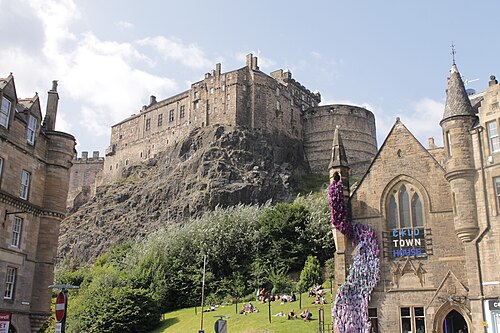 Edinburgh CastleRestored · prime 1520
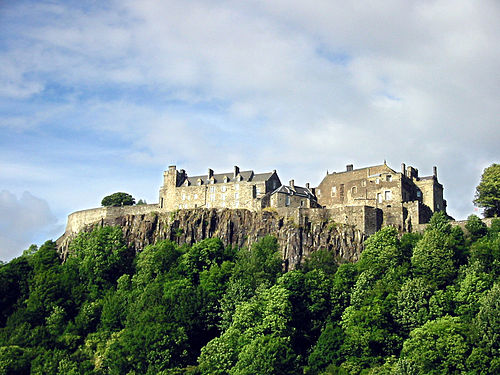 Stirling CastleRestored · prime 1542
 Glamis CastleStill standing · prime 1900
All castles in Scotland → · Strongest castles in Scotland → · Castles of Europe
Play As Your Clan
Hold a real castle against whatever you choose to send at it, take a ship out in her own service years, or stand at the shoulder of someone the record remembers. The chronicler sets the scene; the deeds are yours.
Notable bearers of the Rose name
- Sir Hugh Rose, Field Marshal of the Indian Mutiny
- Justin Rose (b. 1980), English-South African professional golfer; 2013 US Open Champion; Olympic gold medal at Rio 2016