Clan Mackintosh
also McIntosh
Captains of Clan Chattan, of Moy Hall.
- Origin
- The Highlands & Islands, Scotland
- Motto
- Touch not the cat bot a glove
- Famous bearer
- 'Colonel Anne' Mackintosh
- Register
- Scottish clan
The Mackintosh arms, crest badge, tartan and country

Crest badgeClan member crest badge - Clan MackintoshCC BY-SA 3.0 
TartanMackintosh Clan TartanChattan1 · CC BY-SA 4.0 
TartanClan MacKintosh modern tartan“Modern” colours: the deeper shades chemical dyes produced from the 1860s. The same pattern, not a newer one.Tsuzuki26 · CC BY-SA 3.0 
Coat of armsArms of Mackintosh of MackintoshBorne by the Mackintosh line, one branch of the name rather than all of it.MostEpic · CC BY-SA 4.0 
Coat of armsArms of Mackintosh of Mackintosh-Torcastle, Chief of Clan ChattanThe chief's own arms, borne by the head of the name alone; “of that Ilk” is the designation that says so.MostEpic · CC BY-SA 4.0


- Crest badge: The chief's crest inside a belt and buckle: the badge a clansman wears to show whose following he is in.
- Tartan: The checked cloth the family is known by.
- Coat of arms: Granted to an individual and inherited down that one documented line. These are the arms of particular families of the name, not of everyone who shares the surname.
What is the Mackintosh clan tartan?
Two Mackintosh setts are shown above, one of them the same pattern in “modern” colours, the deeper shades chemical dyes gave from the 1860s. They are not rival claims to be picked between; they are different records, and different weaves, of the same family cloth. A sett is the block of coloured bands the cloth is built from, repeated in both directions; the whole plaid is that one square enlarged.
Almost no clan tartan is medieval. Highland dress was proscribed from 1746 until 1782, and when it returned it returned as ceremony rather than everyday cloth, so the surname-to-sett map was fixed after the break, by the Bannockburn weavers’ pattern books, the royal visit to Edinburgh in 1822, and the Vestiarium Scoticum of 1842. The Mackintoshes wore tartan long before any of that. What the registers fixed was which one. Nobody polices any of it. Wearing the Mackintosh sett declares allegiance to the name, not descent from any particular line of it.
The seat of Clan Mackintosh
Seat vacantChief
No one leads the Clan Mackintosh community yet. When the movement opens, you can stand for its leadership, or help elect whoever does.
Current mission
No shared goal set yet. Once Clan Mackintosh has leadership, it sets the public focus: a restoration, a gathering, a real-world project that helps its own.
The Mackintosh clan is being rebuilt. Join the waiting list for the movement today, and you help decide who leads it and what it does.
Help rebuild the Mackintosh clan →Motto
Touch not the cat bot a glove
What does the Mackintosh name mean?
From the Gaelic 'Mac an Tòisich', son of the chief or thane.
The history of Clan Mackintosh
Mac an Toisich, and the first chiefs at Inverness
In Gaelic the clan is Clann Mhic an Tòisich and the surname is Mac an Tòisich, the son of the toisiche. The word means leader, and can equally be translated as chief, so this is a name taken not from a trade or a farm but from an office. The chiefs are styled the Mackintoshes of Mackintosh; a separate branch, the Mackintoshes of Torcastle, hold the chiefship of Clan Chattan, the confederation with which the name is bound up. The motto is as blunt as any in the Highlands: Touch not the cat bot a glove.
Highland Gaelic surnames are overwhelmingly patronymic, built with mac, son, for a man and nic, a contraction of nighean mhic, for a woman. Scottish Gaelic leaves no space after the Mac, unlike Irish, and when the name crossed into English and Scots record-keeping the clerks wrote down what they heard, which is why M'Intosh, McIntosh, MacIntosh, Macintosh and Mackintosh are all one name in different hands.
The seanachies of Clan Mackintosh claimed that the first chief was Shaw, second son of Duncan MacDuff, Earl of Fife, of the royal house of Dál Riata. In 1160 Shaw MacDuff went north with Malcolm IV on the expedition that suppressed a rebellion in Morayshire, and in about 1163 he was made constable of Inverness Castle and granted land in the Findhorn valley. The heartland became the lands of Petty, also the burial place of the chiefs. In 1179 he was succeeded by a son of the same name, confirmed in his patrimony by William the Lion.
In 1263, during the Scottish-Norwegian war, Ferquhar Mackintosh, the fifth chief, led his clansmen at Largs against the army of Haakon IV of Norway. He was killed in a duel two years later, in 1265, leaving an infant son, Angus, as his heir. It was that child, and the marriage arranged for him, who turned an Inverness kindred into the head of a confederation.
Eva of Clan Chattan and the captaincy that followed
Angus Mackintosh was brought up at the court of his uncle, the Lord of the Isles and chief of Clan Donald. Two traditions name that uncle differently: the clan's own history calls him Alexander of Islay, while the tradition attached to Tor Castle makes him Aonghus Óg of Islay, Angus's maternal uncle. In 1291 a splendid match was arranged. He married Eva, the only daughter of Dougal Dal, chief of Clan Chattan and reckoned its sixth chief in the Tor account, and the marriage brought him the lands of Glenloy and Loch Arkaig.
Angus and Eva lived on the Clan Chattan lands at Tor Castle, west of the River Lochy, before withdrawing to Rothiemurchus, the Tor tradition placing that withdrawal after a dispute with his kinsman of Islay. Tor carried an older Chattan association: MacCulloch's Romantic Lochaber, published in 1939, records the tradition that the castle was raised on an earlier site in the 11th century by Gillicattan Mor, an early chief of Clan Chattan.
From that marriage onward, Clan Chattan developed into something unusual in the Highlands: a confederation of independent clans, among them the Macphersons, the Davidsons and the Farquharsons, bound for mutual defence and led by the Mackintosh chiefs. The captaincy was a leadership of allies, not ownership of them, and each member clan kept its own chief, its own country and its own story.
The leadership did not go unchallenged. Clan Macpherson, itself part of the confederation, contested the Mackintosh claim to lead it, a long-running dispute that did not displace the Mackintosh chiefs; the Macpherson case belongs to their own page. The confederation also grew too large to manage as one body. In the 15th century Thomas, called Tomaidh Mòr, grandson of William Mackintosh, 8th chief, led his kinsmen across the Grampians from Badenoch to Glen Shee, where they became known as McComie, McColm and McComas, and at length as MacThomas, a clan in its own right.
During the Wars of Scottish Independence the sixth chief supported Robert the Bruce. The Comyns had their own feud with Bruce, and out of that came the quarrel between Comyn and Mackintosh that ran on into the next century.
Three hundred and fifty years with the Camerons
The defining feud of the name began over the ground Eva had brought into it. In 1337 the Battle of Drumlui was fought between Clan Mackintosh and Clan Cameron over land at Glenlui and Loch Arkaig. The Camerons were defeated, and the quarrel that started there ran for more than three hundred and fifty years. In 1370 the two met again at Invernahoven, the Camerons against the Chattan confederation of Mackintosh, Macpherson and Davidson, and in 1396 at the North Inch, in what the clan record calls one of the most important of the encounters between them.
Land, not temper, kept it alive. The Camerons seized Tor Castle, built a massive tower house and courtyard there and used it at first as a refuge from the MacDonalds of Keppoch; their position in the feud that followed was that the Mackintosh and Chattan lands about it had been abandoned. The castle was abandoned after the Jacobite period, in the middle of the 18th century.
The 15th century brought battle after battle. On Palm Sunday in 1429 the Camerons fought Clan Mackintosh and the Chattan confederation; in the same year the Mackintoshes were in the field at the Battle of Lochaber, fought between the forces of Alexander of Islay, Earl of Ross and 3rd Lord of the Isles, and the royalist army of James I. In 1441, at the instigation of Alexander, Lord of the Isles, the chief's son Duncan Mackintosh, later the eleventh chief, led a raid into Cameron country, and at Craig Cailloch the chief's second son, Lachlann Badenoch, was wounded and his fourth son, Gille Chaluim, killed. In 1454 the clan fought at Clachnaharry against Clan Munro under John Munro of Milntown.
The last acts came late. At Bun Garbhain in 1570 the Camerons, whose chief Domhnall Dubh Camshròn had died leaving an infant son at the head of the clan, met the Mackintoshes, and the chief of Mackintosh is believed to have been killed in the fighting by Donald Cameron, called Taillear Dubh na Tuaighe. In 1665 the two sides faced each other in a stand-off at the Fords of Arkaig that ended without a battle. The final round came at Mulroy, dated 1668 in the clan's own history and 4 August 1688 in the wider record of Scottish clanship, which calls it the last feud between clans to end in a battle outside a civil war.
Malcolm Beg, the Comyns and the feast at Rait
The ninth chief, Ferquhar, gave up the chiefship in favour of Malcolm Beg Mackintosh, 10th of Mackintosh, a son by the second marriage of William Mackintosh, whom the clan record numbers as the seventh chief. Malcolm proved a strong leader who greatly extended the influence of his clan, and he inherited the family's quarrel with Clan Comyn, whose origins lay in the Comyns' older feud with Robert the Bruce.
In 1424 the Comyns took possession by force of Mackintosh land at Meikle Geddes and Rait. Malcolm Beg struck back and put many of the Comyns to the sword, and the Comyns in turn invaded Moy and tried without success to drown the clan on their island in the loch. A feast of reconciliation was then held at the Comyn castle of Rait, and it was there that the Mackintoshes killed their Comyn hosts. The dates come down differently: Rait itself is recorded as passing from the de Raits to the Mackintoshes in 1442.
Rait Castle stands just south of Nairn and dates from the late 13th or early 14th century, a hall-house rather than a tower, originally the property of the Comyn family, who took the name de Rait from it. The walls are nearly six feet thick, the upper hall was reached by an external stair, and it was defended by a portcullis and a drawbar. It later passed from the Mackintoshes to the Campbells, and it is a scheduled monument today.
The most spectacular exploit of the century belongs to Ferquhard Mackintosh, later the twelfth chief. In 1491 he joined Alexander MacDonald of Lochalsh's insurrection, the Raid on Ross, and afterwards took Inverness Castle using what the record calls a sow. The king imprisoned him in Edinburgh Castle with Kenneth Mackenzie, 8th of Kintail. Two years later the pair escaped; Mackenzie was killed by the Laird of Buchanan, and Ferquhard was recaptured and held in Dunbar Castle for sixteen years, until his release after Flodden in 1513. Through those years the affairs of the clan were administered by William Mackintosh, eldest son of Lachlan Badenoch Mackintosh, second son of Malcolm Beg.
Fire and sword, a queen's band, and the houses round Inverness
Early in 1528 the whole name stood under sentence. James V issued a letter of fire and sword against Clan Mackintosh and the wider Clan Chattan and assigned its execution to the Earl of Moray. Its terms required the utter extermination and destruction of the clan and its supporters, leaving none alive except priests, women and children, who were to be shipped across the sea to the Low Countries. Behind it lay a quarrel in Badenoch between the Earl and Hector Mackintosh, the chief's illegitimate brother, over who should raise the dead chief's infant son. The Earl seized three hundred men of the clan; Hector gave himself up and swore fealty to the king, and the clan came through.
A generation later the chiefs were at the centre of the kingdom's politics rather than at the wrong end of it. Lachlan Mor Mackintosh, 16th of Mackintosh, brought his clan out for Mary, Queen of Scots, and shared in her victory over George Gordon, 4th Earl of Huntly, at Corrichie in 1562, where Huntly was killed. The 19th-century historian Alexander Mackintosh-Shaw judged it likely that Lachlan also fought at Langside in 1568, since five days before the battle he had subscribed a band for the Queen's defence at Hamilton. Of the 136 barons and chiefs who signed it, only two others were Highland chiefs.
In 1594 the Mackintoshes and the Chattan confederation were at Glenlivet on the side of the Earl of Argyll, with Clan Campbell, the Stewarts of Atholl and Clan Forbes, and were beaten by Huntly's force of Gordons, Comyns and Camerons. In the civil wars of the following century the clan fought for James Graham, 1st Marquis of Montrose, through the whole of his campaign for Charles I.
The 17th century rearranged the family's houses around Inverness. Culloden House, a mansion built around part of an older castle, was held by the Mackintoshes and sold to the Forbeses in 1626. Castle Stuart, granted to James Stewart, Earl of Moray, was for a time held by the Mackintoshes after they seized it in a dispute over ownership that was settled by agreement. Keppoch Castle, seat of the chiefs of MacDonald of Keppoch, was long disputed and passed to the Mackintoshes in 1690. Dalcross, on a ridge north-east of Inverness, was built in 1621 by the 6th Lord Lovat of the Frasers and passed soon afterwards to the Mackintoshes.
It was at Dalcross that Sir Lachlan Mackintosh of Mackintosh, the clan chief, died in 1704. He was buried in the family vault at Petty, where the chiefs had been laid since the beginning, and some four thousand people came, the cortege stretching four miles from Dalcross. It is the plainest measure of what the captaincy of Clan Chattan meant to the people who lived under it.
Colonel Anne and the Rout of Moy
In the rising of 1715 the Mackintoshes stood by the Stuart cause. Lachlan Mackintosh led eight hundred clansmen out under his cousin, William Mackintosh of Borlum, whose seat was Borlum Castle, later replaced by a mansion. They were beaten at Preston, and many of the clansmen taken there were transported to the Americas. The clan was still counted a force afterwards: General Wade's report on the Highlands in 1724 put the combined strength of the Mackintoshes and Farquharsons at eight hundred men.
In 1745 the chief's own commission divided the house. Angus Mackintosh, twenty-second chief, was a captain in the British army's Black Watch regiment. In his absence his wife, Lady Anne Mackintosh, raised men for Charles Edward Stuart, and command of them was given to MacGillivray of Dunmaglas. The regiment she had raised contributed to the Jacobite victory at Falkirk Muir in 1746, and she is remembered in the clan by the name the rising gave her, Colonel Anne.
On 16 February 1746 the prince came to Moy and was received by Lady Mackintosh; his bed is still at Moy Hall. Five hundred government troops moved on the house to take him. Five of Lady Mackintosh's retainers met them in the dark and convinced them that they had blundered into the entire Jacobite army, and the whole detachment fled. That is the Rout of Moy, five men against five hundred, and it kept Charles Edward Stuart out of custody. At Culloden the clan and its allies in the Chattan confederation suffered heavy losses.
Moy Hall and the chiefs who came after
The original seat of the chief was Moy Castle, on the island in Loch Moy, held from the 14th century and now reduced to slight remains. The first Moy Hall was built on the shore in about 1700 to replace it, and burned down accidentally in the time of Aeneas Mackintosh of Mackintosh (1770-1820), the twenty-third chief. A second hall went up in about 1800 and was remodelled in the 1870s, when the tower and two large wings were added; dry rot was found in it, and it was demolished in the 1950s and replaced by a much plainer house built in 1955-57. Moy Hall remains the seat of the chief.
Aeneas held Badenoch lands at Dunachton, Kincraig, Dalnavert and South Kinrara, and as an absentee landlord took little interest in them until the 1790s, when wartime demand made the timber of Glen Feshie and Inshriach worth cutting. The Glen Feshie Wood Company felled at Ruigh Aiteachain and floated the logs down the river to the Spey. In 1820 the chiefship passed to a second cousin, Alexander Macintosh, a merchant who owned a plantation in Jamaica; in 1827 to his brother Angus, a Canadian merchant who came back to the Highlands; and in 1833 to Angus's son Alexander, who held it until his death in 1861.
The line has not broken. John Lachlan Mackintosh of Mackintosh, born in 1969, succeeded as chief in 1995. He lives in Singapore, where he taught integrated humanities and history in the humanities faculty at Nanyang Girls' High School until he retired in 2022. A clan that took its name from an office, led the Clan Chattan confederation from Angus and Eva's marriage onward and once put five men in front of five hundred is now headed by a history teacher, which is a fitting enough turn.
Charles Rennie Mackintosh, and the name carried outward
The most widely known bearer of the name was a Glasgow architect. Charles Rennie Mackintosh was born at 70 Parson Street in the Townhead district of Glasgow on 7 June 1868, the fourth of eleven children of William McIntosh, a Glasgow police clerk, and Margaret Rennie. His father changed the family's spelling to Mackintosh in 1893 to distinguish them from the Glaswegian McIntoshes, and Charles took his mother's Rennie as a middle name. He attended Allan Glen's School from 1877 to 1883 and at sixteen, against his father's preference for the civil service, was apprenticed to the Glasgow architect John Hutchison.
In 1885 he began evening classes at the Glasgow School of Art under Francis Newbery, who had pivoted the school from craft training into the Aesthetic Movement and became his most important early patron. There he met Herbert MacNair, Margaret Macdonald and Frances Macdonald, and through the 1890s the four worked together as The Four, exhibiting at the Liège, Munich, Turin and Vienna salons where European Art Nouveau was taking shape. He won the Alexander Thomson Travelling Studentship in 1890, spent the summer of 1891 drawing the buildings of the Italian Renaissance, and having joined Honeyman and Keppie in 1889 became a partner in 1901.
The competition for the new Glasgow School of Art building on Renfrew Street was announced in 1896, and Mackintosh, then twenty-eight, drew the Honeyman and Keppie submission. It won. The first phase was finished in December 1899 and the west wing, with the great two-storey library, in 1909, and the result is the most-cited single building in the architectural literature of the twentieth century. Frank Lloyd Wright saw it in 1910 and called Mackintosh the most original architect in Europe.
Through the same decade came the Hill House at Helensburgh for the publisher Walter Blackie (1902 to 1904), the Willow Tearooms for Catherine Cranston in Sauchiehall Street (1903), and Scotland Street School (1903 to 1906). He designed the furniture, textiles, wallpaper, cutlery and metalwork of each building himself, often with his wife Margaret Macdonald, whom he married in 1900; he said later that Margaret had genius and he had only talent. He died in London on 10 December 1928.
The name travelled in other trades too. Charles Macintosh (1766-1843) was a Scottish inventor and Robert Macintosh (1897-1989) the first Nuffield Professor of Anaesthetics at Oxford; E. E. B. Mackintosh (1880-1957) directed the Science Museum in London. Lachlan McIntosh (1725-1806) became an American Revolutionary War general and political leader; Ewart Alan Mackintosh (1893-1917) was a lieutenant in the British army and a war poet of the First World War; Cameron Mackintosh, born in 1946, is a British theatrical producer.
The name also went where the emigrant ships went: Neil William George Macintosh (1906-1977), Australian doctor and anthropologist; William Priestly MacIntosh (1857-1930), Australian sculptor; Marjorie McIntosh, born in 1940, American historian of Great Britain; Kate Macintosh, born in 1937, Scottish architect; and Summer McIntosh, born in 2006, Canadian Olympic swimmer and world record holder.
Champions of the Mackintosh name
The bearers whose lives are inseparable from this surname. Each has their own page, biography, achievements, geography, connection to the family.
Historic Places, Rebuilt
Explore the streets and seats the Mackintosh name knew, rebuilt with AI as they stood in history.
Historic Places, Rebuilt · New
The old castle above the River Ness, the market cross and the seven-arched bridge, on the eve of Culloden.
Historic Places, Rebuilt · New
The great castle guarding the Great Glen, newly granted to the Grants of Freuchie, whole above Loch Ness.
Castles the Mackintosh held
Strongholds this name held for a decade or more, look one up, or rebuild it to explore.
- Tor Castle
Angus Mackintosh and Eva of Clan Chattan lived at Tor after their 1291 marriage, before withdrawing to Rothiemurchus.
- Rait Castle
Passed from the de Raits to the Mackintoshes in 1442.
- Dalcross Castle
Held by the Mackintoshes from soon after 1621; clan chief Sir Lachlan Mackintosh died here in 1704.
The castles of the homeland
The great strongholds of the homeland, look one up, see what it looked like in its prime, and recreate it to explore.
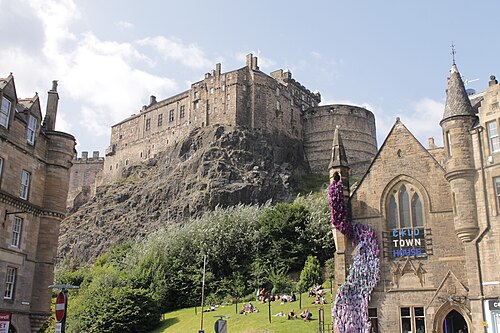 Edinburgh CastleRestored · prime 1520
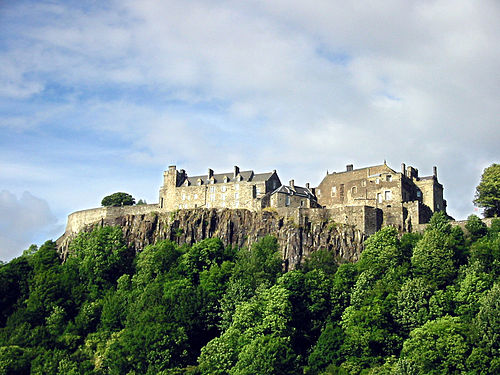 Stirling CastleRestored · prime 1542
 Glamis CastleStill standing · prime 1900
All castles in Scotland → · Strongest castles in Scotland → · Castles of Europe
Play As Your Clan
Hold a real castle against whatever you choose to send at it, take a ship out in her own service years, or stand at the shoulder of someone the record remembers. The chronicler sets the scene; the deeds are yours.
Notable bearers of the Mackintosh name
- 'Colonel Anne' Mackintosh