Clan Cameron
Sons of Lochiel, fierce in the Stewart cause.
- Origin
- The Highlands & Islands, Scotland
- Motto
- Aonaibh ri chéile
- Famous bearer
- Donald Cameron, 'the Gentle Lochiel'
- Register
- Scottish clan
The Cameron arms, crest badge, tartan and country

Crest badgeCameron crest badgeDe Sousa Pinto Jérôme · CC BY-SA 4.0 
Crest badgeClan member crest badge - Clan CameronCeltus · CC BY-SA 3.0 
TartanCameron tartanMicheletb · CC BY-SA 4.0 
TartanCameron hunting tartanThe hunting sett: the same pattern in muted browns and greens, worn in the field where the brighter colours would show.Micheletb · CC BY-SA 4.0 
Coat of armsCameron of Balledgarno armsBorne by the Balledgarno line, one branch of the name rather than all of it.Newm30 · CC BY-SA 4.0 
Clan plateCameron (R. R. McIan)Robert Ronald McIan (1803-1856). · Public domain


.jpg)
- Crest badge: The chief's crest inside a belt and buckle: the badge a clansman wears to show whose following he is in.
- Tartan: The checked cloth the family is known by.
- Coat of arms: Granted to an individual and inherited down that one documented line. These are the arms of particular families of the name, not of everyone who shares the surname.
- Clan plate: Period portrait art of the clan, from the great 19th-century illustrated surveys.
What is the Cameron clan tartan?
Two Cameron setts are shown above, one of them the hunting sett, in muted browns and greens. They are not rival claims to be picked between; they are different records, and different weaves, of the same family cloth. A sett is the block of coloured bands the cloth is built from, repeated in both directions; the whole plaid is that one square enlarged.
Almost no clan tartan is medieval. Highland dress was proscribed from 1746 until 1782, and when it returned it returned as ceremony rather than everyday cloth, so the surname-to-sett map was fixed after the break, by the Bannockburn weavers’ pattern books, the royal visit to Edinburgh in 1822, and the Vestiarium Scoticum of 1842. The Camerons wore tartan long before any of that. What the registers fixed was which one. Nobody polices any of it. Wearing the Cameron sett declares allegiance to the name, not descent from any particular line of it.
The seat of Clan Cameron
Seat vacantChief
No one leads the Clan Cameron community yet. When the movement opens, you can stand for its leadership, or help elect whoever does.
Current mission
No shared goal set yet. Once Clan Cameron has leadership, it sets the public focus: a restoration, a gathering, a real-world project that helps its own.
The Cameron clan is being rebuilt. Join the waiting list for the movement today, and you help decide who leads it and what it does.
Help rebuild the Cameron clan →Motto
Aonaibh ri chéile
“Let us unite”
What does the Cameron name mean?
From the Gaelic 'cam shròn', 'crooked nose', traditionally describing an ancestor.
The history of Clan Cameron
The crooked nose that renamed a kindred
Clan Cameron offers more than one beginning, and one of them is frankly fanciful: descent from Banquo, Thane of Lochaber. The soberer account is a nickname. Scottish Gaelic cam-shròn, "crooked nose", belongs to the same family of epithets as Caimbeul, "crooked mouth", behind Campbell, and such by-names were ordinary currency in Highland Gaelic culture. A chief acquired one; his descendants carried it. A competing line of descent, corroborated by Moncreiffe of that Ilk, takes the chiefly family instead from the medieval Camerons or Cambruns of Ballegarno, whose name came from Cameron in Fife (cam-brun, "crooked hill") and behind them from the Scoto-Pictish Mormaers of Fife.
Whichever origin holds, the clan as a clan begins with Donald Dubh Cameron, who flourished around 1410 and is the first chief whose succession can be traced. Around the beginning of the fifteenth century the Camerons established themselves at the western end of the Great Glen in Lochaber, likely through Donald Dubh's marriage to an heiress of the Mael-anfhaidh kindred (a name Moncreiffe rendered "children of He who was Dedicated to the Storm") whom the Collins Scottish Clan Encyclopedia identifies as a MacMartin of Letterfinlay. As the Mael-anfhaidh chiefship passed into Cameron hands, the local families of MacMartin of Letterfinlay, MacGillonie of Strone and MacSorley of Glen Nevis were absorbed into the incoming clan, and the early chiefs were sometimes styled MacGillonay before settling into Mac Dhomhnuill Dubh after Donald Dubh himself. Studies of Manuscript 1467 have since clarified how those kindreds stood to one another.
What held them together was a confederation of tribes taking their captain's name as the name of the whole, and it was not until a charter of 1472 that the clan was first officially recognised by that name. The five arrows of the second Cameron crest stand for the five branches banded under the Camerons of Lochiel (the MacMartins or Camerons of Letterfinlay, the Camerons of Glen Nevis, the Camerons of Callart and Lundavra, the Camerons of Erracht and the Camerons of Clunes) and the motto Aonaibh ri chéile, "let us unite", says plainly what the arrangement was for. The Oxford Companion to Scottish History puts the working reality neatly: the MacMartins of Letterfinlay saw themselves as distinct within their own lands, but as Camerons the moment they operated outside Lochaber.
Three hundred years of quarrel with the Mackintoshes
Tradition sends the clan south for the Wars of Scottish Independence: John de Cameron, VII Chief, at Bannockburn in 1314, and John de Cameron, VIII Chief, at Halidon Hill in 1333. But the war that defined Lochaber was fought at home. A dispute with Clan Mackintosh and the wider Clan Chattan confederation over the lands of Glenlui and Loch Arkaig opened a feud that ran, on and off, for roughly three centuries. The first recorded battle was Drumlui in 1337; the second, Invernahoven in 1370. The quarrel even split a family down the middle: the Macphails are found in both clans, some having migrated east with Clan Chattan while the rest stayed and became Camerons.
In 1396 the two sides tried to settle it by rule. The Battle of the North Inch was a trial by combat between thirty selected warriors a side, Cameron against the Chattan confederation of Clan Mackintosh. It settled nothing. The Battle of Palm Sunday followed in 1429, fought at the instigation of the Lord of the Isles, and the Battle of Craig Cailloc in 1441. In 1480 Alan MacDonald Dubh, XII Chief, was killed in battle against the Mackintoshes and the MacDonalds of Keppoch.
The most vivid episode came in 1570 at Bun Garbhain. Donald Dubh Cameron, XV Chief, had died leaving an infant son, Allan, at the head of the clan; in the fighting the chief of Mackintosh is believed to have been killed by Donald Cameron, called Taillear Dubh na Tuaighe, a son of the XIV Chief, wielding a Lochaber axe. The end, when it came, was bloodless. The stand-off at the Fords of Arkaig in 1665 saw the Camerons and the Chattan confederation face each other and go home, closing a feud of three hundred and twenty-eight years without a blow struck.
Harlaw, and the long shadow of the Lords of the Isles
The Camerons spent the fifteenth century inside the orbit of Clan Donald, and paid for it in both directions. In 1411 they fought at Harlaw near Inverurie in Aberdeenshire for Domhnall of Islay, Lord of the Isles, who claimed the earldom of Ross against Robert Stewart, Duke of Albany. In 1429 they were at the Battle of Lochaber, where Alexander of Islay, Earl of Ross and 3rd Lord of the Isles, met the royalist army of King James I.
Two years later the loyalty had reversed. At the Battle of Inverlochy in 1431 the Camerons stood against Clan Donald, whose chief Alexander had been imprisoned by the king and whose men were led by his nephew Donald Balloch MacDonald; Donald Balloch beat the royalist army under the Earl of Mar close by the castle walls. In 1439 the clan fought Clan Maclean at Corpach.
Service to the Lords of the Isles also brought office. In 1472 (the same year the clan won its charter of recognition) Alan MacDonald Dubh, XII Chief, was made constable of Strome Castle on behalf of the Clan MacDonald of Lochalsh. In 1491 the Camerons took part in the Raid on Ross.
Inverlochy, the castle at the throat of the Great Glen
Inverlochy Castle was built about 1270 to 1280 by John "the Black" Comyn, Lord of Badenoch and Lochaber and chief of Clan Comyn, on the south bank of the River Lochy at the entrance to the Great Glen. It is a castle of enceinte: a quadrangular courtyard thirty-one metres by twenty-seven, ringed by a curtain wall up to 2.7 metres thick and 7.6 metres high, with a round tower at each corner. The largest of those, the Comyn Tower, served as the donjon. Whoever held it held the road between the western sea-lochs and the eastern Highlands.
The Camerons held it. After the 1431 battle fought beside its walls, where Alexander MacDonald's clansmen broke James I's larger army, the castle came under the control of Clan Cameron until 1501. In 1505 the partially ruined fortress was granted away to Alexander Gordon, 3rd Earl of Huntly, whom James IV charged with repairing it for use as a royal garrison, the Crown taking back the gate of the Great Glen from the clans who had been using it.
Inverlochy saw one more battle that mattered to the clan. In 1645, during the Civil War, the Camerons fought there on the side of the Royalist Scots and Irish who defeated the Covenanters of Clan Campbell. In the nineteenth century the estate was bought by James Scarlett, 1st Baron Abinger, who built a Scottish baronial mansion to the north-west, now the Inverlochy Castle Hotel, and restored loops and battlements on the old castle before Queen Victoria's visit in 1873. The medieval fabric has remained largely unaltered since the reign of Alexander III, and is a scheduled monument in the care of Historic Environment Scotland.
Tor Castle on the ridge above the Lochy
Tor Castle came to the Camerons the hard way. By tradition recorded in MacCulloch's Romantic Lochaber of 1939, it was raised on an earlier site in the eleventh century by Gillicattan Mor, an early chief of Clan Chattan. In 1291 Angus Mackintosh, chief of Clan Mackintosh, married Eva, only daughter of Dougal Dal, 6th chief of Clan Chattan, a match that carried with it the lands of Glen Loy and Loch Arkaig. The couple lived at Tor before withdrawing to Rothiemurchus after a dispute with Aonghus Óg of Islay, chief of Clan Donald and Angus's own maternal uncle.
MacCulloch has the lands around Tor then given by John, 1st Lord of the Isles, to Alastair Carrach, who lived from 1380 to 1440 and fathered the Keppoch branch of the MacDonalds; he built an early keep there. Later, with Clan Cameron and Clan Chattan now loyal to the King rather than to the Lord of the Isles, the castle was seized by the Camerons, who put up a massive tower house and courtyard and at first used it as a refuge from the raids of the MacDonalds of Keppoch. A feud with Mackintosh and Chattan followed, the Camerons holding that the lands and castle had been abandoned. Ewen Cameron, XIII Chief, rebuilt Tor in the early fifteenth century; it was left empty, though not pulled down, by his great-great-great-grandson Sir Ewen Dubh Cameron of Lochiel, XVII Chief.
Abandoned for good after the Jacobite period in the mid-eighteenth century, what stands on the rocky ridge west of the River Lochy is a very ruinous tower house, its walls up to four metres high and averaging over two metres thick, with fragments of a probable barmkin and the platforms of the earlier castle still traceable, the whole cut off from the rest of the ridge by a deep, now water-filled ditch. The Camerons of Lochiel also kept a castle on Eilean nan Craobh, Tree Island, through the sixteenth and seventeenth centuries.
Flodden, the Battle of the Shirts, and the scaffold at Elgin
The sixteenth century opened badly and closed profitably. During Dubh's Rebellion in 1505 the Battle of Achnashellach is said to have been fought between the Camerons and the clans Munro and Mackay. Eight years later, in the Anglo-Scottish wars, the chief Ewen Cameron and a portion of his men survived the field of Flodden in 1513.
In 1544 a feud over the disputed chiefship of the Clan MacDonald of Clanranald produced the Battle of the Shirts, where the Camerons supplied the archers for the MacDonalds against the Clan Fraser of Lovat. The Frasers were destroyed; legend has it that five Frasers and eight MacDonalds survived. The Camerons followed up with successful raids on the lands of Clan Grant and Clan Fraser, ground that was rich and fertile by the standards of Lochaber men.
It cost them their chief. Ewen Cameron's part in that conflict and in what followed put him out of favour with the Earl of Huntly, chief of Clan Gordon and Lieutenant of the North, and he was executed at Elgin in 1547. Half a century later the clan was fighting for the same house: in 1594 Allan Cameron, XVI Chief, led the Camerons at the Battle of Glenlivet in support of George Gordon, 1st Marquess of Huntly, who defeated the forces of Archibald Campbell, 7th Earl of Argyll.
Sir Ewen Dubh and a more convenient house
Sir Ewen Dubh Cameron of Lochiel, XVII Chief, is the figure who carries the clan through the wars of the seventeenth century. The Camerons opposed Oliver Cromwell after the Royalist victory at Inverlochy in 1645 and played a leading role in Glencairn's rising of 1651 to 1654. In 1668 Sir Ewen was answerable for keeping the peace between his men and Clan Mackintosh; while he was away in London a feud broke out between Clan MacDonald and the Mackintoshes, and with no chief present to hold them the Camerons made their contribution to the MacDonald victory over the Mackintoshes and Mackenzies at the Battle of Mulroy, east of Spean Bridge.
Sir Ewen wanted, in his own phrase, a more convenient house than Tor, and around 1655 he built Achnacarry, the seat that gives the clan its address to this day. From it the Camerons went out as Jacobites three times in two years: to Killiecrankie in July 1689, to Dunkeld that August, and to Cromdale in May 1690.
Killiecrankie was also the making of the next generation. John Cameron of Lochiel, the XVIII Chief remembered as the Old Lochiel, fought there for King James VII. He took the clan out again for the rising of 1715 at Sheriffmuir and for the attempt of 1719 at Glen Shiel, after which he hid for a time in the Highlands before making his way back to exile in France. General Wade's report on the Highlands in 1724 put Cameron strength at eight hundred men.
What Lochiel agreed to at Borrodale
Donald Cameron of Lochiel was born at Achnacarry around 1700, eldest son of the Old Lochiel and Isabel Campbell of Lochnell. He was raised on the Cameron policy of education and prudence, sent for two years to study with the Catholic Camerons in France, and on his father's effective forfeiture and exile took up the management of the Lochaber estate around 1719. The name he is known by was earned at home, not in the field: he abolished the heritable jurisdiction of pit-and-gallows on the estate, prohibited the cattle reiving that had been part of Cameron tradition, founded the Achnacarry school of estate management, and carried a cultivated, French-educated manner. Highland memory settled on him as the Gentle Lochiel.
Charles Edward Stuart landed at Loch nan Uamh on the twenty-fifth of July 1745 with seven companions, no army, and no certainty that a single Highland chief would join him. The men who had been willing to rise in 1715 and 1719 were older now, settled, and unwilling to commit. Lochiel rode to meet the Prince at Borrodale, and by the contemporary account of his own brother John Cameron, the chaplain, that conversation was the hinge of the whole rising. Lochiel argued for caution and delay; the Prince argued that if Lochiel would not come out, the cause was finished before it had begun.
Lochiel agreed, on terms. He committed himself only after he was provided security for his estate should the rising prove abortive: if it failed, the Stuart court would compensate the Cameron lands. The Prince gave his word. On the nineteenth of August 1745 Lochiel brought seven hundred Cameron men of Lochaber to Glenfinnan, the largest single contingent in the small army that marched east, and the other western chiefs followed on the strength of the Cameron commitment. That is what the surname means to modern Highland memory: not a nose, but a decision.
Carried off Culloden on a plaid, buried in Flanders
The Cameron regiment marched the whole campaign. Lochiel commanded it at Prestonpans on the twenty-first of September 1745, at the storming of Carlisle, at Clifton Moor in Westmorland on the eighteenth of December, at the relief of Stirling and the Battle of Falkirk in January 1746, and at Culloden Moor on the sixteenth of April 1746, where his men held the centre of the Jacobite line in the charge that broke under Hanoverian artillery and grape-shot.
A musket-ball struck him in both ankles. He was carried from the field on a Highland plaid and got away with the help of a MacBain of Clan Chattan, the confederation his ancestors had fought for three centuries. Through the summer of 1746 his own tenantry hid him in the Cameron country of Lochaber, and on the twentieth of September he sailed from Loch nan Uamh aboard the French frigate L'Heureux with Prince Charles. Behind him, Cumberland's troops burnt Achnacarry to the ground and the Lochaber estate was forfeited to the Crown.
In French service he was given command of the Régiment d'Albanie at Saint-Omer and was made a Brigadier of the Armies of France by Louis XV. He died at the regimental garrison at Bergues in French Flanders on the twenty-sixth of October 1748, of typhoid fever contracted at the camp; his son John was given the colonelcy of the regiment in succession. The compensation he had bargained for at Borrodale never came.
Sergeant Mòr, and the Camerons who would not stop
Not everyone accepted that Culloden had ended it. John Du Cameron, a clansman who had served as a non-commissioned officer in the French Royal Army and fought the rising as a Jacobite, stayed out afterwards and kept fighting, past the Act of Indemnity that was meant to close the account. Known as an Sergeant Mòr, hunted as an outlaw, he lived by cattle raiding and by selling protection against theft to the people whose cattle he might otherwise have taken. He was captured in 1753 and executed, and he remains a folk hero in Lochaber. Dr Archibald Cameron of Lochiel, the chief's own brother and a leading Jacobite, was taken and executed the same year.
The rising had drawn in the whole kindred, women included. Jean Cameron of Glendessary, remembered as Bonnie Jean, was a cousin of Lochiel and a popular Jacobite heroine said to have been a mistress of the Prince; led by her, the Camerons of Glendessary put three hundred men into Lochiel's command at Glenfinnan. The MacMartins, that oldest of the absorbed septs, were out with Lochiel's regiment and are counted among his most loyal and valuable followers, the Letterfinlay men behaving, exactly as the old rule had it, as Camerons the moment they left their own glen.
Clunes, 1801, and the emptying of Lochaber
The forfeited Cameron land reverted to the government and stayed there for a generation. In 1784 it was returned to Donald Cameron, 22nd of Lochiel, grandson of the Gentle Lochiel, who was only fifteen at the time, and the estate was run by a trust until he succeeded to his inheritance in 1819. To get his ancestors' lands back he repaid a huge fine to the British government. In 1802 he built a new mansion house at Achnacarry, near the line of trees the Gentle Lochiel had planted on the day he heard of Bonnie Prince Charlie's landing.
The clearing of the estate began the year before that house. The first clearance took place at Clunes in 1801, and major emigrations, notably to Canada, began in 1802; the removals continued under Donald Cameron's own name after he took the estate over from the trust in 1819. The chief who had bought back the land cleared the people off it.
Some traditional Cameron ground on the eastern side of Loch Lochy was not returned in 1784. Control had passed in 1770 to the Duke of Gordon, who raised the rents and cleared the land with the help of his factor, the Reverend John Anderson, and the Gordon clearances from the Lochaber estate ran on until 1806. A great many Camerons around the world trace their origins to people removed in those years. The Clan Cameron Museum at Achnacarry, founded in a nearby cottage by Sir Donald Cameron of Lochiel in 1989, keeps an account of the clearances alongside the clan's older history.
The 79th, Quatre Bras, and the Ladies from Hell
The same country that had been cleared went on supplying soldiers. In 1793 Sir Alan Cameron of Erracht, who lived from 1753 to 1828, raised the 79th Regiment of Foot, the Queen's Own Cameron Highlanders, from among the members of the clan, turning a clan levy into a line regiment of the British army within half a century of Culloden.
Colonel John Cameron of Fassiefern, 1771 to 1815, was the son of Ewen Cameron, 1st Baronet, and grandson of the John Cameron of Fassiefern who was a brother of the Gentle Lochiel. He fought with distinction across widespread theatres of the Revolutionary and Napoleonic wars from 1793 onwards, and was killed at the head of the 92nd Regiment at Quatre Bras, two days before Waterloo; a commemorative obelisk at Fort William honours him, and his family became baronets on the strength of his martial success. Donald Cameron of Lochiel, XXIII Chief, fought at Waterloo itself with the Grenadier Guards and retired in 1832, marrying that same year Lady Vere Hobart, daughter of the Hon. George Vere Hobart and sister of the 6th Earl of Buckinghamshire, herself descended from the Camerons of Glendessary through her mother Janet Maclean, daughter of Alexander Maclean of Coll and Catherine Cameron, and so a kinswoman of Bonnie Jean.
In the First World War Sir Donald Walter Cameron of Lochiel, XXV Chief, raised four additional battalions of the Queen's Own Cameron Highlanders, and was appointed a Knight of the Thistle in 1934. In the Second the Cameron Highlanders became the last battalions to wear the kilt in battle, the order to give it up having been deliberately delayed by commanding officers (nobody wanted to be the one who surrendered it) until a surprise German attack, successfully repelled, settled the matter. The nickname the Germans left them with was the Ladies from Hell. Sir Donald Hamish Cameron of Lochiel, XXVI Chief, served with the regiment, later became its Honorary Colonel, and was made a Knight of the Thistle in 1973.
Camerons at Tsarskoye Selo and in the Hongkong Bank
Charles Cameron, 1745 to 1812, was a noted architect in Imperial Russia and a favourite of Catherine the Great; his works include Tsarskoye Selo and the Pavlovsk Palace. He claimed to be of the family of Cameron of Lochiel, though he was probably of another junior Cameron branch: a claim worth making, in a court where a Highland pedigree was currency.
A later line of the name went into money rather than stone. Sir Ewen Cameron was London chairman of the Hongkong and Shanghai Bank and played a key part in arranging loans from the Rothschild family to Japan during the Russo-Japanese War. Ewen Allan Cameron was a partner of the stockbrokers Panmure Gordon and served on the boards of the Corporation of Foreign Bondholders and of the Committee for Chinese Bondholders, set up by the Bank of England governor Sir Montagu Norman in November 1935. Ian Donald Cameron, 1932 to 2010, was senior partner of Panmure Gordon in his turn and a director of the estate agent John D. Wood.
Ian's son David Cameron, a descendant through a cadet branch of the 13th Lochiel, served as United Kingdom prime minister and later as foreign secretary, and was raised to the peerage as a life baron by King Charles III in 2023, holding no hereditary title. It is a long way from a chief hidden by his own tenantry in the Cameron country of Lochaber, but the line runs back to the same chiefly house of Lochiel.
Champions of the Cameron name
The bearers whose lives are inseparable from this surname. Each has their own page, biography, achievements, geography, connection to the family.
Castles the Cameron held
Strongholds this name held for a decade or more, look one up, or rebuild it to explore.
- Inverlochy Castle
Under the control of Clan Cameron until 1501.
- Tor Castle
Seized by Clan Cameron, who built the massive tower house and courtyard.
The castles of the homeland
The great strongholds of the homeland, look one up, see what it looked like in its prime, and recreate it to explore.
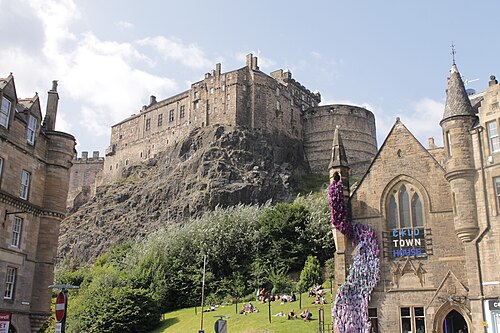 Edinburgh CastleRestored · prime 1520
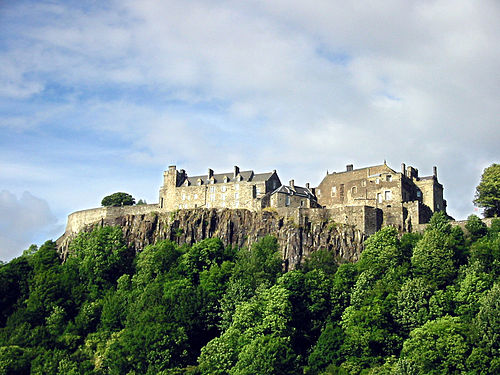 Stirling CastleRestored · prime 1542
 Glamis CastleStill standing · prime 1900
All castles in Scotland → · Strongest castles in Scotland → · Castles of Europe
Play As Your Clan
Hold a real castle against whatever you choose to send at it, take a ship out in her own service years, or stand at the shoulder of someone the record remembers. The chronicler sets the scene; the deeds are yours.
Notable bearers of the Cameron name
- Donald Cameron, 'the Gentle Lochiel'