Clan MacDonald
also McDonald, MacDonell, MacDonnell, Donald
The largest of the Highland clans, Lords of the Isles.
- Origin
- The Highlands & Islands, Scotland
- Motto
- Per mare per terras
- Famous bearer
- Flora MacDonald
- Register
- Scottish clan
Ranked of all time
The 10 Most Powerful Scottish Clans of All Time
Ranked of all time
The 10 Oldest Clans in Scotland
The MacDonald arms, crest badge, tartan and country

Crest badgeClan MacDonald crest badgeDi · CC BY-SA 4.0 
Crest badgeClan member crest badge - Clan MacdonaldCeltus · CC BY-SA 3.0 
TartanMacDonald tartanMicheletb · CC BY-SA 4.0 
TartanMacDonald Dress tartanThe dress sett: the same pattern rewoven with a white ground, worn for dancing and evening wear.Micheletb · CC BY-SA 4.0 
Coat of armsArms of Macdonald of SleatBorne by the Sleat line, one branch of the name rather than all of it.Celtus · CC BY-SA 3.0 
Coat of armsArms of MacDonald of KeppochBorne by the Keppoch line, one branch of the name rather than all of it.Celtus · CC BY-SA 3.0


- Crest badge: The chief's crest inside a belt and buckle: the badge a clansman wears to show whose following he is in.
- Tartan: The checked cloth the family is known by.
- Coat of arms: Granted to an individual and inherited down that one documented line. These are the arms of particular families of the name, not of everyone who shares the surname.
What is the MacDonald clan tartan?
Two MacDonald setts are shown above, one of them the dress sett, rewoven on a lighter ground. They are not rival claims to be picked between; they are different records, and different weaves, of the same family cloth. A sett is the block of coloured bands the cloth is built from, repeated in both directions; the whole plaid is that one square enlarged.
Almost no clan tartan is medieval. Highland dress was proscribed from 1746 until 1782, and when it returned it returned as ceremony rather than everyday cloth, so the surname-to-sett map was fixed after the break, by the Bannockburn weavers’ pattern books, the royal visit to Edinburgh in 1822, and the Vestiarium Scoticum of 1842. The MacDonalds wore tartan long before any of that. What the registers fixed was which one. Nobody polices any of it. Wearing the MacDonald sett declares allegiance to the name, not descent from any particular line of it.
CoreHistoric reach
The seat of Clan MacDonald
Seat vacantChief
No one leads the Clan MacDonald community yet. When the movement opens, you can stand for its leadership, or help elect whoever does.
Current mission
No shared goal set yet. Once Clan MacDonald has leadership, it sets the public focus: a restoration, a gathering, a real-world project that helps its own.
The MacDonald clan is being rebuilt. Join the waiting list for the movement today, and you help decide who leads it and what it does.
Help rebuild the MacDonald clan →Motto
Per mare per terras
“By sea and by land”
What does the MacDonald name mean?
Son of Donald, from Domhnall, a chief of the Gaels. Donald was grandson of Somerled, the 12th-century King of the Hebrides.
The history of Clan MacDonald
Somerled's sea-kingdom and the name that came from it
MacDonald is a patronymic, and the Gaelic keeps that plainer than the English does. The male form is MacDhomhnaill, son of Domhnall; the female form is NicDhomhnaill, from nighean mhic, daughter of the son of; and the adjectival Domhnallach serves either. Domhnall itself is one of the old Goidelic compounds, fused into a single opaque word by the end of the Old Irish period, built from domno, world, and val, might rule; Alex Woolf argues the Gaelic name is probably a borrowing from the British Celtic Dyfnwal. Anglicised, it splits into MacDonald, McDonald, MacDonell, McDonell and plain Donald. It is one name in many spellings, and none of them is wrong.
The Donald the name remembers is Domhnall mac Raghnuill, who died about 1250. His father Reginald, or Ranald, was styled King of the Isles and Lord of Argyll and Kintyre. Ranald's father was Somerled, styled King of the Hebrides, who broke the rule of the Kingdom of Mann at the Sound of Islay in 1156 and was killed campaigning against Malcolm IV of Scotland at the Battle of Renfrew in 1164. Clan Donald shares that descent with Clan MacDougall, who trace their line from Somerled's elder son Dugall mac Somhairle; together the two are called the Clann Somhairle. On the mother's side the descent runs into the Norse world twice over, through Somerled's wife Ragnhildis Olafsdottir, daughter of Olaf I Godredsson, King of Mann and the Isles, and of Ingeborg Haakonsdottir, daughter of Haakon Paulsson, Earl of Orkney.
The male line is genuinely disputed, and best said plainly. The medieval seanchaidhean, the Gaelic historians who kept the genealogies, traced Somerled back to the High Kings of Ireland, to Colla Uais and Conn of the Hundred Battles, so that Clan Donald claimed to be both Clann Cholla and Siol Chuinn, the Children of Colla and the Seed of Conn. A DNA study published in 2005 tested men named MacDonald, MacDougall and MacAlister and found a substantial proportion shared the same Y-DNA and a direct paternal ancestor: a distinct R1a1 haplotype of a kind usually read in Britain and Ireland as evidence of Norse descent. Both things can be true at once. The blood came down a Norse line, the learning came down a Gaelic one, and the genealogy that fused them was a political document as much as a family tree.
From Largs to Finlaggan: how the Isles became a lordship
The hinge year is 1263. Alexander III of Scotland defeated Haakon IV of Norway at the Battle of Largs, and the Clan Donald chief Aonghas Mor, who had technically been Haakon's vassal, found that the king of Scots was now his overlord, a change confirmed in the Treaty of Perth. The sea-kingdom did not stop being one; it simply began answering, on paper, to Edinburgh rather than Bergen. The next two centuries are the story of how much of the old independence the family could keep while holding Scottish charters.
Aonghas Mor's son was Aonghas Og of Islay, and the choice he made in the Wars of Scottish Independence set the family up for everything that followed. He sheltered Robert the Bruce at Dunaverty on Kintyre in 1306, when Bruce's cause was at its lowest, and fought for him at Bannockburn in 1314. In recognition, King Robert proclaimed that Clan Donald would always occupy the honoured position on the right wing of the Scottish army. That is no decorative honour: it is where the fighting is hardest and the line likeliest to break, and the clan claimed it for centuries afterwards.
The reward came in land and in parchment. Bruce gave Aros on Mull to Aonghas Og, and more broadly introduced feudal tenures to harness the prowess of the clans, awarding charters for land in exchange for support against England, a policy that elevated the MacDonalds above their MacDougall cousins, who had backed the wrong side. Robert II granted Castle Sween and half of Knapdale to John MacDonald I, Lord of the Isles, in 1376. Scottish clanship from this point runs on two ideas at once: duthchas, the collective right of the clan to settle where its chiefs gave protection, and oighreachd, the estate defined by Crown charter and owned by the chief in his own right. For two hundred years the MacDonald chiefs held both, and the unravelling began when the second ate the first.
The seat of it all was Finlaggan, on an island in Loch Finlaggan on Islay, where the principal court of the Lords of the Isles met from the 13th to the 15th centuries. The lordship had its own parliament and at its height could challenge the kings of Scotland. Its strength ran along the water, which is why the motto is Per mare per terras, by sea and by land. Ardtornish on Morvern was a principal seat of the high chiefs from the early 14th to the late 15th century and Dunyvaig on Islay the naval base, while Aros, Claig, Kildonan, Dunaverty and Tarbert held the sea roads; Urquhart on Loch Ness was seized repeatedly through the 15th century when the family pushed inland.
Harlaw, and the earldom of Ross
The earldom of Ross had belonged to the chief of Clan Ross, but passed through an heiress to the Leslie family in the early 15th century. Aonghas Og's grandson, Donald of Islay, Lord of the Isles, married Mariota, Countess of Ross (Margaret Lesley), heiress of the Leslie earls, and claimed the earldom through her. It was a legitimate claim by the standards of the day, and pressing it brought the family into head-on collision with the Stewart government.
In 1411 Donald defeated the powerful Clan Mackay, supporters of the Stewart confederacy, at the Battle of Dingwall, and secured Dingwall Castle, the principal seat of the earldom. That in turn produced the Battle of Harlaw on 24 July 1411, fought between Donald's forces and those of Robert Stewart, Duke of Albany, led by Alexander Stewart, Earl of Mar. It is believed there were 10,000 men in Donald's army. He inflicted a decisive defeat on Mar, but did not go on to Aberdeen, taking his army back to the Western Highlands. Possibly the oldest surviving MacDonald poem is the brosnachadh, the incitement to battle, said to have been composed on the day of Harlaw: A Chlanna Cuinn cuimhnichibh, Cruas an am na h-iorghaile: Ye children of Conn, remember hardihood in the time of battle.
Harlaw settled nothing. Albany tried to take Ross afterwards and failed, but by 1415 the earldom was with Murdoch Stewart, Duke of Albany; Donald proclaimed himself Lord of Ross and prepared for war, and Albany answered by appointing his own son, John Stewart, 2nd Earl of Buchan, as earl. The fighting resumed in the next generation: at the Battle of Lochaber in 1429 Donald's son Alexander of Islay, 3rd Lord of the Isles and Earl of Ross, faced the royalist army of James I. Two years later, with Alexander imprisoned by the king, the clan was led by his nephew Donald Balloch MacDonald, who beat the Earl of Mar's royal army at the Battle of Inverlochy in 1431. The armies of the Lords of the Isles were, at this point, the only magnate forces in Scotland capable of inflicting defeats on the Crown: Inverlochy is one demonstration, Lagabraad in Ross in 1480 another.
James I finally conceded to Alexander's rule in the Isles and in Ross. Alexander succeeded to the earldom by charter dated September 1437, following the king's assassination in February of the same year, and the Clan Donald earls of Ross held Dingwall in residence from 1436. His son John of Islay held both titles after him and, according to the 17th-century historian Sir Robert Gordon, 1st Baronet, invaded Sutherland in 1455 and was beaten at the Battle of Skibo and Strathfleet by Clan Sutherland under Robert Sutherland, brother of the 7th Earl. In 1475 John surrendered the earldom to the king and James III forfeited it. The family had held one of the great earldoms of Scotland for two generations. It never held it again.
1493, and the great struggle among the Gael
The Lordship of the Isles itself was not forfeited until 1493, when James IV took it, but in many ways 1475 had already ended the lordship as a potent force. What followed is what the Books of Clanranald call a great struggle for power among the Gael. Several leaders set out to restore MacDonald hegemony in the west: Aonghas Og, fourth illegitimate son of the Lord of the Isles, and his son Domhnall Dubh, along with Alexander MacDonald of Lochalsh and John Mor MacDonald of Dunyvaig. The first casualty was the family itself. At the Battle of Bloody Bay in 1480, John MacDonald of Islay, Lord of the Isles and chief of Clan Donald, was beaten by his own son Aonghas Og.
Domhnall Dubh rebelled against James IV and went so far as to ally with Henry VIII of England to regain the Lordship. Attempts ran on for half a century, and by 1545 all had failed. The victors were the Crown's hard men in the north and west: Alexander Gordon, 3rd Earl of Huntly; Archibald Campbell, 2nd Earl of Argyll; and John MacIain of Ardnamurchan. James IV captured Tarbert, held by John MacDonald of Islay, in 1494. A later poem made to John of Islay (1434-1503), the last of the MacDonald Lords of the Isles, still proclaimed Ceannas Ghaidheal do Chlainn Cholla, coir fhogradh: the headship of the Gael to the family of Colla, it is right to proclaim it. It was written about a man who no longer had it.
The Crown's answer to the MacDonald problem was not extermination but subdivision. The branches began accepting charters for their separate holdings, and that was deliberate policy: a Clan Donald divided into chartered branches threatened central authority far less than a single lordship with a fleet. The branch structure a modern MacDonald inherits (Sleat, Clanranald, Keppoch, Glencoe, Glengarry and the rest) is not an accident of family growth. It is the shape the Crown pressed the family into, and it worked.
One branch answered by leaving. MacDonnell migration to the Glens of Antrim and to Rathlin Island increased in the early 16th century, after the clan rejected overtures from an increasingly powerful James IV. The MacDonnells of Antrim are a cadet branch of the Dunnyveg MacDonalds, seated at Dunluce and Glenarm, with a chief recognised in Ireland rather than through the Scottish associations. In 1607 Sir Randall MacDonnell settled 300 Presbyterian Scots families on his Antrim land as part of the Plantation of Ulster, and that process ended the old Irish practice of hiring Highland gallowglass, the mercenary trade that had carried west-coast Scots to Ireland for generations.
Sleat, Clanranald, Keppoch and Glengarry
The Lord Lyon King of Arms, who regulates Scottish heraldry, recognises a High Chief of Clan Donald and, separately, the chiefs of several branches: Sleat, Clanranald, Keppoch, Glencoe, MacDonell of Glengarry and Clan MacAlister. There are further historic branches without chiefs so recognised (Dunnyveg, Lochalsh and Ardnamurchan) and the MacDonnells of Antrim, recognised in Ireland. A reader with the surname is not looking for one castle, but for which of these coasts their people came off.
Clanranald descend from Ranald, son of John, Lord of the Isles, and held the western seaboard and the Uists; Castle Tioram on Loch Moidart was their traditional seat for centuries, with Borve on Benbecula and Ormiclate also theirs. The Sleat MacDonalds held south Skye: they took Dunscaith before 1395 and, having lost it, recaptured it in the 15th century; they took Knock from the MacLeods in the late 15th century and remodelled it in 1596; and Duntulm was their chiefs' seat in the 17th century until abandoned around 1732 for Monkstadt House.
Keppoch held Lochaber: Alastair Carrach, granted the lands by the 1st Lord of the Isles, built an early keep at Tor Castle, and Keppoch Castle near Spean Bridge was the branch seat until it passed to the Mackintoshes in 1690. The Glengarry MacDonells built on the Rock of the Raven at Invergarry, fortified from 1602, and earlier held Strome on Loch Carron, built in the 15th century by Alexander MacDonald, Lord of the Isles, held by the MacDonalds of Lochalsh from 1472, granted by James V to Glengarry in 1539, and demolished after their surrender in 1602. The Dunnyveg MacDonalds held Dunyvaig on Islay, Loch Gorm and Island Muller in Kintyre, and took Saddell from the Earl of Arran after 1556, keeping it until the Kintyre lands passed to Argyll in 1607. Ardnamurchan held Mingary at Kilchoan.
One honest caution about septs, because the diaspora reader meets sept lists first. Historically, clan surnames were used by the descendants or dependants of an ancestor, not by everyone living in a clan's territory; only with the arrival of a non-Gaelic-speaking administration were they applied en masse to whole districts. A sept, properly, was a family that followed another chief: through marriage, or because they farmed a powerful laird's land, often bound by a bond of manrent. The long printed sept lists date from the 19th century, when clan societies and tartan manufacturers linked as many surnames as possible to a clan whether or not any historical connection existed. Treat a sept list as a doorway, not as proof of descent.
Fire and sword: the civil wars and Glencoe
Losing the Lordship fractured Highland society, and the MacDonalds worst of all, because it left them holding lands on either side of the Irish Sea rather than one unified block. Their attempts to re-establish control destabilised western Scotland for generations. The government's remedy was a law: the charge of slaughter under trust, introduced in 1587 to reduce the endemic feuding, which forced opponents to apply to the Crown to settle disputes and which covered murder committed in cold blood, once articles of surrender had been agreed or hospitality accepted. Its first recorded use was the 1588 prosecution of Lachlan Maclean, whose objections to his new stepfather John MacDonald ended in the murder of John and seventeen others of the MacDonald wedding party.
The Wars of the Three Kingdoms from 1638 to 1651 caused huge dislocation across the British Isles, and clans cannot be tidily labelled Royalist, Catholic or Jacobite in them: in Scotland both Royalists and Covenanters held monarchy to be divinely ordered, and disagreed only over royal authority against that of the church. The local cause is clearer. In 1639 Argyll, head of Clan Campbell, was given a Covenanter commission of fire and sword and used it to seize MacDonald territories in Lochaber, which is why the clan backed Montrose in 1644 and 1645, to get the ground back. In 1642 on Rathlin Island, during the Irish Rebellion that the Covenanter government had sent an expeditionary force into the year before, soldiers of a predominantly Campbell-recruited unit under Sir Duncan Campbell threw scores of MacDonnell women over the cliffs to their deaths.
In 1644 Alasdair Mac Colla landed in Scotland with 1,500 Irish troops to join the Scottish Royalists. He was of Clan Donald of Dunnyveg, the branch holding lands in both the western isles and north-east Ireland, and the campaign he fought alongside Montrose was brilliantly successful: victory at Inverlochy left Montrose in effective control of Scotland. Inverlochy and the whole campaign are often presented as a clan war between Campbells and MacDonalds. There is truth in that, but many others were involved, and the idea persisted in folklore partly by design, since Montrose used it to recruit. It ended in division: Mac Colla wanted Western Highland territory back, Montrose wanted to march south to Charles, and the two split. Mac Colla's ravaging of Campbell lands was still remembered with deep bitterness three hundred years later, and Dunaverty off Kintyre is known as Blood Rock for the massacre there.
Then 1692. In the Massacre of Glencoe, 38 unarmed MacDonalds of the Clan MacDonald of Glencoe were murdered, after a government initiative to suppress Jacobitism became entangled in the long-running feud and MacIain, chief of the Glencoe MacDonalds, was late in signing an oath of allegiance to William III. The charge that attached to it was slaughter under trust: the same law, made a century earlier to curb MacDonald feuding, turned on MacDonalds who had given soldiers hospitality. That is the bitterest turn in the family's history, and it has never stopped being told. In the same year, government forces seized Castle Tioram when the Clanranald chief joined the exiled Jacobite court in France.
The risings, and the road to Culloden
Highland involvement in the risings owed as much to remoteness and to a feudal clan system that required tenants to give military service as to loyalty to the House of Stuart; the historian Frank McLynn ranks support for the Stuarts last among seven primary drivers of Jacobitism, and none of it was tidy: when James VII was deposed in 1688 the Catholic Keppoch MacDonalds tried to sack the pro-Jacobite town of Inverness. In 1715, though, the MacDonalds came out without ambiguity. Men of Keppoch, Clanranald and Glencoe fought at the Battle of Sheriffmuir on 13 November 1715, where the Clanranald chief, Allan MacDonald, was killed. Thirty years later Bonnie Prince Charlie landed in Clanranald territory, and most clan leaders, MacDonald of Sleat and Norman MacLeod among them, advised him to go back to France, since by arriving without French military support he had failed his commitments; it has also been suggested that Sleat and MacLeod were vulnerable to government sanctions over their involvement in illegally selling tenants into indentured servitude. Enough were persuaded anyway.
Glengarry, Keppoch and the MacDonalds of Glencoe fought as Jacobites at the Battle of Prestonpans on 21 September 1745; Clanranald, Glengarry and Keppoch at the Battle of Falkirk Muir on 17 January 1746; and Glencoe, Clanranald and Glengarry at the Battle of Culloden in April 1746, as did Keppoch, whose chief, Alexander MacDonald of Keppoch, was killed there. The Sleat branch had come out for the Jacobites in 1715 but in 1745 raised two Independent Highland Companies for the British government, and as a result the Sleat possessions remained intact, though, according to A and A MacDonald, the companies were more a hindrance than a help, being made up of officers and men in entire sympathy with Prince Charles Edward Stuart. Both Sleat and MacLeod helped Charles escape after Culloden, and it was Flora MacDonald, twenty-four years old and from South Uist, who carried him over the sea to Skye.
The aftermath was savage: punitive expeditions against the clans that had come out, Invergarry sacked, and legislation meant to demolish clan culture, including the Heritable Jurisdictions Act, which extinguished the right of chiefs to hold their own courts. The ban on Highland dress was repealed in 1782, and historians doubt it had much real effect while it stood, just as they doubt clansmen's loyalties changed much for the loss of the chiefs' courts. The modern emphasis is less dramatic and more corrosive: the risings merely paused a process already running, the slow conversion of chiefs into landlords, and the apparent surge of change after the Forty-five was the system catching up with a century of financial pressure.
Clearance, emigration, and the name the world knows
That pressure had a start date. The Statutes of Iona in 1609 obliged clan chiefs to reside in Edinburgh for much of the year and to have their heirs educated in the English-speaking Lowlands. In a largely non-cash Highland economy that was ruinously expensive, and it pushed chiefs towards commercial exploitation of their lands rather than managing them as a social system. The result was chronic indebtedness and, eventually, the sale of many great Highland estates in the late 18th and early 19th centuries. Through the 18th century chiefs squeezed the tacksmen, the middle tier who sublet the land, and from the 1770s that class disappeared; T. M. Devine calls its displacement one of the clearest demonstrations of the death of the old Gaelic society. Many tacksmen and wealthier farmers, tired of repeated rent rises, emigrated, and Gaeldom lost its capital and its entrepreneurial energy in the same movement.
Then came the clearances proper. In the first phase, peasant farmers were evicted and resettled in new coastal crofting communities on holdings deliberately too small to live on, so that tenants would be forced into fishing or the kelp industry. The second phase hit crofting townships that could no longer feed themselves once famine struck or those industries collapsed, and it fell hardest on the Western Highlands and the Hebrides, which is to say on the MacDonald heartland. Landlords, many no longer clan chiefs at all, offered assisted passages to destitute tenants because it was cheaper than another cycle of famine relief. Emigration ran to Canada first and later to Australia, and was followed by a greater emigration still that continued, with a brief lull for the First World War, until the Great Depression. That is why most people who carry the name today were born a long way from Islay.
The distribution figures show the scattering. English data from 1891 shows Macdonald families concentrated in Lancashire and Yorkshire, lower in the northernmost counties but spread throughout the country, with McDonald following the same pattern. In the United States both spellings appear coast to coast by 1880; look back to 1840 and McDonald is far commoner than Macdonald, and heavily concentrated in the Ohio-Pennsylvania-New York corridor.
Two bearers stand out in public life on either side of the Atlantic. Sir John A. Macdonald, a Glasgow-born lawyer, held the disparate British colonies of North America together as one Dominion in 1867, then carried the country from sea to sea by railway and federal architecture. Ramsay MacDonald, a boy from the fisher town of Lossiemouth, built the Labour Party from nothing and became Britain's first Labour Prime Minister. Neither inherited land or title. Both are what a cleared, emigrating, literate Gaelic-descended population produced once it reached institutions that would let it in.
The chiefship as it now stands is modern. In 1947 the Lord Lyon granted the undifferenced arms of Macdonald to Alexander Godfrey Macdonald, 7th Lord Macdonald, making him the first High Chief of Clan Donald; his son Godfrey James Macdonald of Macdonald, 8th Lord Macdonald, succeeded in 1970 and remains high chief, living at Kinloch Lodge on Skye. The Macdonald estates were sold off in 1972 to pay death duties. Armadale Castle on Skye (its mansion begun in 1815, abandoned by the family and ruinous since 1925) now houses the Clan Donald Centre and the Museum of the Isles. One last honesty, because pride is better built on facts: clan tartans are not medieval. Highland tartans were originally regional, woven to whatever local weavers favoured; a tartan per clan gained currency only in the late 18th century, and many surviving setts derive from the Vestiarium Scoticum, a 19th-century forgery by the so-called Sobieski Stuarts. The cloth is Victorian. The name is not. When The Gathering brought at least 47,000 people to Edinburgh in 2009, they were answering to something considerably older than their kilts.
Champions of the MacDonald name
The bearers whose lives are inseparable from this surname. Each has their own page, biography, achievements, geography, connection to the family.
- Somerled
The Norse-Gaelic warlord who broke the rule of the Kingdom of Mann at the Sound of Islay in 1156 and founded the Lordship that became Clan Donald.
- Flora MacDonald
The twenty-four-year-old South Uist woman whose courage carried Bonnie Prince Charlie to safety across the sea to Skye, and whose name has stood for fidelity ever since.
- Sir John A. Macdonald
The Glasgow-born lawyer who held the disparate British colonies of North America together as one Dominion in 1867, then carried the country from sea to sea by railway and federal architecture.
- Ramsay MacDonald
The Lossiemouth fisher-town boy who built the Labour Party from nothing and became Britain's first Labour Prime Minister.
- Stuart McDonald
The Melbourne-born Australian-Scottish founder of clanrising.com, three-time WIRA rowing champion at Gonzaga University, 2016 Olympic-trial rowing invitee, contributor to the Sydney high-growth start-up scene, and a Northern Beaches volunteer with the Rural Fire Service and the Manly Warringah Football Association.
Historic Places, Rebuilt
Explore the streets and seats the MacDonald name knew, rebuilt with AI as they stood in history.
Historic Places, Rebuilt · New
The island capital of the MacDonald Lords of the Isles, restored to its 15th-century prime.
Historic Places, Rebuilt · New
The MacDonnell stronghold on its Antrim sea-stack, whole and inhabited, Clan Donald astride the North Channel.
Historic Places, Rebuilt · New
The galley of the Lords of the Isles under sail and oar through the Hebrides, the warship on a dozen clan crests, made real.
Historic Places, Rebuilt · New
The holy isle at its medieval height, the abbey, the high crosses and the kings' graves, under the Lordship of the Isles.
Historic Places, Rebuilt · New
The sea-girt seat of the MacLeods on Skye, the keep, the Fairy Tower, and the Fairy Flag in the chief's hall.
Castles the MacDonald held
Strongholds this name held for a decade or more, look one up, or rebuild it to explore.
- Urquhart Castle
Seized repeatedly by the MacDonald Lords of the Isles through the 15th century.
- Dunscaith Castle
Clan MacDonald of Sleat took the castle before 1395 and, after losing it, recaptured it in the 15th century.
- Finlaggan Castle
Seat of Clan Donald and the Lords of the Isles, whose principal court met here from the 13th to the 15th centuries.
- Castle Sween
Granted with half of Knapdale to John MacDonald I, Lord of the Isles, by Robert II in 1376.
- Invergarry Castle
Seat of the Chiefs of Clan MacDonell of Glengarry; fortified from 1602, sacked after Culloden.
- Armadale Castle
Former home of the MacDonalds, built in phases from about 1790; abandoned by the family, and ruinous since 1925.
- Duntulm Castle
Seat of the chiefs of Clan MacDonald of Sleat in the 17th century; abandoned around 1732 for Monkstadt House.
- Tor Castle
Alastair Carrach of Keppoch, granted the lands by the 1st Lord of the Isles, built an early keep here.
- Knock Castle
Captured Knock from the MacLeods in the late 15th century and remodelled the castle in 1596.
- Dingwall Castle
Domhnall of Islay captured Dingwall in 1411; Clan Donald earls of Ross held it in residence from 1436 until the earldom's forfeiture in 1475.
- Dunyvaig Castle
Naval base of the Lords of the Isles and seat of the chiefs of Clan MacDonald of Dunnyveg, from Somerled's descendants until the 17th-century surrenders.
- Saddell Castle
Exchanged to James MacDonald of Dunnyveg by the Earl of Arran after 1556; an ancestral home of Clan Donald until the Kintyre lands were conveyed to Argyll in 1607.
- Aros Castle
Given by Robert the Bruce to Angus Og of Islay and Clan Donald; an occasional base of the Lords of the Isles through the 15th century.
- Dunaverty Castle
A fort of Clan Donald, refuge of Robert the Bruce in 1306 under Aonghus Óg Mac Domhnaill, until the last Lord of the Isles forfeited to James IV in 1493.
- Ardtornish Castle
A principal seat of the high chiefs of Clan Donald, Lords of the Isles, from the early 14th to the late 15th century.
- Tarbert Castle
Held by John MacDonald of Islay, Lord of the Isles, until captured by James IV in 1494.
- Strome Castle
Built in the 15th century by Alexander MacDonald, Lord of the Isles, and held by the MacDonalds of Lochalsh from 1472.
- Castle Tioram
Traditional seat of the Clanranald (Clann Raghnaill) branch of Clan Donald for centuries, until government forces seized it around 1692 when the chief joined the exiled Jacobite court in France.
- Kildonan Castle
Built in the 13th century by the MacDonalds, Lords of the Isles.
The castles of the homeland
The great strongholds of the homeland, look one up, see what it looked like in its prime, and recreate it to explore.
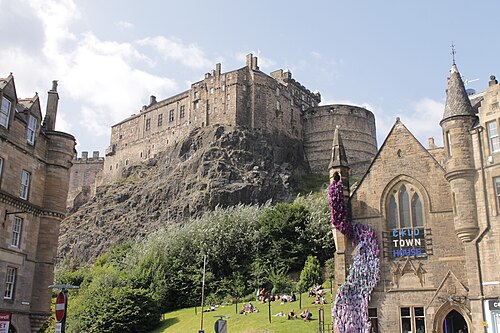 Edinburgh CastleRestored · prime 1520
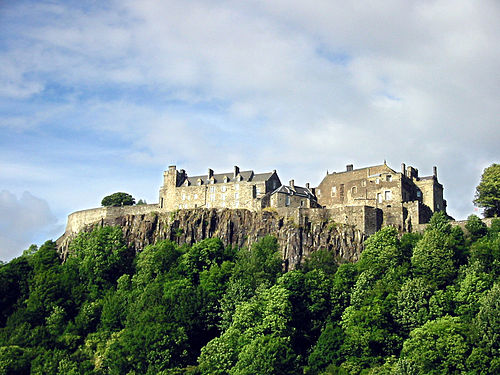 Stirling CastleRestored · prime 1542
 Glamis CastleStill standing · prime 1900
All castles in Scotland → · Strongest castles in Scotland → · Castles of Europe
Play As Your Clan
Hold a real castle against whatever you choose to send at it, take a ship out in her own service years, or stand at the shoulder of someone the record remembers. The chronicler sets the scene; the deeds are yours.
Notable bearers of the MacDonald name
- Flora MacDonald
- Somerled, King of the Hebrides
Stories of Clan MacDonald
The Massacre of Glencoe
1692In late 1691, the British crown demanded every Highland chief swear loyalty by the first of January, on pain of fire and sword. The MacDonalds of Glencoe missed the deadline by six days through no fault of their own. In response, the government quietly authorised the destruction of the family. For two weeks 120 government soldiers under a Campbell captain were billeted as guests in MacDonald longhouses, eating MacDonald food and playing cards with their hosts under the unbreakable Highland code of guest-right. Before dawn on the thirteenth of February 1692, the captain received written orders to fall on the village. What followed is remembered as the worst breach of guest-right in British history, and the reason the MacDonalds will not sit at table with a Campbell to this day.
Read the story →
Flora MacDonald and the prince
1746In June 1746, two months after the disaster of Culloden, Charles Edward Stuart was a fugitive in the Hebrides with a price on his head of thirty thousand pounds, the largest reward of the eighteenth century. Government patrols closed in around him on the islands of South Uist and Benbecula. The plan that came to him through an Irish Jacobite officer was to disguise him as an Irish spinning-maid and put him on a boat to Skye in the household of a young woman with a militia pass. Her name was Flora MacDonald. She was twenty-four years old. She had no political stake in the rising. The crossing made her name a synonym for the lost cause for the next two centuries.
Read the story →
Inverlochy
1645On the night of the thirty-first of January 1645, after a winter march of thirty-six hours from the south end of Loch Ness through Glen Tarbet and the high pass of the Lairig Leacach, James Graham, Marquess of Montrose, with the Highland-Irish brigade of Alasdair MacColla MacDonald and a force of about fifteen hundred men of the western clans, came down at first light on the second of February, the morning of Candlemas, on the Campbell army of Archibald Campbell, eighth Earl of Argyll, encamped under the walls of Inverlochy Castle at the head of Loch Linnhe. Argyll had three thousand men. The day broke in heavy frost. The Highland charge took the Campbell line in flank and rolled it down the loch shore. Argyll was put aboard his galley and rowed for Inveraray. Fifteen hundred Campbells died, by the careful estimate of the modern historians of the action, in two hours. The MacDonalds of Clanranald, of Glengarry, of Keppoch, of Glencoe, fought beside MacColla in the centre. The single most consequential reckoning between MacDonald and Campbell of the seventeenth century was won that morning by Montrose's tactical genius and the Highland charge in winter, fifty years and ten days before Glencoe, and reads, in Highland MacDonald memory, as the inverse of Glencoe.
Read the story →
Sir John A. Macdonald and the Confederation
1867On the morning of the first of July 1867 the British North America Act came into force and the Dominion of Canada was constituted from the four provinces of Ontario, Quebec, Nova Scotia and New Brunswick, on the basis of the Seventy-Two Resolutions agreed at the Quebec Conference of October 1864 and ratified by the colonial legislatures over the next two years. The architect of the deal, the man who had threaded its compromises between the Reformers under George Brown, the Bleus under Cartier, and the maritime delegations under Tupper and Tilley, was the Scottish-born Kingston lawyer John Alexander Macdonald, born at Glasgow on the eleventh of January 1815, brought to Upper Canada at the age of five, called to the bar in 1836, member of the legislature for Kingston since 1844. He was sworn in as the first Prime Minister of Canada on the same morning the Act came into force, by Lord Monck the Governor-General, in the Senate Chamber at Ottawa. He held office for nineteen of the next twenty-four years.
Read the story →