Clan MacLeod
also McLeod
Of Dunvegan, on Skye, keepers of the Fairy Flag.
- Origin
- The Highlands & Islands, Scotland
- Motto
- Hold Fast
- Famous bearer
- Dame Flora MacLeod of MacLeod, 28th chief
- Register
- Scottish clan
Ranked of all time
The 10 Oldest Clans in Scotland
The MacLeod arms, crest badge, tartan and country

Crest badgeClan member crest badge - Clan MacleodCeltus · CC BY-SA 3.0 
Crest badgeClan member crest badge - Clan Macleod of the LewesBorne by the Lewes line, one branch of the name rather than all of it.Celtus · CC BY-SA 3.0 
TartanMacLeod of Assynt tartanBorne by the Assynt line, one branch of the name rather than all of it.Celtus · CC BY-SA 2.5 
TartanMacLeod of Raasay tartanBorne by the Raasay line, one branch of the name rather than all of it.Celtus · CC BY-SA 2.5 
Coat of armsArms of Macleod of MacleodBorne by the Macleod line, one branch of the name rather than all of it.Celtus · CC BY-SA 3.0 
Clan plateMacLeod (R. R. McIan)Robert Ronald McIan (1803-1856). · Public domain


.jpg)
- Crest badge: The chief's crest inside a belt and buckle: the badge a clansman wears to show whose following he is in.
- Tartan: The checked cloth the family is known by.
- Coat of arms: Granted to an individual and inherited down that one documented line. These are the arms of particular families of the name, not of everyone who shares the surname.
- Clan plate: Period portrait art of the clan, from the great 19th-century illustrated surveys.
What is the MacLeod clan tartan?
Two MacLeod setts are shown above: the Assynt line’s own sett, and the Raasay line’s own sett. A branch sett belongs to that line rather than to everyone of the name. They are not rival claims to be picked between; they are different records, and different weaves, of the same family cloth. A sett is the block of coloured bands the cloth is built from, repeated in both directions; the whole plaid is that one square enlarged.
Almost no clan tartan is medieval. Highland dress was proscribed from 1746 until 1782, and when it returned it returned as ceremony rather than everyday cloth, so the surname-to-sett map was fixed after the break, by the Bannockburn weavers’ pattern books, the royal visit to Edinburgh in 1822, and the Vestiarium Scoticum of 1842. The MacLeods wore tartan long before any of that. What the registers fixed was which one. Nobody polices any of it. Wearing the MacLeod sett declares allegiance to the name, not descent from any particular line of it.
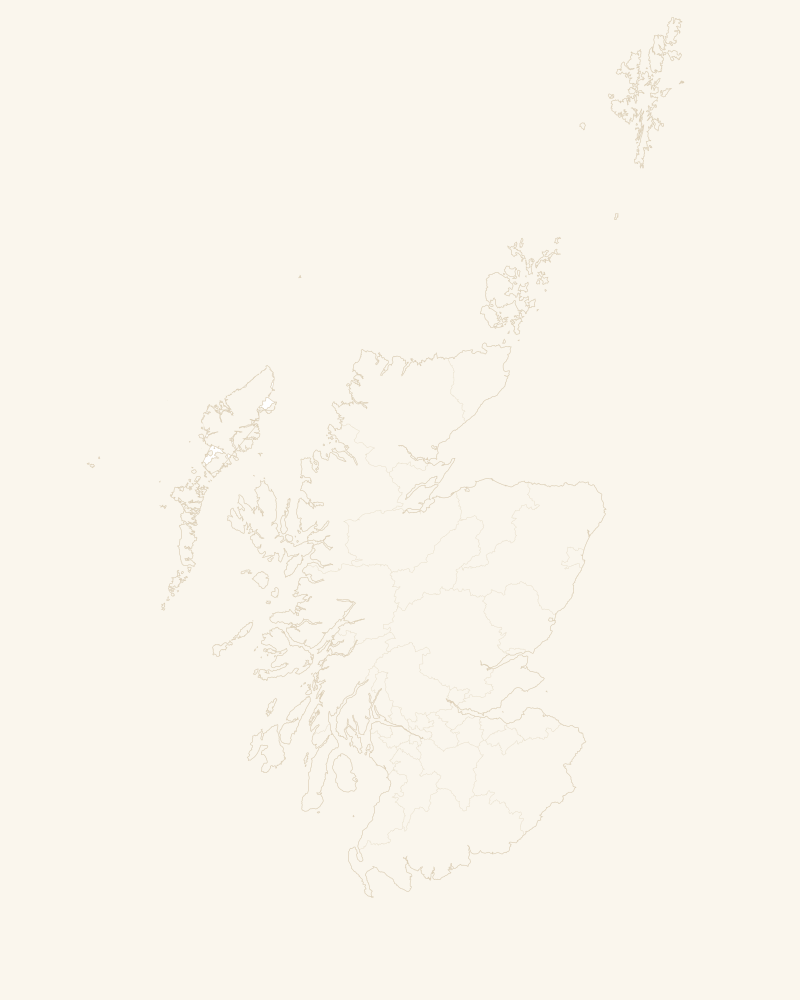
The seat of Clan MacLeod
Seat vacantChief
No one leads the Clan MacLeod community yet. When the movement opens, you can stand for its leadership, or help elect whoever does.
Current mission
No shared goal set yet. Once Clan MacLeod has leadership, it sets the public focus: a restoration, a gathering, a real-world project that helps its own.
The MacLeod clan is being rebuilt. Join the waiting list for the movement today, and you help decide who leads it and what it does.
Help rebuild the MacLeod clan →Motto
Hold Fast
What does the MacLeod name mean?
Son of Leod, from the Old Norse 'Ljótr', a 13th-century chief said to be a younger son of Olaf the Black, King of the Isle of Man.
The history of Clan MacLeod
Leòd, and the Norse name inside the Mac
MacLeod means, plainly, "son of Leòd". Leòid is the genitive of the Gaelic name Leòd, which is itself an anglicisation of a name thought to come from the Old Norse Liótr; mhic is the genitive of mac, "son"; and clann means children, offspring, descendants. Put together, Clann Mhic Leòid is "the descendants of the son of Leod", a Gaelic phrase wrapped around a Norse forename, which is exactly what the family is. One of the earliest appearances of the surname in record is Gillandres MacLeod in 1227.
Both great branches of the clan claim descent from Leòd, a Norse-Gael who lived in the 13th century, the hinge century for the whole western seaboard, when the Scottish Crown bought Argyll and the Outer Hebrides from Norway and, in the unsettled aftermath, war lords imposed their dominance over local families who accepted their protection. A Norse-Gaelic origin is not decoration here; it is the ordinary condition of the Hebrides.
The tradition the clan has carried for centuries is that Leòd was a younger son of Olaf the Black, King of Mann (r. 1229–1237), and it is honest to say that this is disputed. Articles published in the Clan MacLeod magazine argue an alternative genealogy, built on the descent of Leòd's great-granddaughter Christina MacLeod, who married Hector Reaganach of the MacLeans, in which he was not Olaf's son but a third cousin, some removed, of Magnus, the last King of Mann, related to the Manx royal house through the female line of Helga of the Beautiful Hair. The dating of Christina's genealogy lines up convincingly with known historical facts. Either way the family stands close to the kings of Mann; which door it came through is still argued.
Tradition holds that Leòd possessed Harris and part of Skye, and that he married a daughter of MacArailt, "Harold's son", the Norse seneschal of Skye, who held Dunvegan and much of the island. That marriage, if it happened as remembered, is the door through which the family walked into the rock they have never left. Leòd is said to have died around 1280 and to have been buried on Iona, where six chiefs after him were laid as well.
Sìol Tormoid and Sìol Torcaill: the two seeds
The clan is not one line but two, and both are named for Norse forenames long since absorbed into Gaelic: Tormod from the Old Norse Þórmóðr, and Torcuil from Þórkell. The MacLeods of Harris and Dunvegan are Sìol Tormoid, the seed of Tormod, holding Harris, Glenelg on the mainland and the Dunvegan lands on Skye. The MacLeods of Lewis, Assynt and Raasay are Sìol Torcaill, the seed of Torcall, and their country was the Isle of Lewis, the mainland lands of Assynt and Cadboll, and the island of Raasay. Clan tradition makes Tormod and Torquil two sons of Leòd; in fact Torquil was a grandson of Tormod, and the two-brothers version is a tidying of a messier descent.
Tormod himself does not appear in any contemporary record. MacLeod tradition, preserved in the 19th-century Bannatyne manuscript, remembers him as a noted soldier of his era who was present at the Battle of Bannockburn, but that is a memory written down five centuries after the fact, and it should be read as clan memory rather than as evidence. The family enters documented history one generation later. A royal charter of about 1343, in the reign of David II (r. 1329–1371), names "Malcolme, son to Tormode M'Cloyde" and his kinsman "Torkyll M'Cloyd". The mid-14th century is where both MacLeod families first appear using a form of the surname: the true beginning of the name a reader can search for today.
Malcolm was succeeded by his eldest child, Iain Ciar, as fourth chief; the clan historian R. C. MacLeod placed that succession about 1330 and Iain's death in 1392, dates best treated as estimates. Iain Ciar has come down in clan tradition as the most tyrannical chief the family ever had, with a wife said to have been every bit as cruel. He was wounded in an ambush on Harris and died soon after of those wounds at the church at Rodel: a chief the clan chose to remember as carefully as it remembered its best.
Dunvegan, and the ring of castles around it
Dunvegan Castle stands a mile north of the village of Dunvegan on Skye. The fabric dates from the fourteenth century and the castle originally stood on an island, reached from the sea rather than the land; it grew a massive keep or tower, the famous Fairy Tower, a hall block and many later extensions. It has been the seat of the chief of Clan MacLeod since the 13th century and is held by the family to this day, one of the oldest continuously inhabited castles in Britain. Most Highland families point at a ruin. The MacLeods point at a door that has never been shut against them.
Around Dunvegan lay a ring of lesser strongholds whose histories record the long argument with Clan Donald. Dunscaith, Dun Sgathaich, on a sea rock near Armadale in Sleat, was originally held by the MacAskills, a sept of the MacLeods of Lewis, and passed to the MacLeods in the fourteenth century, who held it with their MacAskill allies and beat off the MacDonald Lord of the Isles in 1395 and again in 1401, before losing it to the MacDonalds in the fifteenth. Knock Castle, Caisteal Camus, was built by the MacLeods of Lewis in the fifteenth century and changed hands between MacLeod and MacDonald more than once. Duntulm, near Uig, was MacLeod when James V of Scotland visited it in 1540 and passed to the MacDonalds in the seventeenth century.
The northern branch built its own country. Ardvreck Castle in Assynt was raised about 1490 by the MacLeods of Assynt and held by them until 1672. Cadboll Castle near Tain in Ross-shire, now a ruinous L-plan tower house, came from the Clyne family to the MacLeods of Cadboll and later to the Clan Sinclair. Eilean Ghrudidh, an island castle on Loch Maree in Wester Ross, was MacLeod from about 1430 to 1513. Brochel Castle on Raasay was likely built by Calum Garbh, first MacLeod chief of Raasay, who inherited Raasay and Rona from the ninth chief of Lewis. On Berneray in North Uist stood a MacLeod castle where Norman MacLeod of Berneray, laird of the island, was born. Read them on a map and the pattern is plain: these are the castles of a sea kingdom, on rock and tidal shore, reached by galley rather than road.
The Fairy Flag, the cup and the horn
The heirlooms of the chiefs are kept at Dunvegan, and the best known of them is the Fairy Flag. Numerous traditions are attached to where it came from, and they do not agree with one another; what they share is the claim that the flag, when unfurled, had the power to save the clan on three separate occasions. Be straight about it: the flag is a real object that has been in the family for centuries, but the stories explaining its origin are tradition, not record. That has never diminished it: for a clan whose motto is Hold Fast, a banner kept in reserve against a third and final emergency is close to a statement of character.
The Dunvegan Cup is a ceremonial vessel of wood and silver, made in Ireland and dating to 1493. It is thought to have passed into MacLeod possession sometime in the 16th or 17th century, during the period when the MacLeods were sending aid to certain Irish chieftains in their warring against English-backed forces. The cup is a diplomatic object, and it records a time when the Hebrides and the north of Ireland were one sea-world.
The third heirloom is Sir Rory Mor's Horn, named for the fifteenth chief of the clan, and clan tradition holds that the male heir must quaff it in a single go. The crest badge that clansfolk wear to show allegiance carries the chief's crest (a bull's head cabossed sable, horned Or, between two flags gules) and the motto hold fast, though the arms themselves belong to the chief alone; members of Clan MacLeod of The Lewes wear a badge from their own chief's arms. The clan plant badge is a sprig of juniper.
Sligachan, Harlaw and Bloody Bay
In 1395 the Lord of the Isles is said to have made another attack on Skye, and Iain Ciar's grandson William MacLeod met the MacDonalds at Sligachan and drove them back to Loch Eynort. There the retreating force found that their galleys had been moved offshore by the MacAskills, and every invader was killed. The spoils were divided at Creag an Fheannaidh, the Rock of the Flaying, sometimes identified with the Bloody Stone in Harta Corrie under the Cuillin. Tradition, not charter. But the ground it names can still be walked.
The clan also fought in the great set-piece battles of the age, and not always on the side a reader might expect. At the Battle of Harlaw in 1411 the MacLeods fought as Highlanders in support of Domhnall of Islay, Lord of the Isles and chief of Clan Donald. At the Battle of Bloody Bay in 1481 they again supported Clan Donald's head, John of Islay, Earl of Ross (this time against his own illegitimate son, Angus Og MacDonald), and the chief of Clan MacLeod, William Dubh, was killed in the fighting. Clan Donald was neighbour, overlord, ally and enemy by turns, depending on which MacDonald was asking.
James IV confiscated the Lordship of the Isles from the MacDonalds in 1493, and the destabilised west spent the next century trying to put something back in its place. In 1515 Alastair Crotach MacLeod (who also held Caisteal Mhicleod near Shiel Bridge in Lochaber, still in use in the sixteenth century) besieged Knock Castle, unsuccessfully, in an attempt to resurrect the Lordship. That was no cattle raid. It was an attempt by a Hebridean chief to rebuild a lost polity, and it failed.
The feud with Sleat, and the law that closed the west
Through the sixteenth century Clan MacLeod feuded heavily with the Clan MacDonald of Sleat, with an intensity that is hard to overstate: the MacLeods and the MacDonalds on Skye were reputedly reduced to eating dogs and cats in the 1590s. This was not colourful lawlessness but two kindreds grinding each other's food supply into the ground, in a society where a clan's customary right to its territory, the dùthchas, and its chiefs' charter ownership, the oighreachd, did not match.
Against the feud ran the other great Highland institution, the bond. In 1588 William MacLeod of Dunvegan, the thirteenth chief, bound himself and his heirs in a bond of manrent to "assist, maintain, and defend, and concur with Lachlan Mackintosh of Dunachton, Captain and Chief of the Clan Chattan, and his heirs". Manrent was a contract by which the heads of families looked to a chief for territorial protection even when they did not live on his estates, reinforced by calps, death duties paid as a mark of personal allegiance when the head of a family died, usually the best cow or horse in the house. Fosterage worked alongside it: a chief's children were brought up by a favoured family of the clan gentry. This is how a Highland family bound people to itself who shared no blood with the chief, and it is why so many bearers of the name are of the clan without descending from its chiefs.
The end came by law rather than by battle, though there was a last battle first. At Coire na Creiche on the northern slopes of the Cuillin in 1601, the MacLeods were defeated by the MacDonalds of Sleat. In 1608, after a century of feuding that had drawn in the MacDonalds, the Mackenzies and the MacLeans, all the relevant chiefs were summoned to hear the King's intentions for governing the Isles from his representative, Lord Ochiltree; they disagreed, and were all thrown into prison. The following year the Statutes of Iona obliged clan chiefs to reside in Edinburgh for a large part of the year and to have their heirs educated in the English-speaking Lowlands. In a Highlands that ran on cattle rather than cash that was ruinous: chiefs turned to exploiting their lands commercially rather than holding them in trust for the clan, and the indebtedness that would eventually sell off the great Highland estates begins here.
Sìol Torcaill felt the change first and hardest. Torquil's descendants held the Isle of Lewis until the early seventeenth century, when the Mackenzies overthrew the Lewismen, partly with the aid of the Morrisons and Clan MacRae. The younger branches held on longer: Assynt and Cadboll on the mainland, and the Isle of Raasay, which stayed in MacLeod hands until 1846. But the loss of Lewis removed one of the two great MacLeod countries at a stroke, and from then on the surname outlived the lordship that had carried it.
Montrose in the dungeon, and the chief they called the Wicked Man
The civil wars brought the MacLeods into national history in the most notorious way possible. After the Battle of Carbisdale in 1650, the defeated James Graham, 1st Marquess of Montrose, surrendered himself to Neil MacLeod of Assynt at Ardvreck Castle. MacLeod's wife, Christine Munro, tricked Montrose into the castle dungeon and sent for the troops of the Covenanter government; Montrose was captured and executed. There is no way to write that as a compliment and no reason to try. It sits beside the other side of the same decade: as many as 500 MacLeods fought as royalists at the Battle of Worcester in 1651, among them Norman MacLeod of Berneray, a famous scholar.
The clan came out for the Jacobite rising of 1715, and in 1724 General Wade's report on the Highlands estimated its strength at 1,000 men. The rising of 1745 split them. Norman MacLeod of Dunvegan was one of the majority of clan leaders who advised Prince Charles to return to France, having arrived without the French military support he had promised; historians also note that MacLeod and MacDonald of Sleat were vulnerable to government sanctions over their involvement in illegally selling tenants into indentured servitude, which belongs on the page beside the flags and the horn. When the rising went ahead anyway, Norman raised several Independent Highland Companies for the Government and led 500 of those men to defeat at the Battle of Inverurie on 23 December 1745. He was said that year to be able to bring out 700 men.
The name fought on both sides. The MacLeods of Raasay, a branch of the Lewis line, were at Culloden in the ranks of the Glengarry Regiment. In retribution the Dunvegan MacLeods, under their own chief Norman, burned and pillaged the island of Raasay and harassed its inhabitants for many weeks in the late summer of 1746: MacLeod against MacLeod, in the year the Highlands were being harried by everyone else as well. It earned Norman the name the clan still knows him by: "The Wicked Man". And yet, after Culloden, both MacLeod and Sleat helped Prince Charles escape. Nothing in that generation resolves neatly.
The tacksmen leave, and the name crosses the ocean
The collapse that followed was economic before it was anything else. Through the eighteenth century Highland chiefs, needing income, restricted their tacksmen's right to sublet, so that more of the rent paid by the people actually farming the land reached the landowner. The tacksmen were the middle tier of clan society, lesser gentry who allocated the runrig strips, lent seed-corn and tools, drove the cattle to the Lowlands and mobilised the Clan Host. In a process that accelerated from the 1770s onward, that whole class was squeezed out; the historian T. M. Devine treats its displacement as among the clearest signs that the old Gaelic society was finished. Many tacksmen, and wealthier farmers tired of repeated rent increases, chose to emigrate. The first MacLeods to cross the Atlantic in numbers were not the destitute. They were the managers.
The legislation after Culloden finished the legal frame: the Heritable Jurisdictions Act extinguished the right of chiefs to hold their own courts, and the banning of Highland dress, repealed in 1782, is doubted to have had much real effect. Historians now put less weight on the '45 as the killer of clanship than on the slow conversion of chiefs into landlords.
Then came the Highland Clearances, and they fell hardest exactly where the MacLeods lived. In the first phase, farmers were evicted and resettled in new crofting communities on the coast, the crofts deliberately made small enough to force the tenants into other industries such as fishing or kelp. In the second phase those overpopulated communities broke under famine and the collapse of the very industries they had been pushed into, and landlords, finding it cheaper than another cycle of famine relief, provided "assisted passages" out. This applied particularly to the Western Highlands and the Hebrides: which is to say to Harris, Lewis, Skye and Raasay, which passed out of MacLeod hands in 1846. The destination was Canada first and later Australia, and the emigration ran on, with a brief lull for the First World War, until the Great Depression. If the name reached Ontario or Otago in your family, this is the paragraph your ancestors are standing in.
The chiefly line, remarkably, never broke. Norman MacLeod of MacLeod (1812–1895) was followed as 26th chief by his eldest son Norman Magnus (1839–1929), who died without male issue, a second son having already died young. The chiefship passed to a third son, Sir Reginald MacLeod of MacLeod (1847–1935), 27th chief, who had no sons but two daughters. His daughter Dame Flora MacLeod of MacLeod succeeded him as 28th chief and became the best-known clan figure of the twentieth century. She was followed by her grandson John Wolrige Gordon MacLeod, born John Wolridge-Gordon, who took his maternal grandmother's maiden name in order to claim the chiefship; in 2007 Hugh Magnus MacLeod became the 30th chief. Another MacLeod of that century left a different kind of mark: George MacLeod, the Argyll and Sutherland Highlander turned Govan parish minister, who rebuilt Iona Abbey with the unemployed shipbuilders of the Clyde, on the island where the first chiefs of the clan are said to lie.
What the emigrations scattered, the societies gathered back. Ten national societies are affiliated to the Associated Clan MacLeod Societies in Edinburgh, and their founding dates map the diaspora: Scotland in 1891, Australia in 1912 and re-established in 1951, Canada in 1936, England in 1937, New Zealand and the United States in 1954, South Africa in 1960, France in 1981, Germany in 2003, Switzerland in 2013 and Sweden in 2023. Membership is open to anyone bearing the surname, anyone descended from those who bore it, anyone connected by marriage, members of the clan's septs, and anyone with an interest in its affairs at all. Every four years the societies gather for a clan parliament; the one held at the end of July 2014 met at Dunvegan. Seven centuries after Leòd, the family still answers to the same rock, and still, as the motto has it, holds fast.
Champions of the MacLeod name
The bearers whose lives are inseparable from this surname. Each has their own page, biography, achievements, geography, connection to the family.
Historic Places, Rebuilt
Explore the streets and seats the MacLeod name knew, rebuilt with AI as they stood in history.
Historic Places, Rebuilt · New
The galley of the Lords of the Isles under sail and oar through the Hebrides, the warship on a dozen clan crests, made real.
Historic Places, Rebuilt · New
The sea-girt seat of the MacLeods on Skye, the keep, the Fairy Tower, and the Fairy Flag in the chief's hall.
Castles the MacLeod held
Strongholds this name held for a decade or more, look one up, or rebuild it to explore.
- Dunvegan Castle
Seat of Clan MacLeod since the 13th century, held to this day.
- Ardvreck Castle
Built about 1490 by the MacLeods of Assynt, who held it until 1672.
- Dunscaith Castle
Clan MacLeod took the castle from the MacDonalds, holding it with their MacAskill allies until the MacDonalds recaptured it in the 15th century.
- Knock Castle
Built by Clan MacLeod of Lewis in the 15th century; ownership passed between the MacLeods and MacDonalds several times.
- Brochel Castle
Likely built by Calum Garbh, first MacLeod chief of Raasay, who inherited Raasay and Rona from the 9th Chief of Lewis.
The castles of the homeland
The great strongholds of the homeland, look one up, see what it looked like in its prime, and recreate it to explore.
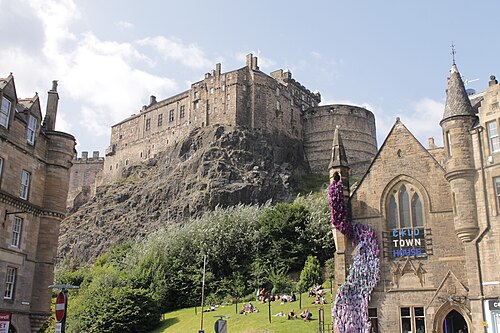 Edinburgh CastleRestored · prime 1520
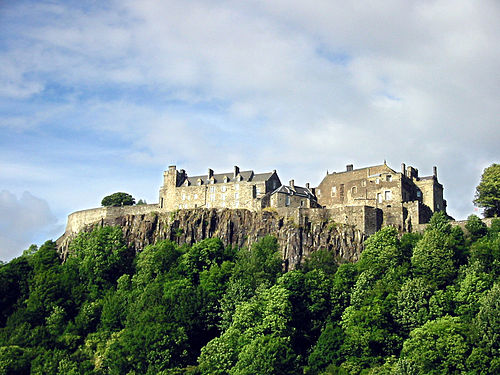 Stirling CastleRestored · prime 1542
 Glamis CastleStill standing · prime 1900
All castles in Scotland → · Strongest castles in Scotland → · Castles of Europe
Play As Your Clan
Hold a real castle against whatever you choose to send at it, take a ship out in her own service years, or stand at the shoulder of someone the record remembers. The chronicler sets the scene; the deeds are yours.
Notable bearers of the MacLeod name
- Dame Flora MacLeod of MacLeod, 28th chief