Clan Rising
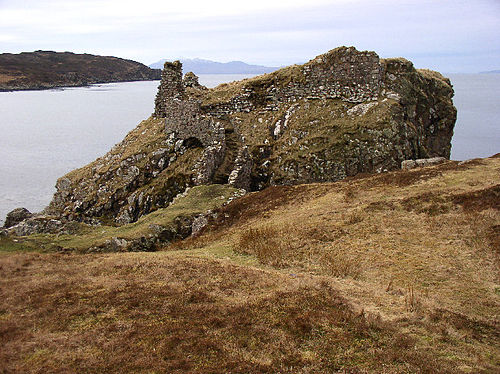
Ardvreck Castle today

Scotland · Ruin

Ardvreck Castle

Ardvreck Castle is a late 15th‑century rectangular stone keep standing on a rocky promontory in Loch Assynt, Sutherland. Built by the MacLeods of Assynt, it had a round stair turret corbelled to form upper rooms, vaulted lower floors and several gunports; the structure is now a ruin and a scheduled monument.

Photograph via Wikimedia Commons

First raised

1590

Its prime

1650

Today

Ruin

As it stood in 1650

What Ardvreck Castle looked like in its prime.

Perched on a rocky promontory in Loch Assynt, Ardvreck Castle was a rectangular four‑storey stone keep with a round stair tower at the south‑east angle. Upper floors were corbelled out to form square chambers with a small stair turret on the corbelling. The ground floor comprised three vaulted compartments; the first floor vaulted, the upper floors joisted. The fabric appears as rough grey and reddish‑brown rubble masonry with narrow slit windows and several gunports facing the loch.

Its story

The story of Ardvreck Castle.

The MacLeods of Assynt, c. 1490

Ardvreck was raised by the MacLeods of Assynt in the fifteenth century, about 1490, on a rocky promontory jutting into Loch Assynt in Sutherland. It replaced the older Assynt Castle, four miles to the north-west of Inchnadamph. The building itself was a simple rectangular keep, apparently of four floors, with a round staircase tower at the south-east angle corbelled out on the upper storeys to form square rooms, three vaulted compartments on the ground floor, and several gunports.

Montrose Handed Over, 1650

Ardvreck's place in Scottish history was fixed in 1650, when the royalist James Graham, 1st Marquess of Montrose, fleeing after his defeat at the Battle of Carbisdale, was handed over here to the Covenanter forces by MacLeod, Laird of Assynt. What actually happened is unclear, and two traditions survive. In one, MacLeod, loyal to the Covenanters, simply arrested the weary fugitive and held him. In the other, he gave Montrose comfortable shelter — and then betrayed him for a reward of £25,000.

The Mackenzie Capture and the Burning of Calda House

In 1672 Clan Mackenzie attacked and captured Ardvreck, and with the castle took control of the Assynt lands. In 1726 the Mackenzies built themselves a more modern manor house nearby, Calda House, named for the Calda burn beside which it stands — but a fire destroyed it in 1737. Castle and manor house were left as ruins, and both are protected today as scheduled monuments, Ardvreck holding that designation since 1936.

Step inside

7 places to explore in 1650.

The record describes 7 distinct spots at Ardvreck Castle, including 4 interiors: ground‑floor vaulted chambers, first‑floor vaulted chamber, spiral stair in the turret and more. Create your own photoreal reconstruction and explore every one, more scenes means more rooms, more angles, and more of the place to stand in.

Approach from grassy slopePromontory shorelineSouth‑east elevation and stair turretGround‑floor vaulted chambersFirst‑floor vaulted chamberSpiral stair in the turretUpper joisted rooms and roofline

Build Your Own Castle

Recreate Ardvreck Castle with AI to explore it.

The artist rebuilds it as it stood in 1650, a photoreal reconstruction that belongs to you alone. Pay with coins, no subscription needed.

Recreate this castle →Defend this castle →

Whose castle

Clans who held Ardvreck Castle.

The families that held Ardvreck Castle for a decade or more across its history, follow a name to its clan.

  • MacLeod

    Built about 1490 by the MacLeods of Assynt, who held it until 1672.

  • Mackenzie

    Clan Mackenzie captured Ardvreck in 1672 and took control of the Assynt lands.

From the archive

Ardvreck Castle on paper: the measured plan and period views.

The survey plan and photographs below are the ground truth this page's reconstructions are checked against, drawn and photographed while the castle was still a working garrison. Every image is public-domain or openly licensed, with its source named.
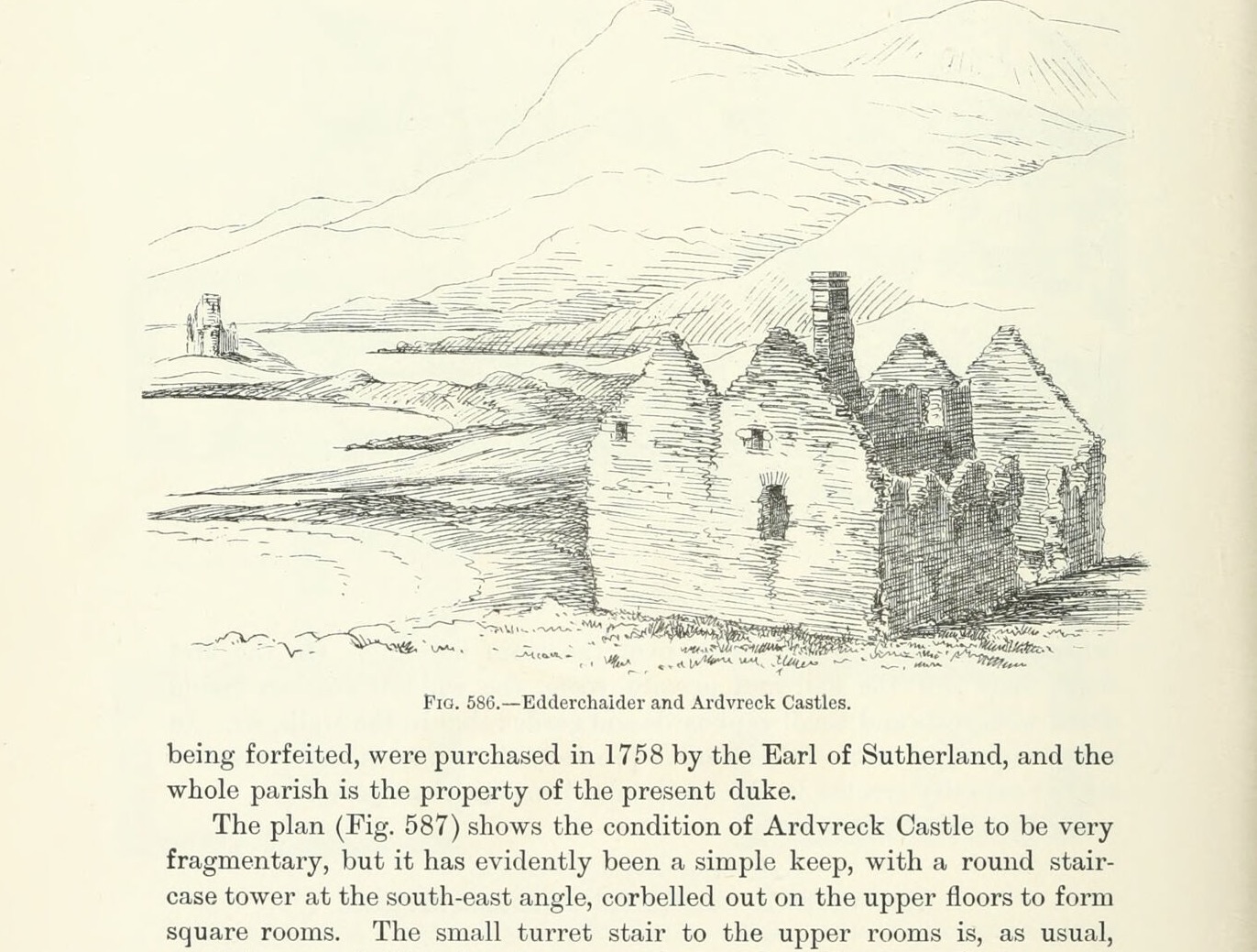
Fig. 586.—Edderchalder and Ardvreck Castles., Ardvreck Castle

Fig. 586.—Edderchalder and Ardvreck Castles.

1889 · MacGibbon & Ross, vol. 3 (1889)

Public domain
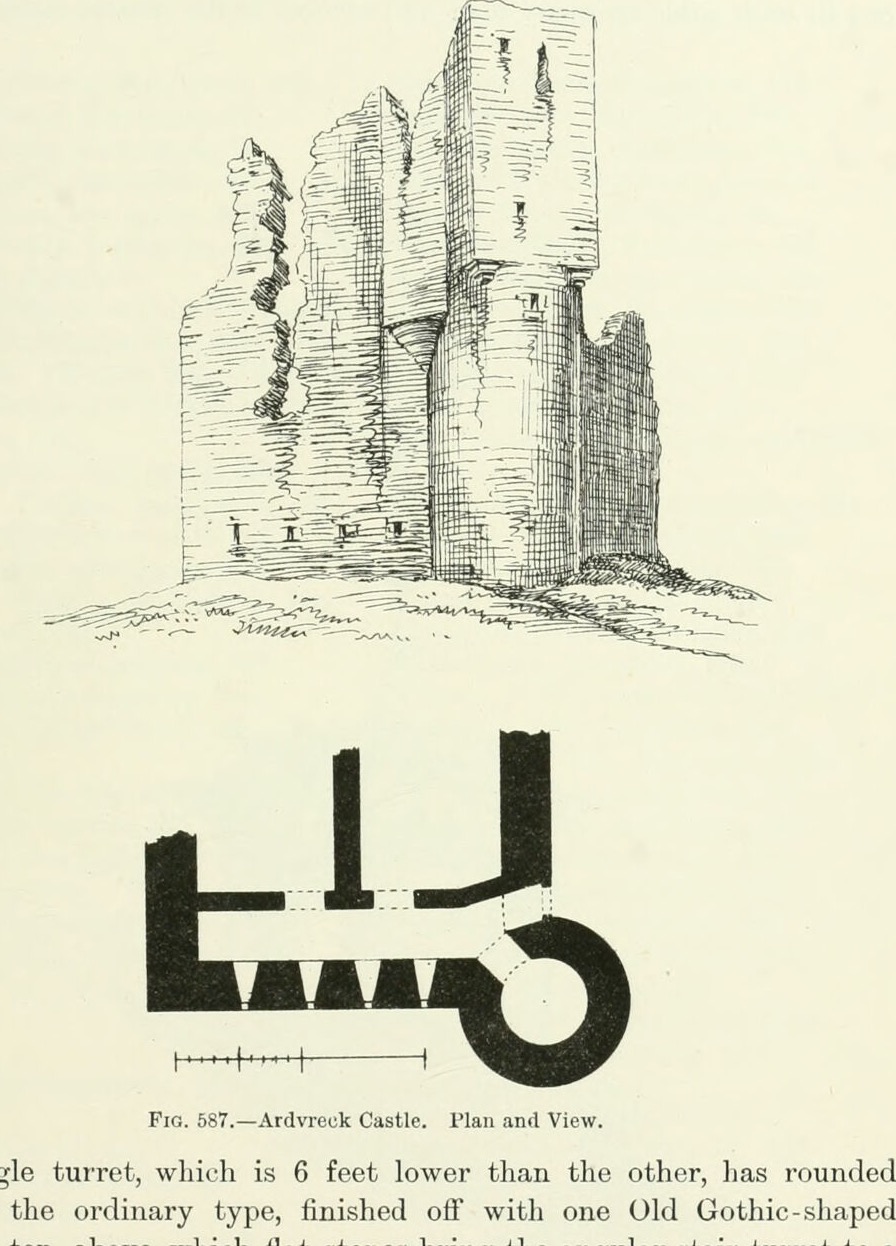
Fig. 587. — Ardvreck Castle. Plan and View., Ardvreck Castle

Fig. 587. — Ardvreck Castle. Plan and View.

1889 · MacGibbon & Ross, vol. 3 (1889)

Public domain
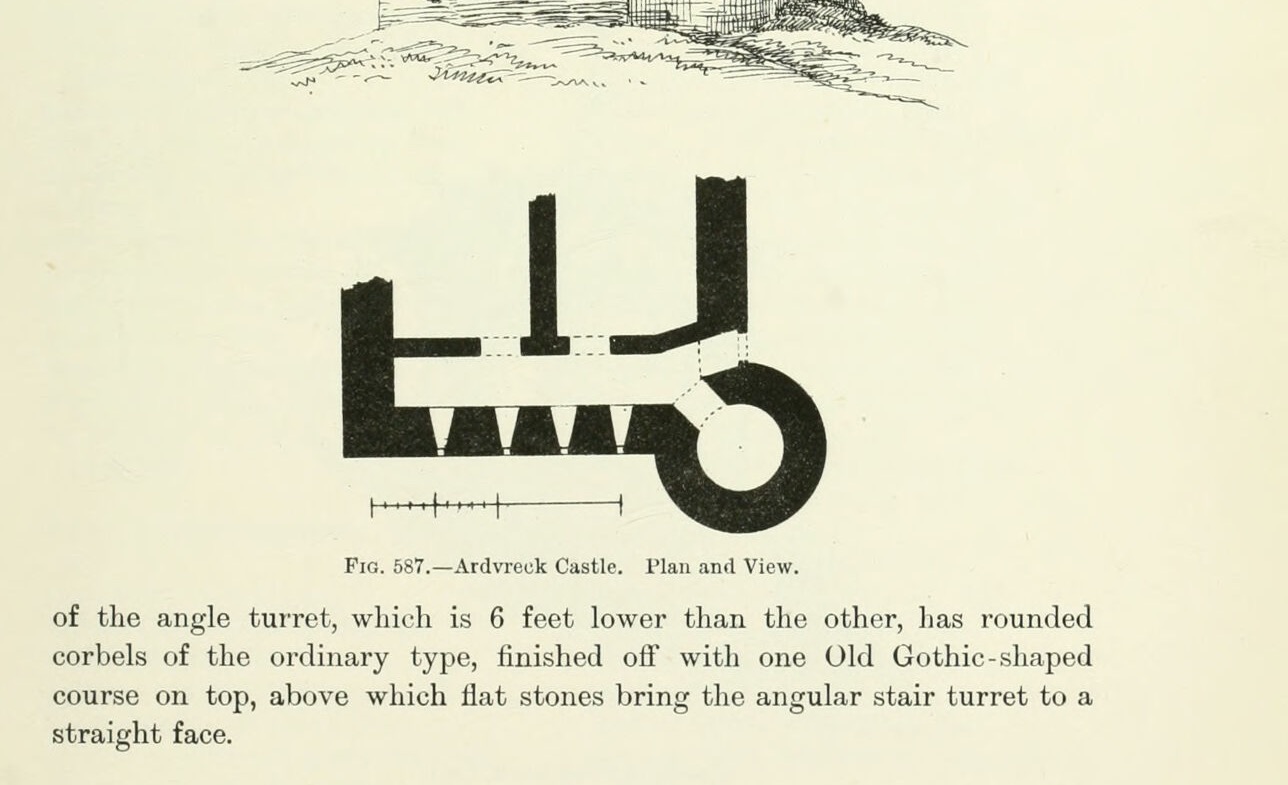
Fig. 587. — Ardvreck Castle. Plan and View., Ardvreck Castle

Fig. 587. — Ardvreck Castle. Plan and View.

1889 · MacGibbon & Ross, vol. 3 (1889)

Public domain

Questions about Ardvreck Castle

What is the history of Ardvreck Castle?

Ardvreck Castle was built in the 15th century by the MacLeods of Assynt. It became associated with the capture of James Graham, Marquess of Montrose, in 1650. Clan Mackenzie attacked and captured the castle in 1672, taking control of the Assynt lands. Both Ardvreck Castle and the later Calda House now stand as ruins.

What is inside Ardvreck Castle?

Inside Ardvreck Castle are ground-floor vaulted compartments and a vaulted first-floor chamber. The round stair turret contains a spiral stair, while the upper floors had joisted rooms and a roofline. The keep had three ground-floor compartments, four floors in total, and upper rooms formed by corbelling.

Who owns Ardvreck Castle now?

Ardvreck Castle is owned by Clan MacLeod. It is also a scheduled monument, a designation held since 1936. The castle is now ruinous, rather than a private residence described as occupied in the supplied material.

Why was Ardvreck Castle built, and what was it used for?

Ardvreck Castle was built as a simple rectangular keep by the MacLeods of Assynt. Its vaulted lower rooms, staircase turret and gunports provided the structure of a fortified residence. No later change of purpose is described, although Clan Mackenzie took control of the castle and Assynt lands in 1672.

Where is Ardvreck Castle?

Ardvreck Castle stands on a rocky promontory in Loch Assynt, in Sutherland and the Highland administrative area. The site overlooks the loch and is approached from a grassy slope. The supplied material does not name a nearer town or city.

When was Ardvreck Castle built?

Ardvreck Castle dates from either the 15th or 16th century in the supplied dates. The site history places its construction about 1490, in the late 15th century, while the recorded inception year is 1590, in the 16th century.

Was Ardvreck Castle ever attacked or besieged?

Ardvreck Castle was attacked and captured by Clan Mackenzie in 1672. The assault succeeded, and Clan Mackenzie then took control of the Assynt lands. No separate siege is described in the supplied material.

Which family or clan held Ardvreck Castle?

The MacLeods of Assynt held Ardvreck Castle from its construction about 1490 until 1672. Clan Mackenzie then captured the castle and took control of the Assynt lands. The change of control followed Clan Mackenzie's attack on Ardvreck Castle.

What did Ardvreck Castle look like in its prime?

In its prime, Ardvreck Castle was a rectangular four-storey stone keep on a rocky promontory. A round stair tower stood at the south-east angle, with upper rooms corbelled out into square chambers. Rough grey and reddish-brown rubble masonry, narrow slit windows and several gunports faced the loch.

Is Ardvreck Castle still standing, or is it a ruin?

Ardvreck Castle is now a ruin. Its surviving description includes the rectangular keep, the staircase tower, vaulted chambers and gunports, while both the castle and nearby Calda House stand as ruins. It is also designated as a scheduled monument.

Who built Ardvreck Castle?

Ardvreck Castle was commissioned by Clan MacLeod, specifically the MacLeods of Assynt. No architect or individual designer is named in the supplied material. It was built as a simple rectangular keep with a round staircase tower at the south-east angle.
All castles of Scotland · Castles of Europe · the best castles in Europe · explore the finished reconstructions.