Clan Maclean
also MacLean, McLean
Of Mull and Duart, Gillian of the Battle Axe's line.
- Origin
- Argyll & the West Coast, Scotland
- Motto
- Virtue Mine Honour
- Famous bearer
- Lachlan Mor MacLean (c.1554–1598), 14th chief of Duart
- Register
- Scottish clan
The Maclean arms, crest badge, tartan and country

Crest badgeClan member crest badge - Clan MacleanCeltus · CC BY-SA 3.0 
TartanMacLean tartan (Vestiarium Scoticum)As printed in the Vestiarium Scoticum, 1842, a collection whose claimed medieval source was never produced, and which is now generally held to be a forgery. Families adopted its patterns anyway, and wear them still.TilmannR · CC0 
Coat of armsMaclean of Duart and Morven armsBorne by the Duart line, one branch of the name rather than all of it.Czar Brodie · CC BY-SA 3.0

.svg)

- Crest badge: The chief's crest inside a belt and buckle: the badge a clansman wears to show whose following he is in.
- Tartan: The checked cloth the family is known by.
- Coat of arms: Granted to an individual and inherited down that one documented line. These are the arms of particular families of the name, not of everyone who shares the surname.
What is the Maclean clan tartan?
One Maclean sett is recorded, and it is the swatch above (the plate printed in the Vestiarium Scoticum in 1842). The Vestiarium claimed to copy a medieval manuscript that was never produced, and is now generally held to be a forgery; families adopted its patterns anyway, and wear them still. A sett is the block of coloured bands the cloth is built from, repeated in both directions; the whole plaid is that one square enlarged.
Almost no clan tartan is medieval. Highland dress was proscribed from 1746 until 1782, and when it returned it returned as ceremony rather than everyday cloth, so the surname-to-sett map was fixed after the break, by the Bannockburn weavers’ pattern books, the royal visit to Edinburgh in 1822, and the Vestiarium Scoticum of 1842. The Macleans wore tartan long before any of that. What the registers fixed was which one. Nobody polices any of it. Wearing the Maclean sett declares allegiance to the name, not descent from any particular line of it.
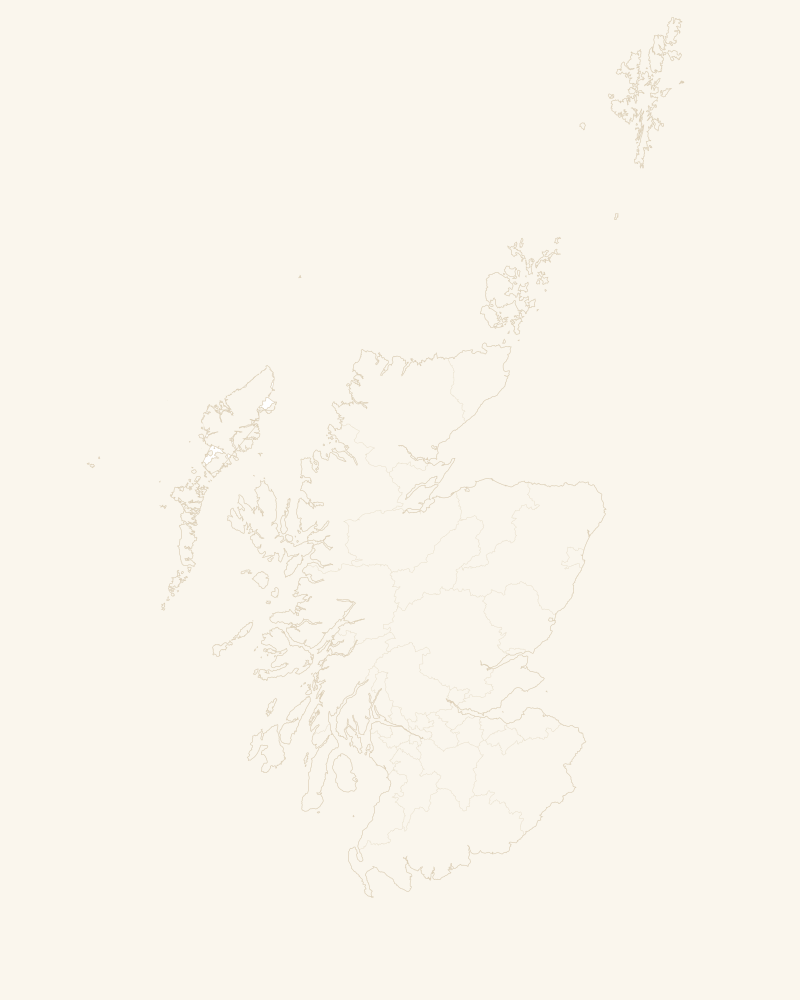
The seat of Clan Maclean
Seat vacantChief
No one leads the Clan Maclean community yet. When the movement opens, you can stand for its leadership, or help elect whoever does.
Current mission
No shared goal set yet. Once Clan Maclean has leadership, it sets the public focus: a restoration, a gathering, a real-world project that helps its own.
The Maclean clan is being rebuilt. Join the waiting list for the movement today, and you help decide who leads it and what it does.
Help rebuild the Maclean clan →Motto
Virtue Mine Honour
What does the Maclean name mean?
From 'Gilleain', Gillian of the Battle Axe, a 13th-century warrior said to descend from the kings of Dalriada.
The history of Clan Maclean
Gillean of the Battle Axe, and what the name actually says
The surname is an anglicisation of the Scottish Gaelic MacGilleEathain, in the clan's own collective form, Clann 'IllEathain. It is a patronymic built on a personal name meaning 'servant of Saint John', so that Maclean is, at root, 'son of the servant of John'. That is a churchman's name, not a warrior's, and it is worth knowing that before anything else: the family that became one of the fiercest sea-powers of the Hebrides carried a name given for devotion to a saint. Several different derivations for Maclean have been proposed over the years, and not all writers agree, but the servant-of-John reading is the one the clan itself carries.
Tradition names the founder as Gillean of the Battle Axe (1210-1263), a Scottish warlord. Beyond that, the traditions do not agree with one another. One line of descent makes him a scion of the kings of Dalriada; another attaches him to the FitzGerald dynasty; a third makes him a judex, a judge, and a councillor to King David I of Scots. These are the kind of origin stories most powerful clans acquired, and they should be read as claims to standing rather than as documented pedigree. The progenitors of Scottish clans can rarely be authenticated further back than the 11th century, and an unbroken line usually cannot be traced before the 13th or 14th. What is consistently told of Gillean is that he fought at the Battle of Largs in 1263, in the Scottish-Norwegian War against King Haakon of Norway, which the Scots won. The clan also dates its rise from a Papal Bull of Charter and Protection granted to Iona Abbey in 852 by Pope Leo IV. Iona sits a few miles off the corner of Mull, and the Macleans would later be entangled with its library and its ruin.
The first Maclean who can be watched in a document rather than a story is Gillean's son. Malise mac Gilleain (his name from the Gaelic Maoliosa, 'servant of Jesus') is said to have led his father's followers at Largs and to have taken the name Gillemor in 1263. In 1296 he signed the third of the Ragman Rolls, swearing fealty to Edward I of England, and wrote himself down as "Gillemor Mcilyn, County of Perth": Gillemor son of Gillean. Gillean's grandson Malcolm, the third chief, fought at Bannockburn in 1314 under Robert Bruce alongside more than a dozen other Scottish clans, and died in the reign of David Bruce leaving three sons: John, Donald and Neil.
It was John (Iain Dhu Maclean, the fourth chief) who settled on the Isle of Mull, and that move made the family. His two sons split the line in a way that still holds. Lachlainn Lubanach became progenitor of the Macleans of Duart; Eachainn Reaganach, Hector, became progenitor of the Maclaines of Lochbuie. Duart and Lochbuie are the two trunks from which almost every later Maclean branch grows, and the different spelling of Lochbuie's Maclaine is not an accident of clerks but the mark of a real and ancient division.
The dispensation of 1367 and the rock at Duart
By the 14th century the Macleans were a dominant force in the Western Isles, and about 1364 the fifth chief, Lachlan Lubanach Maclean of Duart (1325-1405), made the marriage that fixed their fortune. His bride, Mary Macdonald, was the daughter of John Macdonald, first Lord of the Isles, and the granddaughter of Robert II, King of Scots. The couple were closely enough related that the church had to be brought in, and on 3 May 1367 Pope Urban V issued a dispensation approving a marriage that had already been consummated. That document is the first mention of a Maclean in any official record anywhere. It was sought not out of piety but as insurance: a marriage blessed retroactively by Rome could not later be annulled for someone else's political convenience.
The dowry that came with Mary Macdonald was Duart Castle and much of Mull, and the wealth that travelled with her bought up further substantial parcels of the island. With it, Lachlan Lubanach took the hereditary office of Lieutenant-General of the Isles and was recognised by the Lord of the Isles as the superior Maclean on Mull. His younger brother Hector (1328-1407) was given Lochbuie in the late 1300s. In a single generation the family had moved from followers of the Lords of the Isles to the second power in their kingdom.
Duart itself is the reason the name is still recognised. It sits on a rock at the eastern tip of Mull, guarding the Sound of Mull, the sea road every galley from the Firth of Lorn to Ardnamurchan had to pass. The oldest fabric is a 13th-century curtain wall; the substantial tower or keep was added about 1390, in the flush of the MacDonald marriage, and further ranges were built inside the courtyard later. From Duart the chiefs marshalled their birlinns and galleys at Eilean Amalaig, and by the end of the 15th century they held Mull, Tiree, Islay and Jura, together with Knapdale and Morvern on the Argyll mainland and Lochaber in what later became Inverness-shire. A charter of 1409 names Hector Maclean constable of Cairnburgh, the fortress in the Treshnish Isles.
Red Hector of the Battles, and the Macleans who went north
In 1411 Donald Macdonald, Lord of the Isles, claimed the earldom of Ross in right of his wife Mariota Leslie, countess of Ross. Robert Stewart, Duke of Albany, refused the claim because he wanted Ross himself; the young King James I was then a prisoner of Henry IV of England, and Albany did nothing to get him home. The dispute was settled in the field near Inverurie in Aberdeenshire on 24 July 1411, at the Battle of Harlaw, against a mounted army of knights under Alexander Stewart, Earl of Mar.
The Macleans went with Donald Macdonald, who was their kinsman. They were led by the sixth chief, Hector Roy Maclean (Eachann Ruadh, Red Hector of the Battles), Donald's own nephew, and he commanded the right flank of the Isles army. In the middle of the fighting Hector met Sir Alexander Irvine, chief of Clan Irvine, in single combat. Both men died of the wounds they gave each other. It is the fight the clan has told about itself for six hundred years, and it is a fair summary of what the early Macleans were known for: honour, strength and a readiness to close.
Harlaw also sent a branch of the family inland for good. Tearlach, Charles, eldest son of Hector, first of Lochbuie, had fought in the vanguard; afterwards he sought protection inside the Clan Chattan confederation, and his son Hector married a daughter of the chief of the Mackintoshes. These Macleans of the North (Clan Tearlach) lost ownership of Urquhart Castle by 1509 and settled nearby at Dochgarroch, though they went on leasing much of Urquhart, and in 1609 Alexander Maclean of Dochgarroch signed the Clan Chattan Bond. They held Castle Spioradain, the castle of spirits, on an island near Inverness in around 1420; the story attached to it is that during a feud with the Camerons several Cameron men were executed and their bodies hung from the walls, and that the dead haunted the place afterwards. The site was destroyed when the Caledonian Canal was cut, and human bones came out of the ground.
Nearer home the fighting was constant and local. Through the 14th and 15th centuries the Macleans fought many battles with the Mackinnons, and in 1439 they fought the Camerons at the Battle of Corpach. Ardgour was taken from the McMasters in the 1430s, and the first Maclean of Ardgour, "Strong Donald the Hunter", was a son of the seventh chief of Duart. Kinlochaline came to the Macleans after the chief of the MacInneses was murdered along with his sons by the Mackinnons. This is how a Hebridean lordship was actually assembled: not by grant alone, but glen by glen, keep by keep.
When the Lordship fell
In 1484 the Macleans fought at the Battle of Bloody Bay on the side of the Lord of the Isles, the chief of Clan Donald, in the civil war that tore the Lordship apart from inside. Ewan Maclean, second of Ardgour, was killed there in about 1482. Nine years later the whole structure came down: in 1493 James IV abolished the Lordship of the Isles and confiscated it from the MacDonalds. It was the single most consequential event in the family's history.
For the Macleans the collapse of their overlords was a promotion. Duart and Lochbuie now held their lands by charter directly from the king, and Lochbuie thereby became a clan independent of Duart rather than a branch of it. Land that had been MacDonald came to Maclean hands at MacDonald expense: Aros Castle on Mull, which the MacDougalls had built and the Lords of the Isles had held, passed to the Macleans after 1493, and Ardtornish across the Sound, the Lordship's own council seat, was granted to the Duart chiefs after the forfeiture. Holding directly of the crown made a chief a tenant-in-chief; it also made him answerable, and in the century that followed the Macleans would find out exactly what that meant.
The clan's business was not only Hebridean. In 1513 Lachlan Maclean of Duart was killed at Flodden, in the catastrophe that took a Scottish king and much of the Scottish nobility in a single afternoon. The clan pushed its influence further out into Tiree and Islay and onto the mainland. And in 1560, with their allies the Mackays and the MacLeods, Macleans took service as gallowglass, the ferocious Norse-Gaelic mercenary soldiers of Ireland, under Shane O'Neill, chief of Tyrone. This was a settled trade on the western seaboard: within such clans there evolved a military caste of lesser gentry who were warriors rather than estate managers, and who crossed to Ireland seasonally to fight for pay.
Islay: the feud that nearly finished two clans
Through the 16th century the rising power of Clan Campbell pressed hard on the Macleans, and marriages were arranged between the two houses precisely to head off feuding. One went badly wrong. Chief Lachlan Maclean married Lady Elizabeth Campbell, daughter of the Earl of Argyll; the match was unhappy, and the story told ever since is that Maclean marooned his wife on a tidal rock in the sea and left her to drown. Fishermen took her off and carried her home to her own people. Her brother killed Maclean in Edinburgh in 1523.
The next generation was worse. In 1588 Lachlan Maclean became the first man prosecuted under the 1587 'slaughter under trust' law (the statute James VI had passed to stop feuding by making it a distinct crime to kill in cold blood after hospitality had been accepted or terms agreed) for the murder of his own new stepfather, John MacDonald, and seventeen other members of a MacDonald wedding party. Two years earlier, in 1586, the Macleans had fought the MacDonalds of Sleat on Jura at the Battle of the Western Isles. In 1588 they tried to take Mingarry Castle, seat of the MacDonalds of Ardnamurchan, using Spanish soldiers off the San Juan de Sicilia, a ship of the wrecked Armada then lying in Tobermory Bay. Sir Lachlan Maclean harried the MacDonalds of Islay so savagely that in 1594 the Privy Council declared both him and the MacDonald chief outlaws; in the same year he restored himself in the king's favour by fighting at the Battle of Glenlivet on Argyll's side against the Earl of Huntly and the Gordons. Macleans and Campbells were Protestant, and both disliked the MacDonalds; that was enough to make them allies whenever it suited.
The quarrel underneath all of it was narrow and legal. Both clans wanted occupancy of the crown lands called the Rinns of Islay. The Macleans were in possession and claimed to hold as tenants of the Crown; the Privy Council decided that Macdonald of Islay was the real crown tenant. It came to a head on 5 August 1598 at the Battle of Traigh Ghruinneart on Islay, where Sir Lachlan Mor Maclean (c.1554-1598), the fourteenth chief of Duart, was killed. His sons took revenge on the MacDonalds they held responsible with a massacre of the people of Islay that lasted three days; having obtained Letters of Fire and Sword, they were assisted in it by MacLeods, MacNeils and Camerons. What began as a dispute over the right to occupy a peninsula ended by bringing both clans close to destruction, and it is the part of the Maclean story that should be told without varnish.
The Crown's answer to all of this was to change the chiefs themselves. The Statutes of Iona in 1609 bound the chiefs of the Isles to live a large part of the year in Edinburgh and to have their heirs schooled in the English-speaking Lowlands. It was meant to turn island warlords into Scottish landed gentlemen, and over time it did. Edinburgh was expensive, the Highlands ran on cattle and service rather than cash, and chiefs began to work their lands commercially instead of as a social system. The chronic indebtedness that followed would eventually sell many of the great Highland estates out from under their families, the Macleans among the first.
Another for Hector
On 3 September 1631 Sir Lachlan Maclean was created a Baronet of Nova Scotia. When the wars of the three kingdoms came, he called out the clan for Charles I and for James Graham, Marquis of Montrose, the king's captain general. Macleans fought as royalists at Inverlochy in 1645, at Auldearn and at Kilsyth, alongside MacDonalds and the Irish troops raised by Alasdair MacColla, against the Argyll government forces of Clan Campbell under Archibald Campbell, Marquess of Argyll. At Inverlochy a royalist force of 1,500 MacDonalds and Macleans broke an Argyll army of 3,000.
The war reached their own doors. In 1647 Argyll's government troops attacked and besieged Duart Castle, and were beaten off by the Macleans. The same year the Campbells surprised the Macleans at Glen Garrisdale on Jura and killed many of them; tradition holds that a severed head and two limb bones of one of the dead adorned a cairn near what is still called Maclean's Skull Cave. Cairnburgh in the Treshnish Isles surrendered to the Covenanter general David Leslie, Lord Newark, in 1647, and in the 1650s a siege by Cromwell's forces destroyed many of the books and records that had been rescued from Iona and carried there for safety, a loss to Gaelic Scotland that cannot be measured.
Then came Inverkeithing. On the Fife shore in 1651, covering the retreat of Charles II's army, Sir Hector Ruadh Maclean, the eighteenth chief, and five hundred of his clansmen were cut down. Out of that day comes the clan's slogan, Fear eile airson Eachann ("Another for Hector"), the cry of the men who stepped forward one after another to stand over their chief as each was killed in turn. The clan's other slogan is Bas no Beatha, "death or life". The chief's crest is a tower embattled, and the motto on it is Virtue Mine Honour; the plant badge is crowberry, the low black-berried heath plant of the island moors. A reader who wants one sentence for what the name meant to the people who carried it could do worse than the one shouted at Inverkeithing.
The Campbells take Mull, and the risings that followed
The Macleans lost Mull not to a battle but to debt and law. In 1678 Archibald Campbell, ninth Earl of Argyll, invaded the Maclean lands on Mull and garrisoned Duart Castle. By 1679 the Campbells held Duart and most of the Maclean estates. The islands were fought over house by house: Donald Maclean of Coll garrisoned Breachacha on Coll against Argyll in 1679, Castle Loch Heylipol on Tiree was besieged through 1678 and 1679, and Cairnburgh held out against Campbell attack in 1679 and did not surrender until 1692. On Jura, where the Campbells had held the southern half since 1620 and complained continually of Maclean harassment, the Campbell constable was still moving against Macleans who had not sworn the Oath of Allegiance to King William in 1690.
This is the key to everything the clan did afterwards. When James VII was deposed in 1688, the Macleans were Presbyterian, not Catholic, and they were not obvious Jacobites: they backed the Jacobites to get back the Mull territories the Campbells had taken from them in the 1670s. Sir John Maclean, fifth Baronet, fought at Killiecrankie in 1689 under John Graham, Viscount Dundee. The clan came out again for the rising of 1715, and in 1716 their chief, Sir Hector Maclean, was created Lord Maclean in the Jacobite peerage. He was exiled to France, where he founded the Grand Lodge of Freemasons in Paris and served as its first Grand Master.
General Wade's report on the Highlands in 1724 put the fighting strength of Clan Maclean at 150 men. Set that against the clan that had held Mull, Tiree, Islay, Jura, Morvern, Knapdale and Lochaber two centuries earlier, and the number tells the whole story of what the loss of the estates had done. Sir Hector came back for the rising of 1745, was captured, held in the Tower of London until 1747 and died in Rome in 1750; in the field the clan was led by Maclean of Drimnin, who was killed at Culloden. Duart was abandoned after the rising and fell into ruin, lost to the family in 1751. Moy Castle, the Lochbuie seat held since 1360, was abandoned in 1752. Among the laws that followed Culloden was the Heritable Jurisdictions Act, which took from chiefs the right to hold their own courts; the ban on Highland dress that came with it was repealed in 1782.
Clearance, emigration, and the rock bought back
What emptied Maclean country was not the '45 but what came after it, and it was done by landlords rather than armies. Through the 18th century chiefs across the Highlands squeezed out the tacksmen, the lesser gentry who had managed the land, allocated the runrig strips, lent seed corn, droved the cattle to the Lowlands and turned out the clan host for war and for weddings alike. The Dukes of Argyll led the way, putting the tacks of farms and townships up for auction to the highest bidder, beginning with their Kintyre property in the 1710s and extending after 1737 to all their holdings, which by then included the Mull and Morvern ground taken from the Macleans. Letting a township to whoever bid most was a flat breach of duthchas, the old principle that the clan's land was a collective inheritance and the chief its protector. The historian T. M. Devine calls the displacement of the tacksman class one of the clearest demonstrations of the death of the old Gaelic society. Many tacksmen and the better-off farmers, tired of rising rents, simply left.
The Highland Clearances proper followed. In the first phase, peasant farmers were evicted and resettled in newly created crofting townships on the coast, on holdings deliberately made too small to live on so that the people would have to work in kelp or in fishing as well. In the second phase, when the kelp trade collapsed and the potato failed, those same overcrowded coastal communities could no longer feed themselves, and landlords found assisted passages cheaper than another year of famine relief to tenants already deep in arrears. The Western Highlands and the Hebrides (Mull, Tiree, Coll, Morvern, Jura) took the worst of it. Emigration to Canada and later to Australia followed, and went on rising, with a brief lull for the First World War, until the Great Depression. If you carry this surname in Ontario, in Nova Scotia, in Otago or in New South Wales, that is very often the door your family came through, and it was not opened willingly.
The other road out was the army, and the Macleans took it in numbers. From the defeat of the Jacobites onwards every chief has been a soldier. Allan Maclean of Torloisk fought at Culloden and afterwards raised and commanded the 84th Regiment of Foot, the Royal Highland Emigrants, at the Battle of Quebec; Allan McLane served in the American Revolution on the other side of that argument. Sir Fitzroy Maclean, tenth Baronet, fought at Sevastopol. In 1876 Sir Harry Maclean resigned his British Army commission to enter the service of the Sultan of Morocco, where he became the Sultan's military leader and personal adviser. Ardgour House, built in 1765 on the ground wrested from the McMasters three centuries earlier, stayed with its Macleans until 1996.
And then the rock came back. Duart had stood roofless and derelict for a century and a half when Sir Fitzroy Maclean, tenth Baronet and chief of the clan, bought it in 1911 and restored it. It is still owned by the Macleans of Duart, although the family now lives in Perthshire, and it opens to visitors each summer; its walls stood in for a Scottish castle in the film Entrapment, whose star Sean Connery had a Maclean mother, Euphemia McBain "Effie" McLean. The present chief is Sir Lachlan Hector Charles Maclean of Duart and Morvern, born 25 August 1942, twenty-eighth Chief of the Name and Arms of Maclean and twelfth Baronet, who succeeded his father in 1990. Chieftains still sit at Ardgour, Dochgarroch, Dunconnel, Pennycross, Torloisk and Kingairloch: the same branches, on much reduced ground.
One honest word about septs before you buy a tartan. Long lists of names are attached to Clan Maclean: Beaton, Black, Gillan, Gilzean, Lean, Leitch, MacFadyen, MacVey, Rankin and many more. Some of these are real: a sept was a family that followed a chief without sharing his surname, bound by marriage, by living on his land, or by a bond of manrent. But the lists as they now exist were largely drawn up in the 19th century by clan societies and tartan manufacturers, who linked as many surnames as they could to a clan whether or not any historical connection existed, so that anyone might feel entitled to a tartan. The clan tartans themselves are mostly Victorian; many derive from the Vestiarium Scoticum, a forgery passed off as an ancient manuscript. None of that touches the real history. It only means the history is the thing worth holding on to, rather than the cloth.
The last word belongs to a Maclean who fought with words. Sorley MacLean, born on Raasay and a schoolteacher by trade, took Scottish Gaelic (the language the Statutes of Iona, the clearances and the schools had all worked to strip out of the islands) and made it a modernist literary language capable of anything the 20th century could ask of it. Duart guards the Sound of Mull again, and the tongue the name is built from is still being written in. For a clan that lost its lands twice over, that is not a bad ending.
Champions of the Maclean name
The bearers whose lives are inseparable from this surname. Each has their own page, biography, achievements, geography, connection to the family.
Historic Places, Rebuilt
Explore the streets and seats the Maclean name knew, rebuilt with AI as they stood in history.
Historic Places, Rebuilt · New
The holy isle at its medieval height, the abbey, the high crosses and the kings' graves, under the Lordship of the Isles.
Historic Places, Rebuilt · New
The sea-girt seat of the MacLeods on Skye, the keep, the Fairy Tower, and the Fairy Flag in the chief's hall.
Historic Places, Rebuilt · New
The Campbells of Glenorchy's stronghold on its island in Loch Awe, garrisoned under Ben Cruachan.
Castles the Maclean held
Strongholds this name held for a decade or more, look one up, or rebuild it to explore.
- Duart Castle
Seat of Clan Maclean from the 14th century; lost in 1751 and recovered in 1911.
- Moy Castle
Held by the Macleans of Lochbuie from 1360 until the castle's abandonment in 1752.
- Aros Castle
Gained by Clan Maclean at MacDonald expense after the Lords of the Isles forfeited their lands.
- Ardtornish Castle
Granted to the MacLean chiefs of Duart after the 1493 forfeiture of the Lords of the Isles.
- Cairnburgh Castle
Property of Clan MacLean from the 15th into the 16th century; Hector Maclean was named constable of Cairnburg in a 1409 charter.
The castles of the homeland
The great strongholds of the homeland, look one up, see what it looked like in its prime, and recreate it to explore.
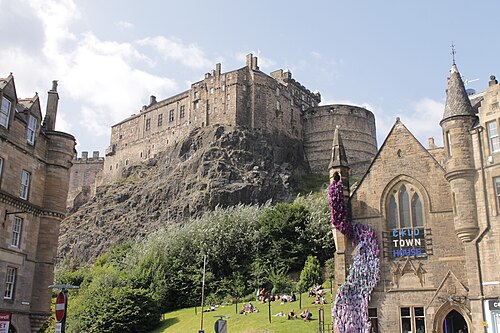 Edinburgh CastleRestored · prime 1520
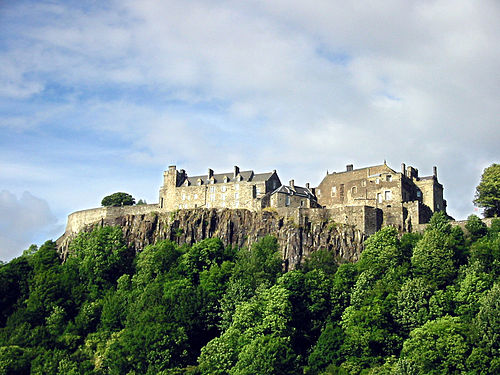 Stirling CastleRestored · prime 1542
 Glamis CastleStill standing · prime 1900
All castles in Scotland → · Strongest castles in Scotland → · Castles of Europe
Play As Your Clan
Hold a real castle against whatever you choose to send at it, take a ship out in her own service years, or stand at the shoulder of someone the record remembers. The chronicler sets the scene; the deeds are yours.
Notable bearers of the Maclean name
- Lachlan Mor MacLean (c.1554–1598), 14th chief of Duart