
Scotland · Restored
Duart Castle
Duart Castle is a medieval castle on the Isle of Mull, Scotland, long-held as the seat of Clan MacLean. Built in the 13th century, it fell into ruin after partial demolition in 1691 and was restored in the early 20th century, remaining under Clan MacLean stewardship and open to visitors.
First raised
1201
Its prime
1690
Today
Restored
As it stood in 1690
What Duart Castle looked like in its prime.
A compact, rectangular stone tower house (keep) of rough grey-brown rubble masonry sits directly atop a steep rocky crag, its base dropping to grassy slopes and the Sound of Mull beyond. Small round projecting corner turrets (bartizans) punctuate the angles; the roofline is pitched and covered in slate with tall stone chimneys and a flagstaff. The mass is largely a single large keep rather than an extended curtain of low curtain walls; in prime condition the masonry is intact and continuous.
Its story
The story of Duart Castle.
MacDougall Origins and the Macdonald Dowry, 13th Century–1390
Duart was probably built by Clan MacDougall in the 13th century and appears to have passed to Clan MacLean in the century that followed. In 1350 Lachlan Lubanach Maclean of Duart, 5th Chief, married Mary Macdonald, daughter of John of Islay, Lord of the Isles, and Duart came to the Macleans as part of her dowry. John of Islay's son, Donald Macdonald, Lord of the Isles, confirmed the castle to the Macleans by charter in 1390.
The Campbell Siege and the Loss of the Swan, 1647–1653
In 1647 Duart was attacked and besieged by the Argyll government troops of Clan Campbell, who were defeated and driven off by the Royalist forces of Clan MacLean.
In September 1653 a Cromwellian task force of six ships anchored off the castle, but the Macleans had already withdrawn to Tiree. A storm on 13 September wrecked three of the ships, among them the Swan. North of the castle, within a Historic Marine Protected Area, lie the remains of a wrecked 17th-century warship believed to be her.
Surrender to Argyll and Demolition, 1678–1751
In 1678 the 9th Earl of Argyll, Chief of Clan Campbell, invaded the MacLean lands on Mull; Sir John Maclean, 4th Baronet, fled the castle for Cairnbulg Castle and afterward Kintail, under the protection of the 3rd Earl of Seaforth. In 1691 he surrendered Duart to the 10th Earl of Argyll, later created 1st Duke of Argyll, and the Campbells partially demolished the castle, scattering the stones from its walls, the 5th Laird of Torloisk used some of them to build a cottage near the site. By 1751 the remains stood abandoned.
From Ruin to Restored Clan Seat, 1801–2014
Descendants of the 1st Duke of Argyll sold the ruin in 1801 to MacQuarrie, who sold it on to Carter-Campbell of Possil, who kept it as a ruin within the grounds of his Torosay estate; Carter-Campbell later sold Torosay, ruin included, to A. C. Guthrie in 1865. On 11 September 1911 the ruin was separated from the Torosay estate and bought by Sir Fitzroy Donald Maclean, 26th Chief of Clan MacLean, who restored it. The castle was listed as a category A listed building in July 1971.
In 2012 the Chief of Clan MacLean announced that the family could no longer afford the castle's upkeep in light of the expense of major repairs. In the winter of 2013–14 Duart lost four ceilings to water penetration through its chimneys, and in July 2014 a restoration appeal was launched. Duart remains the seat of Clan MacLean, and the regimental colours of the First World War Canadian 236th Battalion (New Brunswick Kilties) are laid up in its Great Hall.
Step inside
7 places to explore in 1690.
The record describes 7 distinct spots at Duart Castle, including 1 interior: great hall (interior). Create your own photoreal reconstruction and explore every one, more scenes means more rooms, more angles, and more of the place to stand in.
Build Your Own Castle
Recreate Duart Castle with AI to explore it.
The artist rebuilds it as it stood in 1690, a photoreal reconstruction that belongs to you alone. Pay with coins, no subscription needed.
Recreate this castle →Defend this castle →Whose castle
Clans who held Duart Castle.
The families that held Duart Castle for a decade or more across its history, follow a name to its clan.
Seat of Clan Maclean from the 14th century; lost in 1751 and recovered in 1911.
From the archive
Duart Castle on paper: the measured plan and period views.
The survey plan and photographs below are the ground truth this page's reconstructions are checked against, drawn and photographed while the castle was still a working garrison. Every image is public-domain or openly licensed, with its source named.
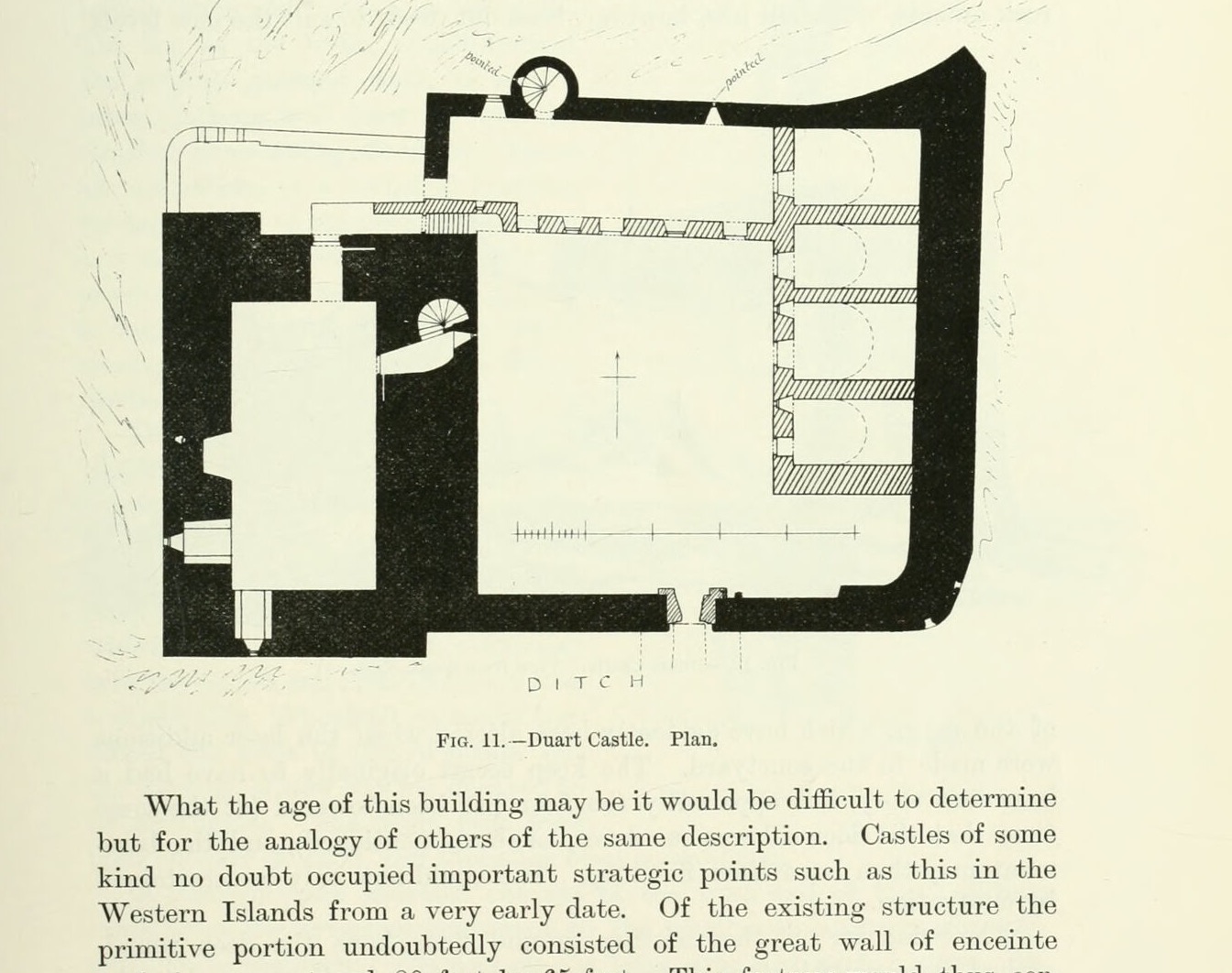
FIG. 11. Duart Castle. Plan.
1889 · MacGibbon & Ross, vol. 3 (1889)
Public domain
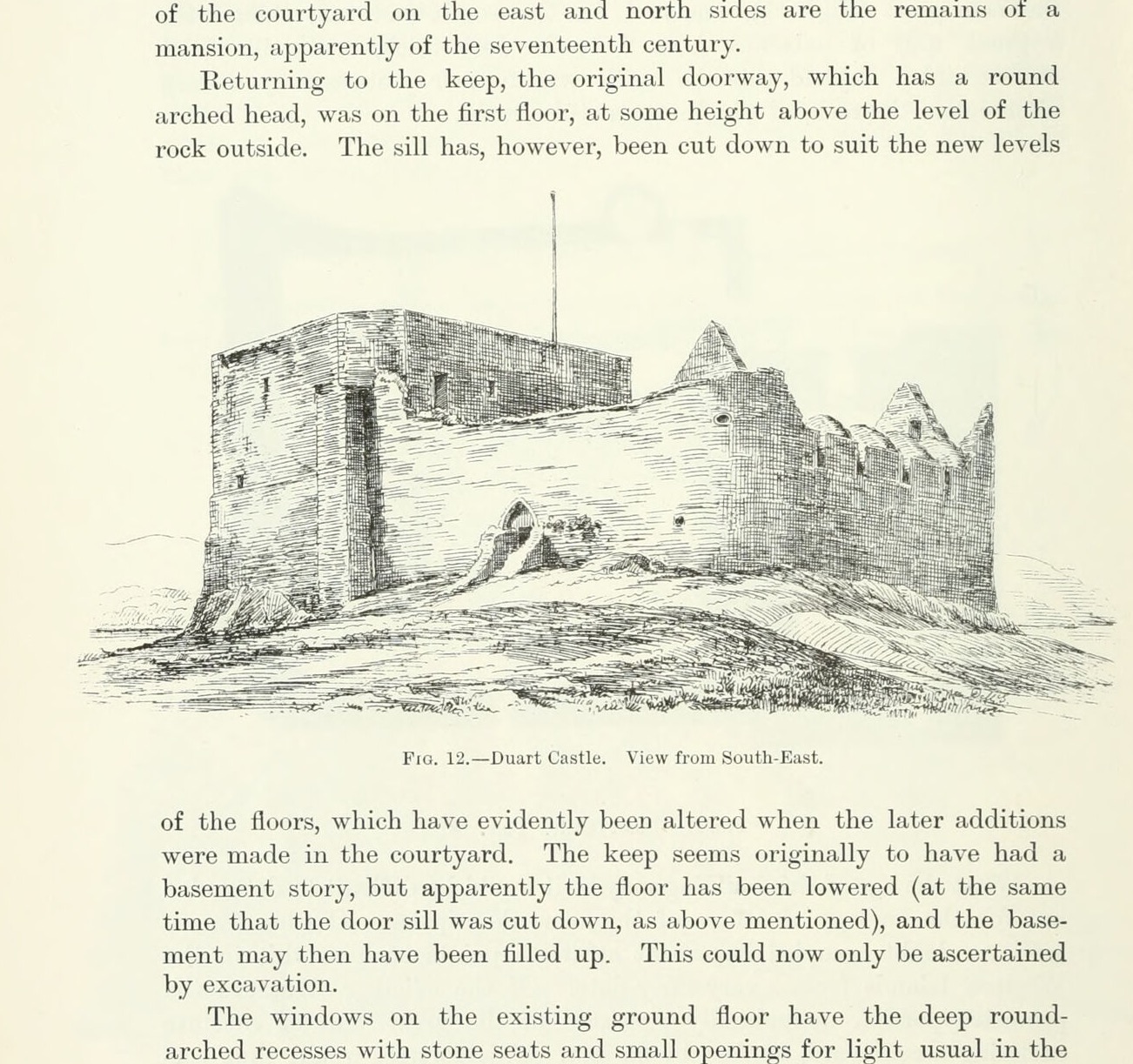
Fig. 12. Duart Castle. View from South-East.
1889 · MacGibbon & Ross, vol. 3 (1889)
Public domain


