
Scotland · Ruin
Ardtornish Castle
Ardtornish Castle is a medieval fortress site on the seaward tip of a rocky promontory in Morvern on Scotland's west coast. It was a principal seat of the Lords of the Isles and is today a scheduled monument consisting of ruined masonry atop the promontory. The surviving remains sit above the Sound of Mull about two kilometres southeast of Lochaline.
Its prime
1461
Today
Ruin
As it stood in 1461
What Ardtornish Castle looked like in its prime.
Sited on the seaward end of a narrow, rocky promontory, the castle reads as a compact stone fortress clustered at the highest point above the shore. The primary mass is a rectangular stone tower set against lower ranges of stone-built service buildings and enclosing walls, all of roughly coursed local dark-grey masonry. Pitched timber-and-slate roofs covered the domestic ranges; the roofline stepped down the slope toward the landward side. The site faces the Sound of Mull with rocky foreshore below.
Its story
The story of Ardtornish Castle.
Somerled's Fortress and the Seat of the High Chiefs
Ardtornish Castle stands at the seaward end of a promontory running south into the Sound of Mull, about a mile south-east of the village of Lochaline in Morvern. Somerled had a fortress here in the mid-12th century, when Ardtornish was the hub of sea lanes that mattered to him. From the early 14th century to the late 15th it was one of the principal seats of the high chiefs of Clan Donald. John of Islay, Lord of the Isles and sixth chief of the clan, died at Ardtornish in the 1380s, and his funeral procession sailed out through the Sound of Mull to Iona.
Donald of Islay's Charters and the Road to Harlaw, 1411
His son and successor Donald of Islay granted charters dated at Ardtornish, at least two of which have survived, one in Latin and the other in Gaelic. Tradition holds that Donald's galley fleet sailed from here to carry the vassals of the Isles to the west coast of Ross-shire, where they landed to begin the invasion mounted in support of his claim to the Earldom of Ross. That campaign resulted in the indecisive Battle of Harlaw in 1411.
The Treaty of Ardtornish-Westminster, 1461–1493
In 1461 John's great-grandson, also named John of Islay and the fourth and last Lord of the Isles, met the commissioners of King Edward IV of England at Ardtornish. The treaty negotiated there bound John, his kinsman Donald Balloch of Dunnyvaig and the Glens, and the forfeited Earl of Douglas to become loyal subjects of the English king; in return each was to hold a third of the kingdom of Scotland, with generous pecuniary rewards until the conquest of it had been completed.
The English government revealed the treaty to the government of Scotland in 1474, and the Earldom of Ross was lost the following year. In the aftermath of the Raid on Ross, John's final forfeiture as Lord of the Isles followed in 1493.
MacLean Lands, Campbell Seizure and Abandonment
The lands of Ardtornish remained for a time in the hands of the Crown, but were eventually given to the Clan MacLean chief of Duart Castle, who had already acquired large tracts of Morvern. The castle was probably abandoned around the end of the seventeenth century, by which time Ardtornish and the other Morvern estates of the MacLeans had been captured by the Campbell Earls of Argyll. The ruin has been protected as a scheduled monument since 1970.
Step inside
5 places to explore in 1461.
The record describes 5 distinct spots at Ardtornish Castle, including the full exterior approach. Create your own photoreal reconstruction and explore every one, more scenes means more rooms, more angles, and more of the place to stand in.
Build Your Own Castle
Recreate Ardtornish Castle with AI to explore it.
The artist rebuilds it as it stood in 1461, a photoreal reconstruction that belongs to you alone. Pay with coins, no subscription needed.
Recreate this castle →Defend this castle →Whose castle
Clans who held Ardtornish Castle.
The families that held Ardtornish Castle for a decade or more across its history, follow a name to its clan.
From the archive
Ardtornish Castle on paper: the measured plan and period views.
The survey plan and photographs below are the ground truth this page's reconstructions are checked against, drawn and photographed while the castle was still a working garrison. Every image is public-domain or openly licensed, with its source named.
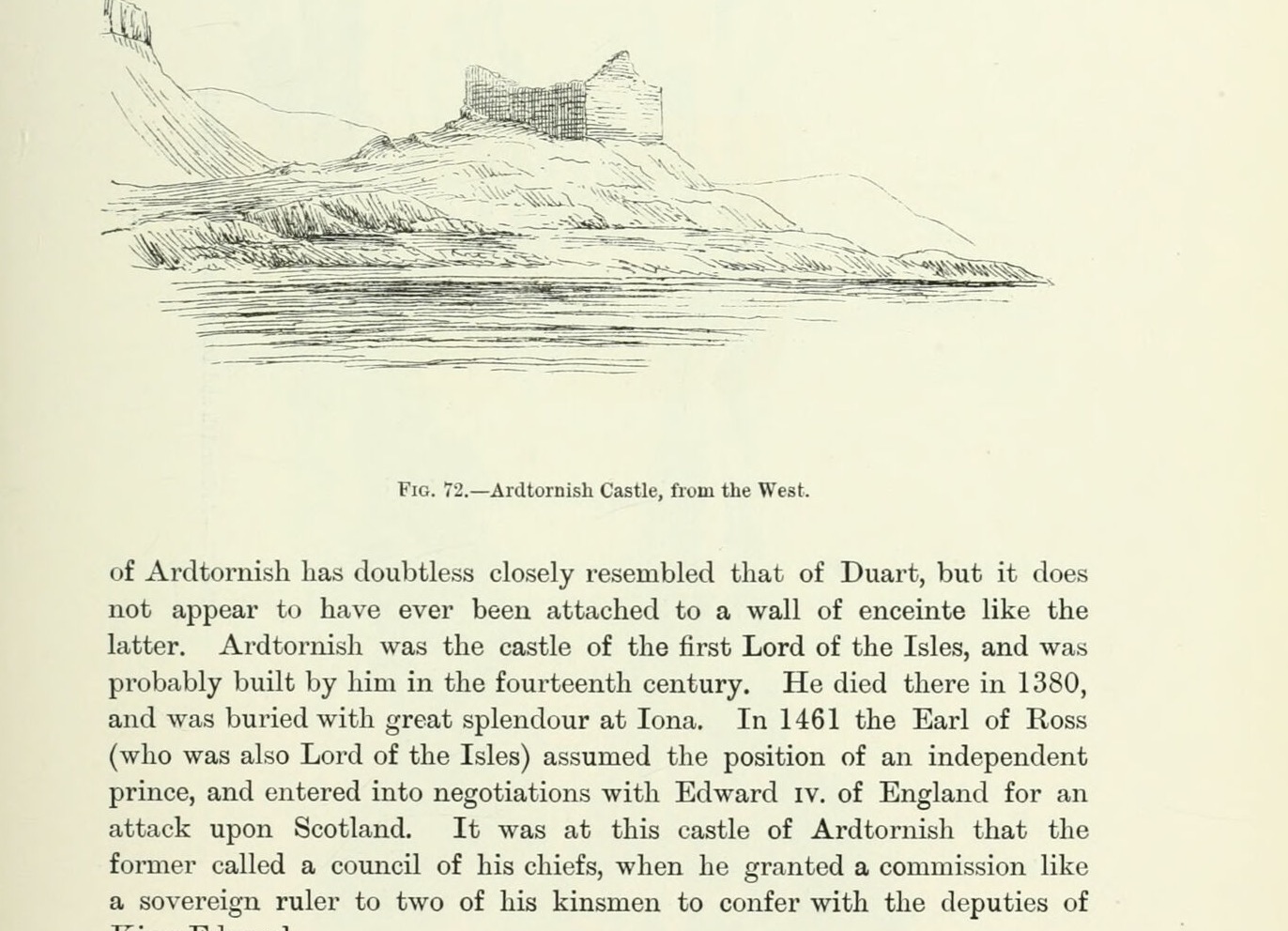
Fig. 72. Ardtornish Castle, from the West.
1889 · MacGibbon & Ross, vol. 3 (1889)
Public domain


