Scotland · Ruin
Dunglass Castle
Dunglass Castle is a 14th-century castle ruin on a rocky cliff overlooking the River Clyde in West Dunbartonshire. Much of the curtain wall survives to heights of around 7–8 metres and the site includes later structures and memorials; the ruin is a Category B listed building and is currently at risk.
First raised
1400
Its prime
1400
Today
Ruin
As it stood in 1400
What Dunglass Castle looked like in its prime.
Perched on a rocky riverside cliff above the River Clyde, the castle originally presented a continuous stone curtain wall rising straight from the rock face to about 7–8 metres, punctuated by a stout cylindrical tower at a corner and a small conical dovecot set into the south wall. A riverside landing sits below the walls, and corbels along the south face indicate a former projecting wooden hoarding above the wall; roofs and internal ranges would have filled the enclosure when complete.
Its story
The story of Dunglass Castle.
Caput of the Barony of Colquhoun, 1380
Dunglass Castle stands on a rocky cliff above the River Clyde in West Dunbartonshire. Built in 1380, it served as the caput of the Barony of Colquhoun, Laird of Luss.
Lord Fleming's Soldiers, 1568–1569
In November 1568 the castle was attacked by Lord Fleming's soldiers out of Dumbarton Castle, and they came against it again in February 1569. That second attack was repulsed, and Lord Fleming's half-brother was captured.
Stone for the Quay, 1735–1812
The castle was ruinous by the eighteenth century, and in 1735 much of its stone, from the castle and the courtyard alike, was carried off to repair the quay on an order of the Commissioners of Supply. The practice ended when Andrew Buchanan of Auchentorlie purchased the castle in 1812.
From Talwin Morris to the Buildings at Risk Register
The graphic artist Talwin Morris leased the castle in July 1893 and remodelled its interior; a remnant of the Morris interior is held in the West Dunbartonshire Council collection. In July 1899 the house was leased to Charles Macdonald, brother of Margaret and Frances Macdonald. Morris's interiors were themselves remodelled by Mackintosh and Macdonald, who created new interiors and furniture. Among them was a white room later refined in Hill House, the Helensburgh house Mackintosh designed for the publisher Walter Blackie. A bookcase the pair created is in the collection of the National Museum of Scotland, and all of Mackintosh's work has been removed from the castle.
The obelisk memorial to Henry Bell, an early steamship pioneer, stands on the grounds. Designated a Category B listed building in 1971, the ruin is graded at high risk by the Buildings at Risk Register for Scotland.
Step inside
6 places to explore in 1400.
The record describes 6 distinct spots at Dunglass Castle, including 1 interior: enclosed inner courtyard (bailey). Create your own photoreal reconstruction and explore every one, more scenes means more rooms, more angles, and more of the place to stand in.
Build Your Own Castle
Recreate Dunglass Castle with AI to explore it.
The artist rebuilds it as it stood in 1400, a photoreal reconstruction that belongs to you alone. Pay with coins, no subscription needed.
Recreate this castle →Defend this castle →From the archive
Dunglass Castle on paper: the measured plan and period views.
The survey plan and photographs below are the ground truth this page's reconstructions are checked against, drawn and photographed while the castle was still a working garrison. Every image is public-domain or openly licensed, with its source named.
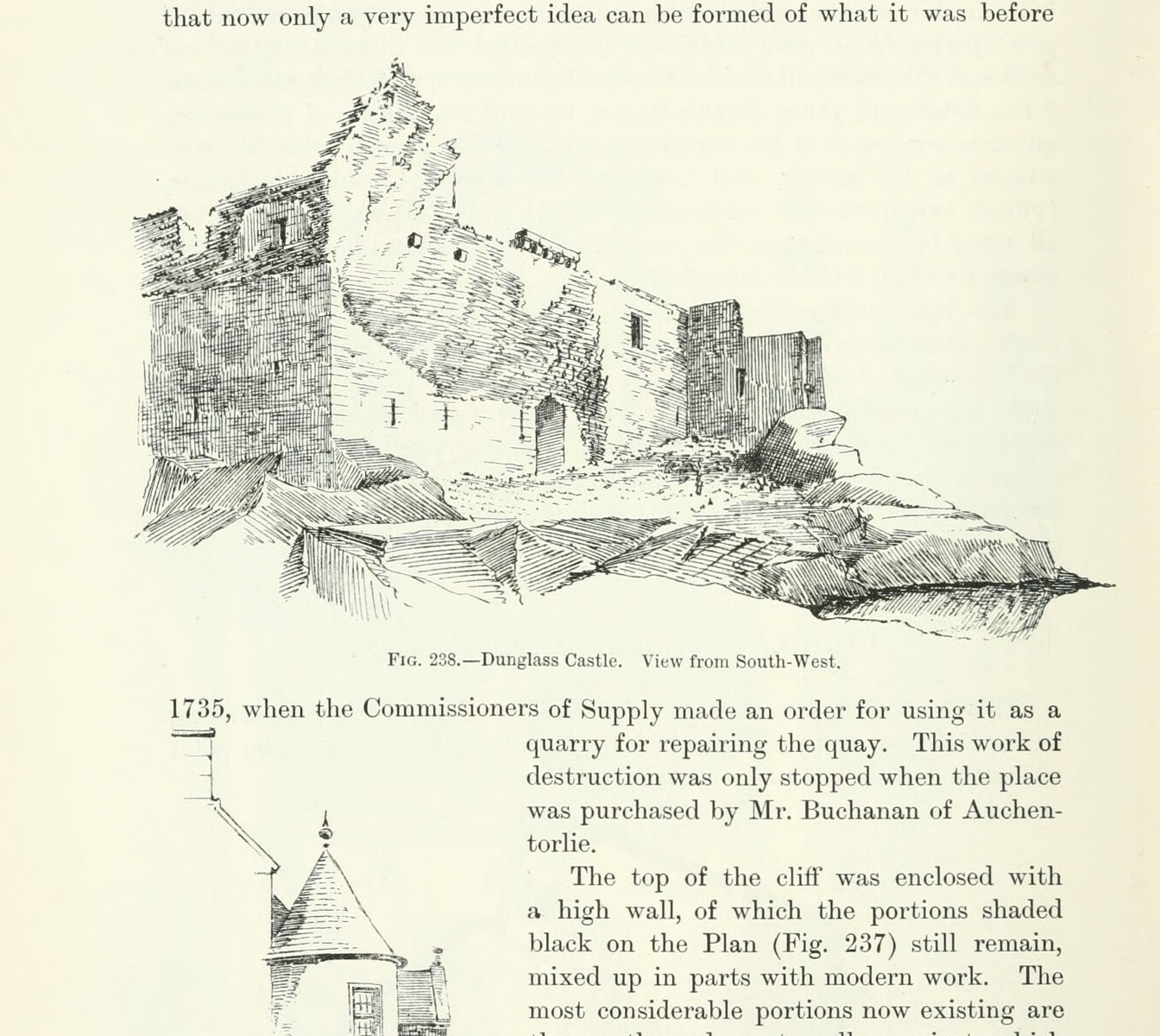
Fig. 238. Dunglass Castle. View from South-West.
1889 · MacGibbon & Ross, vol. 3 (1889)
Public domain
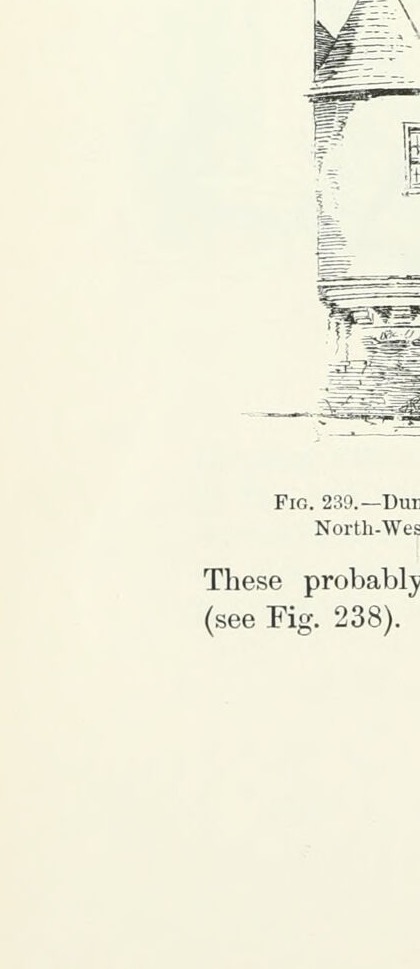
Fig. 239. Dunglass Castle. North-West Turret.
1889 · MacGibbon & Ross, vol. 3 (1889)
Public domain
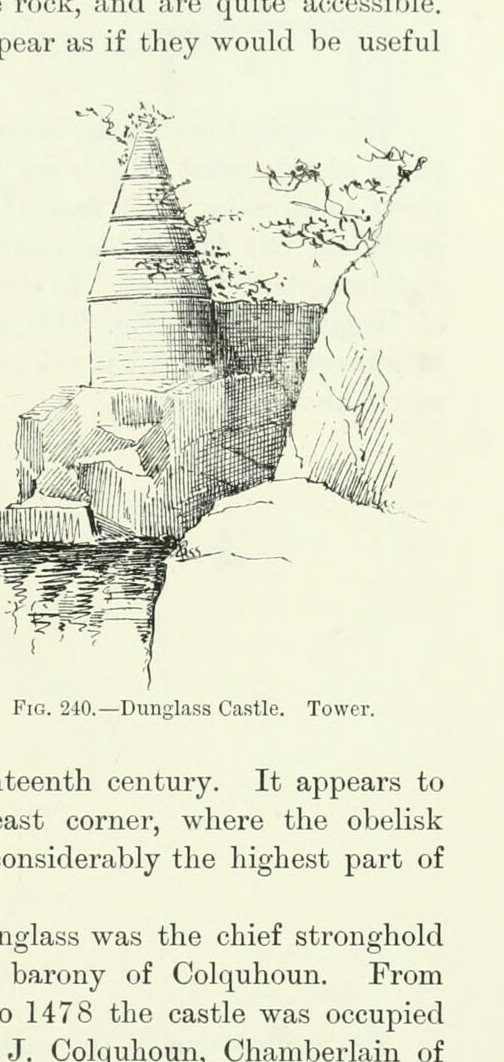
Fig. 240. Dunglass Castle. Tower.
1889 · MacGibbon & Ross, vol. 3 (1889)
Public domain
Nearby