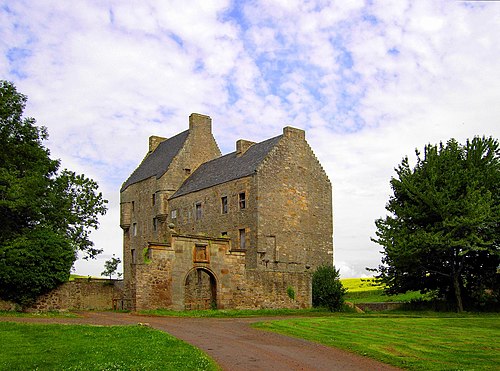
Scotland · Ruin
Kilchurn Castle
Kilchurn Castle is a medieval stronghold on a rocky peninsula at the northeastern end of Loch Awe in Argyll and Bute, Scotland. Built from the mid-15th century by the Campbells of Glenorchy, it was extended over the following centuries and later used as a garrison before being abandoned in the 18th century; today it survives as a scheduled ruin in the care of Historic Environment Scotland.
First raised
1450
Its prime
1693
Today
Ruin
As it stood in 1693
What Kilchurn Castle looked like in its prime.
Perched on a rocky peninsula at the northeast end of Loch Awe, Kilchurn presents a central five-storey rectangular tower house set within an outer curtain wall and courtyard. The castle includes a rebuilt south range and single-storey laich hall, a south‑east chapel range, circular corbelled corner turrets on the parapet, and an L‑shaped three‑storey north block added as barracks; all built of grey masonry and originally roofed and occupied.
Its story
The story of Kilchurn Castle.
The Campbells of Glenorchy Take Kilchurn
The rocky site at the northeastern end of Loch Awe originally belonged to Clan Gregor, and was lost to Colin Campbell around 1440. Sir Colin Campbell, 1st of Glenorchy, a younger son of Duncan Campbell, 1st Lord Campbell and ancestor of the Earls of Argyll, had been granted Glen Orchy by his father in 1432, and around 1450 he established Kilchurn as the base of the Campbells of Glenorchy, the first of several castles that anchored the family's expansion across the central Highlands. The first castle was a five-storey tower house with a courtyard defended by an outer wall, standing on a small island scarcely larger than the castle itself, and would have been reached by an underwater or low-lying causeway.
Flodden, Black Duncan and the Building Lairds
Sir Colin's son, Sir Duncan Campbell of Glenorchy, added the "laich hall", a single-storey dining hall along the inside of the south curtain, before falling at Flodden in 1513 among the many Scottish nobles killed there. In the second half of the 16th century the 6th Laird, another Sir Colin Campbell (1499–1583), added chambers north of the tower house and remodelled the parapet with circular corner turrets on corbels; he also built Balloch Castle, now Taymouth, by Loch Tay, consolidating Perthshire gains won largely at the expense of the Campbells' former allies, the MacGregors of Glenstrae.
Sir Duncan Campbell, 1st Baronet (c.1550–1631), known as "Black Duncan", rebuilt and enlarged the south range in 1614 and added a new range with a chapel in the south-east part of the courtyard, while also beginning Finlarig Castle at the west end of Loch Tay. In 1629 Sir Ewen Cameron of Lochiel was born at Kilchurn; his mother, Margaret Campbell, was a daughter of the 3rd Baronet.
Barracks for 200 and the Jacobite Risings
Sir John Campbell, 5th Baronet, was created Earl of Breadalbane and Holland in 1681, and worked both sides of a turbulent age, negotiating with Jacobite rebels while serving William III. In 1693 he promoted a scheme to pacify the Highlands, and as part of it began converting Kilchurn into a modern barracks for 200 troops, adding the three-storey L-shaped block along the north side.
On Queen Anne's death in 1714 Breadalbane held a conference of Jacobites at Kilchurn, then joined the Earl of Mar's rising of 1715. When it failed, he came home to find pro-government members of his own household had handed Kilchurn and Finlarig to Alexander Campbell of Fonab, to whom he surrendered in February 1716; he died under house arrest at Taymouth the following year. Kilchurn served as a government garrison during the 1745 rising, and after the family moved to the reconstructed Taymouth Castle in 1740 they tried, unsuccessfully, to sell it to the government.
Lightning, Turner and the Long Peninsula
In 1760 the castle was badly damaged by lightning and completely abandoned; the remains of a tower turret still rest upside-down in the centre of the courtyard, testimony to the storm's violence, and the castle was unroofed by 1770. J. M. W. Turner painted the ruin on one of his Scottish tours in the early 19th century, and in 1817 the water level of Loch Awe was altered, leaving the castle on a long peninsula rather than an island. MacGibbon and Ross surveyed it around 1887, after which restoration work appears to have altered some original features. A scheduled monument since 1937, the ruin is now in the care of Historic Environment Scotland.
Step inside
8 places to explore in 1693.
The record describes 8 distinct spots at Kilchurn Castle, including 4 interiors: upper chamber of the tower house, laich hall (south curtain), chapel in the south-east courtyard range and more. Create your own photoreal reconstruction and explore every one, more scenes means more rooms, more angles, and more of the place to stand in.
Build Your Own Castle
Recreate Kilchurn Castle with AI to explore it.
The artist rebuilds it as it stood in 1693, a photoreal reconstruction that belongs to you alone. Pay with coins, no subscription needed.
Recreate this castle →Defend this castle →Whose castle
Clans who held Kilchurn Castle.
The families that held Kilchurn Castle for a decade or more across its history, follow a name to its clan.
Campbell of Glenorchy stronghold from the 1450s to the 1740s.
From the archive
Kilchurn Castle on paper: the measured plan and period views.
The survey plan and photographs below are the ground truth this page's reconstructions are checked against, drawn and photographed while the castle was still a working garrison. Every image is public-domain or openly licensed, with its source named.

Kilchurn Castle, Loch Awe, Scotland LOC 3449513621
ca. 1890-1900 · Photochrom Prints Collection (via Wikimedia Commons)
Public domain
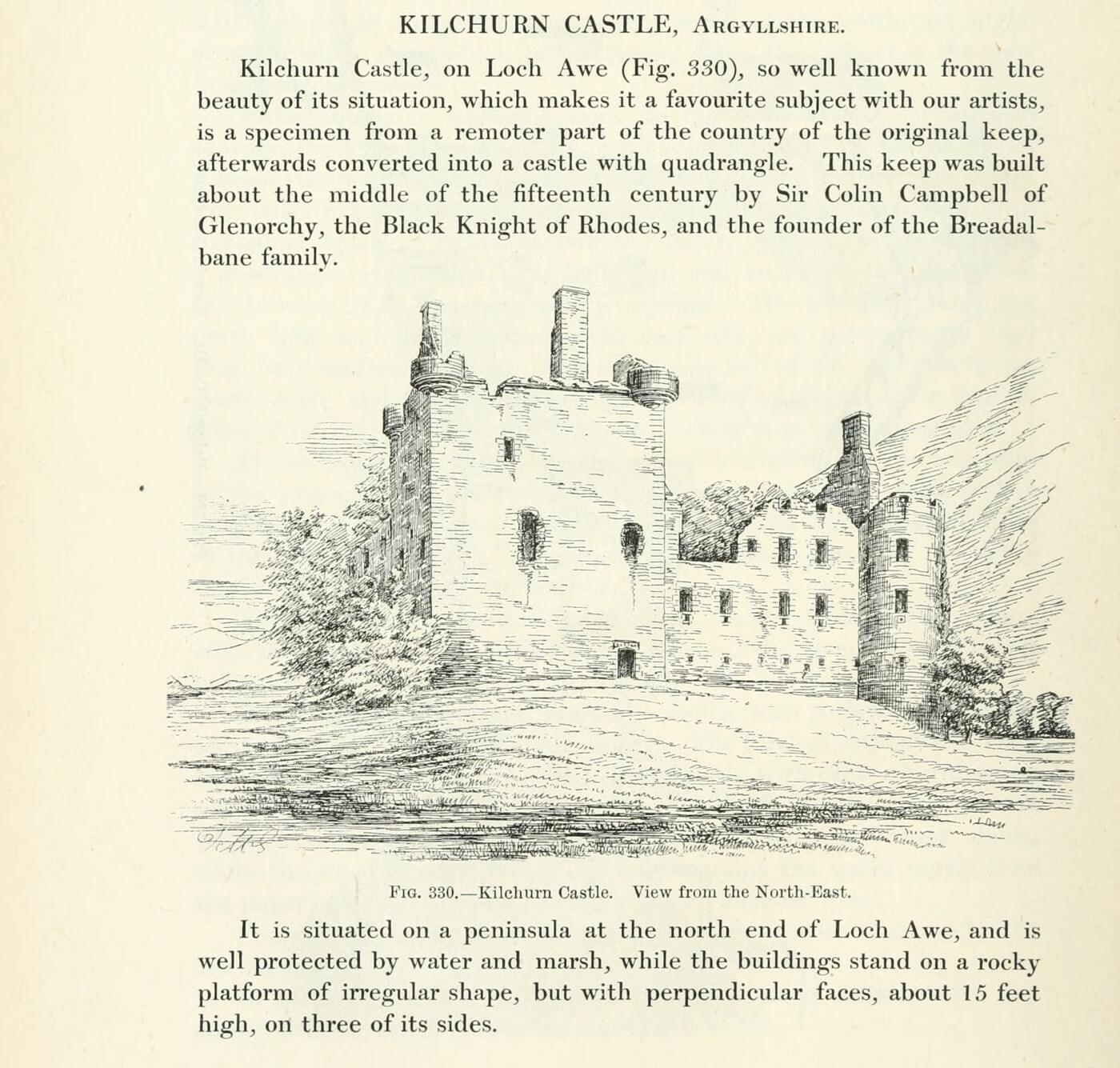
Fig. 330. Kilchurn Castle. View from the North-East.
1887 · MacGibbon & Ross, Castellated and Domestic Architecture of Scotland, vol. 1 (1887)
Public domain