Clan Morrison
also Morison, MacGille Mhoire
Of Pabbay and the Outer Hebrides, the brieves of Lewis, hereditary judges under the Lordship of the Isles.
- Origin
- The Highlands & Islands, Scotland
- Motto
- Teaghlach Phabbay
- Famous bearer
- The Brieves of Lewis, hereditary judges of the Outer Hebrides
- Register
- Scottish clan
The Morrison arms, tartan and country

TartanModern morrison tartan“Modern” colours: the deeper shades chemical dyes produced from the 1860s. The same pattern, not a newer one.Peter4All · CC BY-SA 4.0 
TartanMorrison Badge and Hunting Tartan (Modern Colours)The hunting sett: the same pattern in muted browns and greens, worn in the field where the brighter colours would show.C. W. Gilmore · CC BY-SA 4.0 
Coat of armsArms of Morrison, Baron MargadaleBorne by Baron Margadale: the ennobled line of the name, not the name at large.MostEpic · CC BY-SA 4.0 
Coat of armsCoat of arms of the Morrison of RuchdiBorne by the Ruchdi line, one branch of the name rather than all of it.Czar Brodie~commonswiki · CC BY-SA 4.0

.jpg)


- Tartan: The checked cloth the family is known by.
- Coat of arms: Granted to an individual and inherited down that one documented line. These are the arms of particular families of the name, not of everyone who shares the surname.
What is the Morrison clan tartan?
Two Morrison setts are shown above: the same pattern in “modern” colours, the deeper shades chemical dyes gave from the 1860s, and the hunting sett, in muted browns and greens. They are not rival claims to be picked between; they are different records, and different weaves, of the same family cloth. A sett is the block of coloured bands the cloth is built from, repeated in both directions; the whole plaid is that one square enlarged.
Almost no clan tartan is medieval. Highland dress was proscribed from 1746 until 1782, and when it returned it returned as ceremony rather than everyday cloth, so the surname-to-sett map was fixed after the break, by the Bannockburn weavers’ pattern books, the royal visit to Edinburgh in 1822, and the Vestiarium Scoticum of 1842. The Morrisons wore tartan long before any of that. What the registers fixed was which one. Nobody polices any of it. Wearing the Morrison sett declares allegiance to the name, not descent from any particular line of it.
CoreHistoric reach
The seat of Clan Morrison
Seat vacantChief
No one leads the Clan Morrison community yet. When the movement opens, you can stand for its leadership, or help elect whoever does.
Current mission
No shared goal set yet. Once Clan Morrison has leadership, it sets the public focus: a restoration, a gathering, a real-world project that helps its own.
The Morrison clan is being rebuilt. Join the waiting list for the movement today, and you help decide who leads it and what it does.
Help rebuild the Morrison clan →Motto
Teaghlach Phabbay
“Family of Pabbay”
What does the Morrison name mean?
Two parallel etymologies. In the Hebrides: Mac Gille Mhoire, 'son of the servant of (the Virgin) Mary', anglicised as Morrison. In the Lowlands: a patronymic of Maurice (Morris), with the genitive 's' added in the English fashion. Both surnames produced the same Anglicised form, and the Hebridean Clan Morrison and the Lowland Morrison surname pool share only the spelling.
The history of Clan Morrison
The servant of Mary, and the second r
Mac Gille Mhoire breaks into three parts: mhic, son; gille, servant; Mhoire, Mary. It belongs to the youngest productive layer of Gaelic naming, the devotional compounds coined after Christianisation, at a point when older fusions like Dòmhnall, world-strength, had stopped being made and Gille Chrìost, servant of Christ, still could. Anglicised, the name settled first as Morison with a single r, and the doubled spelling only became the popular form early in the 19th century. Alexander Morison, writing on the heraldry of the Clan MacGhille-mhuire, argued for a different ancestry entirely: adherents of the jarls of More or Moeri in Norway.
Gaelic grammar left marks the English spelling hides. A surname bends to its bearer, MacDhòmhnaill for a man and NicDhòmhnaill for a woman, the latter shortened from nighean mhic, daughter of the son of. The older element ua or ó, descendant, thinned to a vowel in speech and then dropped out of Anglicised forms. Nor did everyone on clan ground carry the clan surname; that came with a non-Gaelic-speaking administration applying names wholesale. On Lewis around 1640, families recorded as McBrief or mac a' Bhritheimh became Morrisons outright.
The paper trail runs ahead of the clan itself. The earliest recognisable spelling is Ricardus Morisson, in the Yorkshire poll tax of 1379; fifty years on, Arthuro Morison domino de Darleith witnessed John MacRoger's resignation of Gleane MacKerne to John of Culquoune of Luss on 7 February 1429. Parish scribes did the rest: an Aberdeen couple married in 1584 as George Morese and Babara Forguson appear later as George Moreson, and later still as George Morrison and Barbara Ferguson. Only the registration act Lord Elcho, 10th Earl of Wemyss, carried on 31 May 1854 froze such spellings where they stood.
Clann-na Breitheamh, the kindred that judged Lewis
The brieve was a breitheamh, a judge, and on Lewis the office was heritable property like a farm. The chiefs who held it were the Morrisons of Habost and Barvas, and it so defined the kindred that it supplied their other name: Clann-na Breitheamh, the children of the judge. Highland disputes were normally settled by arbitration before a panel of leading gentry overseen by a chief, with no appeal from its finding. Lewis simply kept one family permanently in the chair.
The first Morrison on record is Hutcheon, in Gaelic Ùisdean, a contemporary of Rory MacLeod, the last chief of the MacLeods of Lewis, and holder of the brieveship. Behind the chiefly line stood a very large kindred: as late as the census of 1861 there were 1,402 Morrisons on Lewis, one islander in fifteen, spread from Ness and Barvas down the west side, with further strength in North Uist and around Durness. Numbers on that scale, generations after the family lost its office, mark how thoroughly the name had held the north of the island.
The end came quietly rather than by decree. Moncreiffe of that Ilk judged it unlikely the brieves exercised real judicial authority after about 1595, and the Morisons are counted as holding the office only to 1613. The last brieve named in the record appears not as a judge but as a target: Donald MacIndowie Brieff, against whom the Tutor of Kintail issued a Letter of Fire and Sword. By the 19th century, tracing the descendants of the brieve chiefs was reckoned impossible.
Hutcheon's deathbed, and the son who was not a MacLeod
In the 16th century Hutcheon Morrison confessed on his deathbed that he, and not the MacLeod chief, was the father of Torquil MacLeod. Torquil was disinherited and the chiefship passed to another man. Still holding himself the rightful chief, Torquil allied with the Morrisons, until then a peaceable kindred, and with the far more aggressive Mackenzies. The alliance beat the MacLeods. Torquil then declared himself a MacLeod after all and turned on both his allies, driving the Morrisons off their lands and goods. They returned to Ness, but never held power on Lewis again.
The Macaulays of Uig kept the pressure on. They killed Donald Ban, brother of John Morrison the brieve, at Habost; the Morrisons raided Uig in answer; the Macaulays called in their allies the MacLeods of Lewis. The Morrisons were beaten badly at the Caws of Tarbert, and a combined force went straight into their lands. The chief was taken and imprisoned at Rodil. He got out, but the MacLeods used their standing with the king to have him proclaimed an outlaw, which left him without lawful recourse of any kind.
What he did next was calculated. He carried off one of the MacLeod heiresses and offered to return her in exchange for a royal pardon, which he got; the girl came back unharmed. The feud passed to the next chief, Uisdean, who invaded north Harris and was met by Iain Mor MacLeod at Clachan on Taransay. Tradition holds that Uisdean was the only Morrison to come off that field alive, swimming more than two miles to the mainland with serious wounds on him.
Cattle out of Ness: the last fight at Druim nan Carnan
The last great clan battle on Lewis is dated by local lore to 1654, and it was fought between Macaulays and Morrisons over cattle. A party of Uig Macaulays lifted stock from the Ness Morrisons and got as far as Barvas before they were caught. Tradition offers several sites, two at Shader, one at Brue, one at Barvas, the last being Druim nan Carnan, the ridge of the cairns, so named because the dead were buried where they fell and their graves marked with stones. Nobody recorded how many died, and the cairns are now gone; in June 2009 a proposal to raise three wind turbines on one of the sites raised the prospect of disturbing the graves.
The date is the sharpest comment on the fight. Half a century earlier a cattle raid between two Lewis kindreds was precisely the case a brieve existed to hear; by 1654 the family that had supplied the judges had lost the office, and the answer to a stolen herd was found on a ridge above Barvas.
Sixty families for a bishop's daughter
The Sutherland Morrisons trace themselves to a marriage. Aodh Mac Thormoid, rendered in the old accounts as Ay Mac Hormaid, married a daughter or sister of the Bishop of Caithness, and the couple were given the whole of Durness with Ashir. Aodh then brought over a colony of about sixty families, most of them his own kindred, planting the name at the far north-west corner of the mainland, deep inside Clan Mackay country and well beyond the reach of the Lewis feuds.
The colony held, and grew by refuge as well as settlement: when the Morisons were forced out of Lewis, those who left went to their kin in Durness and Edderachyllis. In 1793 the natives of that district were reported to be, a few excepted, entirely of three names: MacLeay, Morison and MacLeod.
Mackay and Morrison stayed bound after the reason had faded into a story. When the Clan Morrison Society of Scotland wanted a tartan around 1908 to 1909, it took a variant of the Mackay sett, on the strength of that Durness marriage.
Ó Muirgheasáin: poets Harris borrowed from Ulster
A second family reached the same English spelling by a route that had nothing to do with Lewis. The Ó Muirgheasáin were a bardic kindred with roots in the north of Ireland, in O'Neill's country, established in the Inner Hebrides on Mull by 1512, most likely under the patronage of the MacLeans of Duart. Around 1600 a group of them settled on Harris in the service of the MacLeods of Harris and Dunvegan, the file Ó Muirgheasáin taking over from the bard Mac Gille Riabhaich.
For a professional poetic family the surviving output is startlingly thin: not one Ó Muirgheasáin poem written for the MacLeans of Duart survives, and the earliest piece for the MacLeods of Harris and Dunvegan dates only to 1626. The name means descendant of Muirgheas, a personal name built from muir, sea, and geas, taboo. Anglicised, it became Morrison, which is why a Harris Morrison and a Ness Morrison can share a spelling and no ancestor.
Harris went on producing verse under the borrowed spelling. John Morrison, 1701 to 1774, known as Iain Gobha na Hearadh, Iain the smith of Harris, was the Gaelic religious poet of that ground. The Harris Morrisons claimed descent from the original stock of Morrisons, a claim the antiquaries recorded without settling.
Bognie, Frendraught, and the Moor's head pun
The north-eastern Morisons rose on another family's disaster. In the aftermath of the Fire of Frendraught, Alexander Morison acquired the lands of Bognie from Sir James Crichton of Frendraught in 1635, becoming 1st Baron of Bognie. His son George, 2nd Baron, then married Christian Urquhart, Viscountess Frendraught, widow of James Crichton, 2nd Viscount, so that within a generation the Morisons held both the Crichton ground and the Crichton widow. The line runs to Alexander Gordon Morison, 14th Baron of Bognie and Mountblairy.
Their seat is nearly gone. Bognie Castle, also called Conzie Castle, is thought to have been built in the 1660s on the estate in the parish of Forgue, between Huntly and Banff. It once stood four storeys high; a single remnant of masonry survives in pasture among scattered trees. One further claim attaches to the Bognie descent: that the British royal family descends directly from the early Morisons of Bognie through the maternal line of Lady Diana Spencer.
The arms of the Morisons of Bognie, of Dersay or Darcie in Fife, and of Prestongrange all carry Moor's heads, canting arms that pun Morison on Moor, and the Lowland Clan Morrison Society registered three of its own in 1919. William C. Mackenzie doubted any link between these families and the Lewis Morisons, noting only that early in the 17th century a son of the laird of Darcie went to Lewis to negotiate the release of the Fife adventurers held hostage there.
A sett found wrapped round a family bible
In 1965 the Lord Lyon King of Arms faced a name with no traceable chiefly line and several unrelated clans using it, and resolved it by recognising one man over the lot. Dr John Morrison of Ruchdi was declared principal chief of the whole name and clan of Morrison, with Lyon stating plainly that he descended neither from the brieves, nor from the Morrisons of Habost, nor from the chiefs of the Morrisons of Lewis. What Ruchdi had was a Gaelic pedigree of some twelve generations back to the Morrisons in the Dun of Pabbay, on Tarbert of Harris, which is all the motto Teaghlach Phabbay, the family of Pabbay, claims.
Beneath the chief, Lyon built a structure of regional chieftains: John Morrison, 1st Baron Margadale, for the Morrisons of Islay, the Sundrays and the south-west, and, around 1972, John Morrison, 2nd Viscount Dunrossil, for North America. Further chieftaincies were left open for the line of the brieves and Habost, for Lothian and for Merse. The chiefship has passed steadily since: Dr Ian Martin Morrison on 12 June 1974, Dr John Ruaraidh Morrison on 11 December 2010, and R. Alasdair Morrison on 7 November 2020.
The clan's relics came out of demolition rather than a charter chest. The official tartan, recorded by Lyon on 3 January 1968, follows a sett found in 1935 when a blackhouse on Lewis was being pulled down and an old Morrison family bible came out of it wrapped in a piece of tartan, a note inside dated 1745. The Clan Morrison Society, formed in 1909, bought Dùn Èistean off Ness and transferred it to John Morrison, great-grandfather of the present chief. The plant badge, fittingly for that coast, is driftweed.
Travellers, missionaries, and the name in public life
The learned Morrisons carried the name well beyond the Minch. Fynes Moryson, 1566 to 1630, was an English traveller and writer; Richard Morrison served Edward VI as ambassador to Charles V; Robert Morison, 1620 to 1683, was a Scottish botanist, and Sir Richard Morrison, 1767 to 1849, an Irish architect. Robert Morrison, 1782 to 1834, went out as the first Protestant missionary to China in 1807, and Sophia Morrison, 1859 to 1917, collected and wrote up the folklore of the Isle of Man.
In public life the name reached cabinet rank and Government House alike. Herbert Morrison ran the London County Council, held the Home Office through the Blitz and served as Attlee's deputy; William Morrison, 1st Viscount Dunrossil, 1893 to 1961, went from British politics to Governor-General of Australia. Norman Morrison, 1933 to 1965, protested the Vietnam War; William Morrison founded the Morrisons supermarket chain; and Scott Morrison, born 1968, carried the name into Australian politics.
It reached the record shops too. Van Morrison came out of Belfast, and Jim Morrison, son of the United States Navy admiral George Stephen Morrison, fronted the Doors.
Champions of the Morrison name
The bearers whose lives are inseparable from this surname. Each has their own page, biography, achievements, geography, connection to the family.
Historic Places, Rebuilt
Explore the streets and seats the Morrison name knew, rebuilt with AI as they stood in history.
Castles the Morrison held
Strongholds this name held for a decade or more, look one up, or rebuild it to explore.
- Bognie Castle
Thought to have been built in the 1660s by the Morisons of Bognie, on the family's estate.
The castles of the homeland
The great strongholds of the homeland, look one up, see what it looked like in its prime, and recreate it to explore.
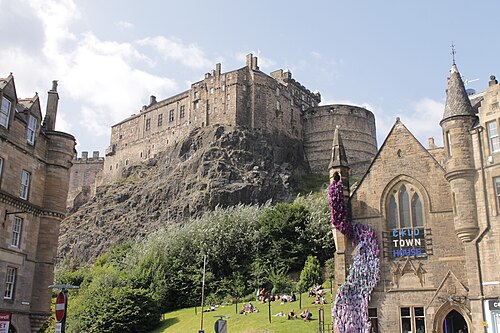 Edinburgh CastleRestored · prime 1520
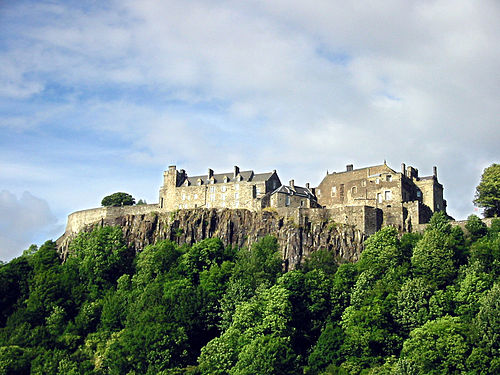 Stirling CastleRestored · prime 1542
 Glamis CastleStill standing · prime 1900
All castles in Scotland → · Strongest castles in Scotland → · Castles of Europe
Play As Your Clan
Hold a real castle against whatever you choose to send at it, take a ship out in her own service years, or stand at the shoulder of someone the record remembers. The chronicler sets the scene; the deeds are yours.
Notable bearers of the Morrison name
- The Brieves of Lewis, hereditary judges of the Outer Hebrides
- John Morrison (1701–1774), 'Iain Gobha na Hearadh', Harris-born Gaelic religious poet