Scotland · Ruin
Invergarry Castle
Caisteal Dubh Inbhir Gharaidh
Invergarry Castle is a ruined Scottish tower house on Creagan an Fhithich overlooking Loch Oich, long associated with the Chiefs of Clan MacDonell of Glengarry. The surviving structure is an L-plan masonry tower house of five storeys in the main block with a six-storey tower and once stood within a service close and barmkin; it was damaged and partially demolished in the 18th century and is now a scheduled monument.
Its prime
1714
Today
Ruin
As it stood in 1714
What Invergarry Castle looked like in its prime.
A tall, narrow L-plan masonry tower house rising five storeys in the main block with a projecting stair/tower to six storeys; walls of rough grey dressed and rubble stone; several small vertical windows and ground-floor shot-holes; about six corner bartizans and a small stair cap-house on the roofline but no continuous defensive parapet; perched on a rocky promontory above Loch Oich with a close or courtyard of service buildings at the base.
Its story
The story of Invergarry Castle.
The Mackenzie Raids and the Rock above Loch Oich, 1602
Invergarry Castle stands on Creagan an Fhithich, the Raven's Rock, overlooking Loch Oich at a point in the Great Glen that mattered in the age of clan warfare. It is not certain when a first structure went up there, but at least two earlier sites preceded the present castle, and the form of what stood before is not recorded. The MacDonells of Glengarry, chiefs of a powerful branch of Clan Donald, fortified Creagan an Fhithich after raids by Clan Mackenzie in 1602 that included the burning of Strome Castle. Clan tradition holds that the stones were passed hand to hand by a chain of clansmen down from the mountain Ben Tee.
Cromwell's Burning and the Jacobite Garrisons, 1654-1716
During the English Civil War, troops under General Monck, serving Oliver Cromwell, burned the castle down in 1654. It was repaired and eventually completed by 1691 as an L-plan house of five storeys in the main block and six in the tower, with a first-floor hall 44 by 20 feet - an old-fashioned design by the Scottish standards of its day, more country house than fortress.
Invergarry was held for King James VII from 1688 until its surrender to the forces of William and Mary in 1692. The Jacobites held it again during the 1715 rising; the government took it back in 1716.
Bonnie Prince Charlie and the Slighting after Culloden, 1745-1746
Jacobites held Invergarry once more during the 1745 rising. Charles Edward Stuart - Bonnie Prince Charlie - visited twice, shortly after raising his standard at Glenfinnan and again, by tradition, to rest there after his defeat at Culloden in 1746, while Lord MacDonnell sat on the Prince's Council.
In the aftermath of Culloden, troops under the Duke of Cumberland sacked the castle and partially blew it up as part of his systematic suppression of the Highlands. Its walls refused to yield entirely: Cumberland's men removed the south-east wall and demolished the north-west extension of the L-plan, and evidently judged that enough. Invergarry was never rebuilt.
The New House and the Sale of the Glengarry Estate
The MacDonells abandoned the ruin for a new Invergarry House nearby, a project already under way when Richard Pococke reported it on his tour in 1760. Aeneas Ranaldson MacDonell of Glengarry - son of Alexander Ranaldson MacDonell of Glengarry (1771-1828) - sold the wider Glengarry estates on coming of age, but kept the castle ruin, Invergarry House, the Well of Heads and the clan's ancient burial ground; these passed, through his daughter, to the Erskine Cuninghames of Balgownie and Corrie.
Preservation, Collapse and Consolidation, 1957-2007
In 1957 the Glengarry News called on McDonalds, MacDonalds, MacDonells and other members of Clan Donald to each give a pound toward preserving the ruin. In 1960 the castle, the Well of Heads and the burial ground passed to the Invergarry Castle Preservation Trust, and Invergarry House reopened the same year as the Glengarry Castle Hotel, with the ruin standing in its grounds.
The castle's north staircase collapsed around 2000. Historic Scotland - now Historic Environment Scotland - carried out a consolidation programme in 2007, inserting stabilising beams into the structure. Invergarry Castle is a scheduled monument.
Step inside
8 places to explore in 1714.
The record describes 8 distinct spots at Invergarry Castle, including 3 interiors: great hall on the first floor, scale-and-platt staircase in the nw wing, un-vaulted basement and service spaces. Create your own photoreal reconstruction and explore every one, more scenes means more rooms, more angles, and more of the place to stand in.
Build Your Own Castle
Recreate Invergarry Castle with AI to explore it.
The artist rebuilds it as it stood in 1714, a photoreal reconstruction that belongs to you alone. Pay with coins, no subscription needed.
Recreate this castle →Defend this castle →Whose castle
Clans who held Invergarry Castle.
The families that held Invergarry Castle for a decade or more across its history, follow a name to its clan.
Seat of the Chiefs of Clan MacDonell of Glengarry; fortified from 1602, sacked after Culloden.
From the archive
Invergarry Castle on paper: the measured plan and period views.
The survey plan and photographs below are the ground truth this page's reconstructions are checked against, drawn and photographed while the castle was still a working garrison. Every image is public-domain or openly licensed, with its source named.
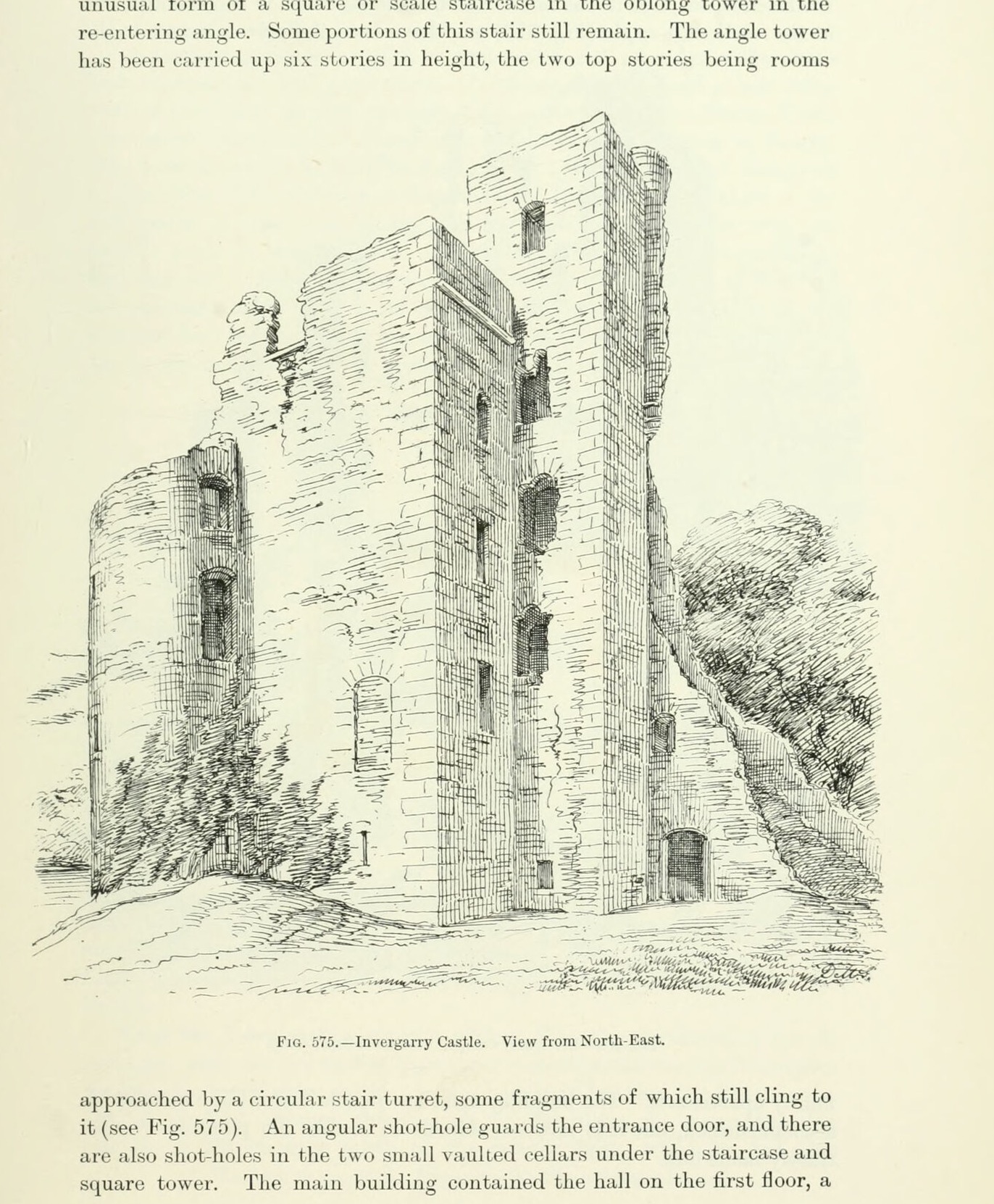
Fig. 575. Invergarry Castle. View from North-East.
1889 · MacGibbon & Ross, vol. 3 (1889)
Public domain