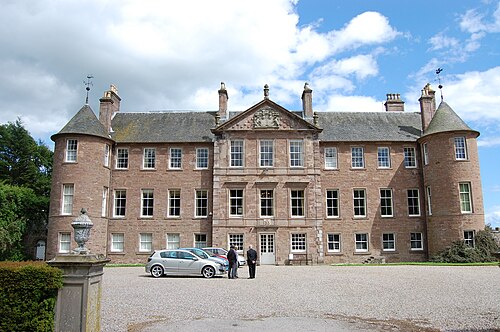
Scotland · Ruin
Dunskey Castle
Dunskey Castle is a ruined medieval tower house on a rocky promontory near Portpatrick on Scotland's south-west coast. The three-storey L-plan stone building stands above sea cliffs with a defended landward approach and an adjacent cliff-edge watchtower; its south range survives only as foundations. The site is a scheduled monument and access is restricted by the owner.
Its prime
1620
Today
Ruin
As it stood in 1620
What Dunskey Castle looked like in its prime.
A compact three-storey L-plan stone tower house sited on a rocky promontory above the sea, measuring roughly 30 by 14.3 metres with walls about 1.5 metres thick. The landward approach is defended by a rock-cut ditch c.15 m wide and 2.5 m deep to the north-east. A later north-east wing is attached and the foundations of a south range survive; a separate 7 m square watchtower stands on the cliff edge. At prime the main block was roofed and complete.
Its story
The story of Dunskey Castle.
Walter de Corry to the Adairs of Kinhilt, 1291–1486
Dunskey is a twelfth-century tower house on a promontory half a mile south of Portpatrick, in the Rhinns of Wigtownshire, its only landward approach cut by a rock-cut ditch 15 metres wide and 2.5 metres deep. In 1291 the nearby Wigtown Castle lay in the hands of Edward I of England, who committed it to Walter de Corry, laird of Dunskey, and later conferred it on the Scottish king John Balliol; by 10 October 1303 Corry was dead and his lands had been taken into the English king's hands. Among the twenty-six Wigtownshire names on the Ragman Rolls compiled at Berwick-upon-Tweed on 28 August 1296 was Thomas de Kithehilt, of the Adair line of Kinhilt later seated here.
In 1456 Gilbert Kennedy, 1st Lord Kennedy of Dunure, obtained the ward of Kinhilt with Dunskey, and the next year Rolland Adair had sasine of Kildonan, otherwise Portree. The wardship record is a tangle: by 1486, Rolland dead and his son William apparently still under age, the ward of Kilhelt, Portree, Kildonan and Drummore had gone about 1468 to an Alexander Bruce, who held it in error for eighteen years.
Feud and Fire, 1488–1499
In 1488 William Adair of Dunskey and Kinhilt, with McCulloch of Ardwell in Stoneykirk, was attacked by the sheriff Quentin Agnew of Lochnaw and his band of men; pursued before the Lords of Council, Agnew had to pay in 1489 for the goods taken. About the same year the tower was partially burnt by Sir Alexander M'Culloch of Myrtoun.
The burning is set out in a complaint of 29 August 1496, in which William Adair and Archibald McCulloch of Ardwell alleged that Sir Alexander and Uchtred McDowell of Garthland, with their accomplices, "assegit the place of DUNSKAY" and "rasit fyre and byrnt the sammyn". The damage was itemised: 40 pounds of household gear, another 20 for the burning of Adair's house, four horses and barked hides, and from Archibald McCulloch and his folk cattle, sheep and sixteen horses and mares. Behind it lay a charge, which the complainers denied, of art and part in the slaughter of Dionyse of Hamilton in the town of Wigtown. A pardon followed for McCulloch on 3 March 1499, with respites for the burning granted to four other men.
Flodden and Ninian Adair's New Hall, 1513–1523
William Adair was killed at Flodden in September 1513, and his son Ninian Adair of Kinhilt took sasine of the estate. Ninian is said to have rebuilt Dunskey on a more magnificent scale than ever, and to have ended the feud with the MacDowells by marrying Janet McDowell of the house of Garthland. The hall was rebuilt about 1520, 36 feet by 17 feet; the Adairs had raised the Castle of St John at Stranraer about 1510. Ninian had little time in the new work: by 1520–21 the wardship of his lands had passed to Gilbert Kennedy, 2nd Earl of Cassilis, and Lord Maxwell, his heir being under age, and in 1523 that son William is named as heir.
Montgomery's Gallery and the Fall to Ruin, 1580–1684
Timothy Pont's map of about 1580–90 shows Dunskay with two watchtowers on the cliff edge fronting the sea; the remains of one, 7 metres square, survive. In February 1620 it was acquired by Hugh Montgomery, 1st Viscount Montgomery of the Ards, who extended the castle with a Gallery leading off the Hall and vaults beneath it. Work was still running twelve years on, when his wife Sara Maxwell wrote to him on 24 August 1632: "It seameth ye ar causing your workmen goe on both in your building and theikine of your Gallerie att Dunskay."
The Viscount was heavily mortgaged from the long upkeep of his troops. His lands were apprised from him on 1 August 1650 for payment of 2,000 pounds Scots, and by a deed of 15 June 1653 the three-merk land of Marrock with the castle, tower and fortalice of Dunskey went to John Shaw of Greenock. The castle came to the Blairs, ministers at Portpatrick: John Blair had acted as the Viscount's agent and foreclosed on a mortgage covering the whole Montgomery property in Galloway. On 11 September 1672 Blair and his wife Jean Agnew had their lands ratified as the barony of Dunskey; by 1684 the laird had moved to nearby Killantringan and the castle was in ruin, some fifty years after the gallery was added.
Grose's Drawing, the Film Crews and Scheduled Status
Francis Grose's drawing of the 1790s shows the ruined foundations and the sea-wall on the south, with the Irish coast across the water. The three-storey L-plan tower, 30 by 14.3 metres, is now a roofless shell. It has been a scheduled monument since 9 November 1938, and was a filming location for Kidnapped (1951), from Robert Louis Stevenson's novel, for Hunted (1952) and for Double X: The Name of the Game (1992). The owner restricts public access.
Step inside
9 places to explore in 1620.
The record describes 9 distinct spots at Dunskey Castle, including 4 interiors: internal stair from entrance to hall, great hall (new hall c.1520) with large fireplace, gallery leading off the hall (added c.1620) and more. Create your own photoreal reconstruction and explore every one, more scenes means more rooms, more angles, and more of the place to stand in.
Build Your Own Castle
Recreate Dunskey Castle with AI to explore it.
The artist rebuilds it as it stood in 1620, a photoreal reconstruction that belongs to you alone. Pay with coins, no subscription needed.
Recreate this castle →Defend this castle →Whose castle
Clans who held Dunskey Castle.
The families that held Dunskey Castle for a decade or more across its history, follow a name to its clan.
Gilbert Kennedy, 1st Lord Kennedy, obtained the ward of Kinhilt with Dunskey in 1456.
Adair
Held by the Adairs of Kilhilt through the late 15th and early 16th centuries.
From the archive
Dunskey Castle on paper: the measured plan and period views.
The survey plan and photographs below are the ground truth this page's reconstructions are checked against, drawn and photographed while the castle was still a working garrison. Every image is public-domain or openly licensed, with its source named.

Dunskey Castle, Portpatrick, Scotland, ca. 1900
ca. 1890-1900 · Photochrom Prints Collection (via Wikimedia Commons)
Public domain
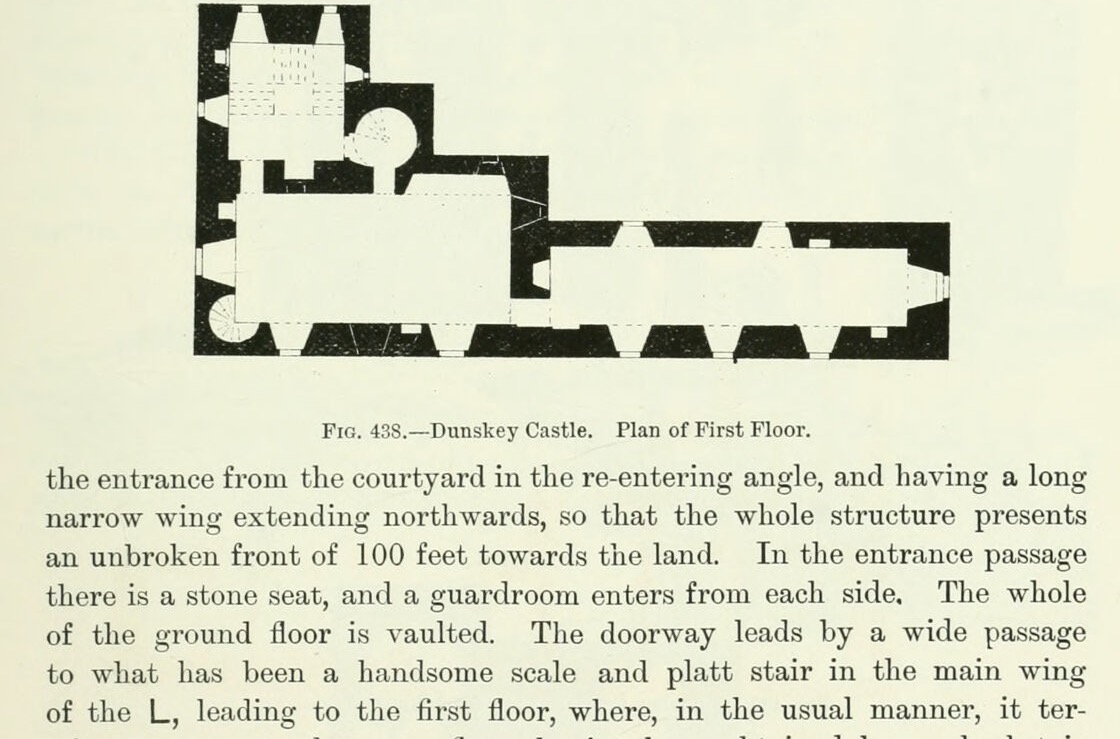
Fig. 438. Dunskey Castle. Plan of First Floor.
1889 · MacGibbon & Ross, vol. 3 (1889)
Public domain
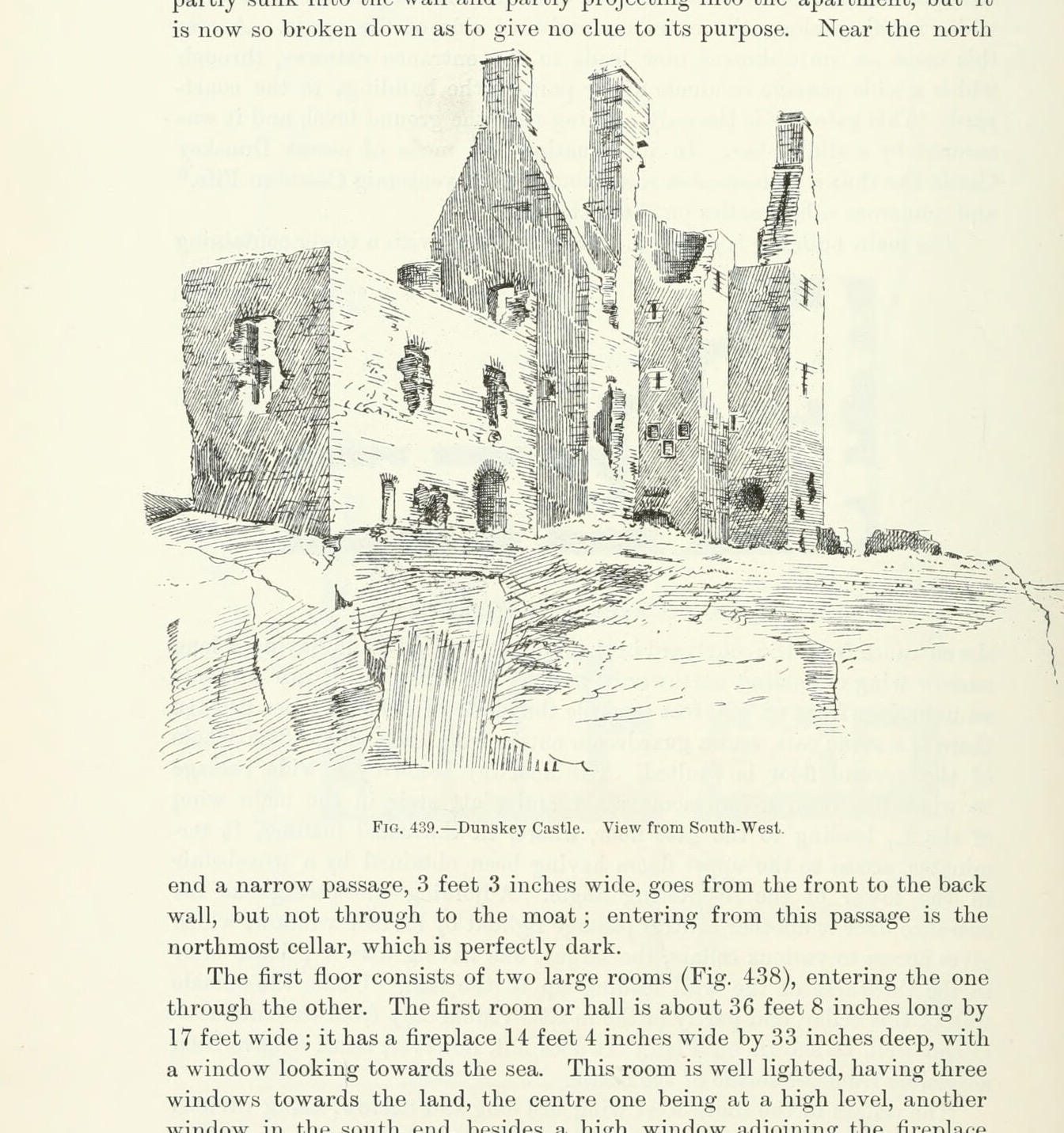
Fig. 439. Dunskey Castle. View from South-West.
1889 · MacGibbon & Ross, vol. 3 (1889)
Public domain