Clan Henderson
also Mackendrick, MacHenry, Henryson
Bodyguards of the chiefs of MacDonald of Glencoe.
- Origin
- The Highlands & Islands, Scotland
- Motto
- Sola virtus nobilitat
- Famous bearer
- Alexander Henderson, Presbyterian divine
- Register
- Scottish clan
The Henderson arms, tartan and country

TartanHenderson tartanMicheletb · CC BY-SA 4.0 
TartanHenderson Dress tartanThe dress sett: the same pattern rewoven with a white ground, worn for dancing and evening wear.Micheletb · CC BY-SA 4.0 
Coat of armsHenderson of Fordell armsBorne by the Fordell line, one branch of the name rather than all of it.Czar Brodie · CC BY-SA 3.0


- Tartan: The checked cloth the family is known by.
- Coat of arms: Granted to an individual and inherited down that one documented line. These are the arms of particular families of the name, not of everyone who shares the surname.
What is the Henderson clan tartan?
Two Henderson setts are shown above, one of them the dress sett, rewoven on a lighter ground. They are not rival claims to be picked between; they are different records, and different weaves, of the same family cloth. A sett is the block of coloured bands the cloth is built from, repeated in both directions; the whole plaid is that one square enlarged.
Almost no clan tartan is medieval. Highland dress was proscribed from 1746 until 1782, and when it returned it returned as ceremony rather than everyday cloth, so the surname-to-sett map was fixed after the break, by the Bannockburn weavers’ pattern books, the royal visit to Edinburgh in 1822, and the Vestiarium Scoticum of 1842. The Hendersons wore tartan long before any of that. What the registers fixed was which one. Nobody polices any of it. Wearing the Henderson sett declares allegiance to the name, not descent from any particular line of it.
The seat of Clan Henderson
Seat vacantChief
No one leads the Clan Henderson community yet. When the movement opens, you can stand for its leadership, or help elect whoever does.
Current mission
No shared goal set yet. Once Clan Henderson has leadership, it sets the public focus: a restoration, a gathering, a real-world project that helps its own.
The Henderson clan is being rebuilt. Join the waiting list for the movement today, and you help decide who leads it and what it does.
Help rebuild the Henderson clan →Motto
Sola virtus nobilitat
“Virtue alone ennobles”
What does the Henderson name mean?
Gaelic 'mac Eanruig', son of Henry. Anglicised variously as McHenry, Henryson, and Mackendrick.
The history of Clan Henderson
One patronymic, several unrelated families
Henderson means what it says: son of Henry, or of Hendry, the Scots form of the same name. In Scottish Gaelic it is MacEanraig for a man and NicEanraig for a woman, and the Glencoe line still knows itself as MacEanruig. What the plain meaning hides is that the name was never one family's property. Henderson is borne by numerous unrelated families in Scotland, because a Henry with a grown son existed in every corner of the country, and the byname that marked the son hardened into a surname wherever it stuck.
There are three well-known origins and no known connection between them. The Hendersons of the Scottish Borders, more often written Henryson, were a riding family of Dumfriesshire and Liddesdale, and from them the chiefly house of Fordell in Fife descends. The Hendersons of Glencoe take their English name from the Gaelic MacEanruig and were a sept of the Clan MacDonald of Glencoe. A third group in Caithness were septs of the Clan Gunn. Which line you belong to is a question of geography, not of spelling.
The timing is not accidental. By 1400 most English families, and those of Lowland Scotland, had adopted hereditary surnames, and Henryson was common in the 14th century and after. In the Gaelic west the older habit lasted far longer: a man was known by his own name and his father's, so that James son of Neil was Seumas Neill, and clan surnames were applied to whole districts en masse only once a non-Gaelic-speaking administration arrived. The Lowland Hendersons therefore have documents from the 1370s; the Glencoe MacEanruig have a tradition and a stone.
From Lochmaben Castle to the tower of Fordell
The earliest Hendersons the records name are officials rather than warlords. Between 1373 and 1377 William Henryeson was chamberlain of Lochmaben Castle, the royal fortress of Annandale; between about 1387 and 1395 John Henryson was a burgess of Edinburgh. Neither was a great power, and the family were never troublesome enough for Parliament to notice: when it listed the border clans in 1594, during its campaign to suppress the Border Reivers, the Hendersons were not on it.
Out of the Dumfriesshire Hendersons came the man who made the family's fortune. James Henderson, who also wrote himself Henryson, became Lord Advocate of Scotland in about 1494 and was afterwards appointed to the Bench. Between 1510 and 1512 he bought land in Fordell, in Fife, including the original tower of Fordell Castle. That purchase settled everything after it: Fordell became the territorial designation of the Lowland Henderson chiefs, and the present chief descends from the judge who bought it. He did not enjoy it long. James Henderson of Fordell was killed at the Battle of Flodden in 1513, in the catastrophe that took James IV and much of the Scottish political nation with him, an estate bought with a lawyer's income and paid for within three years on an English hillside.
Fordell, Otterston and Broomhill
Fordell Castle stands about a mile north of Inverkeithing in Fife, and the Hendersons held it for over 300 years. Nobody knows when the first structure went up, but the main entrance tower is believed to date from the 1400s, so the judge bought something already old. James Henderson, 3rd of Fordell, began extending the castle in 1566; it burned in 1568, two years into the work.
The wars of the 17th century reached it. Sir John Henderson rebuilt the chapel in 1650, and in 1651, after the Battle of Inverkeithing, the castle was sacked by Oliver Cromwell's forces, who then garrisoned troops at both castle and mill. The estate later passed by marriage to the Duncans of Camperdown, and in 1953 the 8th Earl of Buckinghamshire divided it up. The clan's historical seat is still Fordell, in what is now Dalgety Bay.
Two other houses belonged to the name. Otterston Tower, two miles west of Aberdour, is an L-plan tower house the Hendersons built and held in the early 16th century, though it had passed to the Mowbrays of Barnbougle by 1589. Broomhill House, south of Edinburgh, was Henderson property between 1508 and 1648, before going to the Bairds of Newbyth and then the Trotters of Mortonhall; castle and mansion there have both since been demolished.
Alexander Henderson and the Covenant
The most consequential man the name produced was born about 1583. Alexander Henderson of Fordell took his Master of Arts at the University of St Andrews and held a chair of philosophy there before 1611, then became minister of Leuchars. He set himself violently against Charles I's attempts to reform the Church of Scotland, and against the new prayer book above all, putting a petition before the Privy Council in Edinburgh arguing that the book had never been sanctioned by the General Assembly or by Parliament, an argument about who holds authority, not about liturgy.
With Archibald Johnston of Warriston he then drafted the National Covenant, first sworn and subscribed in Greyfriars Kirk in Edinburgh in 1638. Later that year the General Assembly at Glasgow elected him moderator unanimously, and he served three times as Moderator of the Kirk of Scotland. In 1643 he drafted the Solemn League and Covenant, and as leading Scottish commissioner at the Westminster Assembly of 1643 to 1646 he set the constitutional foundations of British Presbyterianism.
When Charles I gave himself up to the Scottish army it was Henderson the king sent for. Henderson met him and failed to move him. Ill and worn down, he died in August 1646 and was buried in Greyfriars churchyard, the scene of his greatest triumph, where a monument to him stands. The family did not stand together on this: Sir John Henderson, 5th of Fordell, born in 1605, brought his military expertise to the Royalist cause through the same wars. One name, both sides of the argument that broke Britain.
MacEanruig of Glencoe: the hereditary custodians
The Highland Hendersons of Glen Coe are a separate people with a separate story. They claim descent from a Pictish prince, Eanruig Mor Mac Righ Neachtain (Big Henry, son of King Neachtain), usually identified as Nechtan mac Der-Ilei, said to have reigned between 700 and 724, and the clan's own tradition brings him to Kinlochleven, just north of Glencoe, around 900 AD. These are traditions, not charters: the dates do not sit comfortably together, and it is simply not known when the Hendersons came to Glen Coe.
Tradition holds that Dougall MacHenry, the last Henderson chief in the direct line, left an heiress who had a son by her lover Aonghus Óg of Islay. Their son was Ian Fraoch; Ian Fraoch's son was Iain Abrach, whose patronymic MacIain became the designation of the chiefs of the MacDonalds of Glencoe. If the tradition holds, the MacIain chiefs were Henderson on the mother's side. The Hendersons were the hereditary pipers and armour-bearers of those chiefs, renowned for size and strength, and remembered as the chief's personal bodyguard.
That office put them at the centre of the massacre of 1692. Big Henderson of the Chanters, the chief's personal attendant and piper, is said to have been among those killed. The Henderson Stone (Clach Eanruig in Gaelic) is a granite boulder in a field a little south of Carnach, and local tradition attaches two warning stories to it. In one, a Campbell soldier speaks to the stone in a local man's hearing: "Great stone in the Glen, though you have every right to be there, if you knew what was to happen tonight you would not stay there on any account." In the other, a Campbell piper plays a tune at the stone meant as a warning. The man who heard escaped and could not warn many others. The killing was prosecutable under the 1587 law against slaughter under trust; the full account of that night belongs to the MacDonald page, where this atlas tells it once.
The Glencoe Hendersons kept the name a reader searches for today. Families across Lochaber and Appin, and their descendants in Ontario, Otago and the Carolinas, carry MacEanruig blood under an English spelling that gives no hint of it.
The Caithness line and the Gunn quarrel
The third origin is northern and is dated by a family row. In the late 15th century a difference within the Clan Gunn led Henry Gunn, the youngest son of the chief, to branch off on his own, and his descendants became the Henderson family line of Caithness. They are counted as septs of Clan Gunn, and have no known connection to the Hendersons of Glencoe or of the Borders.
It is a small story with a large lesson. A surname in Scotland could be manufactured in one generation by a younger son with a grievance, and three centuries on his descendants, those of a Border chamberlain and those of a Glencoe piper all answer to the same word. The name is a meeting point, not a pedigree.
Spellings, septs and the tartan trade
Few Scottish names have thrown off so many forms. The Gaelic gives MacEanrig, MacIanruig, MacInrig and MacCanruig; the Latin records give filius Henrici and Henrisoun; the anglicised forms run through Hendrig, Hendrick, Hendry, Hendrie, Hendren, Hendron, Henerson, Enderson and Henderson itself. Robert Henryson, the Scottish poet who lived from about 1425 to about 1500, wrote under one of them. The variation came from regional pronunciation and sometimes perversely creative spelling, and one man might use several: a travelling Henderson could be MacEanruig in the Highlands, Henderson in the Lowlands, McHenry in Ulster and Henry in England, and be himself in each place.
The name was unknown in England before the 17th century. Its first mention there is in a marriage document drawn up at Hexham, between one of the Borders Hendersons and the daughter of a Carlisle merchant, the name crossing the line by wedding, which is how most Scottish surnames entered England.
A warning is owed to anyone about to buy a tartan. The long sept lists clan societies and outfitters publish date from the 19th century, when clan societies and tartan manufacturers set out to capitalise on the enthusiasm for all things Scottish and linked as many surnames as possible to a clan, whether or not a historical connection existed. Patronymic forms of common personal names were the easiest of all to absorb, and Henderson is exactly that kind of name. There is no official list of clan septs. So a Hendry or a Hendrick may be Glencoe, may be Gunn, may be Fordell, or may descend from a Henry with no clan at all, and only genealogy will tell which.
The name in the world, and a chief in Australia
For a name with no great earldom behind it, Henderson has an unusual reach into public life. Arthur Henderson (1863–1935) rose from the trade union movement to lead the British Labour Party and won the Nobel Peace Prize. Thomas Henderson (1798–1844) was Astronomer Royal for Scotland. Sir David Henderson was a senior British Army and later Royal Air Force officer; Sir Nevile Henderson was British Ambassador to Germany from 1937 to 1939. Two Hendersons won the Victoria Cross: Arthur Henderson (1894–1917) and George Stuart Henderson (c. 1894–1920).
Others carried the name into learning, faith and letters: Ebenezer Henderson (1784–1858), minister and missionary; Thomas Finlayson Henderson (1844–1923), author; Hamish Henderson, poet and collector of Scottish folk song; Richard Henderson, born 1945, molecular biologist and biophysicist. Mary H. J. Henderson (1874–1938) administered a Scottish Women's Hospital in the First World War and was a suffragist and war poet.
The emigrants are the ones a diaspora reader will recognise. William Henderson, born at Lonmay in Aberdeenshire in 1837 into a family of architects, was a stone cutter at thirteen and sailed for Canada in 1857; he ended as Resident Architect for the Department of Public Works in British Columbia, site supervisor for every federal building in the province until he retired in 1925. Henderson Hall and Henderson Road in Oak Bay are named for him. The pattern repeats: Paul Henderson and Brooke Henderson in Canada, Greg Henderson and Martin Henderson in New Zealand, Edwin Hubert Henderson (1885–1939) as Chief Architect of the Commonwealth of Australia.
The clan itself now sits where its people went. The Chief of Clan Henderson is Alistair Henderson of Fordell, recognised by the Lord Lyon King of Arms and a member of the Standing Council of Scottish Chiefs, an Australian environmental engineer and inventor. The motto he bears is Sola virtus nobilitat (virtue alone ennobles), which for a family founded by a working lawyer, sustained by a parish minister and carried abroad by a stone cutter is an unusually well-earned line.
Champions of the Henderson name
The bearers whose lives are inseparable from this surname. Each has their own page, biography, achievements, geography, connection to the family.
Castles the Henderson held
Strongholds this name held for a decade or more, look one up, or rebuild it to explore.
- Fordell Castle
Held by the Hendersons of Fordell; Sir John Henderson rebuilt the chapel in 1650, and the 8th Earl of Buckinghamshire divided the estate in 1953.
The castles of the homeland
The great strongholds of the homeland, look one up, see what it looked like in its prime, and recreate it to explore.
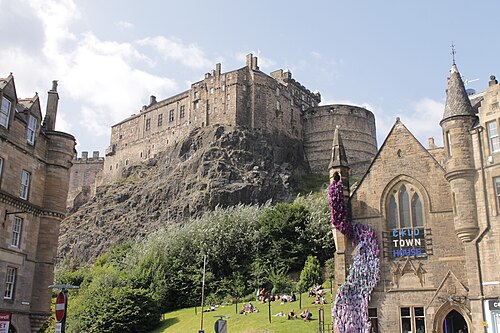 Edinburgh CastleRestored · prime 1520
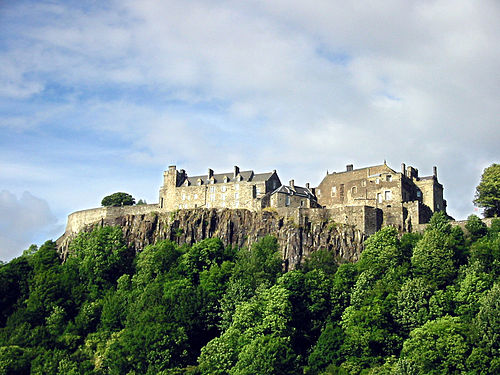 Stirling CastleRestored · prime 1542
 Glamis CastleStill standing · prime 1900
All castles in Scotland → · Strongest castles in Scotland → · Castles of Europe
Play As Your Clan
Hold a real castle against whatever you choose to send at it, take a ship out in her own service years, or stand at the shoulder of someone the record remembers. The chronicler sets the scene; the deeds are yours.
Notable bearers of the Henderson name
- Alexander Henderson, Presbyterian divine