
Scotland · Restored
Fordell Castle
Fordell Castle is a restored 16th-century Scottish tower house (a fortified Z-plan fortalice) near Dalgety Bay in Fife. The stone building retains its two external stair towers, corbelled turrets and many original interior vaulted and panelled rooms; it remains a private residence and a category A listed building.
Its prime
1580
Today
Restored
As it stood in 1580
What Fordell Castle looked like in its prime.
A Z-plan sandstone tower house running east–west with square towers at the north‑west and south‑east corners, each housing a circular stair. Plane masonry walls are relieved by corbelled turrets and small projecting bartizans, a crow‑stepped gable at one end, and a short castellated flat roof with flagpole and iron beacon basket. Roofs are steep and stone‑slated; windows are narrow and vertically proportioned. The north stair tower contains the main entrance with a studded door and metal yett.
Its story
The story of Fordell Castle.
From Fractional Lands to a Barony, 1217–1511
A charter of 1217 already shows the lands of Fordell being parcelled out: Richard, son of Hugh de Camera, granted part of them to the Abbey of Inchcolm with the consent of his wife and his son. William de Hercht held the lands by 1240, and by 1428 Sir William de Erth was Lord of Fordell, the same de Erth who had earlier served as a hostage for James I, held at Durham in 1423–24 and at Pontefract in 1426–27. On his death the estate broke apart into fractional shares, and John Henrisoun was serving as sergeant of Fordell by 1465. It was James Henrysoun, a burgess of Edinburgh, who between 1510 and 1512 redeemed his own inherited portion from mortgage and bought out at least five co-heirs, reassembling the estate into a barony granted by James IV in 1511.
A House of Great Quantity, 1566–1580
James Henderson, 3rd of Fordell, began extending the castle in 1566. The masons Robert Peris and James Orrok had made good progress on a 'house of great quantity' when, on 5 June 1567, William Spittal of Luquhat halted the work, claiming his own title to the Fordell lands. A fire damaged the castle the following year and it was rebuilt; most of the Z-plan tower house standing today dates from 1580 or later. Later in the century the Hendersons began working the estate's coal seams, which became the basis of the family's wealth.
Flodden, Pinkie and a Soldier's Knighthood
Two lairds of Fordell died in the field in the decades after the barony was founded. James Henryson, 1st of Fordell (appointed Advocate to James IV in 1494 and Clerk of Justiciary in 1507) was killed alongside the king at the Battle of Flodden in 1513, his eldest son dying with him. The next laird, George Henderson, 2nd of Fordell, was killed with his own eldest son, William, at the Battle of Pinkie in 1547. A later laird, Sir John Henderson, 5th of Fordell, was a soldier taken prisoner while commanding on the African coast before fighting for the Royalist cause in the Civil War, during which Charles I knighted him; in 1651 Fordell itself was damaged by troops of Oliver Cromwell's army garrisoned there.
The Witch Stone of Margaret Echlin, 1649
A carving above the entrance to the Great Hall, known as the witch stone, is said to depict Margaret Echlin (née Henderson) of Pittadro, daughter of James Henderson, 3rd of Fordell. Accused of witchcraft, she was imprisoned in 1649; before she could be brought to trial she was found dead, apparently poisoned. Local tradition holds that the nearby Witch Knowe was used for burning witches, the last such burning also dated to 1649. The following year Sir John Henderson rebuilt St Theriot's Chapel as a family mausoleum.
From Farm Stable to a £3.85 Million Sale
By the 19th century the family had built a new mansion, Fordell House, nearby, and the castle itself was rarely occupied; the Great Hall is said to have served for a time as a stable. George Mercer-Henderson modernised the castle and installed its gates, and the north front was rebuilt in 1855 to a design by Robert Hay. In 1953 John Hampden Mercer-Henderson, 8th Earl of Buckinghamshire, divided the nearly 2,000-acre estate, selling the land west of the Fordell Burn; the walled garden at Pittadro was sold on for use as a commercial nursery.
Sir Nicholas Fairbairn, the controversial lawyer and Conservative politician, bought Fordell in 1961 and restored it as a private residence with his wife, Lady Sam Fairbairn; after his death in 1995 he was buried in the crypt below the Chapel of St Theriot. The castle passed to Dr Lorraine Inglis and her husband, the veterinarian Bill Inglis, around 1995, then to the businessman Andrew Berry around 1999, who carried out extensive restoration. In November 2007 it was sold for £3,850,000 to Stuart Simpson, 17th Baron of Fordell (the fifth-highest price then paid for a home in Scotland), and the castle remains privately owned and category A listed.
Step inside
12 places to explore in 1580.
The record describes 12 distinct spots at Fordell Castle, including 6 interiors: vestibule inside the north stair entrance, vaulted basement chambers (western chamber with stocks), great hall on the first floor with large stone fireplace and more. Create your own photoreal reconstruction and explore every one, more scenes means more rooms, more angles, and more of the place to stand in.
Build Your Own Castle
Recreate Fordell Castle with AI to explore it.
The artist rebuilds it as it stood in 1580, a photoreal reconstruction that belongs to you alone. Pay with coins, no subscription needed.
Recreate this castle →Defend this castle →Whose castle
Clans who held Fordell Castle.
The families that held Fordell Castle for a decade or more across its history, follow a name to its clan.
Erth
The de Hercht / de Erth family held the lands of Fordell from at least 1240; Sir William de Erth was Lord of Fordell in 1428.
Held by the Hendersons of Fordell; Sir John Henderson rebuilt the chapel in 1650, and the 8th Earl of Buckinghamshire divided the estate in 1953.
Fairbairn
Acquired in 1961 by Sir Nicholas Fairbairn, who restored it as a private residence.
From the archive
Fordell Castle on paper: the measured plan and period views.
The survey plan and photographs below are the ground truth this page's reconstructions are checked against, drawn and photographed while the castle was still a working garrison. Every image is public-domain or openly licensed, with its source named.
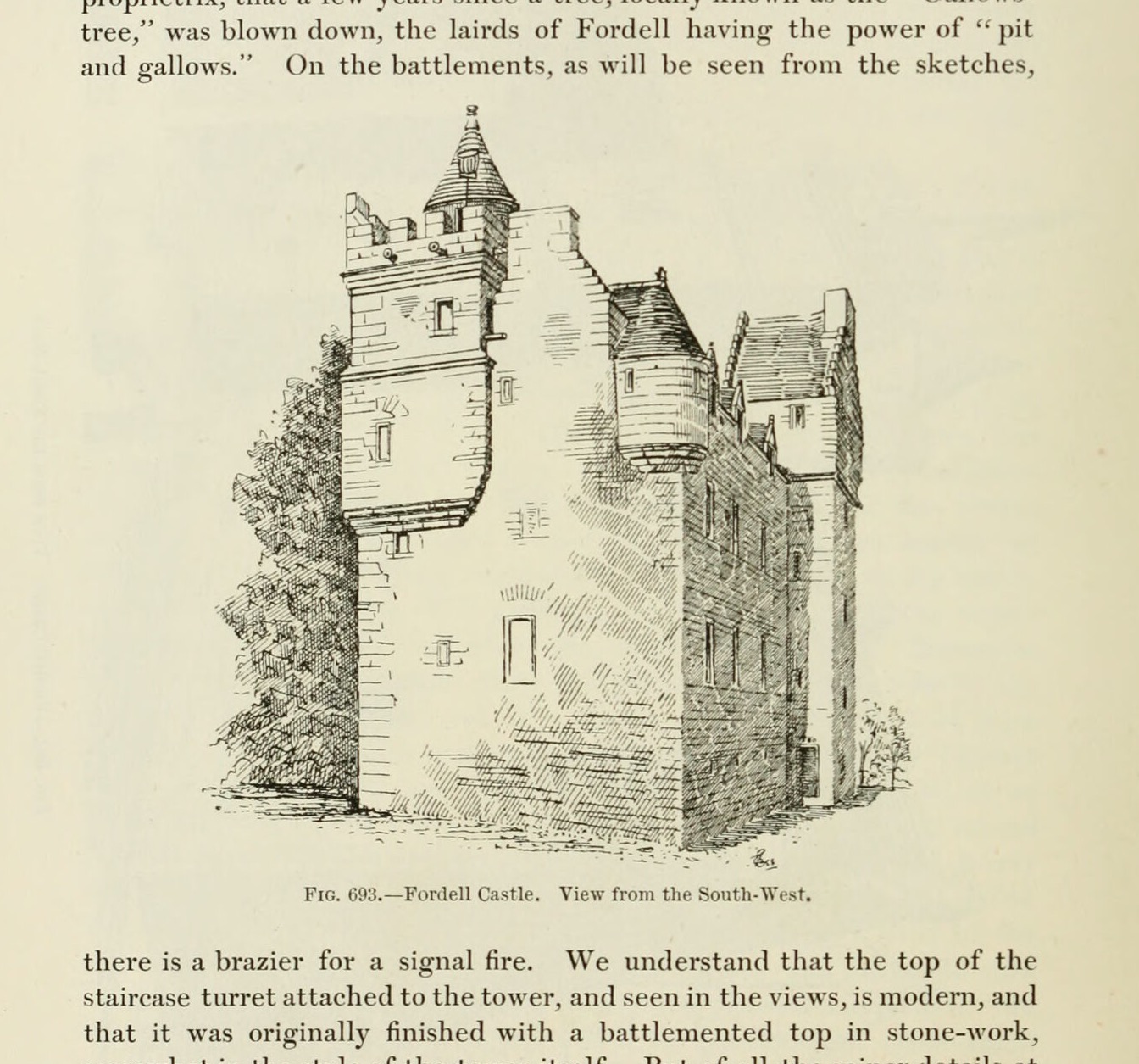
Fig. 693. Fordell Castle. View from the South-West.
1887 · MacGibbon & Ross, vol. 2 (1887)
Public domain
Nearby


