
Scotland · Ruin
Urquhart Castle
Caisteal Urchadain
Urquhart Castle is a medieval fortress sited on Strone Point on the north-western shore of Loch Ness in the Scottish Highlands. The surviving ruins date mainly from the 13th–16th centuries and the site consists of two main enclosures (the Nether Bailey to the north and the Upper Bailey to the south) centred around a five-storey Grant Tower and a gatehouse.
Its prime
1623
Today
Ruin
Ranked among Europe’s castles
As it stood in 1623
What Urquhart Castle looked like in its prime.
Sited on a triangular loch-side promontory, Urquhart presents a spread of grey-brown rubble stone curtain walls and freestanding buildings arranged around two main bailey enclosures. The north end is dominated by the square, five-storey Grant Tower and the ruined gatehouse beside the approach from the west; the Upper Bailey sits higher to the south on a rocky knoll. At prime the buildings would have been roofed with multiple floors, and the shoreline and low cliffs of Loch Ness form the castle’s eastern backdrop.
Its story
The story of Urquhart Castle.
Airdchartdan, Columba and the Fort on the Knoll
The name Urquhart goes back to the 7th-century form Airdchartdan, a mixture of the Old Irish aird, a point or promontory, and the Old Welsh cardden, a thicket or wood; in Gaelic the castle is Caisteal na Sròine. Pieces of vitrified stone, characteristic of early medieval fortification, had been turning up on the site since the early 20th century, and the suspicion that this might have been the fortress of Bridei son of Maelchon, king of the northern Picts, brought Professor Leslie Alcock to excavate in 1983. Adomnán's Life of Columba records that the saint visited Bridei at some point between 562 and 586 without saying clearly where, and that during the journey he converted a dying Pictish nobleman named Emchath, his son Virolec and their household at a place called Airdchartdan.
Alcock's excavations, backed by radiocarbon dating, showed that the rocky knoll at the south-west corner of the site carried an extensive fort between the 5th and the 11th centuries, and on that evidence he judged Urquhart most likely Emchath's residence rather than Bridei's seat. The knoll later became the motte of the medieval castle, and the surviving walling around it represents a shell keep of the 13th century.
Edward I, Andrew de Moray and the Wars of Independence
Through the 12th and 13th centuries the Meic Uilleim, descendants of Malcolm III, rose repeatedly against David I and his successors, and when the last of those risings was put down in 1229 Alexander II granted Urquhart to his door-ward, Thomas de Lundin, as a means of holding the district. On de Lundin's death it passed to his son Alan Durward, and the first castle was probably built soon afterwards on the motte; in 1275 the king granted it to John II Comyn, Lord of Badenoch. The site is Strone Point on the north-western shore of Loch Ness, commanding both the route along that side of the Great Glen and the entrance to Glen Urquhart.
Urquhart first appears in the written record in 1296, when Edward I of England captured it at the outbreak of the Wars of Scottish Independence and left Sir William Fitz Warin as constable to hold it for the English. In 1297 Fitz Warin was ambushed by Sir Andrew de Moray on his way back from Inverness, and Moray then laid siege to the castle and attacked it by night without success; the English were dislodged soon enough, for by 1298 Urquhart was in Scottish hands again. In 1303 Sir Alexander de Forbes failed to hold off a fresh English assault, and Edward installed as governor Alexander Comyn, the family having sided with the English against Robert Bruce. After murdering the Red Comyn in 1306, Bruce finished them off by marching through the Great Glen in 1307 and taking Inverlochy, Urquhart and Inverness; from then on Urquhart was a royal castle held for the crown by a succession of constables.
Sir Robert Lauder of Quarrelwood, constable in 1329, fought at Halidon Hill in 1333 and came back to hold Urquhart against another threatened English invasion: at a moment when it was one of only five castles in Scotland still held by the Scots, the others being Dumbarton, Lochleven, Kildrummy and Loch Doon. In 1342 David II spent the summer hunting there, the only king recorded as having stayed.
The Lords of the Isles Come Up the Great Glen
For the next two hundred years the Great Glen was raided repeatedly by the MacDonald Lords of the Isles, rulers of a semi-independent kingdom in the west with a valid claim to the earldom of Ross. In 1395 Domhnall of Islay seized Urquhart from the crown and held it for more than fifteen years, while his brother Alexander, Lord of Lochaber, held a contract from the Earl of Moray to defend the Regality of Moray, which controlled access to the glen. In 1411 Donald marched up the glen to claim the earldom of Ross and met Alexander Stewart, Earl of Mar, at the Battle of Harlaw; he won, kept control of Ross afterwards, and was recognised by James I as the first earl of Ross of his family, though the crown was soon back in possession of the castle.
In 1437 Domhnall's son Alexander, Earl of Ross, raided around Glen Urquhart but could not take it, and royal money was granted to shore up its defences. Alexander's son John succeeded in 1449 at the age of sixteen, and in 1452 led his own raid up the Great Glen, seizing Urquhart and later obtaining a grant of the lands and castle for life. It ended badly: in 1462 John made an agreement with Edward IV of England against James III, and when James learned of it in 1476 John was stripped of his titles and Urquhart handed to a royal ally, the Earl of Huntly.
The Grants and the Great Raid of 1545
Huntly brought in Sir Duncan Grant of Freuchie to restore order around the castle, and in 1502 his son John Grant of Freuchie took a five-year lease of the Glen Urquhart estate. In 1509 James IV granted John Grant the castle in perpetuity, together with the estates of Glen Urquhart and Glenmoriston, on condition that he repair and rebuild it. The raiding from the west did not stop: in 1513, in the disarray after Flodden, Sir Donald MacDonald of Lochalsh claimed the Lordship of the Isles and occupied Urquhart, and though Grant had it back before 1517, the MacDonalds had by then driven off 300 cattle and 1,000 sheep and looted the castle of its provisions.
John's successor James Grant of Freuchie was drawn in 1544 into a feud with the MacDonalds of Clanranald, alongside Huntly and Clan Fraser, which came to a head at the Battle of the Shirts. The MacDonalds and their Cameron allies answered by attacking and capturing Urquhart in 1545. This was the Great Raid: 2,000 cattle taken along with hundreds of other animals, and the castle stripped of its furniture, its cannon and even its gates. Grant recovered it and was awarded Cameron lands in recompense, and no further raid followed. In 1527 the historian Hector Boece had written of the "rewinous wallis" of Urquhart, but by the end of the 16th century the Grants, by then a power in the Highlands, had rebuilt it.
Covenanters, Jacobites and the Blown Gatehouse
In 1644 a mob of Covenanters broke into the castle while Lady Mary Grant was staying there, robbed her and turned her out for her adherence to Episcopalianism. An inventory of 1647 shows the place virtually empty, and when Oliver Cromwell invaded Scotland in 1650 he passed Urquhart over in favour of building forts at either end of the Great Glen.
When James VII was deposed in the Revolution of 1688, Ludovic Grant of Freuchie declared for William of Orange and garrisoned the castle with 200 of his own soldiers. They were short of weapons but well provisioned, and when a Jacobite force of 500 laid siege they held out until after the main Jacobite army was beaten at Cromdale in May 1690. On finally marching out, the garrison blew up the gatehouse so the Jacobites could not reoccupy the castle; the collapsed blocks still lie beside its remains. Parliament ordered £2,000 in compensation to Grant, but no repairs were carried out, locals carried off the stonework for their own use, and the Grant Tower lost its southern wall in a storm in 1715.
By the 1770s the castle was roofless, and 19th-century painters and Highland travellers took it for a romantic ruin. In 1884 it passed to Caroline, Dowager Countess of Seafield, on the death of her son the 8th Earl, and on her own death in 1911 her will directed that Urquhart be entrusted to state care; in October 1913 its upkeep passed to the Commissioners of His Majesty's Works and Public Buildings. Repairs and excavation followed, completed by 1922, turning up a 15th-century bronze ewer, coins, jewellery and crosses of the 13th to 17th centuries, a collection now largely held by the National Museum in Edinburgh.
Step inside
10 places to explore in 1623.
The record describes 10 distinct spots at Urquhart Castle, including 1 interior: grant tower (interior). Create your own photoreal reconstruction and explore every one, more scenes means more rooms, more angles, and more of the place to stand in.
Build Your Own Castle
Recreate Urquhart Castle with AI to explore it.
The artist rebuilds it as it stood in 1623, a photoreal reconstruction that belongs to you alone. Pay with coins, no subscription needed.
Recreate this castle →Defend this castle →Whose castle
Clans who held Urquhart Castle.
The families that held Urquhart Castle for a decade or more across its history, follow a name to its clan.
From the archive
Urquhart Castle on paper: the measured plan and period views.
The survey plan and photographs below are the ground truth this page's reconstructions are checked against, drawn and photographed while the castle was still a working garrison. Every image is public-domain or openly licensed, with its source named.
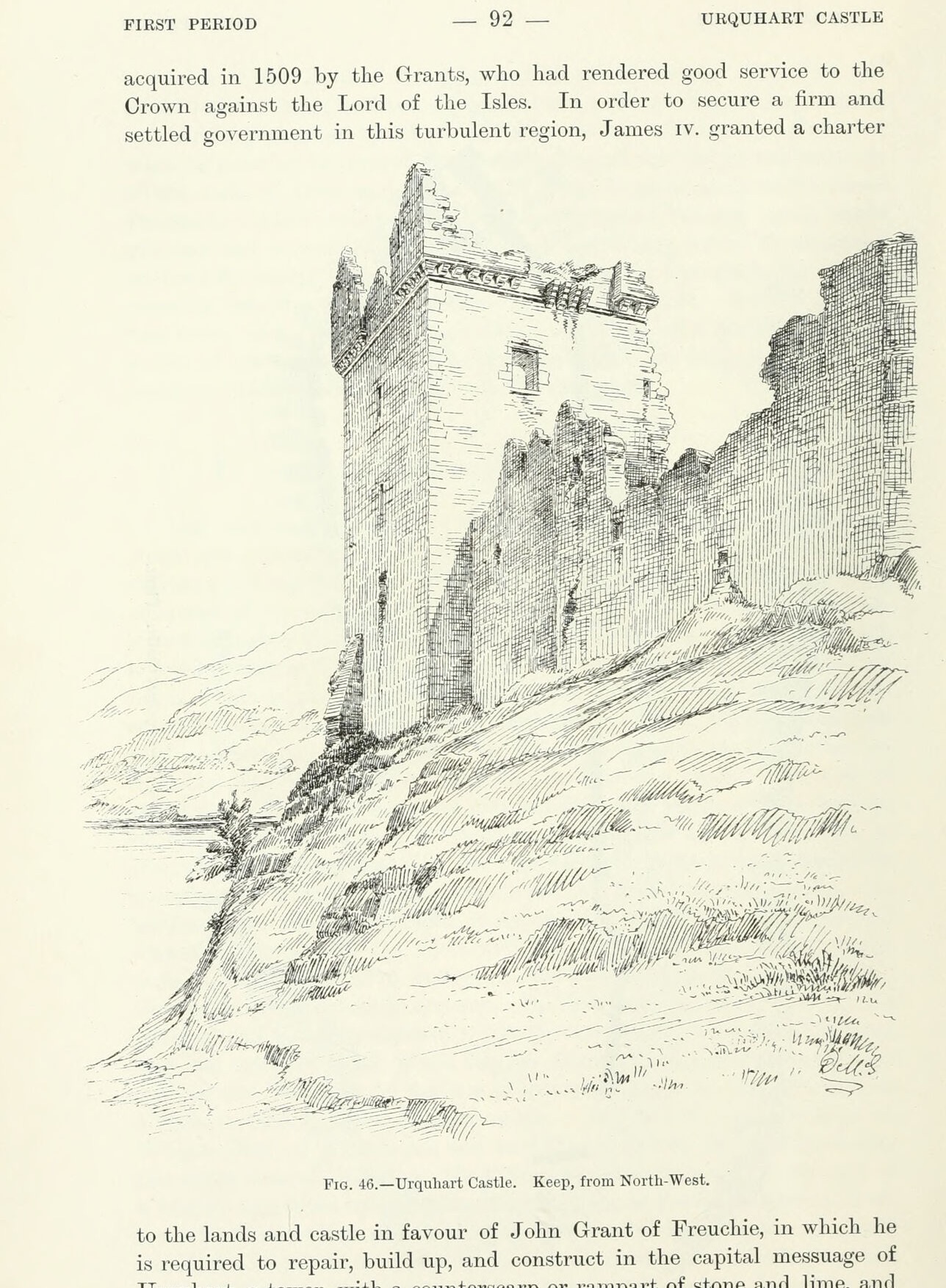
Fig. 46. Urquhart Castle. Keep, from North-West.
1889 · MacGibbon & Ross, vol. 3 (1889)
Public domain
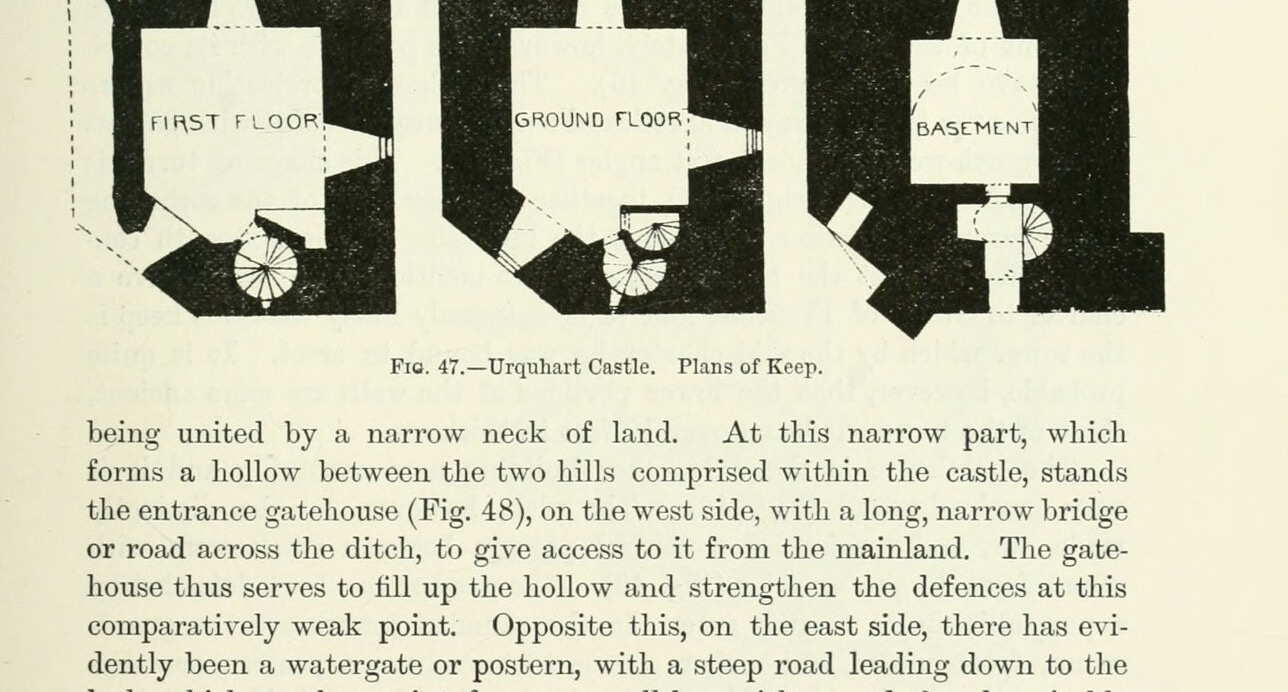
Fig. 47. Urquhart Castle. Plans of Keep.
1889 · MacGibbon & Ross, vol. 3 (1889)
Public domain


