
Scotland · Restored
Kilravock Castle
Kilravock Castle is a composite Scottish seat formed around a 15th-century rectangular tower house with later 17th‑century domestic additions. Located near Croy between Inverness and Nairn, it has been the seat of the Clan Rose since the late Middle Ages and retains its historic keep and attached ranges. The building is a Category A listed structure and remains a restored, occupied country house.
Its prime
1680
Today
Restored
As it stood in 1680
What Kilravock Castle looked like in its prime.
A compact rectangular 15th‑century keep of squared pinkish sandstone blocks with a corbelled course supporting a crenellated parapet rises above lower domestic ranges. The keep has small vertical slit windows and a flagstaff on its roof; a 17th‑century square stair tower projects from the south face and the south range shows steep slate roofs and tall clustered stone chimneys. The castle closes a grassed forecourt and sits in cultivated Highland lowlands near a village setting, appearing complete and in regular use in its prime.
Its story
The story of Kilravock Castle.
From Boscoe to Rose: the Barony of 1293
The lands of Kilravock belonged to the Boscoe family, and passed by marriage (first through Andrew Boscoe's marriage to Elizabeth Bissett in the twelfth century, then through their daughter Mary Boscoe's marriage to Hugh II de Ros of the Rose family in the thirteenth), until in 1293 John Balliol created the Roses Barons of Kilravock.
The 1460 Keep to Robert Burns's Visit, 1787
The keep itself dates from around 1460, when the Baron of Kilravock secured a licence to build from the Lord of the Isles; a square stair tower and south range were added in the seventeenth century, with the north and west sides of the quadrangle following later. Mary, Queen of Scots was received at Kilravock in 1562, and in February 1568 an Elgin blacksmith, George Robertson, forged a new iron yett for the great tower.
Prince Charles Edward Stuart was entertained at Kilravock four days before the battle of Culloden; his enemy the Duke of Cumberland visited soon afterwards. Robert Burns came to the castle in September 1787.
The Roses' Unbroken Line, 1293–2013
The Roses, a family of Norman origin, held Kilravock continuously from 1293, and from that date child succeeded parent without a collateral heir intervening, a run of direct descent unique in Scottish history. Many bore the Christian name Hugh, and only one ever rose above the rank of laird.
The estate left the Rose clan in 1984, when it passed to a charitable Christian trust and was run for a time as bed-and-breakfast accommodation; it is no longer open to the public. Anna Elizabeth Emily Guillemard Rose, 25th of Kilravock and chief of Clan Rose, died at Nairn in December 2012 at the age of 88, and in June 2013 the Lord Lyon recognised her nephew, David Hugh Heriot Baird Rose, as 26th Baron of Kilravock and chief of the clan.
Step inside
9 places to explore in 1680.
The record describes 9 distinct spots at Kilravock Castle, including 1 interior: stair tower interior. Create your own photoreal reconstruction and explore every one, more scenes means more rooms, more angles, and more of the place to stand in.
Build Your Own Castle
Recreate Kilravock Castle with AI to explore it.
The artist rebuilds it as it stood in 1680, a photoreal reconstruction that belongs to you alone. Pay with coins, no subscription needed.
Recreate this castle →Defend this castle →Whose castle
Clans who held Kilravock Castle.
The families that held Kilravock Castle for a decade or more across its history, follow a name to its clan.
Seat of Clan Rose from c. 1460 until the castle was transferred to a charitable trust in 1984.
From the archive
Kilravock Castle on paper: the measured plan and period views.
The survey plan and photographs below are the ground truth this page's reconstructions are checked against, drawn and photographed while the castle was still a working garrison. Every image is public-domain or openly licensed, with its source named.
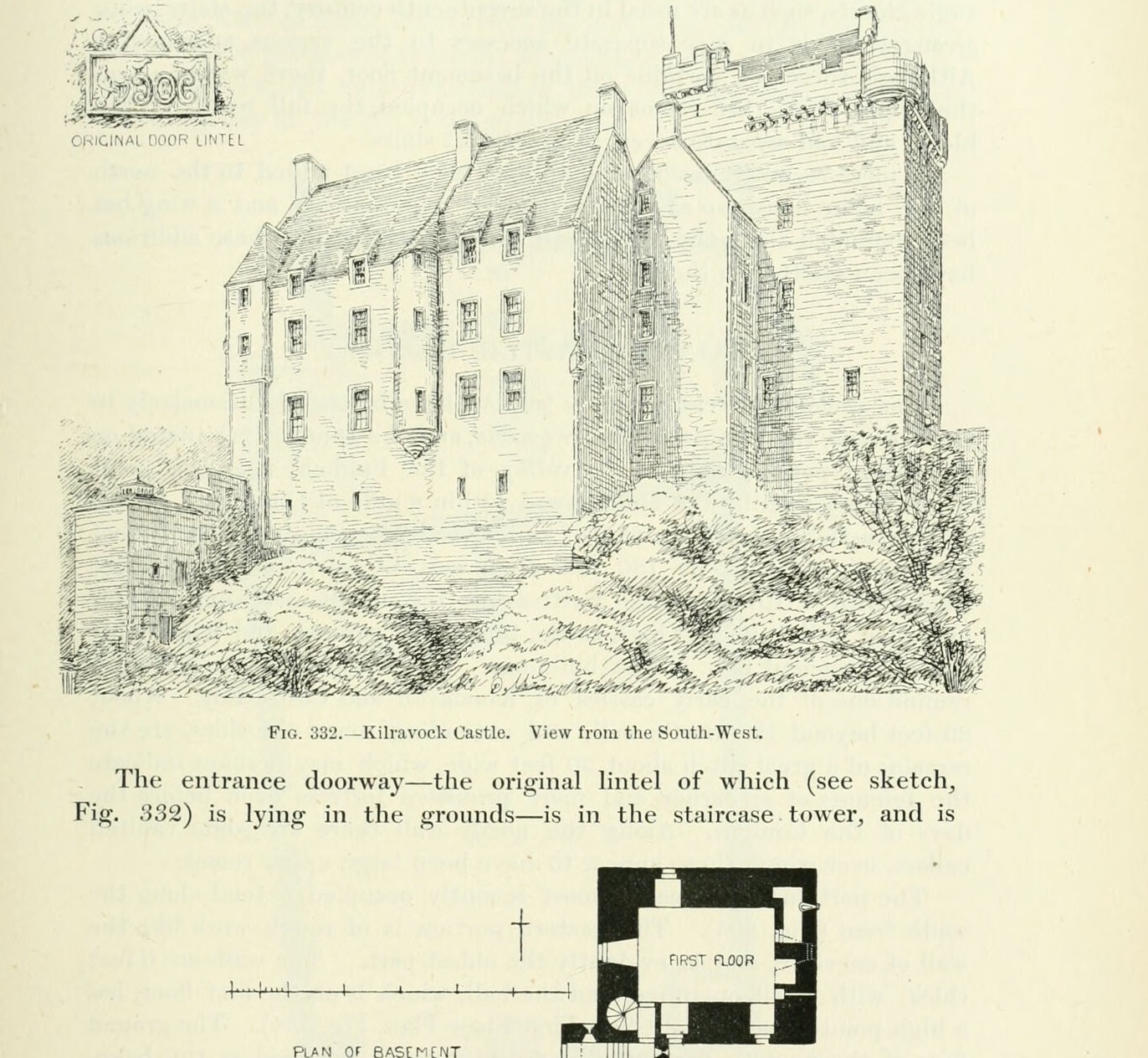
FIG. 332. Kilravock Castle. View from the South-West.
1887 · MacGibbon & Ross, Castellated and Domestic Architecture of Scotland, vol. 1 (1887)
Public domain
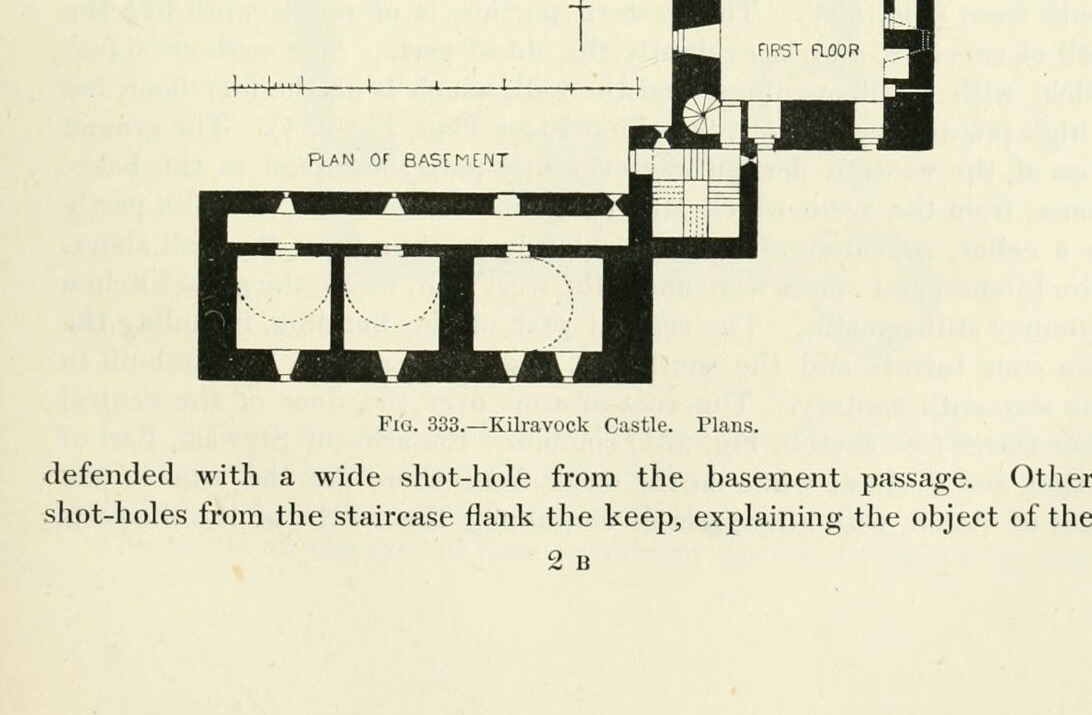
Fig. 333. Kilravock Castle. Plans.
1887 · MacGibbon & Ross, Castellated and Domestic Architecture of Scotland, vol. 1 (1887)
Public domain


