
Scotland · Restored
Neidpath Castle
Neidpath Castle is a tall L-plan rubble-built Scottish tower house overlooking the River Tweed west of Peebles. Built in the later medieval period and remodelled in the 17th century, the castle retains its main tower, battlements and ancillary buildings and is still owned and managed for events and filming.
First raised
1263
Its prime
1686
Today
Restored
As it stood in 1686
What Neidpath Castle looked like in its prime.
A tall L-plan rubble-built tower house with one short leg, rounded corner turrets and a compact, blocky silhouette; the roofline has roofed battlements and a balustraded sentry walk. Walls are coarse grey sandstone rubble with narrow slit windows (two with iron bars). The tower sits on a grassy slope above the River Tweed, with low outbuildings abutting the base, the ruined west wing visible, and terraced garden banks to the south‑east with a small summerhouse.
Its story
The story of Neidpath Castle.
Fraser of Oliver and the Hays of Yester, 1263-1587
An early castle was probably built at Neidpath by Simon Fraser of Oliver Castle between 1263 and 1266, while he held the office of High Sheriff of Tweeddale. Early in the 14th century the barony passed to the Hay family by marriage to Margaret, heiress and daughter of the sheriff's son, Simon Fraser of Oliver and Neidpath; the archway still carries both the goats' head emblem of the Hays and the strawberries of the Frasers.
The tower that stands above the Tweed today was probably raised in the late 14th century by Sir William de Haya, who died about 1390. His son Sir Thomas Hay married the daughter and heiress of Sir Hugh Gifford of Yester, and Yester Castle thereafter served as the principal family seat, though Neidpath remained in use: Mary, Queen of Scots visited in 1563, and her son James VI in 1587.
Garrisoned Against Montrose, Attacked Under Cromwell, 1645-1650
In 1645 Neidpath was garrisoned against the Royalist forces of James Graham, 1st Marquess of Montrose. The following year John Hay of Yester went over to the King's party, and was afterwards created 1st Earl of Tweeddale by Charles II.
When Oliver Cromwell invaded Scotland in 1650 the castle was attacked, and its fall is told two ways: by one account it was surrendered without a fight, while other accounts suggest that it took the longest assault on any stronghold south of the River Forth to force it. Writing in 1887, James Taylor held that the 13th-century tower was brought down by artillery during the siege; damage to the west wing is on record.
The 2nd Earl's Yews and the Queensberry Purchase, 1660s-1693
During the 1660s the 2nd Earl of Tweeddale remodelled the castle and put up outbuildings. An agricultural improver, he planted an avenue of yews, one side of which survives. Between 1682 and 1686 the garden terraces to the south-east and east were remodelled and a summer house built. He was then declared bankrupt, and in 1686 sold Neidpath to William Douglas, 1st Duke of Queensberry, who in 1693 gave it to his second son William Douglas, later 1st Earl of March.
Adam Ferguson, Collapse and 'Degenerate Douglas', 1700s-1810
The 2nd Earl of March altered the castle in the 18th century. In 1778 the 3rd Earl inherited the title and estates of the Duke of Queensberry and let Neidpath to tenants, among them the philosopher and historian Adam Ferguson. The castle was neglected, and by 1790 the upper storeys of the wing had collapsed. William Wordsworth and Walter Scott both came in 1803; Wordsworth, appalled at the felling of “a brotherhood of venerable Trees”, wrote a sonnet opening “Degenerate Douglas! oh, the unworthy Lord.”
The castle is said to be haunted by Jean Douglas, whom Scott's poem calls the Maid of Neidpath: the youngest daughter of William Douglas, Earl of March, forbidden the son of the laird of Tushielaw as beneath her station, who dwined away while her lover was sent off and was so wasted on his return that he did not know her, and died of a broken heart. On the Duke's death in 1810 the castle and the earldom of March passed to the Earl of Wemyss, while the dukedom went to the Scotts of Buccleuch.
The Wemyss Inheritance and the Courtesy Title of Lord Neidpath
Neidpath still belongs to the Earl of Wemyss, whose heir takes his courtesy title, Lord Neidpath, from it. The tower has been a category A listed building since February 1971. It now serves as a wedding venue and filming location (Merlin: The Quest Begins, starring Jason Connery, was shot here in September and October 1997), and can be viewed by appointment.
Step inside
9 places to explore in 1686.
The record describes 9 distinct spots at Neidpath Castle, including 3 interiors: vaulted basement, first‑floor hall (divided by wooden floor), pit dungeon. Create your own photoreal reconstruction and explore every one, more scenes means more rooms, more angles, and more of the place to stand in.
Build Your Own Castle
Recreate Neidpath Castle with AI to explore it.
The artist rebuilds it as it stood in 1686, a photoreal reconstruction that belongs to you alone. Pay with coins, no subscription needed.
Recreate this castle →Defend this castle →Whose castle
Clans who held Neidpath Castle.
The families that held Neidpath Castle for a decade or more across its history, follow a name to its clan.
Probably built by Simon Fraser of Oliver Castle, 1263–1266; held by the Frasers until the early 14th century.
Held by the Hays from the early 14th century until the bankrupt 2nd Earl of Tweeddale sold it in 1686.
Held by the Douglases from 1686, bought by William Douglas, 1st Duke of Queensberry, then held by his son's line, the Earls of March.
From the archive
Neidpath Castle on paper: the measured plan and period views.
The survey plan and photographs below are the ground truth this page's reconstructions are checked against, drawn and photographed while the castle was still a working garrison. Every image is public-domain or openly licensed, with its source named.
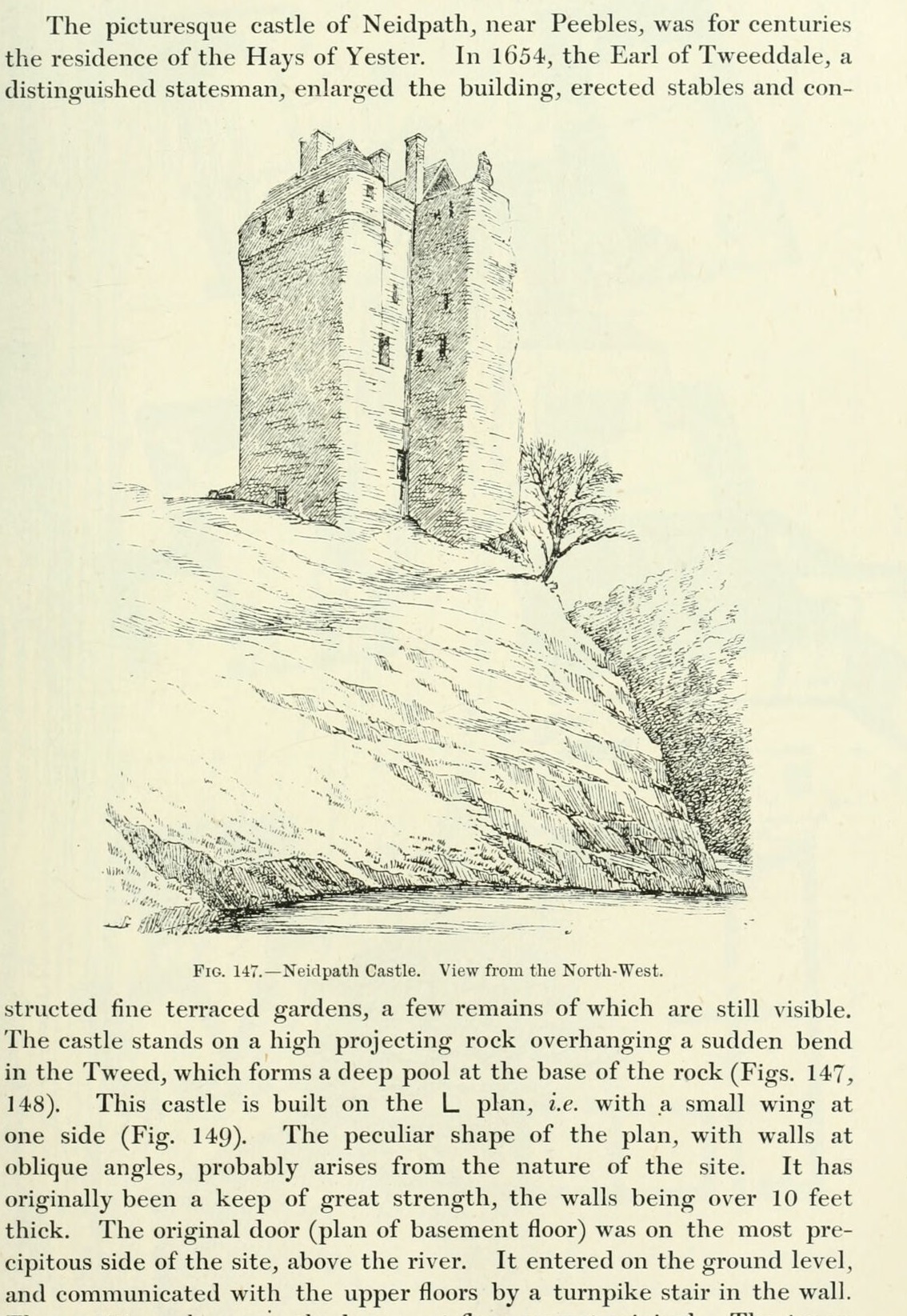
Fig. 147. Neidpath Castle. View from the North-West.
1887 · MacGibbon & Ross, Castellated and Domestic Architecture of Scotland, vol. 1 (1887)
Public domain
Nearby


