Clan Baird
Lawyers, soldiers, and statesmen of Lanarkshire and the north-east.
- Origin
- Glasgow & Strathclyde, Scotland
- Motto
- Dominus fecit
- Famous bearer
- Sir David Baird, general
- Register
- Scottish clan
The Baird arms, crest badge, tartan and country

Crest badgeClan member crest badge - Clan BairdCeltus · CC BY-SA 3.0 
TartanBaird tartanMicheletb · CC BY-SA 4.0 
Coat of armsArms of Baird of NewbythBorne by the Newbyth line, one branch of the name rather than all of it.Sodacan · CC BY-SA 4.0


- Crest badge: The chief's crest inside a belt and buckle: the badge a clansman wears to show whose following he is in.
- Tartan: The checked cloth the family is known by.
- Coat of arms: Granted to an individual and inherited down that one documented line. These are the arms of particular families of the name, not of everyone who shares the surname.
What is the Baird clan tartan?
One Baird sett is recorded, and it is the swatch above. A sett is the block of coloured bands the cloth is built from, repeated in both directions; the whole plaid is that one square enlarged.
Baird is a Lowland name, and Lowland families did not wear Highland dress; the 1746 proscription that broke the tradition in the north took nothing from them, because there was nothing there to take. The Baird sett is a 19th-century assignment, made when tartan stopped being Highland and became Scottish and fixed by the Bannockburn weavers’ pattern books, the royal visit to Edinburgh in 1822, and the Vestiarium Scoticum of 1842. Nobody polices any of it. Wearing the Baird sett declares allegiance to the name, not descent from any particular line of it.
The seat of Clan Baird
Seat vacantChief
No one leads the Clan Baird community yet. When the movement opens, you can stand for its leadership, or help elect whoever does.
Current mission
No shared goal set yet. Once Clan Baird has leadership, it sets the public focus: a restoration, a gathering, a real-world project that helps its own.
The Baird clan is being rebuilt. Join the waiting list for the movement today, and you help decide who leads it and what it does.
Help rebuild the Baird clan →Motto
Dominus fecit
“God Made”
What does the Baird name mean?
Of debated origin, possibly from the Gaelic 'bard' (poet) or the Old French 'bardé' (armoured). Borne in Lanarkshire from the 13th century.
The history of Clan Baird
A poet's name, or an armoured man's
Baird is a name whose meaning was never settled. One reading takes it from the Gaelic bard, a poet; the other from the Old French barde, armoured. Gaelic surnames in the Highlands and the west are overwhelmingly patronymic, built from the name of a remembered ancestor, but epithets and occupations do appear among them too, so a poet's byname hardening into a family name is not far-fetched. Neither derivation can be proved, and the two are still argued over.
The date, at least, is firm. Most families in Lowland Scotland had adopted hereditary surnames by 1400, and Baird is on record in Lanarkshire from the 13th century, well before the practice became general. Whatever the word had once described, by then it described nobody: it was simply what one family was called, and what their children would be called after them.
Lanarkshire first, then Aberdeen and Banff
The surname's first ground is Lanarkshire, the upper Clyde country, from the 13th century. By the 14th it is also being written down far to the north-east, in Aberdeen and Banff, and from that period onward the record shows Baird families of consequence in both places rather than one. Two footholds at opposite ends of the country, and the name held firmly in both.
Nothing in the family's motto suggests modesty about the fact. Dominus fecit, God made, is the line the Bairds took for themselves, a flat statement of provenance rather than a boast of arms or conquest. It suited a family that would make its name less by the sword than by office: by the bench, the regiment and, in the end, the laboratory bench of a Helensburgh minister's son.
A family, not a clan, and the difference the law made
The idea that Highland groups are clans and Lowland groups merely families is a 19th-century convention, not a legal or historical one. An Act of the Scottish Parliament of 1587 spoke of the chiefs and chieftains of all clans, as well on the highlands as on the borders, and Sir Crispin Agnew of Lochnaw, Albany Herald Extraordinary at the Court of the Lord Lyon, has pointed out that chief and head, clan and family, have been interchangeable words all along. What actually confers standing under Scots law is a chief recognised by the Lord Lyon; a name group without one has no equivalent position, whichever word is used of it.
By the 17th century the chiefs and leading gentry of Scotland were increasingly settling their disputes by recourse to the law rather than by feud. The Bairds' particular distinction was in the legal profession.
John Baird was raised to the bench in the 17th century with the judicial title Lord Newbyth. It is a small thing to state and a large thing to have achieved: a Lanarkshire surname of debated meaning seated among the men who decided what the law of Scotland was.
The prisoner of Hyder Ali who took Seringapatam
David Baird (1737-1829) joined the army in 1772 and went out to India in 1780. His war began badly: he was severely wounded and held captive by Hyder Ali.
He came back to it with interest. Baird took Pondicherry in 1793 and captured Seringapatam in 1799, the action his name has been attached to ever since.
From the Red Sea to the Nile
In 1801 Baird led a march overland from the Red Sea to the Nile, a feat of movement rather than of battle and famous on that account. In 1805 he commanded the expedition to the Cape of Good Hope. General Sir David Baird died in 1829, having given the surname a second register alongside the courts: the Bairds were soldiers of the first rank as well as lawyers.
Newark Castle above the St Monans rocks
Newark Castle stands on a rocky promontory just west of St Monans on the Fife coast, looking out at the North Sea. The Kinloch family began the present building in the 15th century and it passed by marriage to the Sandilands of Cruivie, who sold it in 1649 to David Leslie, a prominent commander in the English and Scottish Civil Wars who was made Lord Newark after them. On Leslie's death in 1682 it went to the Anstruthers, and last of all to the Bairds of Elie.
The upper storeys are ruinous now, though the vaulted cellars survive beneath, hidden from view, and a separate round dovecote still stands beside them. The site is a scheduled monument. It is the one building the family can be pointed at on the Fife coast, and it came to them at the end of a chain of four other names.
Stooky Bill, a hatbox, and two attic rooms in Soho
John Logie Baird was born at 121 West Argyle Street in Helensburgh on the Firth of Clyde on 13 August 1888, the youngest of four children of the minister of the West Parish Church. He was an inveterate boy inventor: he wired the family house for electric light at thirteen, ran a private telephone exchange to his friends' houses across the street, and at fourteen took a press photograph that ran on the front page of the local paper. He studied at the Royal Technical College and the University of Glasgow, then spent his twenties as a power-station engineer, increasingly preoccupied with the idea of sending pictures by wireless.
In 1922 he moved to Hastings and built a television apparatus out of whatever he could afford: a wooden tea-chest, a biscuit tin for the lamphousing, darning needles, sealing wax, a hatbox, and a scanning disk cut from cardboard. From that workshop, moved to 22 Frith Street in Soho, came the first recognisable transmitted human image in October 1925, a ventriloquist's dummy he called Stooky Bill, and then an office boy, William Taynton, the first human face ever televised. On the afternoon of 26 January 1926, in two attic rooms at Frith Street, he showed the system working to forty members of the Royal Institution and a reporter from The Times. He was thirty-seven.
The firsts came fast after that: moving pictures across the Atlantic to a receiver in New York on 9 February 1928, colour television on 3 July 1928, stereoscopic television, and from 30 September 1929 experimental BBC broadcasts on his system from a transmitter at Brookmans Park, the first television service of its kind anywhere. He kept going: large-screen television by 1938, a colour receiver by 1944, fully electronic colour by 1945. He died at Bexhill-on-Sea on 14 June 1946 and lies with his parents at Helensburgh. The Royal Television Society's highest honour is the John Logie Baird Award.
The name in other people's countries
The surname carried well beyond Lanarkshire and Buchan. Spencer Fullerton Baird (1823-1887) was an American ornithologist and ichthyologist; Matthew Baird (1817-1877) a railroad and locomotive businessman; Francis Baird (1802-1864) an engineer and the owner of Baird Works. Tadeusz Baird (1928-1981) was a Polish composer, the same surname on a concert programme in another language altogether.
At home it kept the same habit of quiet professional weight. Sir Dugald Baird (1899-1986) was a British doctor specialising in obstetrics and fertility; Patrick Douglas Baird (1912-1984) a Scottish glaciologist; Edith Baird (1859-1924) a British chess composer; Jane Baird (1875-1960) a Scottish educator and Esperantist; Mamie Baird (1925-2012) a Scottish journalist and author. Poets or armoured men at the root, the Bairds have spent their recorded history, from 13th-century Lanarkshire onward, being useful.
Champions of the Baird name
The bearers whose lives are inseparable from this surname. Each has their own page, biography, achievements, geography, connection to the family.
Castles the Baird held
Strongholds this name held for a decade or more, look one up, or rebuild it to explore.
- Newark Castle
Held latterly by the Bairds of Elie.
The castles of the homeland
The great strongholds of the homeland, look one up, see what it looked like in its prime, and recreate it to explore.
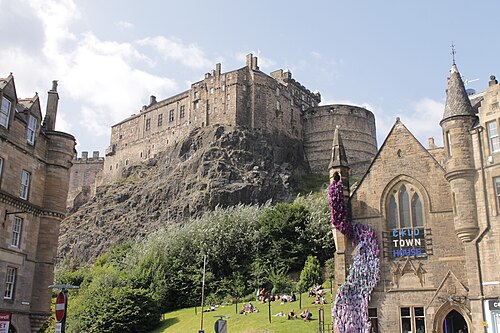 Edinburgh CastleRestored · prime 1520
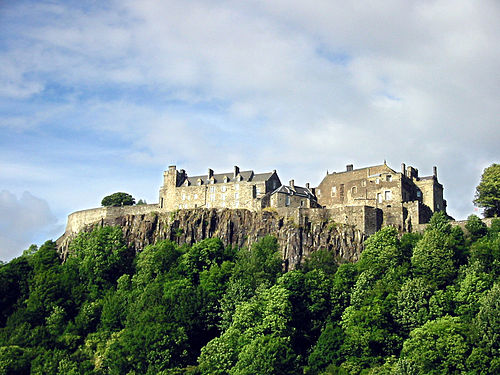 Stirling CastleRestored · prime 1542
 Glamis CastleStill standing · prime 1900
All castles in Scotland → · Strongest castles in Scotland → · Castles of Europe
Play As Your Clan
Hold a real castle against whatever you choose to send at it, take a ship out in her own service years, or stand at the shoulder of someone the record remembers. The chronicler sets the scene; the deeds are yours.
Notable bearers of the Baird name
- Sir David Baird, general
- John Baird, Lord Newbyth