Stanley
also de Stanley
Earls of Derby, kingmakers at Bosworth, two Prime Ministers.
- Origin
- North West, England
- Motto
- Sans changer
- Famous bearer
- Thomas Stanley, 1st Earl of Derby (1435-1504), kingmaker at Bosworth
- Register
- English family
Ranked of all time
The 15 Most Powerful English Houses of All Time
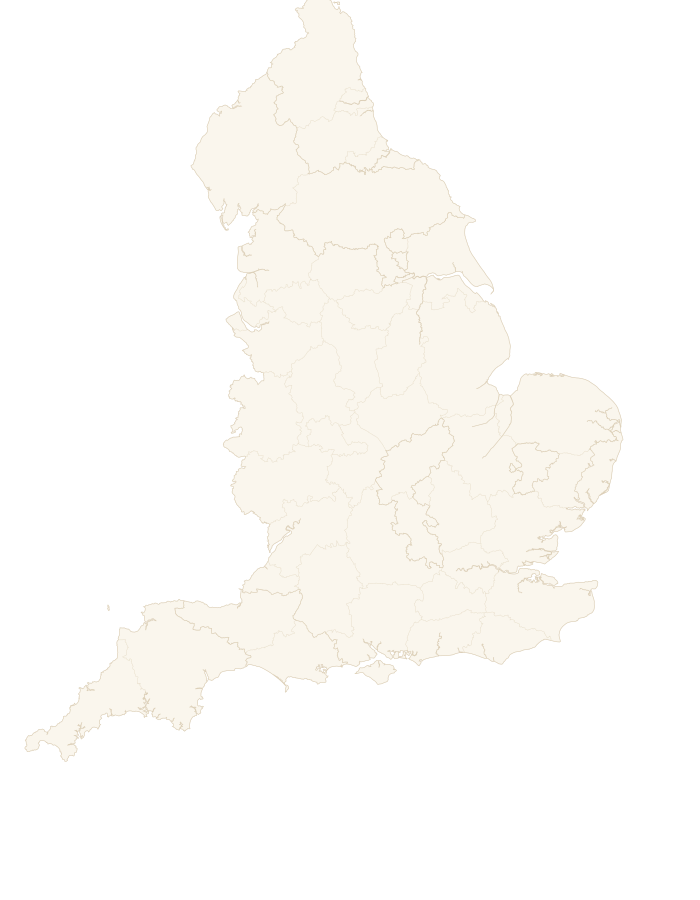
The Stanley arms and country

Coat of armsStanleyArmsPublic domain 
Coat of armsArms of StanleyCC BY-SA 4.0


- Coat of arms: Granted to an individual and inherited down that one documented line. These are the arms of particular families of the name, not of everyone who shares the surname.
CoreHistoric reach
The seat of Stanley
Seat vacantChief
No one leads the Stanley community yet. When the movement opens, you can stand for its leadership, or help elect whoever does.
Current mission
No shared goal set yet. Once Stanley has leadership, it sets the public focus: a restoration, a gathering, a real-world project that helps its own.
The Stanley clan is being rebuilt. Join the waiting list for the movement today, and you help decide who leads it and what it does.
Help rebuild the Stanley clan →Motto
Sans changer
“Without changing”
What does the Stanley name mean?
Territorial surname from Stanley in Staffordshire, originally 'stán-lēah', stone-clearing in Old English. The family emerged as Lords of Mann and gentry of Cheshire and Lancashire from the 14th century and became Earls of Derby in 1485 through their decisive intervention at the Battle of Bosworth.
The history of Stanley
A stone clearing in Staffordshire
The name is a place before it is a family. Stanley in Staffordshire is built from Old English stan, stone, and leah, a clearing or meadow cut into woodland: a stone clearing, the sort of worked patch a neighbour could point at and name. The men who held it were called after it, and the oldest form on the record is not Stanley but de Stanley, carrying the Norman French preposition for 'of' or 'from'. Fixing de in front of a village or an estate was the mark of a territorial surname, a consequence of feudal landholding, and it is how the landed families of post-Conquest England told each other apart.
Hereditary surnames were still new when the first Stanleys took theirs. In England the practice is generally dated to the preparation of the Domesday Book in 1086, and surnames were adopted first among the feudal nobility and gentry before spreading slowly through the rest of society; by 1400 most English people, and most Lowland Scots, used one. Stanley was one of the early sort, fixed among the gentry.
Ligulf, Adam, and a pedigree the family later invented
The earliest documented members of the kindred are two apparent brothers, Ligulf de Aldelegha and Adam de Standlega, who during the reigns of Stephen and Henry II divided the lands at Audley in Staffordshire that the Domesday survey of 1086 had recorded in the hands of a man named Gamel. No relationship with Gamel is known, and the parentage of the brothers is unknown too. What the names say is that the stock was English rather than French. Ligulf is an Anglo-Saxon name, and it belongs to a generation that had watched the old landholding class swept away: by 1086 only about five per cent of the land in England south of the Tees was left in English hands.
That English descent later became inconvenient. When a Norman origin was the prestigious thing to have, descendants pushed the brothers back in time and presented them as sons of a fictitious Adam, follower of William the Conqueror and lord of an equally fictitious Aldithley in Normandy, in defiance of Ligulf's non-Norman name and the plainly English etymology of Aldithley. They had company in the exercise: the surviving lists of the Conqueror's companions are mostly padded with added names, and only about thirty-five men can be reliably claimed to have been with William at Hastings. Later still, when pre-Conquest ancestry came into vogue instead, the family reversed the invention and produced a maternal descent from a supposed Anglo-Saxon of half a century before 1066 who improbably bore the Norman name William de Stanley.
How Stanley itself reached the family is uncertain. It lies about nine miles from Audley and was not part of Gamel's Domesday holdings. One account has it granted by Ligulf's son Adam de Aldelegha, ancestor of the Audleys, to his cousin William, son of Adam de Standlegha. Another has Adam's grandson William marry Joan de Stanley, heiress of Stoneleigh in Staffordshire, and become William de Stanley of Stoneleigh. Either way, the younger branch took the name Stanley and kept it. The senior line went the other road: made Baron Audley in 1313, it failed in the male line in 1391 when Nicholas Audley, 3rd Baron Audley, died without a male heir.
Heiresses, Hooton, and the crown of Mann
The Stanleys rose by marrying well and repeatedly. In the late 13th century William de Stanleye married one of the coheiresses of Philip de Baumvill. A century after that the family split in two. The elder son, William, took the Baumvill seat at Stourton in Cheshire and picked up neighbouring Hooton by marriage, founding the senior line known as the Stanleys of Hooton.
It was the younger son who made the family's name. Sir John Stanley married the rich heiress Isabella de Lathom, daughter of Thomas Lathom of Lathom in Lancashire, and with her came the Lancashire estate that anchored the family for good. Sir John went on to serve as Lord Lieutenant of Ireland and to hold the title King of Mann.
That title was not a courtesy. It reflected the peculiar standing of the Isle of Man, ruled as a feudal kingdom under the English crown rather than as an English county, with its own law and its great court at Castle Rushen. Under the style King of Mann and then Lord of Mann, the Stanleys held the island with some gaps from 1405 until 1736, when it was sold back to the Crown.
The morning at Bosworth and the earldom of Derby
The family was raised first to the barony of Stanley, created in 1456, and then to an earldom won on a battlefield. On 22 August 1485 Thomas Stanley, 1st Earl of Derby (1435-1504), stood on the field at Bosworth with an army and, being stepfather to Henry Tudor, was the man both sides were watching. He held his levies through the morning, uncommitted, then threw them in at the decisive moment. Richard III was killed and Henry Tudor became king of England; by tradition it was Stanley who picked the fallen crown out of a thornbush and set it on Henry's head. The earldom of Derby was created within the year as the reward, and the Stanleys hold it still, under the motto Sans changer, without changing.
Bosworth put more than a title into the family's hands. In 1490 the 1st Earl built Greenhalgh Castle to defend his estates around Garstang in Lancashire, with leave to enclose a park with free warren and chase; the land is said to have been a gift from his stepson Henry Tudor for his part in defeating Richard III. The castle at Macclesfield passed into Stanley hands from 1485, and when Henry VII came to visit the Earl of Derby at Macclesfield in 1496 it is assumed the castle is where he stayed. One other bearer of the name is recorded on the field itself: William Stanley (c. 1435-1495), an English soldier who fought at Bosworth. No relationship between him and the earl is documented.
Greenhalgh, Macclesfield and Hornby: the castles of the name
Greenhalgh was the earls' own work from the ground up, and it was noticed: in the 16th century John Leland called it 'a pretty castle of the lords of Derby'. Four towers stood in the farmland around Garstang, guarding an estate rather than a frontier.
Macclesfield came to the family already built and already old. John de Macclesfield began it in 1398 as a square sandstone fortified manor house with projecting wings and decorative towers, and by 1444 the lands had been bought by Humphrey Stafford, 1st Duke of Buckingham, whose family left the house its local nickname of Buckingham Palace. The Stanleys held it from 1485, and by 1585 it was ruinous. Only the porch survived into the 20th century, carrying a Tudor rose that dates its vaulted interior to the reign of Henry VII; it was dismantled in 1932.
Hornby Castle, above the Lune Valley village of Hornby in a curve of the River Wenning, belonged to a cadet line, the Stanley Barons Monteagle, who held it from the 16th century. The site was older than they were: the base of the tower at the back of the house is thought to have been built for the Neville family in the 13th century. The polygonal tower rising from it is the Stanley work, probably raised for Sir Edward Stanley, 1st Baron Monteagle. The second Baron helped suppress the Rising of the North; the third died in 1581 leaving an only daughter, Elizabeth, who married Edward Parker, 12th Baron Morley, and with her the castle passed out of the name.
Charlotte at Lathom: the Stanleys in the Civil War
By the 17th century the earls were the senior peers of the north-west, seated at Lathom House and Knowsley Hall in Lancashire and holding their island court at Castle Rushen. Henry Stanley, 4th Earl of Derby (1531-1593), and William Stanley, 6th Earl (1584-1642), carried the house through the Tudor and early Stuart years, while William Stanley (1548-1630) served as a military commander under Elizabeth I.
James Stanley, 7th Earl of Derby (1607-1651), was the most senior Royalist commander in the north of England, and the defence of the family's own seat fell to his wife. Charlotte de la Trémoille held Lathom House through the eighteen-month siege of 1644-45 against the Parliamentary armies. Greenhalgh was garrisoned for Charles I at the same time, and with Lathom it was one of the last two Royalist strongholds in Lancashire to fall, taken only after a bitter siege through 1644-45 by Cromwell's forces under Colonel Dodding and Major Joseph Rigbie; the garrison marched out in May 1645 on the promise of safe conduct home unharmed.
Greenhalgh did not survive its surrender. Demolition teams pulled it down far enough to end its military use, and the stone walked away into local farmhouses, among them the neighbouring Castle Farm; by 1772 Thomas Pennant found only 'the poor remains of Greenhalgh Castle', and today the lower part of one of the four towers is all that stands. The senior line itself ran out in 1735 with the death of James Stanley, 10th Earl of Derby, predeceased by his only son. The earldom went sideways to a patrilineal sixth cousin, Edward Stanley, 5th Baronet Stanley, of a branch made Baronets Stanley of Bickerstaffe in 1623 and descended from a younger brother of the 2nd Earl. That line holds the title still.
Knowsley, abolition, and the leap in the dark
Edward Smith-Stanley was born at Knowsley Hall in Lancashire on 29 March 1799, heir to one of the oldest and greatest landed families in England. He was a serious classical scholar who would publish a respected verse translation of Homer's Iliad, and from the moment he entered the House of Commons in 1822 one of the most powerful debaters of his generation, quick, fluent and combative enough to be nicknamed the Rupert of debate.
His first great achievement came as a reforming Whig. As Secretary of State for War and the Colonies in Earl Grey's government it fell to him in 1833 to bring forward the bill for the abolition of slavery throughout the British Empire. He introduced it in a powerful speech, steered it through the House of Commons, and saw it become the Slavery Abolition Act of 1833, which freed some eight hundred thousand enslaved people across the empire. He was its parliamentary author, and it stands as one of the great humane measures of the century.
He later crossed the floor on a matter of principle and became leader of the Conservative Party, which he led for twenty-two years, longer than anyone before or since, holding a divided party together through the long dominance of his rivals. He formed a government three times, in 1852, in 1858-1859 and from 1866 to 1868, the last great political chief of the modern era to lead from outside the Commons. The crown of it came in the third ministry with the Reform Act of 1867, which roughly doubled the electorate and gave the vote to a large part of the urban working class for the first time: a measure he called, with characteristic boldness, a leap in the dark. He gave up the premiership in 1868 and died at Knowsley on 23 October 1869.
He was not an isolated case. His son Edward Stanley, 15th Earl, was Foreign Secretary under both his father and Disraeli, and Edward Stanley, 17th Earl (1865-1948), was Secretary of State for War in the First World War cabinet; at least one historian has argued that the Stanleys rival the Cecils as the most important family in the history of the Conservative Party. The 12th Earl had earlier founded the two classic flat races at Epsom, the Derby in 1779 and the Oaks in 1780, which is why both races carry a Stanley title. Edward Stanley, 19th Earl of Derby, born in 1962, holds Knowsley Hall today.
Where the name travelled
The surname long outgrew the earldom. Sir Henry Morton Stanley (1841-1904), the Welsh-American journalist and explorer, went in search of Dr David Livingstone and met him at Ujiji in 1871. Arthur Penrhyn Stanley (1815-1881) was dean of Westminster; Henrietta Stanley, Baroness Stanley of Alderley (1807-1895), campaigned for the education of women; Owen Stanley (1811-1850) was a British naval captain; and Albert Stanley, 1st Baron Ashfield (1874-1948), was president of the Board of Trade and chairman of the London Passenger Transport Board.
In America the name attached itself to machines. Frederick Trent Stanley (1802-1883) founded Stanley Works, while Francis Edgar Stanley (1849-1918) and Freelan O. Stanley (1849-1940) are credited as co-inventors of the Stanley Steamer, and Freelan founded the Stanley Hotel. David S. Stanley (1828-1902) was a Union general in the American Civil War and a Medal of Honor recipient, Winifred C. Stanley (1909-1996) represented New York in Congress, and the virologist Wendell Meredith Stanley (1904-1971) took a Nobel prize. George F. G. Stanley (1907-2002), the Canadian historian, designed the flag of Canada.
The last turn is one few surnames take. Stanley became a first name, and it did so as a political gesture: its use as a given name began with the political followers of the family. English naming has a habit of turning the surnames of important houses into forenames to signal support or patronage, which is where Cecil, Howard, Percy and Gordon come from too, and the political sense faded as parents simply began to like the sound. By the 20th century the men carrying it included Stanley Baldwin (1867-1947), three times prime minister of the United Kingdom, the footballer Sir Stanley Matthews (1915-2000), the film director Stanley Kubrick (1928-1999) and the comic Stan Laurel, born Arthur Stanley Jefferson (1890-1965). None was a Stanley of Knowsley; each carried, at several removes, the name of a Lancashire family that once held a kingdom.
Champions of the Stanley name
The bearers whose lives are inseparable from this surname. Each has their own page, biography, achievements, geography, connection to the family.
Castles the Stanley held
Strongholds this name held for a decade or more, look one up, or rebuild it to explore.
- Hornby Castle
Held by the Stanley Barons Monteagle from the 16th century until the third Baron's death in 1581.
- Greenhalgh Castle
Built in 1490 by Thomas Stanley, 1st Earl of Derby; held by the Earls of Derby until slighted after the siege of 1645.
- Macclesfield Castle
The Stanley family, Earls of Derby, held the castle from 1485.
The castles of the homeland
The great strongholds of the homeland, look one up, see what it looked like in its prime, and recreate it to explore.
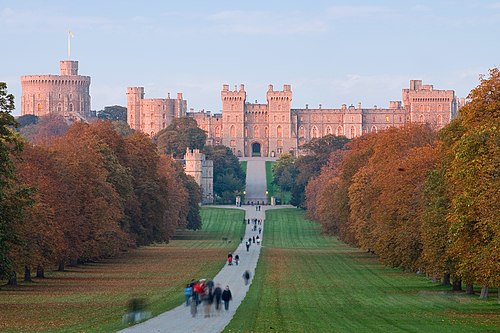 Windsor CastleRestored · prime 1820
 Tower of LondonRestored · prime 1285
 Bamburgh CastleRestored · prime 1904
All castles in England → · Strongest castles in England → · Castles of Europe
Play As Your Clan
Hold a real castle against whatever you choose to send at it, take a ship out in her own service years, or stand at the shoulder of someone the record remembers. The chronicler sets the scene; the deeds are yours.
Notable bearers of the Stanley name
- Thomas Stanley, 1st Earl of Derby (1435-1504), kingmaker at Bosworth
- Sir Henry Morton Stanley (1841-1904), Welsh-American journalist-explorer, met David Livingstone at Ujiji 1871
- Edward Stanley, 14th Earl of Derby (1799-1869), three-time Conservative Prime Minister
- Edward Stanley, 17th Earl of Derby (1865-1948), Secretary of State for War
- Edward Stanley, 19th Earl of Derby (b.1962), current head of the Stanley line
Stories of Stanley
The Stanley intervention at Bosworth
1485Late in the morning of Monday the twenty-second of August 1485, on the small ploughed-and-marsh field of Bosworth between the villages of Sutton Cheney, Stoke Golding, Shenton and Dadlington in the south-west of Leicestershire, Thomas Stanley, fifty-year-old Lord Stanley and the stepfather of the Lancastrian-Tudor claimant Henry Tudor, sat on the open field with his army of approximately three thousand Cheshire-and-Lancashire Stanley levies arrayed on the rising ground to the north of the engagement-field, and held the position through the opening two hours of the battle between Henry Tudor's outnumbered Lancastrian army of approximately five thousand and the larger Yorkist royal army of approximately ten thousand under the reigning King Richard III of England. Lord Stanley's brother Sir William Stanley sat on the parallel rising ground to the south with the second Stanley levy of about two thousand five hundred men. Both Stanley brothers had refused to commit to either side in the morning's deployment in spite of the King's standing instruction to Lord Stanley (King Richard III was holding Lord Stanley's eldest son George Strange as a hostage at the Yorkist royal camp). At approximately eleven in the morning, with the battle hanging on the small cavalry charge Richard III had launched personally against Henry Tudor's bodyguard at the centre of the field, Sir William Stanley committed his levy in a flank charge against the King's cavalry that broke Richard's small bodyguard formation, brought down Richard in person on the slopes above Redemore Plain, and ended the Plantagenet dynasty in twenty minutes of close-quarters fighting. By tradition, the crown of Richard III was found in the thorn-bush near the King's body by Lord Stanley personally and was placed by him on Henry Tudor's head on the field of victory. Henry Tudor was crowned King Henry VII on the spot. The earldom of Derby, created within the year by Henry VII as the reward for the Stanley intervention, has been held in the senior Stanley line continuously since.
Read the story →
Stanley meets Livingstone at Ujiji
1871On the morning of Friday the tenth of November 1871, on the dusty palm-and-mango-shaded waterfront of the small Arab slave-trading town of Ujiji on the east shore of Lake Tanganyika in what is now western Tanzania, the thirty-year-old Welsh-American newspaper reporter Henry Morton Stanley of the New York Herald, at the close of eight months of overland march from Zanzibar through the German-and-Belgian-claimed-but-still-uncolonised East African interior with a small expedition of approximately two hundred porters and twenty-seven askari guards, walked through the small crowd of Ujiji locals that had gathered at the shore on news of the European caravan's arrival, picked out from the crowd the small figure of the fifty-eight-year-old Scottish-born Congregational missionary and explorer Dr David Livingstone (who had been six years missing in the central African interior on his search for the source of the Nile, who was widely believed in Europe and America to be dead, and who was at this moment standing weak and ragged at the edge of the Ujiji crowd in his blue cloth cap and the threadbare oxford-grey jacket that was almost his last remaining piece of European clothing), removed his own pith helmet, walked the last twenty paces, and addressed Livingstone in the form of the famous question that has been universally remembered ever since: Doctor Livingstone, I presume? Livingstone smiled, raised his blue cloth cap in return, and replied Yes. The two men shook hands at the centre of the Ujiji crowd at approximately eleven in the morning of the tenth of November 1871. Stanley delivered the eighteen-month-old letter-of-correspondence from Livingstone's children at Newstead Abbey that he had carried in his pith-helmet hatband across the eight months of the East African march; Livingstone read it, wept openly, and embraced Stanley. The meeting at Ujiji was the central moment of nineteenth-century European geographical journalism and the foundational event of the modern news-reporter-as-explorer tradition.
Read the story →