Turner
The lathe.
- Origin
- North West, England
- Famous bearer
- Joseph Mallord William Turner (1775–1851), painter
- Register
- English family
The Turner arms and country

Coat of armsEscutcheon of the Turner baronets of Kirkleatham (1782)Borne by the Kirkleatham line, one branch of the name rather than all of it.Charles Matthews · CC BY-SA 4.0
.svg)
- Coat of arms: Granted to an individual and inherited down that one documented line. These are the arms of particular families of the name, not of everyone who shares the surname.
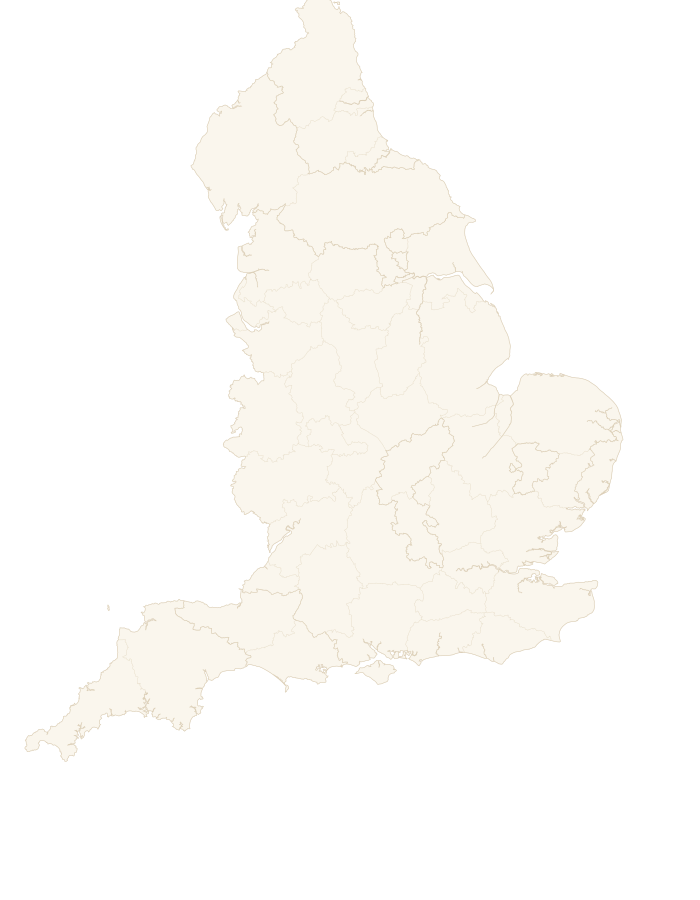
CoreHistoric reach
The seat of Turner
Seat vacantChief
No one leads the Turner community yet. When the movement opens, you can stand for its leadership, or help elect whoever does.
Current mission
No shared goal set yet. Once Turner has leadership, it sets the public focus: a restoration, a gathering, a real-world project that helps its own.
The Turner clan is being rebuilt. Join the waiting list for the movement today, and you help decide who leads it and what it does.
Help rebuild the Turner clan →What does the Turner name mean?
Occupational, lathe-turner; Norman tournament sense also feeds the pool.
The history of Turner
Warner le Turnur, 1180
The earliest recorded spelling of the family name dates from 1180, for a man written down as Warner le Turnur; Ralph le Turner follows in the late 12th century. The name reached England from Normandy after the Norman Conquest, and the word behind it is the Old French tornier, a lathe. A turner was the man who worked one, a maker of small objects in wood, metal or bone, cut to shape while they spun.
Those first Turners were being described rather than named. Family names in England are generally traced to the preparation of Domesday Book in 1086, spreading slowly downwards from the feudal nobility; only by 1400 had most English families adopted hereditary surnames. Somewhere in that stretch a description of one man's work stopped washing off his sons. Not every Turner came off a lathe: Old French tournoieur, a man who ran or rode in a tournament, feeds a little of the pool, and so does Turnhare, a nickname for a runner quick enough to outrun a hare. But the lathe is the main line, and there were enough men at one that Turner is now the 28th-most common surname in the United Kingdom.
Treen: what Europe ate from before cheap pottery
Between 500 and 1500 AD, turned wooden vessels served as the everyday bowls and cups of most of the population of Europe: the ordinary dish that ordinary people ate from, every day, for a thousand years. Somebody made all of it, and the somebody was a turner.
Almost none survives, because wood rots. What is left comes out of ground that kept the air away: shipwrecks such as the Mary Rose, the Oseberg burial ship under its clay mound, deep wells and waterlogged pits. Among the oldest are 7th-century bowls from the island monastery of Iona, off western Scotland. Most such ware was turned from green wood on a spring pole lathe, fast and cheap and made close to the tree; at the top of the same craft sat the mazer, a drinking bowl made in very limited numbers from dry wood and dressed with a silver-gilt boss and rim.
One man, a springy pole and six tools
The pole lathe is a reciprocating lathe: powered by a bow or a spring, it turns the wood one way and then back, and the turner cuts on one side of the rotation only. It is primitive technology demanding considerable dexterity, and nothing about it is automatic: the turner controls the contact of tool and wood entirely by hand, the tool pressed on the rest, braced against his body, the bevel riding the wood.
A skilled turner could produce a wide variety of objects with five or six simple tools, every form coming out of five cuts: parting, planing, bead, cove and hollowing. His stock was the whole household and half the building trade: tool handles, candlesticks, egg cups, rolling pins, knitting needles, thimbles, chessmen and spinning tops; furniture legs and pegs, balusters and newel posts, bowls, platters and chair seats. In many parts of the world the lathe was portable and went to the source of the wood, which is why the trade left so little trace and so many surnames.
Wood Street, 1310, and the Worshipful Company
London's woodturners organised into a guild as early as 1310, on Wood Street. By 1347 the Mayor had made the Turners Company responsible for regulating weights and measures in the city, a trade of dishes and vessels handed the job of policing what a measure held. The Company governed the apprentice system and set the prices of turned goods. By 1591 the turners had built their own Hall, and in 1604 they were incorporated as the Worshipful Company of Turners of London.
Outside London the craft was decentralised and unregulated, and that is where most Turners lived. Itinerant turners known as bodgers set up temporary pole lathes near the source of the wood, turning furniture parts where the trees stood and moving on when the stand was cut out.
From the pole lathe to the queen of machine tools
As early as 1568 a separate flywheel was driving a lathe through a belt: the master cut the wood while an apprentice turned the crank on a huge wheel, often several feet across. That was continuous revolution rather than the pole lathe's back-and-forth, and it opened the craft to water, steam and finally electricity. This is the lathe that evolved into the queen of machine tools, which made it possible to turn the parts for other machinery.
The craft went the other way as well, into luxury: the Holtzapffels' ornamental lathes cut patterns into ebony and were favoured as a hobby by European princes, earning a mention from Tolstoy in War and Peace in 1869. Through the 19th and early 20th centuries English turners worked in turning shops under the master-and-apprentice system, while in Germany and Russia the work concentrated in villages with a single speciality such as toys.
The barber's son who painted the Temeraire
Joseph Mallord William Turner (1775–1851) was a Covent Garden barber's son who at fifteen exhibited his first watercolour at the Royal Academy, then spent sixty years inventing the modern landscape painting of light, weather and the sea.
In 1838 he painted The Fighting Temeraire, tugged to her last Berth to be broken up, an old warship of sail under tow to the breakers behind a small steam tug. It became the single most-loved English painting of the nineteenth century.
The same man in five languages
Every settlement that ate off wooden dishes needed a turner, and each language named him after his lathe. The English Turner has counterparts in the German Drexel, Drechsler, Dressler and Dreyer, the Polish Tokarz, the Finnish Sorvari and the Russian Tokarev, and stands beside Potter and Crocker, the men who made the same vessels out of clay.
That is why the surname is common everywhere and seated nowhere: there is no Turner castle and no Turner chief, because the name was made hundreds of times over, by neighbours who needed to say which Warner or which Ralph they meant.
The last apprentices, and where the name went
The trade nearly died with the men who held it. An apprentice system in the United Kingdom preserved the old skills until the 1970s, and it was Dr Dale Nish, going to England to recruit teachers, tools and techniques from the last of the apprentice-trained woodturners, who carried them over to a new generation.
The name travelled further and faster than the craft: there are Turner towns and counties across the United States, a New England town in Maine and counties in Georgia and South Dakota among them. If you carry the name, the line behind you runs back to a man at a pole lathe, green shavings at his feet, making the bowl his village ate from.
Champions of the Turner name
The bearers whose lives are inseparable from this surname. Each has their own page, biography, achievements, geography, connection to the family.
Historic Places, Rebuilt
Explore the streets and seats the Turner name knew, rebuilt with AI as they stood in history.
The castles of the homeland
The great strongholds of the homeland, look one up, see what it looked like in its prime, and recreate it to explore.
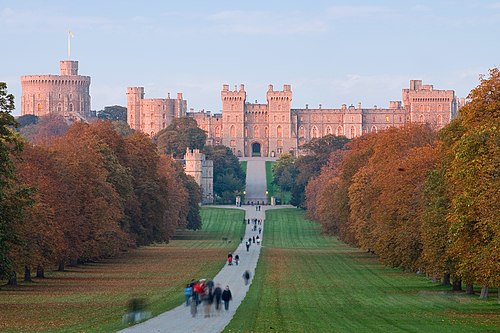 Windsor CastleRestored · prime 1820
 Tower of LondonRestored · prime 1285
 Bamburgh CastleRestored · prime 1904
All castles in England → · Strongest castles in England → · Castles of Europe
Play As Your Clan
Hold a real castle against whatever you choose to send at it, take a ship out in her own service years, or stand at the shoulder of someone the record remembers. The chronicler sets the scene; the deeds are yours.
Notable bearers of the Turner name
- Joseph Mallord William Turner (1775–1851), painter