England · Restored
Bamburgh Castle
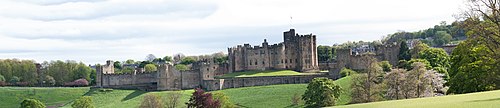
Bamburgh Castle is a large coastal castle on the northeast coast of England near the village of Bamburgh. Built on a black volcanic dolerite crag, its core includes a Norman keep and long curtain walls; it was extensively restored by William Armstrong around the turn of the 20th century and remains open to the public.
Its prime
1904
Today
Restored
Ranked among Europe’s castles
As it stood in 1904
What Bamburgh Castle looked like in its prime.
A massive sandstone ashlar fortress sits atop a dark volcanic dolerite crag overlooking a wide sandy beach and dunes. The silhouette is dominated by a rectangular, crenellated Norman keep at the centre, flanked by long straight curtain walls and lower ranges of stone buildings with crenelated parapets. A prominent round artillery tower occupies the east end. The walls step down the slope toward the shore; at prime the fabric is whole and rooflines complete with battlements and pitched roofs on internal ranges.
Its story
The story of Bamburgh Castle.
Din Guarie and the Citadel Ida Took in 547
The crag is black volcanic dolerite, part of the Whin Sill, and it carried a fortress centuries before the Normans arrived. The Celtic Britons knew the place as Din Guarie, and it may have been the capital of Bernicia, the realm of the Gododdin people, from that kingdom's foundation around 420 until 547. That year brought both the first written reference to the site and its capture: the Anglo-Saxon ruler Ida of Bernicia took the citadel and made it his seat. Possession changed hands three times between Britons and Anglo-Saxons before settling. The Britons briefly retook it from Ida's son Hussa during the war of 590, only to lose it again the same year, and around 600 Hussa's successor Æthelfrith passed the fortress to his wife Bebba, whose name survives in the early form Bebbanburh.
Most of what is known about that early community has come out of the ground rather than the chronicles. Brian Hope-Taylor began excavating in the 1960s and found the gold plaque known as the Bamburgh Beast, along with the Bamburgh Sword. Since 1996 the Bamburgh Research Project has worked both the fortress site and the Bowl Hole, an early medieval burial ground in the dunes to the south that a storm first exposed in 1817. Between 1998 and 2007 the remains of 120 people of the 7th and 8th centuries were recovered from that graveyard; the work, led by Professor Charlotte Roberts of Durham University, identified individuals who had originated in Ireland, Scotland, Scandinavia, the Mediterranean and North Africa. In 2016 they were moved into the crypt of St Aidan's Church in the village.
William Rufus and the Threat to Blind an Earl, 1095
The Normans built a new castle on the crag, and it forms the core of the one standing there now. In 1095 its owner, Robert de Mowbray, Earl of Northumbria, backed a revolt against William II, and the king besieged Bamburgh without success. Robert himself was captured; his wife carried on the defence from inside until the king coerced her into surrendering by threatening to blind her husband. From that point the castle was the Crown's, held for the king by keepers rather than by a lord of its own. Henry II probably built the keep, which was complete by 1164.
Governors, King John's Civil Wars, and a Captive King of Scots
Bamburgh's keepers were the Crown's men. Richard I rewarded John Forster for his service at the Siege of Acre in 1191 with the keeping of Bamburgh Castle. During the civil wars at the end of King John's reign, the castle was under the control of Philip of Oldcoates. In 1346, after the Scots were defeated at the Battle of Neville's Cross, King David II was held prisoner here.
Warwick's Artillery and the Fall of the Forsters, 1464–1704
In 1464, during the Wars of the Roses, Bamburgh was subjected to a nine-month siege by Richard Neville, 16th Earl of Warwick, the Kingmaker, acting on behalf of the Yorkists. Warwick's guns broke the walls open, and the garrison under Sir Ralph Grey surrendered - the first English castle brought down by artillery fire.
The Forsters of Northumberland went on supplying the Crown with successive governors of the castle until the mid-1500s, when, after the Dissolution of the Monasteries, another Sir John Forster was granted the church and the castle. The family held it until Sir William Forster, who died in 1700, was posthumously declared bankrupt. An Act of Parliament in 1704 settled the debts by selling his estates, the castle among them, to Lord Crewe, Bishop of Durham, who had married Sir William's sister Dorothy.
The Sharps, Armstrong and Ferguson: Rebuilding a Ruin
Financial difficulties in the 17th century had left the fabric deteriorating, and the castle was ruinous by the time Lord Crewe acquired it in 1704. Crewe placed it in the hands of a board of trustees chaired by Thomas Sharp, Archdeacon of Northumberland. On Sharp's death, leadership passed to his son John, also Archdeacon of Northumberland, who refurbished the keep and the court rooms and established a hospital on the site.
The Victorian industrialist William Armstrong bought Bamburgh in 1894, and C. J. Ferguson rebuilt much of it between 1894 and 1904 in squared sandstone and ashlar. During the Second World War pillboxes were dug into the sand dunes below to hold the beach against invasion. In 1944 a Royal Navy corvette was named HMS Bamborough Castle. The castle was designated Grade I listed in January 1952 and remains in Armstrong hands: it is owned by Francis Watson-Armstrong, son of the 3rd Baron Armstrong, and its laundry rooms house the Armstrong and Aviation Artefacts Museum.
Step inside
8 places to explore in 1904.
The record describes 8 distinct spots at Bamburgh Castle, including 2 interiors: court rooms (refurbished interiors), laundry rooms / armstrong and aviation artefacts museum. Create your own photoreal reconstruction and explore every one, more scenes means more rooms, more angles, and more of the place to stand in.
Build Your Own Castle
Recreate Bamburgh Castle with AI to explore it.
The artist rebuilds it as it stood in 1904, a photoreal reconstruction that belongs to you alone. Pay with coins, no subscription needed.
Recreate this castle →Defend this castle →Whose castle
Clans who held Bamburgh Castle.
The families that held Bamburgh Castle for a decade or more across its history, follow a name to its clan.
Forster
Held by the Forster family, 1610–1704.
Bought and restored by Lord Armstrong in 1894; held by the family still.
From the archive
Bamburgh Castle on paper: the measured plan and period views.
The survey plan and photographs below are the ground truth this page's reconstructions are checked against, drawn and photographed while the castle was still a working garrison. Every image is public-domain or openly licensed, with its source named.
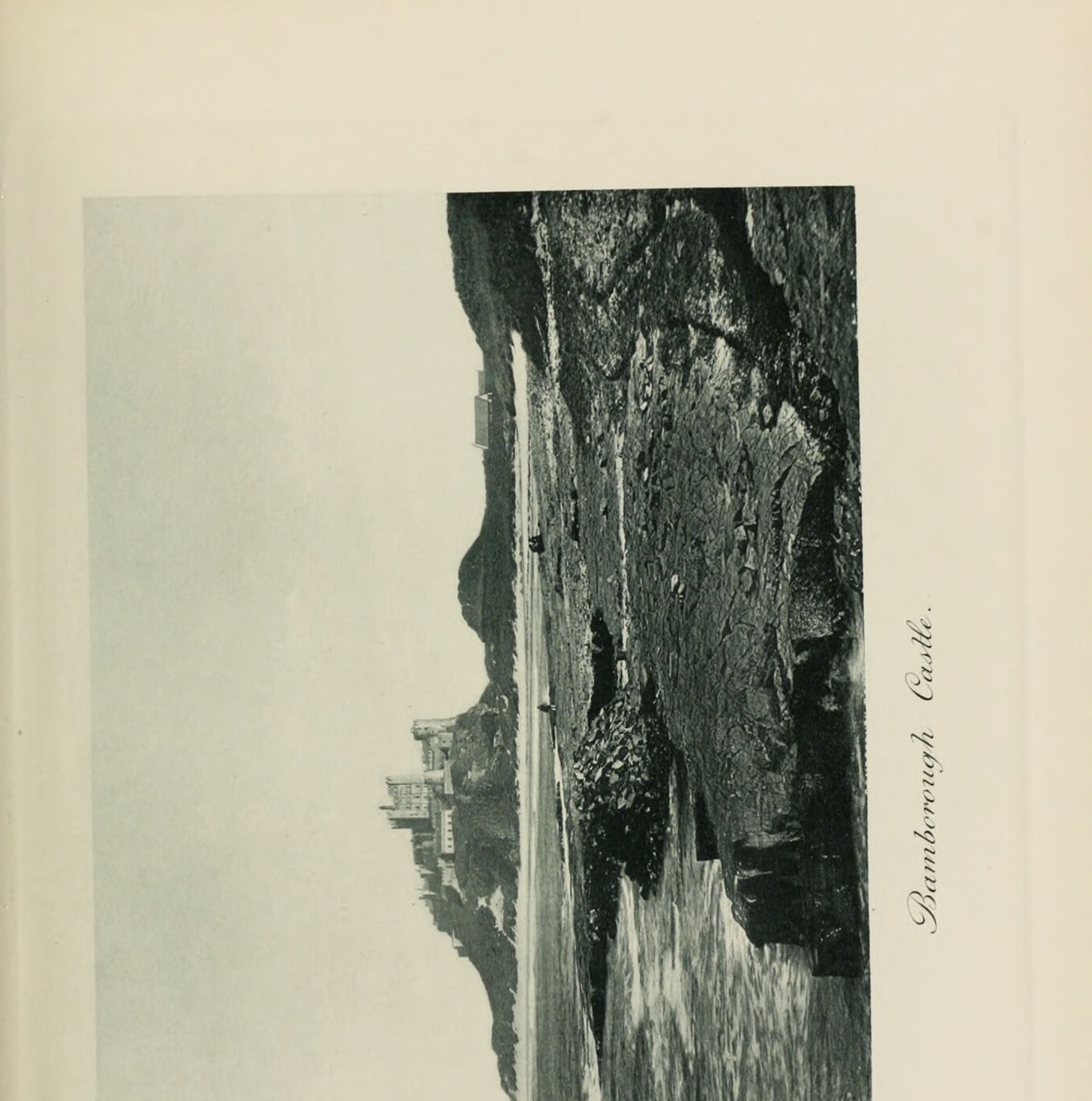
Bamborough Castle.
1897 · J. D. Mackenzie, The Castles of England, vol. 2 (1897)
Public domain
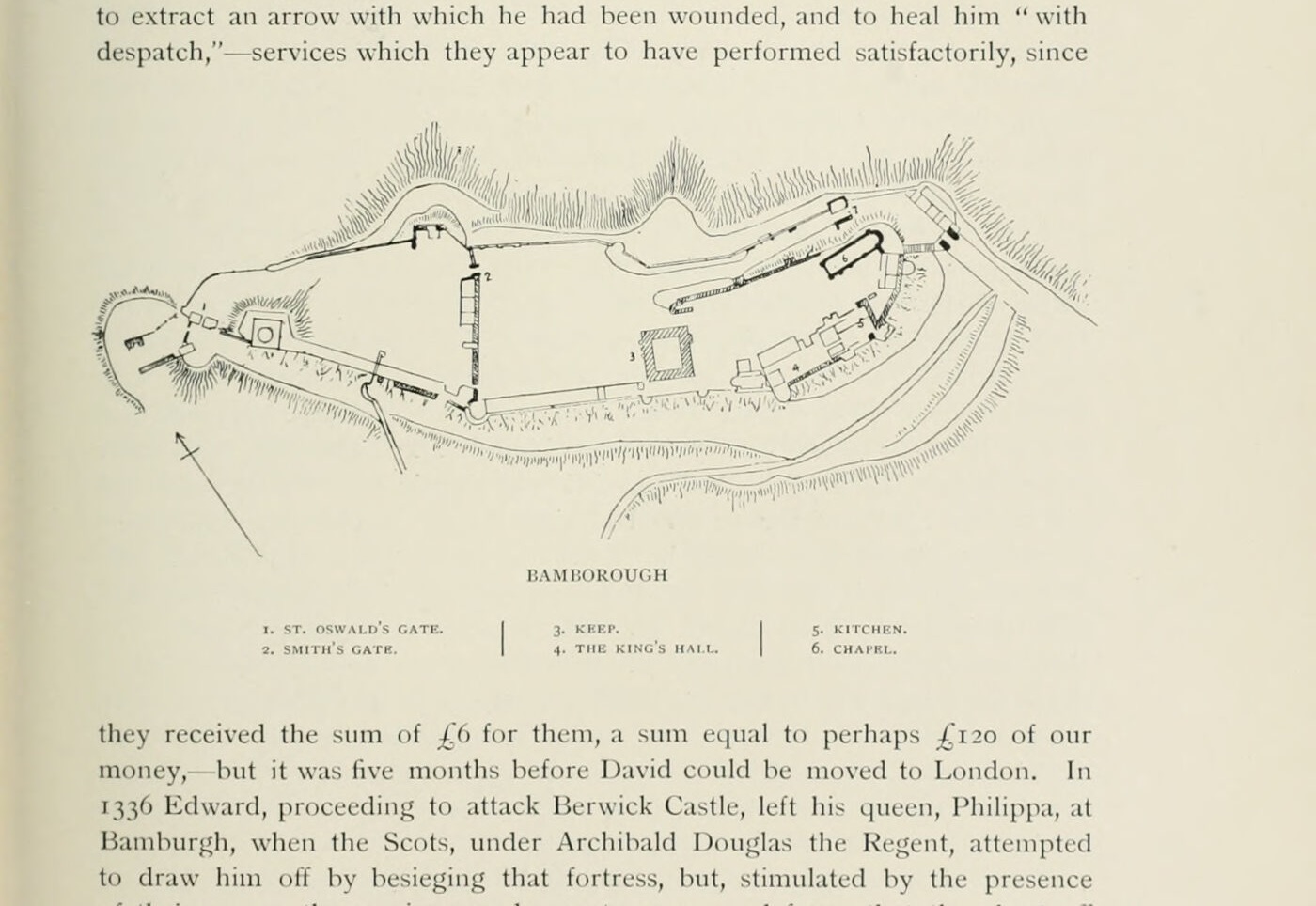
BAMBOROUGH
1897 · J. D. Mackenzie, The Castles of England, vol. 2 (1897)
Public domain