Clan Mackay
also MacKay, McKay, Mac Aoidh, Clan Mackay
Strathnaver and the Mackay country, the kindred of Cape Wrath.
- Origin
- The Highlands & Islands, Scotland
- Motto
- Manu forti
- Famous bearer
- Donald Mackay, 1st Lord Reay (1591–1649), colonel of the Mackay Regiment, 30 Years War
- Register
- Scottish clan
The Mackay arms, crest badge, tartan and country

Crest badgeClan member crest badge - Clan MackayCeltus · CC BY-SA 3.0 
TartanClan Mackay tartan (Logan, 1816)The sett the chief certified to the Highland Society of London in 1816, the earliest authenticated record of most clan tartans.BalfourStokes · CC BY-SA 4.0 
TartanMacKay tartan (Vestiarium Scoticum)As printed in the Vestiarium Scoticum, 1842, a collection whose claimed medieval source was never produced, and which is now generally held to be a forgery. Families adopted its patterns anyway, and wear them still.Celtus · CC BY 2.5 
Coat of armsMackay of Holland armsBorne by the Holland line, one branch of the name rather than all of it.Czar Brodie · CC BY-SA 3.0 
Coat of armsMackay of Aberach ArmsBorne by the Aberach line, one branch of the name rather than all of it.QuintusPetillius · CC0

.png)
.png)


- Crest badge: The chief's crest inside a belt and buckle: the badge a clansman wears to show whose following he is in.
- Tartan: The checked cloth the family is known by.
- Coat of arms: Granted to an individual and inherited down that one documented line. These are the arms of particular families of the name, not of everyone who shares the surname.
What is the Mackay clan tartan?
Two Mackay setts are shown above: the sett certified to the Highland Society of London in 1816, and the plate printed in the Vestiarium Scoticum in 1842. They are not rival claims to be picked between; they are different records, and different weaves, of the same family cloth. A sett is the block of coloured bands the cloth is built from, repeated in both directions; the whole plaid is that one square enlarged.
Almost no clan tartan is medieval. Highland dress was proscribed from 1746 until 1782, and when it returned it returned as ceremony rather than everyday cloth, so the surname-to-sett map was fixed after the break, by the Bannockburn weavers’ pattern books, the royal visit to Edinburgh in 1822, and the Vestiarium Scoticum of 1842. The Mackays wore tartan long before any of that. What the registers fixed was which one. Nobody polices any of it. Wearing the Mackay sett declares allegiance to the name, not descent from any particular line of it.
CoreHistoric reach
The seat of Clan Mackay
Seat vacantChief
No one leads the Clan Mackay community yet. When the movement opens, you can stand for its leadership, or help elect whoever does.
Current mission
No shared goal set yet. Once Clan Mackay has leadership, it sets the public focus: a restoration, a gathering, a real-world project that helps its own.
The Mackay clan is being rebuilt. Join the waiting list for the movement today, and you help decide who leads it and what it does.
Help rebuild the Mackay clan →Motto
Manu forti
“With a strong hand”
What does the Mackay name mean?
From Mac Aoidh, son of Aodh ('fire'). The Mackay chiefs of Strathnaver claim descent from Iye Mór Mac Aoidh, who flourished c.1210, and through him from the royal house of Moray. The clan's territory was Strathnaver in north-west Sutherland, the long valley of the river Naver, together with the wider Mackay country between the river Helmsdale and Cape Wrath. The Mackays were the dominant kindred of the Scottish far north for the entire late mediaeval and early modern period.
The history of Clan Mackay
Mac Aoidh: the fire-name, the disputed descent, and Strathnaver
Mackay is Mac Aoidh in Gaelic, the son of Aodh, and Aodh is an old Gaelic personal name meaning fire. The clan is Clann Mhic Aoidh. Gaelic builds a surname from mac, son, for a man and nic (a contraction of nighean mhic, daughter of the son of) for a woman, and the second element shifts under lenition depending on the grammar around it, which is why a single Gaelic name can surface in English and Scots records in a dozen spellings. MacKay and McKay are not two families; they are one name written down by clerks who had no Gaelic and no fixed rule. Note too that Highland clan surnames were historically carried by the descendants and dependants of an ancestor rather than by everyone inside a clan's bounds; it was only with the arrival of a non-Gaelic-speaking administration that clan surnames were applied to whole territories at once.
The descent of the chiefs is genuinely disputed, and the honest version is more interesting than either tidy one. Angus Mackay, in his Book of Mackay of 1906, set two genealogies side by side: one by Sir Robert Gordon, the 17th-century historian who was a younger son of Alexander Gordon, 12th Earl of Sutherland, and one by Alexander Mackay of Blackcastle, who wrote later but had access to the charters and papers of the chief's own family. They agree in places and diverge sharply in others. Gordon made the Mackay chiefs share an ancestor with the chiefs of Clan Forbes and Clan Farquharson; Angus Mackay argued the Forbes connection was really the memory of a very strong 16th-century alliance formed during the long feud with the Gordons, and judged the Blackcastle manuscript by far the more accurate of the two.
Blackcastle makes Iye Mackay, 1st chief of Clan Mackay, born about 1210, a descendant of Malcolm MacHeth, 1st Earl of Ross, who died about 1168 and who may himself have been connected to the early rulers, the Mormaers, of Moray. The story runs that in the 1160s the MacHeths and their followers, after conflict with Malcolm IV of Scotland, fled north over the hills of Ross into Strathnaver, where they were received by the Norse Harald Maddadsson, Mormaer of Caithness, then an enemy of the king. In 1215 the MacHeths and MacWilliams rose against the crown and were defeated by Fearchar, Earl of Ross; Kenneth MacHeth, grandson of Malcolm MacHeth, was killed. Angus Mackay thought it possible that the Strathnaver Mackays descend from that Kenneth and that the first chief was his son or nephew: possible, he says, not proved. What is recorded rather than reasoned is that Iye Mor Mackay, 2nd chief, married a daughter of Walter, Bishop of Caithness, in 1263. The documentary spine of the family, the part that rests on charters and dated events rather than on genealogy, begins in the 14th century.
The country is easier to be certain about. Mackay territory was the parishes of Farr, Tongue, Durness and Eddrachillis (Strathnaver, the long valley of the river Naver, in the north-west of what is now Sutherland), and the wider Mackay country ran from the Helmsdale to Cape Wrath. By the 17th century the chief's lands reached east into the parish of Reay in western Caithness, and the whole became known as the Reay Country. Crucially, the Mackays held of the Crown and not of the Earls of Sutherland, and Strathnaver was not reckoned part of Sutherland at all until 1829. The old seat was Caisteal Bharraich, Castle Varrich, above Tongue, held by the Bishops of Caithness before the Mackays and possibly built as a tower in the 14th century on an older Norse fort; the chiefs later moved down to the House of Tongue. Borve Castle in Farr served as an outpost for raiding. Balnakeil House in Durness was held from 1611 and was reckoned by Dr Ian Grimble second in magnificence only to Tongue. Dirlot in Caithness came to the Mackays in 1499, Dounreay passed to the Lords Reay from the Sinclairs, and Loch Stack, Melness, Bighouse and Scourie carried the names of branches of the clan.
Bruce's men, and the murder at Dingwall Castle
The Mackays come into national history on the winning side. According to Major-General Stewart they were among the clans who supported Robert the Bruce at Bannockburn in 1314, in the war that decided whether there would be a Scottish kingdom for a northern clan to hold land of at all. It is a claim from a later historian rather than a charter, and it should be read as such, but it fits everything else about the family: for five centuries the Mackays backed the crown of the day, and paid for it as often as they profited.
The other, darker thread starts in the same century. In 1370 chief Iye Mackay, 4th of Strathnaver, and his son were murdered at Dingwall Castle by Nicholas Sutherland, 1st of Duffus, head of one of the junior branches of Clan Sutherland. Much bloodshed followed. In 1372 the Mackays raided Dornoch in reprisal, the cathedral was set on fire once again, and many Sutherland men were hanged in the town square. Then the feud went quiet, because both sides were called away to fight the English.
Hold that date. The quarrel between the Mackays of Strathnaver and the house of Sutherland opens with a murder in 1370 and does not close until a Lord Reay sells Strathnaver to a Countess of Sutherland in 1829, by which time the people of the strath were already being carried out of it. Nearly everything else on this page happens inside that argument.
A century of battles: Tuiteam Tarbhach to Aldy Charrish
The 15th century in the far north was fought hand to hand, and the Mackays were in most of it. In 1403 the Battle of Tuiteam Tarbhach was fought against the MacLeods of Lewis: chief Angus Mackay, 6th of Strathnaver, had married the sister of MacLeod of Lewis, MacLeod judged that his sister had been ill-treated, and he came to spoil Strathnaver and Brae-Chat. He was killed in the fighting. In 1411 Donald of Islay, Lord of the Isles, challenged the Stewart royal house for the Earldom of Ross; chief Angus Du Mackay, 7th of Strathnaver, joined the Stewart confederacy, was beaten at the Battle of Dingwall and imprisoned in one of the Islesmen's coastal castles. What happened afterwards says more than the battle did. Donald made peace and gave Angus Du his own sister Elizabeth in marriage, a granddaughter of Robert II of Scotland. A Lord of the Isles does not marry his sister to a minor chief.
In 1426 Angus Du and his son Neil laid waste to Caithness; the inhabitants gathered and met them at the Battle of Harpsdale, where there was great slaughter on both sides. In August 1428 James I of Scotland came north to Inverness intending to impose royal authority on the Highland chiefs. Angus Du submitted to the king's mercy and handed over his son Neil as a pledge of future obedience. The king accepted, and sent the boy to be held on the Bass Rock in the Firth of Forth, which is how the 8th chief of Clan Mackay came to be known for the rest of his life as Neil Bhasse. Sometime between 1429 and 1433 Angus Du defeated the Sutherlands under Angus Moray at the Battle of Drumnacoub, a fight independently noticed by the historian George Buchanan (1506–1582) and by the 18th-century John Pinkerton, quoting the 15th-century chronicler Walter Bower. In 1437, released from the Bass Rock after the assassination of James I, Neil Bhasse Mackay, 8th of Strathnaver, overthrew the men of Caithness in the running fight remembered as the Sandside Chase.
In 1464 the Mackays under Angus Roy Mackay, 9th of Strathnaver, joined the Clan Keith to defeat the Clan Gunn of Caithness at the Battle of Tannach. Then the long feud with the Rosses came to a head. At the Battle of Tarbat in 1486 the Mackays were beaten and Angus Roy was killed; at the Battle of Aldy Charrish that followed, the Rosses were defeated and the Ross chief killed with many of his clan. Sir Robert Gordon wrote that the Sutherlands fought on the Mackay side at Aldy Charrish. Angus Mackay disputed it flatly: the Earl of Sutherland of the day was married to a daughter of Ross of Balnagowan and would hardly have marched against him, and the feudal superiority of the Sutherlands over the Mackays that Gordon assumed, he wrote, "nowhere existed save in his own fertile imagination".
The long war with the Earls of Sutherland, and who wrote it down
The 16th century opened with the Mackays fighting for the crown again. Iye Roy Mackay, 10th of Strathnaver, supported the king against the rebellion of Donald Dubh with much success, though Clan Cameron tradition holds that in 1505 the Cameron chief, who was for Donald Dubh, defeated a joint force of Mackays and Munros at the Battle of Achnashellach. In 1513 Iye Roy led the Mackays to Flodden alongside his brother John Riavach Mackay, who was killed there with many of his clansmen. Strathnaver is about as far from the Border as a Scottish clan can live, and it still sent its chief and his brother to die on the wrong side of Flodden Edge.
Then comes a stretch of the family's history where the sources contradict each other so directly that a reader deserves to be told why. Almost every surviving 17th-century account of the Mackay-Sutherland feud was written by Sir Robert Gordon, a son of the 12th Earl of Sutherland; it was answered three centuries later by Angus Mackay working from the chiefs' own papers. Gordon has the Sutherlands defeating the Mackays under John Mackay, 11th of Strathnaver, at the Battle of Torran Dubh in 1517; Angus Mackay says the battle was fought against the Rosses, Murrays and Gunns, and not against the Sutherlands at all. Gordon has Alexander Gordon overthrowing John Mackay at Lairg in 1522 and forcing him to submit and give a bond of manrent and service to the Earl of Sutherland; Angus Mackay denies there was even a skirmish, and says John Mackay was simply renewing in 1522 the bond of friendship he had already made with Alexander Gordon's father, Adam Gordon, in 1518. Gordon has chief Donald Mackay, 11th of Strathnaver, captured by the Gordon Earls of Sutherland and Huntly in 1542 and imprisoned in Foulis Castle; Angus Mackay disputes that too. The book Conflicts of the Clans, published in 1764, records a Mackay defeat by the Sutherlands at the Battle of Alltan-Beath in the same year. When you read that the Mackays were subject to Sutherland, ask who was holding the pen.
What is not in dispute is that the Mackays kept turning out for Scotland while the feud ran. In 1528 they stood with Clan Forbes, then at feud with the Gordon Earls of Huntly. In 1542 chief Iye Du Mackay, 12th of Strathnaver, and his followers fought the English at Solway Moss; in 1544 he joined the Earl of Arran at the Battle of Glasgow; in 1548 he was at the Siege of Haddington. In 1555 the Siege of Borve Castle ended in the castle's capitulation and Iye Du's capture by the Sutherlands, after which he was imprisoned first in Dumbarton Castle and then in Edinburgh Castle. By Gordon's account the siege was followed by the Battle of Garbharry, the last battle fought between the Mackays of Strathnaver and the Earls of Sutherland. In 1562 the Mackays were at Corrichie, fighting for Mary, Queen of Scots, against George Gordon, 4th Earl of Huntly.
The end of the century shows how tangled northern loyalties had become. In 1586, at the Battle of Allt Camhna, the chief's younger brother William Mackay, 1st of Bighouse, helped the Clan Gunn beat the Sinclairs of Caithness; and in the fighting at Leckmelm that followed, the Aberach branch of the Mackays helped the Earl of Sutherland defeat those same Gunns. In 1588 chief Huistean Du Mackay, 13th of Strathnaver, joined the Earl of Sutherland and married his daughter the following year. In 1590 the chief's half-brother Donald Balloch Mackay led a company of archers at the Battle of Clynetradwell in support of the Earl of Caithness, and afterwards changed sides to Sutherland. Two hundred years of killing were being settled, slowly and imperfectly, by marriage contracts.
Three thousand men out of Cromarty: the Mackay regiment abroad
In April 1616 chief Donald Mackay travelled to London with his uncle Sir Robert Gordon and was knighted by the king. Ten years later he did the thing the name is remembered for across northern Europe. In 1626 Sir Donald Mackay embarked at Cromarty with three thousand men, under Count Mansfeld, for the Thirty Years' War in the service of the king of Denmark, serving alongside their colonel Robert Monro. Three thousand men, raised out of Strathnaver and Sutherland (a country of scattered townships, sea lochs and hill grazings) and shipped to the German wars. There is nothing else in the history of the far north on that scale until the emigrant ships.
The rewards came quickly. In March 1627 Sir Donald was created a Baronet of Nova Scotia, and in 1628 he was raised to the peerage as Lord Reay. In 1630 he took his regiment on to Germany and was present at the capture of Stettin and Colberg. In 1631 Charles I empowered him to raise a further force for service with Gustavus Adolphus, king of Sweden. That same restless year he quarrelled with David Ramsay at the English court and challenged him to a duel, and both men were shut in the Tower of London to keep the peace between them.
The bill came due in 1632. Gustavus Adolphus was killed at the Battle of Lutzen, and the large sums of money owed to Lord Reay for the men he had raised and kept in the field were never repaid. That is the plain shape of Scottish mercenary service in the period: the reputation was real, the regiments were real, and the debts died with the kings who ran them up. The lasting consequence for this family was not the money. It was that Mackays were now established on the continent, in Danish and Swedish and Netherlands service, and two and a half centuries later that would decide who inherited the chiefship.
Covenant, Killiecrankie and the anti-Jacobite century
In 1638 James Graham, 1st Marquess of Montrose, with the Lords Home, Boyd and Loudoun, invited Donald Mackay, 1st Lord Reay, to join them in considering the religious troubles of the time and to sign the Covenant. He signed it unwillingly, and so did his son John Mackay, Master of Reay, because of his long attachment to Charles I. In 1644, like Montrose, he returned openly to the King's side and spent several months aiding Lord Crawford at the Siege of Newcastle, defending the city against the Scots army. When General Leslie took the town, Reay and Crawford were sent as prisoners to Edinburgh Castle. Montrose's victory at Kilsyth in 1645 got him out. Charles I was executed in January 1649; Lord Reay was to have been created Earl of Strathnaver for his service, but the royal patent was never completed, and he died in exile in Denmark in February of the same year. In 1651 a company of Mackays under William Mackay of Borley fought for Charles II at the Battle of Worcester under the Duke of Hamilton.
The next Mackay to matter nationally fought on the other side of the same argument. Hugh Mackay of Scourie (1640–1692) was made Commander-in-Chief in Scotland by William, Prince of Orange. In 1689 he garrisoned a hundred Mackays in Brahan Castle, the seat of Mackenzie, Earl of Seaforth, to keep a check on the Mackenzies. That summer he was beaten at the Battle of Killiecrankie by John Graham of Claverhouse, 1st Viscount of Dundee, and won the campaign anyway, because Dundee was killed in his own victory and the rising did not survive him. Hugh Mackay was mortally wounded at the Battle of Steinkirk in 1692. His kinsman the Hon. Aeneas Mackay, son of the 2nd Lord Reay, served long as a brigadier-general in Scotland, Ireland and on the continent and died at Bath in 1697, where a monument was raised to him. Meanwhile, from 1680, George Mackay, 3rd Lord Reay, had succeeded his grandfather as a boy and spent fourteen years under the guardianship of his maternal grandfather, Sir George Munro of Culrain.
In the Jacobite risings the Mackays were consistently, and at times decisively, on the government side. In 1715 they held Inverness Castle against the Jacobites and were present at the Skirmish of Alness against Mackenzie, Earl of Seaforth. In 1719 a detachment of eighty Mackays fought at the Battle of Glen Shiel and beat the Jacobites there. In 1745 they were out for the government again: the Mackay Independent Highland Companies, with some men of Loudon's Highlanders, intercepted and captured the gold sent from France to Charles Edward Stuart, in the affair known as the Skirmish of Tongue, money the Jacobite army badly needed and never saw. In 1746 Mackay companies under Ensign John Mackay defeated the Jacobites at the Battle of Littleferry and took the Jacobite George Mackenzie, 3rd Earl of Cromartie, prisoner at Dunrobin Castle.
Remember that when you reach the next section. Clan Mackay never came out for the Stuarts. It held a royal castle for George I, killed Jacobites at Glen Shiel and Littleferry, and took the French war chest at Tongue. Seventy years later its people were cleared off their land as thoroughly as any clan that had followed Prince Charles to Culloden. Loyalty bought Strathnaver nothing at all.
Cleared for sheep: 1814 to 1829, and the diaspora it made
The machinery that emptied Strathnaver was built long before the first roof was fired, and it was legal from end to end. Scottish clanship held two ideas of land at once: duthchas, the clan's collective and customary right to settle in the territory where the chief and leading gentry protected them, and oighreachd, the estate defined by crown charter and owned by the chief in his own right. While duthchas held, the people of the strath had a place. Once oighreachd won, they were tenants at will on another man's property. The 1609 Statutes of Iona pushed chiefs to live much of the year in Edinburgh and educate their heirs in the English-speaking Lowlands, which cost cash in a country that ran on cattle; that pressure turned chiefs into landlords, drove chronic indebtedness, and led in the end to the sale of many great Highland estates in the late 18th and early 19th centuries. From the 1770s the tacksmen (the middle tier who sublet the land, lent seed corn and tools, arranged the droving of cattle to the Lowlands and raised the clan host for war and for weddings) were squeezed out of existence. The historian T. M. Devine calls the displacement of that class one of the clearest demonstrations of the death of the old Gaelic society. Many of them emigrated, taking their capital with them.
Then it reached the Mackay country. From 1815 to 1818 the Highland Clearances took effect on Mackay lands, and the people were removed to make room for sheep; the clan's own record dates the waves of eviction from 1814 to 1820 and places the Mackay tenants of Strathnaver among the very first cleared anywhere in Scotland. In 1829 Eric, 7th Lord Reay, sold the Reay estate to the Countess of Sutherland. Only at that point was Strathnaver considered part of Sutherland at all. The clan record describes the transfer as a forced sale, an act of legal coercion by the house the Mackays had fought since 1370; the transaction itself is not in doubt, and neither is its timing, which came after the burnings rather than before them. The chief sold the land. The people had already been taken off it.
Clearance had a standard method and Strathnaver got it. Evicted farmers were resettled in newly created crofting townships, usually on the coast, on holdings deliberately made too small to live on, so that the family would have to take work in fishing or in the kelp industry to pay the rent. When those industries collapsed or the harvest failed, the second phase followed: landlords who found it cheaper than repeated famine relief paid "assisted passages" for destitute tenants, and the emigration ran to Canada and later to Australia. Highlanders became seasonal migrants to the Lowlands in growing numbers, and English became the language of work, so completely that parents pressed schools to teach their children English rather than the Gaelic they spoke at home. The emigration outlasted the clearances themselves and continued, with a pause for the First World War, until the Great Depression.
This is the reason most people named Mackay today live nowhere near the river Naver. The name is common in Canada, in Australia, in New Zealand and across the United States not because the clan lost a war but because it lost its land in peacetime, by charter, valuation and writ, having spent four centuries fighting for whichever government held Edinburgh. A heritage page that tells you only about Bannockburn and the Thirty Years' War and leaves this out has not told you why your family is where it is. Strathnaver is quiet now, and it is quiet for a reason.
Dutch barons, a Sutherland chiefship, and the name today
In 1875 Eric Mackay, 9th Lord Reay, died unmarried, and the chiefship of a clan of the Scottish far north passed to a branch of the family resident in Holland, descended from John Mackay, 2nd Lord Reay, the son of the man who had shipped three thousand Strathnaver men to the German wars. The sources record the descent without spelling out every step by which the line settled in the Netherlands, so the connection to the regiment is a thread rather than a proof, but it is the only continental thread the family has. Aeneas Mackay, a Baron of the Netherlands, Vice-President of the Council of State and holder of the Cross of the Order of the Netherlands, became 10th Lord Reay and died the following year, in 1876.
His son Donald James Mackay succeeded as 11th Lord Reay, left Holland, and was made a peer of the United Kingdom as Baron Reay of Durness on 8 October 1881, with a seat in the House of Lords. He was Governor of Bombay from 1885 to 1890, Under-Secretary of State for India from 1894 to 1895, and Lord Lieutenant of Roxburghshire. The present chief, Aeneas Simon Mackay, 15th Lord Reay, still holds the Dutch title Baron Mackay van Ophemert and Zennewijnen along with the Scottish Baronetcy of Strathnaver, a chief of Strathnaver who is also a Netherlands baron, which is a fair summary of what the last four hundred years did to this family.
The clan kept turning up elsewhere. Mackay's Society was founded in Glasgow in 1806. At Waterloo in 1815, when the 79th Highland Regiment of Foot formed square under French cavalry attack, piper Kenneth Mackay stepped outside the square and marched around it playing "War or Peace"; he was afterwards presented with a set of silver pipes by the King's own hand. David Mackay won the Victoria Cross taking the colours at the storming of the Sercunderbah fortification in India, and was shot later the same day attacking a second fort at Shah Neijeef and sent home to recover. In 1900 John Frederick MacKay, serving with the Gordon Highlanders at the Battle of Crow's Nest Hill, north of Johannesburg, won the Victoria Cross in South Africa. And Charles Mackay (1814–1889), the Perth-born poet and journalist, wrote Extraordinary Popular Delusions and the Madness of Crowds in 1841; his anatomy of the South Sea Bubble, the Mississippi collapse and the tulip mania has never been out of print, and every generation of investors rediscovers it in time to ignore it.
One last thing, for anyone about to buy a tartan. A clan surname was never proof of descent from the chief's house. The Scottish Parliament's Act of 1587 already described followers who depended on chiefs "by pretence of blood or place of their dwelling", and tenants and clients on a dominant clan's land could take that clan's name for protection, favour or plain solidarity. The sept lists that link dozens of surnames to one clan mostly date from the 19th century, when clan societies and tartan manufacturers were competing to attach as many names as possible; many clan tartans descend from the Vestiarium Scoticum, a document passed off as ancient and since proved a forgery, and the Highland Society of London only began naming clan-specific tartans in 1815. None of that makes the connection less real. Clanship in Strathnaver was always about who accepted the chief's protection and who lived on the ground he answered for, and a name carried out of a cleared strath and kept for two hundred years in Ontario or Otago is exactly the kind of loyalty the motto was written for: Manu forti, with a strong hand.
Champions of the Mackay name
The bearers whose lives are inseparable from this surname. Each has their own page, biography, achievements, geography, connection to the family.
Castles the Mackay held
Strongholds this name held for a decade or more, look one up, or rebuild it to explore.
- Castle Varrich
Ancient seat of the chiefs of Clan Mackay, who may have built the tower in the 14th century on an old Norse fort; the chiefs later moved their seat to Tongue House.
The castles of the homeland
The great strongholds of the homeland, look one up, see what it looked like in its prime, and recreate it to explore.
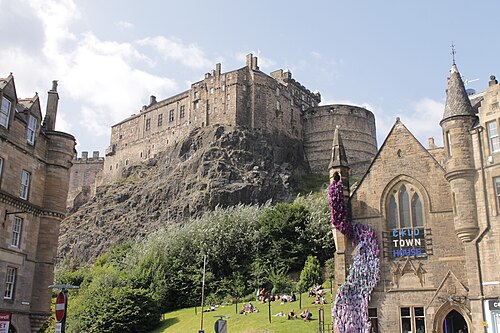 Edinburgh CastleRestored · prime 1520
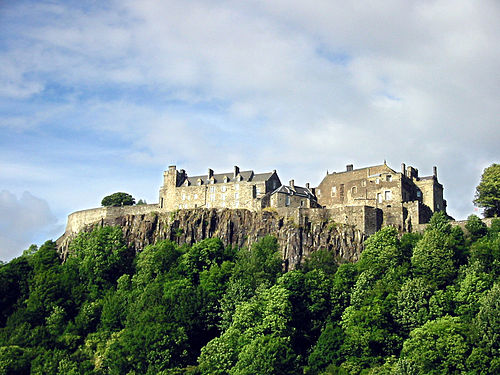 Stirling CastleRestored · prime 1542
 Glamis CastleStill standing · prime 1900
All castles in Scotland → · Strongest castles in Scotland → · Castles of Europe
Play As Your Clan
Hold a real castle against whatever you choose to send at it, take a ship out in her own service years, or stand at the shoulder of someone the record remembers. The chronicler sets the scene; the deeds are yours.
Notable bearers of the Mackay name
- Donald Mackay, 1st Lord Reay (1591–1649), colonel of the Mackay Regiment, 30 Years War
- Hugh Mackay of Scourie (1640–1692), Williamite general at Killiecrankie
- Charles Mackay (1814–1889), poet and journalist (Extraordinary Popular Delusions)