Clan Sutherland
also Clan Sutherland
Sudr-land, the southern land of the Norse, and the clan that took its name.
- Origin
- The Highlands & Islands, Scotland
- Motto
- Sans peur
- Famous bearer
- Donald Sutherland (1935–2024), actor (M*A*S*H, Klute, The Hunger Games)
- Register
- Scottish clan
Ranked of all time
The 10 Oldest Clans in Scotland
The Sutherland arms, crest badge, tartan and country

Crest badgeClan member crest badge - Clan SutherlandSodacan · Public domain 
TartanSutherland (district) tartanA district sett, worn by everyone living in the place rather than by one family.SMcCandlish, made with the old Windows program Textile32 · CC0 
TartanSutherland tartan (Vestiarium Scoticum)As printed in the Vestiarium Scoticum, 1842, a collection whose claimed medieval source was never produced, and which is now generally held to be a forgery. Families adopted its patterns anyway, and wear them still.Celtus · CC BY-SA 2.5 
Coat of armsSutherland coat of armsZacwill16 · CC BY-SA 3.0 
Coat of armsArms of Earl of Sutherland (modern)Borne by the Earl of Sutherland: the ennobled line of the name, not the name at large.NoahHK · CC BY-SA 4.0

_tartan%2C_tileable.png)
.png)

.svg)
- Crest badge: The chief's crest inside a belt and buckle: the badge a clansman wears to show whose following he is in.
- Tartan: The checked cloth the family is known by.
- Coat of arms: Granted to an individual and inherited down that one documented line. These are the arms of particular families of the name, not of everyone who shares the surname.
What is the Sutherland clan tartan?
Two Sutherland setts are shown above, one of them the plate printed in the Vestiarium Scoticum in 1842. They are not rival claims to be picked between; they are different records, and different weaves, of the same family cloth. A sett is the block of coloured bands the cloth is built from, repeated in both directions; the whole plaid is that one square enlarged.
Almost no clan tartan is medieval. Highland dress was proscribed from 1746 until 1782, and when it returned it returned as ceremony rather than everyday cloth, so the surname-to-sett map was fixed after the break, by the Bannockburn weavers’ pattern books, the royal visit to Edinburgh in 1822, and the Vestiarium Scoticum of 1842. The Sutherlands wore tartan long before any of that. What the registers fixed was which one. Nobody polices any of it. Wearing the Sutherland sett declares allegiance to the name, not descent from any particular line of it.
CoreHistoric reach
The seat of Clan Sutherland
Seat vacantChief
No one leads the Clan Sutherland community yet. When the movement opens, you can stand for its leadership, or help elect whoever does.
Current mission
No shared goal set yet. Once Clan Sutherland has leadership, it sets the public focus: a restoration, a gathering, a real-world project that helps its own.
The Sutherland clan is being rebuilt. Join the waiting list for the movement today, and you help decide who leads it and what it does.
Help rebuild the Sutherland clan →Motto
Sans peur
“Without fear”
What does the Sutherland name mean?
From Sudr-land, Old Norse for 'southern land', the name the Norse of Caithness gave to the territory south of their own lands. The county and the clan derive directly from the Norse usage, retained when the territory passed under Scottish royal control in the 13th century. The Sutherlands of Sutherland descend from Hugh of Sutherland (d. before 1248); the Earldom of Sutherland was created c.1235 for William of Sutherland and is among the oldest peerages in Scotland.
The history of Clan Sutherland
Sudr-land, and how de Moravia became Sutherland
The name is a direction. Sudr-land is Old Norse for 'southern land', which is what the Norse of Caithness, ruled from the earldom of Orkney and Caithness, called the country lying south of their own. When the territory passed under Scottish royal control in the 13th century the Norse word stayed on it, and both the county and the family that governed it take the name directly from that usage. In Gaelic the people of the name are Suithearlarach, Na Suithearlaraichean collectively. Most Highland surnames are patronymic, built on an ancestor; one built out of a piece of ground is the exception.
The family that took the name was neither Norse nor local. Its progenitor was Freskin, a Flemish nobleman who was also progenitor of Clan Murray. He may have been Pictish, but was much more likely a Flemish knight, one of the warlords the Norman kings used to pacify their new realm after the conquest of England. David I of Scotland, brought up in the English court, employed such men to hold the wilder parts of his kingdom, and granted Freskin lands in West Lothian and then the ancient Pictish kingdom of Moray, Moireabh in Gaelic, a grant that finished the remnants of that old royal house. Freskin and his sons then married into the old house of Moray, and their descendants were designated by the surname de Moravia, 'of Moray' in the Norman language.
Freskin's grandson Hugh de Moravia was granted lands in Sutherland and styled Lord de Sudrland; he died before 1248. Hugh's younger brother, William de Moravia of Petty, became progenitor of Clan Murray, so the two names divide at that generation. Hugh's eldest son, also William, became 1st Earl of Sutherland. The earldom was created around 1235, the oldest of the Highland earldoms and one of the oldest peerages in Scotland, and for most of the late mediaeval and early modern period its holder was the dominant power in the far north.
The senior line kept de Moravia as its formal surname for generations while using the territorial surname Sutherland alongside it, and from Robert, 6th Earl (d. 1444) onward their use of Sutherland is confirmed. Younger sons had taken the territorial name earlier, which is exactly how the cadet branches came into being: the men who would not inherit the earldom carried the country's name out into Duffus, Forse, Skelbo, Torboll, Pronsy and Evelix. The arms recorded in 1719 are gules, three mullets or, on a bordure of the second a double tressure flory counterflory of the first; the crest is a cat-a-mountain salient, the motto Sans peur, 'without fear', and the slogan Ceann na Drochaide Bige, 'the head of the little bridge'.
Bannockburn, Halidon Hill, and the earl who was named heir to Scotland
The first Sutherland century of record is a century of national war. In 1308 Robert the Bruce captured Skelbo Castle near Dornoch, in the heart of the earldom's country, and in 1314 William de Moravia, 3rd Earl of Sutherland, fought at Bannockburn, where the English army was defeated. Bannockburn is where the family stops being a northern landholding installed by a king and becomes part of the settlement of the kingdom itself.
The cost came quickly. Kenneth de Moravia, 4th Earl of Sutherland, was killed at the Battle of Halidon Hill in 1333. His successor, William de Moravia, 5th Earl, married Margaret, daughter of Robert the Bruce and sister of David II, which put the earldom directly into the royal family. He led the clan at Kilblene and took part in the siege of Cupar Castle in Fife. Then he accompanied David II into England, where in 1346 both king and earl were captured at the Battle of Neville's Cross, by Durham. They were held over ten years, so for a decade the earldom in the far north was run without its earl.
That marriage produced the most striking might-have-been in the family's record. John of Sutherland, son of the 5th Earl and Princess Margaret, was designated heir to the throne of Scotland ahead of Robert Stewart, who eventually became King Robert II in 1371. The crown went to the Stewarts, and the Sutherlands went back to being the power in the north rather than the power in Scotland. They stayed close to the royal house all the same: in 1388 the Earl of Sutherland was one of the leaders of the Scots invading into the west of England, and he married Margaret Stewart, daughter of Alexander, Earl of Buchan, a younger son of Robert II.
Duffus, Old Wick and the cadet houses of the name
The most substantial of the branches was Sutherland of Duffus, and it came in by marriage rather than conquest. Duffus Castle, near Elgin in Moray, was in use from about 1140 to 1705 and at its establishment was one of the most secure fortifications in Scotland. David I granted lands in the region to Norman and Flemish nobles, and it came down through the descendants of Freskin. In 1270 it passed by marriage to Sir Reginald le Chen (d. 1312), husband of the heiress Mary de Moravia, and on the death of Reginald le Chen of Duffus in 1345 to his daughter Mariot, married to Nicholas, second son of Kenneth de Moravia, 4th Earl of Sutherland. Nicholas Sutherland, 1st of Duffus, heads that line.
What the branch inherited was a working lordship. The original wooden structure had been replaced in stone, with a two-storey rectangular tower on the motte holding the lord's hall, bed chambers and storage; the tower shows no further repairs and may have collapsed early, the newer hall becoming the main residence. In 1689 John Graham, 1st Viscount of Dundee, was a guest of Lord Duffus just before the Battle of Killiecrankie; by the death of the 2nd Lord Duffus in 1705 the castle was unfit as a dwelling and was abandoned. The Sutherlands had already moved to nearby Duffus House, and held the lands until 1843. Their burial aisle is at St Peter's Church.
The same 1345 marriage carried the name into Caithness. The Castle of Old Wick stands on a cliff-girt peninsula south-west of Wick, its landward approach cut by two moats and reached by a drawbridge across a rock-cut ditch. Only the square tower survives, originally four storeys of which three remain, and a narrow courtyard once ran down the peninsula lined with barracks, brewery and chapel. It passed by marriage to Nicholas Sutherland in 1345 and was held by the Sutherlands of Duffus into the 15th century, leaving the name by the marriage of Christian, heiress of Alexander Sutherland of Duffus, to William Oliphant. Forse Castle near Dunbeath was the seat of the Sutherlands of Forse, abandoned in the eighteenth century; Forse House was built in 1753.
Four centuries against the Mackays
The habitual enemies of Clan Sutherland were the Sinclairs of Caithness to the north and the Mackays and MacLeods to the west, and the Mackay feud is the long one. It came to a head when Nicholas Sutherland, 1st of Duffus, murdered the chief of Clan Mackay and his heir at Dingwall Castle, where the two had met to patch the quarrel up. The Mackays answered with a raid on Dornoch: the cathedral was set on fire and many Sutherland men were hanged in the town square. William, 5th Earl of Sutherland, was killed by the Mackays in 1370, and the feud ran on for the next four centuries.
The set-piece of the fifteenth century went against the name. In 1431, in the time of Robert Sutherland, 6th Earl, the Battle of Drumnacoub was fought on the slopes of Ben Loyal near Tongue, where Angus Du Mackay, chief of Clan Mackay, defeated Angus Murray and the Sutherlanders. Almost everything known about it comes through the 17th-century historian Sir Robert Gordon, 1st Baronet; it is also mentioned by George Buchanan (1506-1582) and by John Pinkerton, quoting the chronicler Walter Bower. Gordon is the source for much of the clan's mediaeval record and not a neutral one, being a son of Alexander Gordon, 12th Earl of Sutherland, which is why the historian Angus Mackay contested him at almost every point.
Not all of the period was defeat. In the time of John Sutherland, 7th Earl, according to Gordon, John MacDonald of Islay, Earl of Ross, invaded Sutherland and was beaten at the Battle of Skibo and Strathfleet by the clan under the earl's brother Robert Sutherland with the Murrays of Aberscross. That same earl was held hostage at Pontefract Castle against the ransom money of James I of Scotland, and was visited there by Alexander Sutherland, 3rd of Duffus, whose father Henry Sutherland had received from Robert, 6th Earl, the forty-pound lands of Torboll. In 1487 Gordon has the clan joining the Mackays in their victory over the Clan Ross at Aldy Charrish; Angus Mackay disputed that the Sutherlands were there at all, pointing out that the earl was married to a daughter of the Ross chief of Balnagowan.
Dunrobin, Skelbo and the castles of the earldom
Dunrobin is the seat of the Earls of Sutherland and chiefs of the clan, a mile north of Golspie, and its oldest portion is first recorded in 1401, in the time of Robert, 6th Earl, after whom it is thought to be named. Most of the present house was built by Sir Charles Barry between 1835 and 1850, which made it the largest in the north of Scotland, and it was remodelled again by Robert Lorimer. It served as a naval hospital in the First World War and as a public boys' school between 1963 and 1972. It is said to be haunted by a girl, though the stories disagree about her: in one she fell from an upstairs window trying to elope with her lover, in another she was seized by an earl who desired her, refused him, and fell.
Skelbo, on its grassy motte above a ferry crossing with views over Loch Fleet near Dornoch, has the longer paper trail. Hugh de Moravia granted Skelbo in 1211 to Gilbert de Moravia, Bishop of Caithness, and in 1235 Gilbert granted the castle to his brother Richard de Moravia; the stone keep is 14th-century. In 1494 the Murrays of Aberscross disputed ownership with the Kinnairds, both descended from Richard de Moravia, and the Kinnairds prevailed. In 1529 William Sutherland, 6th of Duffus, bought it, contracting with John Kinnaird of that Ilk to pay 2,300 merks by instalments and receiving lands including Skelbo, held from the Earl of Sutherland as overlord. The Sutherlands of Skelbo had acquired the Lordship of Duffus in the fourteenth century, and were forfeited for their part in the Jacobite rising of 1715.
The rest of the estate reads like a map of the far north. Dornoch Castle, also called Dornoch Palace, was originally the bishops' and passed to the earls after the Protestant Reformation; burnt in the sixteenth century and restored as a court house and jail in the nineteenth, it is now a hotel. Golspie Tower, Helmsdale Castle and Langwell Castle at Latheron were all held by the earls, Clyne near Brora passed to the Sutherlands in 1550, and Skibo was remodelled for them in 1872 before Andrew Carnegie bought it in 1895. Aberscross Castle, ruined by the seventeenth century, was the seat of the Murrays of Aberscross, a sept of Clan Sutherland who were the earl's principal vassals and were charged with the defence of the shire, which is why their name appears on the front line of every feud fought with the Mackays and the Sinclairs.
The Gordon earls: a claimed earldom, a poisoned cup, a burnt cathedral
The sixteenth century opened with a death in the national service, William Sutherland, 4th of Duffus, killed fighting the English at Flodden in 1513, and then changed the family at the top. In 1517 Elizabeth Sutherland, 10th Countess of Sutherland, married Adam Gordon, a younger son of Gordon of Huntly, and their son Alexander Gordon, Master of Sutherland, became legal heir to the earldom and to the chiefship of the clan. The Mackays rose against the Gordons who had taken power in Sutherland and were defeated at the Battle of Torran Dubh in the same year, according to Sir Robert Gordon, who has the Sutherland force led by Alexander Sutherland, brother of the countess. Angus Mackay and Sir William Fraser both dispute it: Alexander, they say, can be proved to have been in prison in 1517.
Whatever happened at Torran Dubh, in 1518 or 1519 Alexander Sutherland claimed the earldom for himself and rose against his sister and her husband, and was defeated and killed at the Battle of Alltachuilain. The rest of the reign is written in charters rather than casualties: on 25 March 1525 the countess and Adam Gordon granted William Sutherland, 5th of Duffus, the lands of Torboll and Pronsy, and on 4 September 1529 William Sutherland, 6th of Duffus, as the new Laird of Skelbo, gave a bond of manrent to Alexander Gordon, Master of Sutherland, acknowledging that the Master had received him as tenant and vassal in the lands. A bond of manrent was how the north actually worked: a lesser laird bound himself and his followers to a greater one, and the paper mattered as much as the sword.
The middle of the century is a run of battles and treaties. Conflicts of the Clans, published in 1764, puts the Battle of Alltan-Beath in 1542, the Mackays defeated; Gordon adds that in the same year Donald Mackay, 11th of Strathnaver, was captured by the Gordon Earls of Sutherland and Huntly and imprisoned in Foulis Castle, which Angus Mackay again disputed. In 1545, at Dingwall, the Earl of Sutherland made a bond of manrent with John Mackenzie of Kintail for mutual defence against all enemies, reserving only their allegiance to the youthful Mary, Queen of Scots. In 1547 John Gordon, 11th Earl, led the clan against the English at Pinkie Cleugh; in 1555 Garbharry was fought, the last battle between Mackays and Sutherlands; and in 1586 at Leckmelm the Sutherlands, Mackays and MacLeods together defeated the Clan Gunn.
The ugliest episode was domestic. At Helmsdale Castle, Isobel Sinclair, aunt of the Earl of Sutherland, poisoned John Gordon, 11th Earl, and his wife, meaning to make her own son the earl; she also tried to poison the earl's heir, but the cup was drunk by her own son, who died two days later, and she killed herself before she could be executed in Edinburgh. The affair was apparently a plot hatched by George Sinclair, 4th Earl of Caithness, who in 1567 had the town and cathedral of Dornoch burnt and the castle besieged to secure possession of the young earl. Dornoch Castle held out a month and surrendered on fair terms, after which the hostages given by the garrison were murdered. The Caithness quarrel outlived that generation: Castle Sinclair Girnigoe withstood a siege by the Earl of Sutherland in 1588, and in 1590 George Sinclair, 5th Earl of Caithness, invaded Sutherland, which brought on the Battle of Clynetradwell.
Covenanters, Glenshiel and the fight at Littleferry
In the seventeenth century the clan acquired a reputation for enthusiastic and pious Protestantism, which is probably what pushed the Gordon Earls of Sutherland away from their Gordon cousins of Huntly, Catholics and later Jacobites. In 1645 John Gordon, 14th Earl of Sutherland, led the clan against the Royalists at the Battle of Auldearn and was beaten. Alexander Sutherland, 1st Lord Duffus, supported the National Covenant and had his estates, probably those in Morayshire, attacked by the Royalists in consequence. Sent from Stirling to Perth to hold the town against Oliver Cromwell, he was forced to surrender a place he had occupied only twelve hours before, with just 600 men.
In 1650 the Sutherlands, with the Munros and the Rosses, joined the Argyll government forces against James Graham, 1st Marquess of Montrose, and beat his royalist army of foreigners at Carbisdale. In 1685 John Gordon, 16th Earl of Sutherland, raised his men against the expedition of Archibald Campbell, 9th Earl of Argyll, and after the Glorious Revolution of 1688 he raised two regiments from the clan, commanding the second as colonel in Flanders in 1694. The pattern for the next sixty years is set there: where most of the Highlands went one way, Sutherland went the other, armed.
In the rising of 1715 the 16th Earl called out his men for George I and the clan garrisoned Inverness Castle. Kenneth Sutherland, 3rd Lord Duffus, went the other way: he had voted for the Acts of Union in 1707 and still supported the Jacobites in 1715, and was forfeited for it. In 1719 a detachment of Sutherland men fought for the government at the Battle of Glenshiel. The earls had borne the surname Gordon since the early sixteenth century, but in that same year of 1719 John Gordon, 16th Earl, resumed the surname Sutherland and was officially recognised as chief by the Court of the Lord Lyon. Wade's report on the Highlands in 1724 put the clan's strength at 1,000 men.
By 1745 that figure was given as 2,000, and at the start of the rising William Sutherland, 17th Earl, reconciled with the Mackays and settled the ancient feud. Jacobites under George Mackenzie, 3rd Earl of Cromartie, occupied Dunrobin; the earl escaped through a back door and sailed for Aberdeen to join Cumberland's army. That same Jacobite force was then beaten by the Sutherland militia, formed as an Independent Highland Company, at the Battle of Littleferry. Three companies fought there: about 80 men under Robert Macallister, a senior factor to the earl, with Hector Munro of Novar as lieutenant; about 70 under Lieutenant William Sutherland of Sciberscross; and 80 to 100 under Robert Gray, another of the earl's factors. Even with Littleferry won, the earl struggled to convince parliament in London that he had never had Jacobite sympathies.
The countess, the duke, and the clearing of the straths
When William Sutherland, 18th Earl of Sutherland, died in 1766 he left an only daughter, Elizabeth, and the succession went to law. Her right to succeed as a woman was challenged by George Sutherland of Forse, a direct male descendant of the original de Moravia and Sutherland earls, and by Sir Robert Gordon of Gordonstoun, a direct male descendant of the later Gordon earls: the two lines of the name arguing over the oldest earldom in the Highlands. The House of Lords heard the case on 21 March 1771 and decided in Elizabeth's favour. She married George Granville Leveson-Gower, Marquess of Stafford, who became the first Duke of Sutherland in 1833, and the earldom passed into the highest reaches of English wealth.
What that wealth did to the country is the central historical fact of the modern surname. Between 1814 and 1820 the factors Patrick Sellar and James Loch evicted between 6,000 and 10,000 Sutherland tenants out of the inland straths, moving them to lots on the coast or onto emigration berths, and put Cheviot sheep on the ground they had farmed. The duke set up businesses on the coast and cleared his tenants off the land with what were held at the time to be philanthropic intentions. The mechanism was not unique to Sutherland: across the Highlands the coastal crofts were made deliberately small so that tenants would have to work in fishing or kelp, and landlords found assisted passages to Canada cheaper than repeated famine relief. In Sutherland it was done under the family's own name.
Opposition to it also carried the name. Two tacksmen of the clan, the brothers Alexander and John Sutherland of Sciberscross, set themselves against the clearance of the tenants. Alexander, an army officer, opposed the evictions fiercely and was the source of much of the London press's critical coverage of what was happening in Sutherland. His brother John gave what was described as covert aid in 1813 to the Kildonan rebels opposing the clearances. The tenants who were put onto emigration berths, and their descendants, carried the name of the county to Canada and Australia.
La Stupenda, and the name in the wider world
The most celebrated bearer of the name began in a Sydney front parlour. Joan Alston Sutherland was born at 70 Queen Street, Woollahra, on 7 November 1926, the second daughter of William McDonald Sutherland, a Sydney tailor born in Pictou, Nova Scotia to Scottish parents from Sutherland and Banff, and of Muriel Alston, an Australian mezzo-soprano who had given up a concert career on marriage and taught singing at home. She studied at the New South Wales Conservatorium under Aida Dickens from 1944, paying the fees by working as a typist, won the Mobil Quest in 1949, sailed for London in 1951 and made her Royal Opera debut on 28 October 1952 as the First Lady in Mozart's Magic Flute. Her husband, the conductor Richard Bonynge, whom she married in 1954, pushed her against her teachers' advice into the high coloratura of Donizetti and Bellini.
He was right. On 17 February 1959 she sang the title role in Lucia di Lammermoor at Covent Garden in a Franco Zeffirelli production conducted by Tullio Serafin, and the mad scene drew a twelve-minute ovation; she was thirty-two. At La Fenice in Venice in 1960 the Italian press christened her La Stupenda. She sang Norma, Anna Bolena, I Puritani and the rest of the bel canto repertoire at La Scala, the Met, the Vienna State Opera and the Bolshoi, recorded over two hundred discs with Bonynge conducting, and partnered Luciano Pavarotti at the Met in 1972. Her farewell was at the Sydney Opera House in Les Huguenots on 2 October 1990, and the audience stood for half an hour. She was made a Dame in 1979 and a Member of the Order of Merit in 1991, and died at Les Avants in Switzerland on 10 October 2010.
Others of the name made their mark in other rooms. Donald Sutherland (1935-2024), the Canadian actor of M*A*S*H, Klute and The Hunger Games, and his son Kiefer Sutherland (b. 1966), of 24 and Designated Survivor, are the best known. Graham Sutherland (1903-1980) was an English artist. Earl Wilbur Sutherland Jr. (1915-1974) was an American physiologist and Nobel laureate; Ivan Sutherland (b. 1938) an American computer scientist; Edwin Sutherland (1883-1950) an American sociologist. Sir Gordon Sutherland (1907-1980) was a Scottish physicist, Dame Lucy Sutherland (1903-1980) a British historian and university college head, Margaret Sutherland (1897-1984) an Australian composer, Selina Sutherland (1839-1909) a New Zealand nurse and social worker, and Walter Sutherland (1890-1918) a Scottish rugby union footballer.
The chiefship came back to the name in the twentieth century. On the death of the fifth Duke of Sutherland the chiefship and the earldom devolved on his niece, Elizabeth Millicent Sutherland, 24th Countess of Sutherland, who held Dunrobin while living at the House of Tongue and in London. Her son, Alistair Charles St. Clair Sutherland, is 25th Earl of Sutherland and the present chief; since 2022 his heir presumptive has been his elder daughter, Lady Rachel Elizabeth Sutherland, Mistress of Sutherland, following the death of his only son, Alexander Charles Robert Sutherland, Lord Strathnaver. One caution is worth carrying: the sept lists clan societies and tartan manufacturers drew up in the nineteenth century linked as many surnames as possible to a clan whether or not any historical connection existed, so a genuine following of the Earls of Sutherland, like the Murrays of Aberscross, is a different thing from a name added to a list to sell a tartan.
Champions of the Sutherland name
The bearers whose lives are inseparable from this surname. Each has their own page, biography, achievements, geography, connection to the family.
Castles the Sutherland held
Strongholds this name held for a decade or more, look one up, or rebuild it to explore.
- Dunrobin Castle
Family seat of the Earls of Sutherland, Chiefs of Clan Sutherland, from the Middle Ages.
- Duffus Castle
Passed in 1345 to Mariot le Chen and her husband Nicholas, second son of Kenneth de Moravia, 4th Earl of Sutherland.
- Skelbo Castle
Bought by William Sutherland, 6th of Duffus, in 1529, to be held from the Earl of Sutherland as overlord.
- Castle of Old Wick
Passed by marriage to Nicholas Sutherland in 1345; held by the Sutherlands of Duffus into the 15th century.
The castles of the homeland
The great strongholds of the homeland, look one up, see what it looked like in its prime, and recreate it to explore.
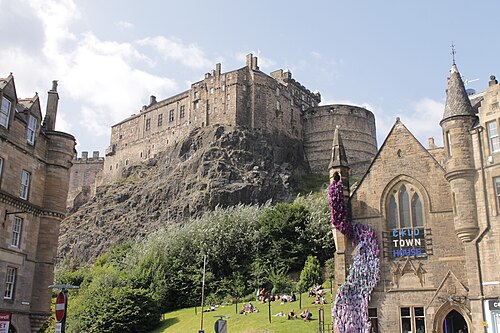 Edinburgh CastleRestored · prime 1520
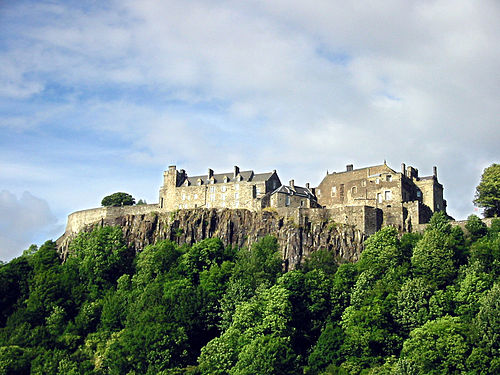 Stirling CastleRestored · prime 1542
 Glamis CastleStill standing · prime 1900
All castles in Scotland → · Strongest castles in Scotland → · Castles of Europe
Play As Your Clan
Hold a real castle against whatever you choose to send at it, take a ship out in her own service years, or stand at the shoulder of someone the record remembers. The chronicler sets the scene; the deeds are yours.
Notable bearers of the Sutherland name
- Donald Sutherland (1935–2024), actor (M*A*S*H, Klute, The Hunger Games)
- Kiefer Sutherland (b. 1966), actor (24, Designated Survivor)
- Dame Joan Sutherland (1926–2010), Australian operatic soprano
- Graham Sutherland (1903–1980), English painter