Clan Boyd
also Clan Boyd
Lord Boyd of Kilmarnock, Ayrshire's regents and rebels.
- Origin
- Ayrshire & Galloway, Scotland
- Motto
- Confido
- Famous bearer
- William Boyd, 4th Earl of Kilmarnock (1705–1746), Jacobite commander, executed for the '45
- Register
- Scottish clan
The Boyd arms, crest badge, tartan and country

Crest badgeClan member crest badge - Clan BoydCeltus · CC BY-SA 3.0 
TartanBoyd tartanMicheletb · CC BY-SA 4.0 
Coat of armsBoyd armsWikimandia · CC BY-SA 4.0


- Crest badge: The chief's crest inside a belt and buckle: the badge a clansman wears to show whose following he is in.
- Tartan: The checked cloth the family is known by.
- Coat of arms: Granted to an individual and inherited down that one documented line. These are the arms of particular families of the name, not of everyone who shares the surname.
What is the Boyd clan tartan?
One Boyd sett is recorded, and it is the swatch above. A sett is the block of coloured bands the cloth is built from, repeated in both directions; the whole plaid is that one square enlarged.
Boyd is a Lowland name, and Lowland families did not wear Highland dress; the 1746 proscription that broke the tradition in the north took nothing from them, because there was nothing there to take. The Boyd sett is a 19th-century assignment, made when tartan stopped being Highland and became Scottish and fixed by the Bannockburn weavers’ pattern books, the royal visit to Edinburgh in 1822, and the Vestiarium Scoticum of 1842. Nobody polices any of it. Wearing the Boyd sett declares allegiance to the name, not descent from any particular line of it.
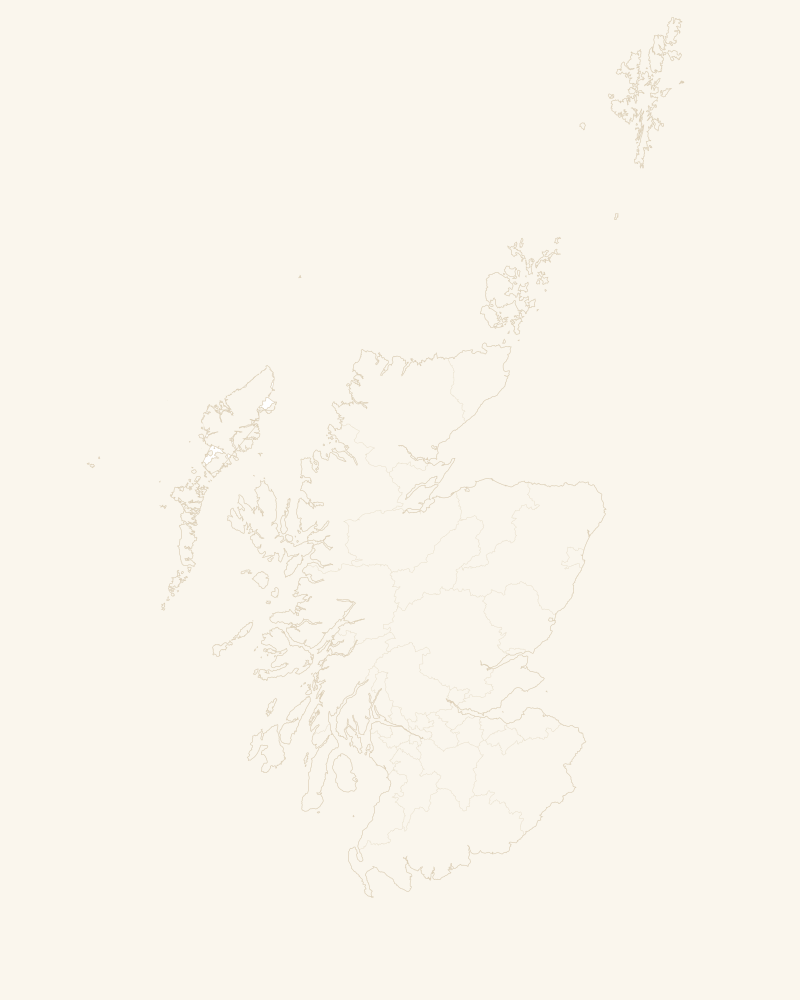
CoreHistoric reach
The seat of Clan Boyd
Seat vacantChief
No one leads the Clan Boyd community yet. When the movement opens, you can stand for its leadership, or help elect whoever does.
Current mission
No shared goal set yet. Once Clan Boyd has leadership, it sets the public focus: a restoration, a gathering, a real-world project that helps its own.
The Boyd clan is being rebuilt. Join the waiting list for the movement today, and you help decide who leads it and what it does.
Help rebuild the Boyd clan →Motto
Confido
“I trust”
What does the Boyd name mean?
From the Gaelic buidhe, yellow, fair-haired, and probably from a fair-haired ancestor, traditionally identified with Robert, a follower of King David I of Scotland in the 12th century. The Boyds were lords of Kilmarnock from the early 13th century; the chiefly seat at Dean Castle on the edge of modern Kilmarnock remains intact. Through the medieval period the Boyds were a Ayrshire family, briefly the most powerful family in Scotland after the regency of Robert, 1st Lord Boyd (c.1410–1465), during the minority of James III.
The history of Clan Boyd
Fair-haired, or from the island of Bute
Two explanations of the name have run side by side for as long as anyone has written the family down. The descriptive one takes it from Scottish Gaelic buidh, fair or yellow, a nickname for a fair-haired man that hardened into a surname. The territorial one takes it from Bòd, the Gaelic for the Isle of Bute in the Firth of Clyde; George Fraser Black offered the Gaelic style of the Marquess of Bute, Morair Bhoid, in support, and modern usage gives the island as Eilean Bhòid. Clan tradition names the progenitor as Robert, son of Simon and nephew of Walter fitz Alan, first High Steward of Scotland.
The genealogist William Anderson would not have it. The Stewards' friends and dependants were Norman men, he argued, and Norman men do not hang a Celtic nickname on one of their own; he looked for a Norman or Saxon root instead. Black, for his part, made the first Boyds vassals of the Norman de Morvilles, holding of them around Largs and Irvine. Whichever reading is right, the family that emerges into record is already an Ayrshire one. In 1205 Robert de Boyd witnessed a contract between the Lord of Eglinton and the burgh of Irvine, and in 1296 a Robert de Boyte appears on the Ragman Rolls, doing homage to Edward I of England.
Gold Berry Hill and the word a king shouted
The family's prominence begins at the Battle of Largs in 1263. Robert Boyd was given a detachment and a specific job: clear the Norsemen off the high ground above the beach. As he turned north, Alexander III called after him "Confido!" (I trust) and made the sign with it, the first two fingers of his right hand raised and the thumb crossed over the palm. Clan history takes both the word and the gesture from that moment, and both are still on the badge.
The high ground was called Gold Berry Hill. The flanking move worked: Boyd's infantry took the Norse detachment by surprise and sent it back down in such haste and panic that it fed the disaster in the melee on the beach for King Haakon's men. For that reason the words "Gold Berry" were often written beneath the early heraldic shield of the family.
The crest is a dexter hand erect in pale with the outer fingers bowed inwards, the king's gesture frozen, ringed with CONFIDO. The chiefly arms are quartered: azure a fess chequy argent and gules for Boyd, then Hay, Livingston and Callendar.
Duncan Boyd's execution and the chequered shield of 1314
In the 1290s the Boyds attached themselves to the other Ayrshire name of the age, William Wallace, fighting to dislodge the English through the years after Alexander III died leaving no clear successor. It cost them early: in 1306 Duncan Boyd was executed for supporting the cause of Scottish independence.
Sir Robert Boyd, probable grandson of the Robert of Largs, came through the same wars as a trusted commander under Wallace, then threw the family behind Robert the Bruce and stood as one of the key commanders at Bannockburn in 1314. The reward came in 1316, out of the lands confiscated from the Balliols: Kilmarnock, Bondington, West Kilbride and other substantial holdings in Ayrshire, laid on top of what Largs had earned half a century earlier. He died that same year, having converted two generations of fighting into a landed lordship his descendants held for four hundred years.
The Bannockburn Shield is dated to this moment, a field of cobalt blue carrying a red and white chequered medieval counting board, and survives among the relics kept at Dean Castle. Bruce also gave the Boyds of Kilmarnock the coastal site at Portencross, fortified since the 11th century, known in its earliest days as Arneil and held before them by the de Ross family.
Craignaucht Hill, 9 July 1439
Sir Thomas Boyd, 8th chief of the clan, killed Sir Alan Stewart of Darnley in a feud that was already in its third year. Alan's brother Alexander Stewart came for him and set upon him in open battle at Craignaucht Hill, in the parish of Dunlop, on 9 July 1439.
The arithmetic of the day is recorded in detail. Boyd brought a hundred men. Stewart brought three detachments of seventy. Boyd's scout saw only one of the three, so the Boyds went in expecting an inferior enemy and found themselves outnumbered by more than two to one when the other two joined. The fighting was fierce enough that both sides broke off and re-engaged at the sound of a trumpet, more than once, before the day went to the Stewarts of Darnley. Thomas Boyd was killed, and many men on either side with him.
It settled nothing. Another of the Stewarts was later killed in revenge by the Boyds in the town of Dumbarton. Nor was Darnley the only quarrel the family carried: James Boyd, 2nd Lord Boyd and 11th chief, was killed in a feud with Hugh Montgomerie, 1st Earl of Eglinton, in 1484.
Three years running Scotland, and the summons of 1469
James II raised the chief to the peerage as Lord Boyd of Kilmarnock, and on that king's death Robert Boyd, 1st Lord Boyd, was appointed one of the regents to the young James III. His younger brother Alexander was made the new king's military tutor, and Robert himself took the office of Great Chamberlain. In 1466 the brothers went further and seized the boy king's person outright. For three years they ran the kingdom.
They banked the windfall in a marriage. Robert's son Thomas married Princess Mary, the king's sister, and was given the title Earl of Arran; the Boyds held Brodick Castle as Earls of Arran from 1467 to 1469. No family in Scotland stood higher, and the height brought them the enemies that go with it, who began conspiring almost at once.
In 1469, with the king at his majority, Lord Boyd, his son Thomas and his brother Alexander were summoned before king and parliament to answer the charges laid against them. Robert understood that the summons meant death and escaped to England. Alexander was executed. Thomas, abroad on state business, learned of the reversal of the family's fortunes, accepted his exile, and was well received in royal courts across Europe. Trabboch Castle, Boyd since the 14th century, is recorded as forfeited to the crown in the wreckage of the fall.
An assassination at Irvine and a queen at Langside
The family climbed back. Alexander Boyd, 3rd Lord Boyd and 12th chief (uncle of the James killed by the Eglinton feud) became a favourite of James IV, who made him Bailie and Chamberlain of Kilmarnock. His son Robert Boyd, 4th Lord Boyd, had the estates and honours of the lordship restored: the historian William Boyd dates that to 1536 under James V, while the Collins Scottish Clan & Family Encyclopedia puts it in the reign of Mary, Queen of Scots.
Restoration did not mean peace with the Montgomeries. Robert's daughter Margaret married Neil Montgomery of Lainshaw, and the marriage did nothing to warm the two houses. In 1547 Robert Boyd, together with Mowat of Busbie, assassinated Neil Montgomery at Irvine, in revenge for the killing of his cousin James Boyd in 1484.
The lordship then ran on through five more holders, and the plain register of their dates is the measure of how ordinary the family had become after the drama of 1469: Robert, 5th Lord Boyd (c.1517–1559), who acceded in 1558; Thomas, 6th Lord Boyd (c.1547–1611), who acceded in 1560; Robert, 7th Lord Boyd (1595–1628); Robert, 8th Lord Boyd (c.1618–1640); and James, 9th Lord Boyd, who died in 1654 and who had sold Bedlay in 1642.
A later Robert Boyd, descended from the first Lord Boyd, had every estate and honour confirmed to him by Mary, Queen of Scots, and repaid it. When she escaped from Lochleven Castle he was among the first to join her; he fought for her at the Battle of Langside, and afterwards made many visits to her during her captivity in England. He died in 1590. Robert Boyd of Badenheath was out for the queen at Langside in 1568 as well; his castle went to the Coupers in the later 17th century and was demolished completely in 1953.
Tower Hill, 18 August 1746
Through the Wars of the Three Kingdoms the Boyds held to the royalist cause, and the Restoration paid the bill: William, Lord Boyd, was created Earl of Kilmarnock in 1661. It was a hard century for the district: Covenanters were held prisoner at Dean.
The third earl opposed the Jacobite rising of 1715 and raised a regiment of Ayrshire volunteers for the government. His son went the other way entirely. William Boyd, 4th Earl of Kilmarnock (1705–1746), who had leased Callendar House in 1715, came out for Charles Edward Stuart in the '45 and was made a member of the Privy Council with the rank of general. He was captured at Culloden, taken to the Tower of London, and beheaded on Tower Hill on 18 August 1746. Every Boyd title was forfeited; Callendar House passed to the Forbes.
Dean keeps the story of what happened next: that the earl's head was carried back from London to the castle and stored in a large chest which still stands in the Laigh Tower. The bloodline went sideways rather than out. His eldest son succeeded through his mother to the earldom of Erroll and changed his surname accordingly, becoming James Hay, 15th Earl of Erroll (1726–1778).
The surname came back in the 20th century by the same door it had left. When the 22nd Earl of Errol died in Kenya in 1941, his daughter was entitled to the earldom and to the chiefship of Clan Hay, but not to the barony of Kilmarnock, which could pass only to males; the dead earl's brother resumed the name Boyd and took the barony. Alastair Boyd, 7th Baron Kilmarnock and Chief of Clan Boyd, died on 19 March 2009, the barony and the chiefship falling to his brother Dr Robin Boyd, who has claimed neither.
The towers they kept and the ones they let go
Dean was the seat, called Kilmarnock Castle until about 1700, when it gradually took the name of the dean, the wooded valley below it. The barons, lords and earls of Kilmarnock held it for over 400 years from 1316; a sister of James III married into it, Covenanters were imprisoned in it, and the 4th Earl left it for Bonnie Prince Charlie. After the forfeiture it passed on: the Earl of Glencairn who owned it in his day was the man who encouraged Robert Burns to publish his poetry. In 1975 the 9th Lord Howard de Walden gave the castle, the estate, his father's arms and armour and his grandfather's musical instruments to the people of Kilmarnock, and East Ayrshire Leisure now runs the Category A listed building in a 200-acre country park, showing those collections beside a Kilmarnock Edition of Burns.
Portencross the family kept until 1737. The present tower is thought to date from the mid-14th century, probably built first as a stone hall house, with upper storeys and an attic added in the late 1400s and further Boyd alterations after that: attic rooms and an extended spiral stair. A great storm unroofed it in 1739 and it slid gradually into ruin, though local fishermen went on using it. It was scheduled in 1955, appeared on the BBC's Restoration in 2004, and was rebuilt by the Friends of Portencross Castle in the 2010s, who keep it as a museum.
Bedlay came through the church. In 1580 James Boyd of Trochrig, titular Protestant Archbishop of Glasgow, granted the lands to his kinsman Robert Boyd, 4th Lord Boyd, and the tower went up soon after: two storeys and an attic, two vaulted cellars beneath a hall, set on a natural defensive point guarded on three sides by watercourses. James, 9th Lord Boyd sold it in 1642 to the advocate James Roberton, later Lord Bedlay.
The rest went one at a time: Law Castle at West Kilbride to the Bonties in 1670, Pitcon near Dalry to the MacRaes in the 1770s, Badenheath to the Coupers, Little Cumbrae out of the family without a date attached. Penkill outlasted them all. Built by a branch related to the Earls of Kilmarnock, a square three-storey tower grown into an L-shaped house south of Old Dailly and heavily restored from 1857 into the place its Pre-Raphaelite visitors knew, it stayed Boyd to the end of the line: Evelyn May Courtney-Boyd, 16th Laird, was also the last, and sold it in the 1980s.
Van Diemen's Land, 1845, and the dynasty that grew from it
Major Alexander Boyd (1 August 1792 – 21 August 1869), paymaster of the 11th Regiment of Foot, the North Devonshire, arrived in Van Diemen's Land in 1845, possibly with his wife Susan, née Brown. In the young colony of Victoria his family married into three others during the 1850s: the à Becketts of William à Beckett, Chief Justice of Victoria; the Mills fortune built by a convict transported in 1827 who took a ticket of leave and turned to brewing and real estate; and the Martins of Mount Sturgeon. And the four lines together became the Australian Boyd family, an artistic dynasty working in painting, sculpture, pottery, ceramics, literature, architecture, poetry and music.
The registers bear that out: Merric Boyd (1888–1959), artist; Arthur Merric Boyd, painter; Penleigh Boyd, artist; Arthur Boyd (Arthur Merric Bloomfield Boyd), painter; Guy Boyd, sculptor; Martin Boyd (1893–1972), architect and writer; Robin Boyd (1919–1971), architect, writer, teacher and social commentator; Anne Boyd, composer; Russell Boyd, cinematographer. The dynasty's public legend can be dated exactly. In 1955 David Boyd and his wife Hermia came home from several successful years potting in England and the south of France, and David's promotion of the family's grandeur to the magazines and newspapers of that year produced pages of glory that dismayed most of his relatives, and that every Boyd born since has grown up inside. The politician Cressida O'Hanlon is their granddaughter.
Other roads led out of Ayrshire. William Boyd (1895–1972), born in Ohio, made 66 Hopalong Cassidy films between 1935 and 1948 and then carried Hopalong onto television in 1949, the first Western show on American screens. John Boyd Orr, 1st Baron Boyd-Orr, the Scottish nutritionist, won the Nobel Peace Prize. Louise Arner Boyd (1887–1972) was an American explorer and Harriet Boyd-Hawes an American archaeologist; Federico Boyd and Augusto Samuel Boyd each became President of Panama; Mark Alexander Boyd (1563–1601) was a Scottish poet and Zachary Boyd a Scottish theologian. Belle Boyd spied for the Confederacy and Edwin Alonzo Boyd robbed Canadian banks; Eliza Stewart Boyd was the first woman to sit on a jury in America, and Peggy Boyd one of Scotland's first air ambulance nurses, serving through the Second World War. Nearer home the register runs to law, sport and public life: Colin Boyd, Baron Boyd of Duncansby, Scottish lawyer; Alan Lennox-Boyd, 1st Viscount Boyd of Merton, British politician; Andrew Kennedy Hutchison Boyd (1825–1899), Scottish writer; Pattie Boyd, British model and photographer; Billy Boyd, Scottish actor; Kris Boyd, born 1983, Scottish footballer.
The novelist William Boyd was born at Accra on the Gold Coast on 7 March 1952, only son of a Scottish doctor running the new university hospital there and a Scottish teacher, and grew up across the Accra and Ibadan medical compounds before being sent at nine to Gordonstoun. He read English and philosophy at Glasgow, took a first, went up to Jesus College, Oxford in 1975 for a doctorate under Christopher Ricks, and took a junior lectureship at St Hilda's in 1980. A Good Man in Africa (1981) won a Whitbread First Novel Award and a Somerset Maugham Award, An Ice-Cream War (1982) was Booker-shortlisted, and he resigned the lectureship in 1983 to write full-time. Seventeen novels followed, among them Brazzaville Beach, The Blue Afternoon, Any Human Heart and Restless, along with the Nat Tate hoax of 1998 and the Bond novel Solo in 2013. He was appointed CBE in 2005. The Ayrshire surname, the yellow-haired one, he carried out of an African childhood and into the long twentieth-century-life novel.
Champions of the Boyd name
The bearers whose lives are inseparable from this surname. Each has their own page, biography, achievements, geography, connection to the family.
Castles the Boyd held
Strongholds this name held for a decade or more, look one up, or rebuild it to explore.
- Dean Castle
Stronghold of the Boyds, lords of Kilmarnock for over 400 years, from Sir Robert Boyd's reward of the lands in 1316 for his service at Bannockburn.
- Portencross Castle
The Boyds held Portencross Castle until 1737.
- Penkill Castle
Built by a branch of the Boyds, relatives of the Earls of Kilmarnock, in the 16th century and held until the last laird sold it in the 1980s.
- Bedlay Castle
The Boyds of Kilmarnock held Bedlay from 1580 until 1642.
The castles of the homeland
The great strongholds of the homeland, look one up, see what it looked like in its prime, and recreate it to explore.
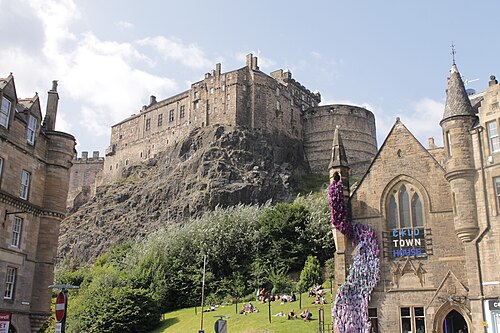 Edinburgh CastleRestored · prime 1520
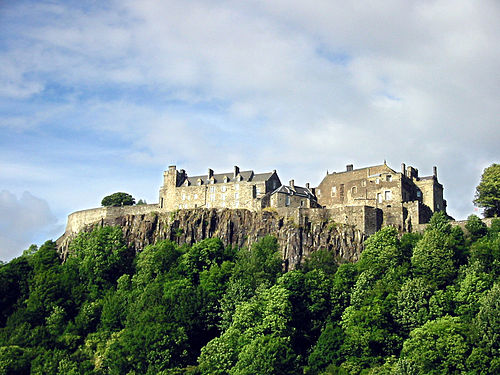 Stirling CastleRestored · prime 1542
 Glamis CastleStill standing · prime 1900
All castles in Scotland → · Strongest castles in Scotland → · Castles of Europe
Play As Your Clan
Hold a real castle against whatever you choose to send at it, take a ship out in her own service years, or stand at the shoulder of someone the record remembers. The chronicler sets the scene; the deeds are yours.
Notable bearers of the Boyd name
- William Boyd, 4th Earl of Kilmarnock (1705–1746), Jacobite commander, executed for the '45
- William 'Hopalong Cassidy' Boyd (1895–1972), pioneering television cowboy
- William Boyd (b. 1952), novelist (A Good Man in Africa, Any Human Heart)