Clan Cunningham
Earls of Glencairn and Ayrshire's milk-pail name.
- Origin
- Ayrshire & Galloway, Scotland
- Motto
- Over Fork Over
- Famous bearer
- Admiral of the Fleet Andrew Browne Cunningham, 1st Viscount Cunningham of Hyndhope (1883–1963)
- Register
- Scottish clan
The Cunningham arms, crest badge, tartan and country

Crest badgeClan member crest badge - Clan CunninghamCeltus · CC BY-SA 3.0 
TartanTartan CunninghamUnknown author Unknown author · OGL v1.0 
TartanCunningham tartan (Vestiarium Scoticum)As printed in the Vestiarium Scoticum, 1842, a collection whose claimed medieval source was never produced, and which is now generally held to be a forgery. Families adopted its patterns anyway, and wear them still.Celtus · CC BY 2.5 
Coat of armsArms of CunninghamBorne by the Cunningham line, one branch of the name rather than all of it.MostEpic · CC BY-SA 4.0 
Coat of armsCunningham of Drumquhassle armsBorne by the Drumquhassle line, one branch of the name rather than all of it.Wikiwayman · CC BY-SA 3.0


.png)


- Crest badge: The chief's crest inside a belt and buckle: the badge a clansman wears to show whose following he is in.
- Tartan: The checked cloth the family is known by.
- Coat of arms: Granted to an individual and inherited down that one documented line. These are the arms of particular families of the name, not of everyone who shares the surname.
What is the Cunningham clan tartan?
Two Cunningham setts are shown above, one of them the plate printed in the Vestiarium Scoticum in 1842. They are not rival claims to be picked between; they are different records, and different weaves, of the same family cloth. A sett is the block of coloured bands the cloth is built from, repeated in both directions; the whole plaid is that one square enlarged.
Cunningham is a Lowland name, and Lowland families did not wear Highland dress; the 1746 proscription that broke the tradition in the north took nothing from them, because there was nothing there to take. The Cunningham sett is a 19th-century assignment, made when tartan stopped being Highland and became Scottish and fixed by the Bannockburn weavers’ pattern books, the royal visit to Edinburgh in 1822, and the Vestiarium Scoticum of 1842. Nobody polices any of it. Wearing the Cunningham sett declares allegiance to the name, not descent from any particular line of it.
The seat of Clan Cunningham
Seat vacantChief
No one leads the Clan Cunningham community yet. When the movement opens, you can stand for its leadership, or help elect whoever does.
Current mission
No shared goal set yet. Once Clan Cunningham has leadership, it sets the public focus: a restoration, a gathering, a real-world project that helps its own.
The Cunningham clan is being rebuilt. Join the waiting list for the movement today, and you help decide who leads it and what it does.
Help rebuild the Cunningham clan →Motto
Over Fork Over
What does the Cunningham name mean?
From the district of Cunningham in Ayrshire, Saxon 'cuinneag' (milk pail) + 'ham' (village).
The history of Clan Cunningham
Over fork over: a district, a milk pail and a shakefork
Cunninghame is the northern part of Ayrshire, and the family took its name from the ground rather than the ground from the family. The elements are read as cuinneag, a milk pail, with ham, a village. The progenitor of the family known as Cunningham was Warnebald, who received a grant of the lands of the Manor of Cunningham between 1135 and 1140, and his descendants did what Norman landholders across Britain were doing: they set de before the estate they held and let feudal landownership harden into an inherited name.
An older tradition sits beside the charter and does not agree with it. Fredric van Bassen stated that in the year 1059 King Malcolm rewarded Malcolm, son of Friskin, with the lands of Cunningham, and the charming legend attached to it says the reward was for sheltering Malcolm III under hay in a barn. That, the story runs, is why the arms are a shakefork and the motto is Over Fork Over. Sir George Mackenzie held instead that the arms allude to the office of Master of the King's Stables, and other explanations exist. The firm ground is Warnebald's grant; the barn is the tale the family chose to keep.
Kilmaurs, Largs and the charters that followed Bruce
The Cunninghams were well settled in their lands and in the parish of Kilmaurs by the end of the thirteenth century, with an early stronghold near Jocksthorn Farm; Kilmaurs Place, about two and a half miles north of Kilmarnock, dates from 1620 and stands on ground the family had held since the 1200s. Hervy de Cunningham, son of the Laird of Kilmaurs, fought for Alexander III at the Battle of Largs in 1263 against the Norse invaders, and the following year received a charter from the king confirming all of his lands.
The name appears in the Ragman Rolls, swearing fealty to Edward I of England in 1296. What followed mattered more: the Cunninghams supported the Bruces through the Wars of Scottish Independence, and Bruce was generous to his supporters. In 1319 the lands of Lamburgton were added to Kilmaurs by royal charter. In 1354 Sir William Cunningham of Kilmaurs was among the Scottish noblemen offered as hostage to the English captors of David II.
Sir William's eldest son, also William, married Margaret, daughter of Sir Robert Denniston of that Ilk, and through her acquired substantial lands including Glen Cairn and Finlayston in Renfrewshire. Finlaystone, near Port Glasgow, was held from 1399 to 1873, by the chiefs as Lords Kilmaurs to 1488 and as Earls of Glencairn thereafter. Glencairn Castle, a couple of miles east of Moniaive in Dumfries and Galloway, passed by marriage from the Dennistouns to the Cunninghams of Kilmaurs in the fifteenth century and carried the earldom's name until it was sold in 1611 to the Lauries, who renamed it Maxwelton.
Lord Kilmaurs, the earldom of Glencairn, and the branch houses
The lordship came in 1462 and the earldom in 1488, and the sources do not agree on who held them. The clan account makes the man created Lord Kilmaurs in 1462, and later Earl of Glencairn, the grandson of Sir William Cunningham; the site's own record has James III granting the lordship to Sir William Cunningham in 1462 and the earldom in 1488; and the account of Sauchieburn names Alexander Cunningham, 1st Earl of Glencairn, as the man slain beside the defeated James III.
The house threw off branches that became powers in their own right: the Cunninghams of Caprington, of Cunninghamhead, of Aitket, of Robertland and of Corsehill. Caprington, about two miles south-west of Kilmarnock, was owned by the Wallaces of Sundrum from 1385 and passed by marriage to the Cunninghams, in 1400 by one account and 1425 by another. Its massive fifteenth-century keep survives at the heart of the building, its walls now those of the dining room, encased around 1829 in a castellated mansion with corner turrets and a porte-cochere, and the castle is still occupied.
Corsehill lay within the feudal Baillerie of Cunninghame near Stewarton. In 1532 Andrew Cunningham, second son of William Cunningham, 4th Earl of Glencairn, became the first of the House of Corsehill, granted the lands of Doura, Potterton, Little Robertland and the two Corsehills, with Cuttiswray, Clarklands and Hillhouse following in 1538. The Hearth Tax records of 1691 show the House of Corsehill with ten hearths and some 83 other dwellings in the barony. The line gained a baronetcy in 1672, and in 1685 the second baronet married Margaret Boyle, sister of the Earl of Glasgow.
The Bailieship of Cunninghame
The long quarrel with the Montgomeries was an argument about who administered north Ayrshire. The office of Baillie in Cunninghame was held by the Cunninghams, and on 31 January 1448-9 it was awarded to the son of Lord Montgomerie. A standing rivalry over the bailieship became something harder when the two names stood on opposing sides at Sauchieburn, Hugh Montgomery among the victorious rebels and the Earl of Glencairn slain with the king. In 1488 the Montgomeries burned Kerelaw Castle, built by the Cunningham Earls of Glencairn.
The sixteenth century carried it on. Edward Cunningham of Auchenharvie was slain in 1526 and Archibald Cunningham of Waterstoun in 1528; Eglinton Castle was burned by the Cunninghams in the same year, and Kerelaw was sacked a second time. The dispute was never merely personal: the two names shared the district they were fighting over, and the bailieship remained the prize.
In April 1586 the feud reached its worst point when a party of Cunninghams ambushed and killed Hugh Montgomery, 4th Earl of Eglinton, at Annick Ford as he rode to join the court at Stirling. The reprisals that followed swept across Cunninghame: the laird of Aiket was killed near his own house, and Robertland and Corsehill got away to Denmark. The government of James VI eventually brought the chiefs of the two names to shake hands, and in 1661 William Cunningham, 9th Earl of Glencairn, Lord High Chancellor, married Margaret Montgomery, daughter of Alexander, 6th Earl of Eglinton, drawing a line under it.
Flodden, John Knox and five thousand acres in Donegal
Cuthbert Cunningham, Earl of Glencairn, was killed at the Battle of Flodden in 1513. The next century put the family at the centre of a different fight: the fifth Cunningham Earl of Glencairn was a Protestant reformer and a patron of John Knox. The English saw the Reformation as an opportunity to discomfort the Scottish Crown, and Glencairn was accused of being in their pay. He rose against Mary, Queen of Scots, and was one of the commanders at Carberry Hill in 1567, the field where she surrendered.
The Cunninghams were among the Scots who were undertakers of the Plantation of Ulster. Sir James Cunningham, who married a daughter of the Earl of Glencairn, was granted five thousand acres in County Donegal, though the Glengarnock account gives the grant from James VI as 12,000 acres and the two figures are not reconciled. What is certain is the sequence: in 1609 Sir James assigned the lands of Glengarnock, a keep of 1400 to 1542 on a rocky promontory above the River Garnock north of Kilbirnie, to his creditors, and crossed to Ireland to manage his Irish estate. Cunningham today stands in the top seventy-five most common names in Ulster.
Glencairn's rising, and the Chancellor's return
During the Scottish Civil War, William Cunningham, 9th Earl of Glencairn, held for Charles II. In 1653 he raised a force to oppose General Monck, and in August of that year went to Lochearn in Perthshire to meet with Highland chiefs. In 1654, with a body of fighting men, he took possession of Elgin, and announced a commission to raise all of Scotland against Oliver Cromwell.
The rising failed and Glencairn escaped with his life. It was not wasted: when the king came back in 1660 the man who had raised and led the rising was made Lord Chancellor of Scotland. The following year he married into the family his own had feuded with for generations.
The branches prospered under the restored Stuarts. In 1669 Sir John Cunningham of Caprington, a lawyer, was created a Baronet of Nova Scotia by Charles II, and Corsehill followed with its baronetcy in 1672. The estate of Thorntoun near Kilmarnock was held from 1699 together with Caddel near Kilwinning. At Culloden in 1746 the British artillery that fired grapeshot at the advancing Jacobites was Captain Cunningham's Company, still carrying the name of Archibald Cunningham, who had been dead for two months.
Poets, painters, and a name that waited two hundred years for a chief
The eighteenth century turned the family's energy to paper. Alexander Cunningham was a historical writer who served as British envoy to Venice from 1715 to 1720. Charles Cunningham was famous for his historical paintings, some of which hang in the Hermitage Palace in Saint Petersburg and in Berlin. William Cunningham of Robertland was a friend of the poet Robert Burns. Allan Cunningham was a poet and writer whom some judged eclipsed only by Burns himself. His work was supported by Sir Walter Scott, who provided for Cunningham's children after his death.
The senior line went quiet. The earldom and the chiefship fell dormant in 1796, and in 1797 Finlaystone passed to Cunningham heirs including Robert Cunningham Graham of Dartmore before being sold in 1873 to the Kidstons. The family acquired the Castle of Park, a tower house of 1590 to 1599 near Glenluce in Wigtownshire, in 1830.
Under Scots law a family is a noble incorporation only once it has an officially recognised chief, and for over two hundred years this one had none. That ended on 18 December 2013, when Sir John Christopher Foggo Montgomery Cunninghame, Baronet of Corsehill, was recognised by Lord Lyon as chief; the branch founded in 1532 by a younger son of the 4th Earl now holds the headship, and the chief's own name carries both of the two surnames that fought over Cunninghame.
The admiral who held the middle sea
Andrew Browne Cunningham was born at 1 Glencairn Crescent in Edinburgh's West End on 7 January 1883, the third of five children of Daniel John Cunningham, professor of anatomy at the University of Edinburgh and later at Trinity College Dublin, and Elizabeth Browne. The Cunninghams of his father's line were Galloway smallholders who had walked into the medical profession in two generations. He entered the Royal Navy through HMS Britannia at fourteen in 1897, took his first destroyer, HMS Scorpion, in 1911, and held her through the Dardanelles in 1915, coming out of it with the Distinguished Service Order and, by the war's end, two Bars to it.
He took the Mediterranean Fleet in 1939, the most important sea command outside the Home Fleet. On the night of 11 to 12 November 1940 his carrier strike on the Italian battle fleet at Taranto, twenty-one Swordfish biplanes from HMS Illustrious in two waves, sank or crippled three battleships at anchor for the loss of two aircraft: the first carrier-launched air attack on a defended battle fleet in naval history. On the night of 28 to 29 March 1941, off Cape Matapan, he fought a night action by radar gunnery against a fleet that had none and sank five Italian warships, effectively ending the Italian battle-fleet challenge in the Mediterranean.
Two months later, with Crete invaded and air cover gone, he kept his ships at sea under air attack to lift the army off the beaches, and the fleet brought sixteen thousand men out. His signal to his captains, when the cost was at its highest, is the line that became his: it takes the Navy three years to build a ship and three hundred years to build a tradition, and the evacuation will continue. He commanded the Allied naval forces for the Sicily and Italian landings in 1943, became First Sea Lord that October, and was created Viscount Cunningham of Hyndhope in 1946 with the Order of Merit the same year. He died on 12 June 1963, aged eighty, and was buried at sea off Portsmouth by his own request.
Champions of the Cunningham name
The bearers whose lives are inseparable from this surname. Each has their own page, biography, achievements, geography, connection to the family.
Historic Places, Rebuilt
Explore the streets and seats the Cunningham name knew, rebuilt with AI as they stood in history.
Castles the Cunningham held
Strongholds this name held for a decade or more, look one up, or rebuild it to explore.
- Castle of Park
The Cunningham family acquired Castle of Park in 1830.
- Barony and Castle of Corsehill
Held by the Cunninghams of Corsehill from 1532, when Andrew, second son of the 4th Earl of Glencairn, became first of the house; baronets from 1672.
- Glengarnock Castle
Held by the Cunninghams until Sir James Cunningham assigned the lands to his creditors in 1609.
- Caprington Castle
Passed by marriage to the Cunninghams in 1400.
The castles of the homeland
The great strongholds of the homeland, look one up, see what it looked like in its prime, and recreate it to explore.
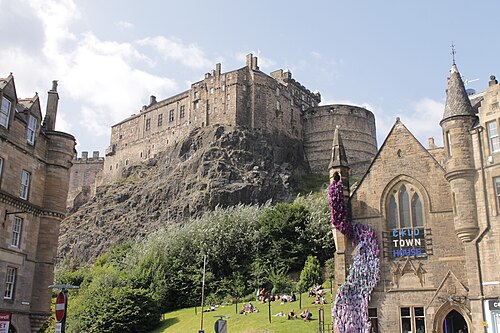 Edinburgh CastleRestored · prime 1520
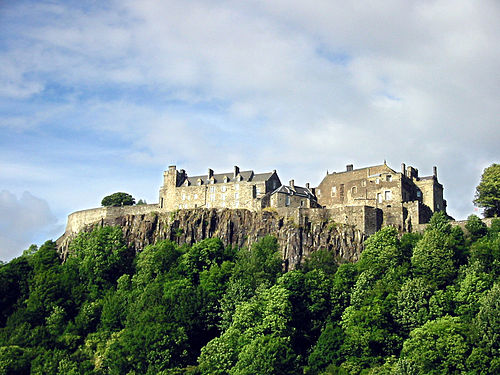 Stirling CastleRestored · prime 1542
 Glamis CastleStill standing · prime 1900
All castles in Scotland → · Strongest castles in Scotland → · Castles of Europe
Play As Your Clan
Hold a real castle against whatever you choose to send at it, take a ship out in her own service years, or stand at the shoulder of someone the record remembers. The chronicler sets the scene; the deeds are yours.
Notable bearers of the Cunningham name
- Admiral of the Fleet Andrew Browne Cunningham, 1st Viscount Cunningham of Hyndhope (1883–1963)