Clan Munro
also Monro, Munroe, Clan Munro
From the Roe to Foulis, the clan of the Black Isle's northern shore.
- Origin
- The Highlands & Islands, Scotland
- Motto
- Dread God
- Famous bearer
- Sir Hector Munro of Novar (1726–1805), commander at Buxar
- Register
- Scottish clan
The Munro arms, crest badge, tartan and country

Crest badgeClan member crest badge - Clan MunroCeltus · CC BY-SA 3.0 
TartanMunro tartan (Vestiarium Scoticum)As printed in the Vestiarium Scoticum, 1842, a collection whose claimed medieval source was never produced, and which is now generally held to be a forgery. Families adopted its patterns anyway, and wear them still.Celtus · CC BY 2.5 
Coat of armsMunro of Foulis ArmsBorne by the Foulis line, one branch of the name rather than all of it.Czar Brodie · CC BY 3.0 
Clan plateMunro (R. R. McIan)Robert Ronald McIan (1803-1856). · Public domain

.png)

.jpg)
- Crest badge: The chief's crest inside a belt and buckle: the badge a clansman wears to show whose following he is in.
- Tartan: The checked cloth the family is known by.
- Coat of arms: Granted to an individual and inherited down that one documented line. These are the arms of particular families of the name, not of everyone who shares the surname.
- Clan plate: Period portrait art of the clan, from the great 19th-century illustrated surveys.
What is the Munro clan tartan?
One Munro sett is recorded, and it is the swatch above (the plate printed in the Vestiarium Scoticum in 1842). The Vestiarium claimed to copy a medieval manuscript that was never produced, and is now generally held to be a forgery; families adopted its patterns anyway, and wear them still. A sett is the block of coloured bands the cloth is built from, repeated in both directions; the whole plaid is that one square enlarged.
Almost no clan tartan is medieval. Highland dress was proscribed from 1746 until 1782, and when it returned it returned as ceremony rather than everyday cloth, so the surname-to-sett map was fixed after the break, by the Bannockburn weavers’ pattern books, the royal visit to Edinburgh in 1822, and the Vestiarium Scoticum of 1842. The Munros wore tartan long before any of that. What the registers fixed was which one. Nobody polices any of it. Wearing the Munro sett declares allegiance to the name, not descent from any particular line of it.
CoreHistoric reach
The seat of Clan Munro
Seat vacantChief
No one leads the Clan Munro community yet. When the movement opens, you can stand for its leadership, or help elect whoever does.
Current mission
No shared goal set yet. Once Clan Munro has leadership, it sets the public focus: a restoration, a gathering, a real-world project that helps its own.
The Munro clan is being rebuilt. Join the waiting list for the movement today, and you help decide who leads it and what it does.
Help rebuild the Munro clan →Motto
Dread God
What does the Munro name mean?
From the Gaelic Mac an Rothaich, son of the man from the Roe, the Roe being the river Roe in Co. Derry, Ireland. The Munro tradition holds that Donald, the eponymous progenitor, came north from Ulster c.1025 to fight alongside Malcolm II against the Vikings. The Munros settled at Foulis on the north shore of the Cromarty Firth, where their seat at Foulis Castle remains the chiefly residence today, one of the longest-continuously-occupied family seats in Scotland.
The history of Clan Munro
The man from the Roe, and the eight miles called Ferindonald
In Gaelic the name is Mac an Rothaich, with Rothach and Roich as its other forms, and it means the man from Ro: the river Roe in County Derry. By the clan's own account Donald Munro, son of the Irish chief Ó Catháin, came north from Ulster in the eleventh century and was granted lands for services rendered to Malcolm II in defeating the Danes. From him the clan country took the name Ferindonald, Donald's lands, a strip running eight miles along the northern shore of the Cromarty Firth from Dingwall to Alness.
That tradition survives in writing only from the late seventeenth century. George Martine of Clermont (1635-1712) instead made the founder a brother of Áine Ni Catháin, who married Aonghus Óg Mac Domhnaill of Islay about 1300 and brought many men of different surnames north as her tocher; the genealogist David Kelley took that to place Donald in the late thirteenth century.
About a fifth of contemporary Munro men tested share a patrilineal ancestor of haplogroup I2a-P37.2, and that minority includes documented descendants of two sons of Hugh Munro of Foulis, the ninth baron. Hugh, who died in 1425, must have carried it, and the variation since points to a common ancestor around the fourteenth century rather than the eleventh, with first-millennium ancestry shared with families of south-west Ireland, most notably the Driscolls of Cork.
Robert de Munro and the charter for Estirfowlys
The first chief documented by contemporary evidence is Robert de Munro, traditionally counted the eighth baron, who died in 1369; his father is mentioned in several charters but never named. The chiefs originally held land principally at Findon on the Black Isle and exchanged it in 1350 for Estirfowlys. Robert married a relative of the Earl of Ross and had many charters confirmed under David II, among them one of 1350 from Uilleam III, Earl of Ross, for the "Tower of Strathskehech" and "Estirfowlys".
The particle "de" is Norman for "of", and the Clan Munro Association holds that the family passed from Celtic chiefs to feudal lords in this period. Robert was killed in 1369 in an obscure skirmish, fighting in defence of Uilleam III. His son Hugh gathered charters of his own, among them two granted in 1394 by Euphemia I, Countess of Ross, covering the "Tower of Strathschech" and "Wesstir Fowlys". Hugh, who died in 1425, was the first styled "of Foulis", though the genealogies number him ninth baron: the pedigree runs well ahead of the parchment.
By clan tradition Robert Munro, sixth baron of Foulis, led the clan for Robert the Bruce at Bannockburn in 1314 and survived it, while his son George was killed; George's own son of the same name succeeded his grandfather as chief and died leading the clan at Halidon Hill in 1333. Whichever century the founder belongs to, by the middle of the fourteenth the Munros were charter-holding landowners on the Cromarty Firth, bound by marriage and service to the Earls of Ross.
Caisteal Foghlais na theine: the beacon on the highest tower
Foulis Castle, two miles south-west of Evanton in Ross and Cromarty, has been held by Clan Munro from the twelfth century or earlier, and the remains of an eleventh-century motte believed to be the first fortification on the site still stand in the grounds. In times of clan warfare a beacon was lit on the highest tower to gather the clan under arms, which gave the Munros their slogan, Caisteal Foghlais na theine, Castle Foulis ablaze. In 1542 Donald Mackay of Strathnaver was imprisoned there after his capture at Alltan-Beath.
Culloden ended the need for a defensive fort in Easter Ross, and Foulis became the white-washed mansion seen today, the old tower house and its gun loops built into the fabric of it. It remains the home of the chief, Hector W Munro of Foulis. Around it stood the cadet houses: Milntown, seat of the senior cadets, begun in 1500 and objected to by the Rosses as too close to their Balnagown; Newmore; Teaninich; Balconie; Novar; Lemlair; Contullich, thought first built in the eleventh century; and a castle at Allan near Tain.
Holdings were lost as readily as won. Ardross passed to Clan Matheson, and Loch Slin near Tain, Munro in the seventeenth century, went to the Mackenzies. Strome Castle on Loch Carron was governed in the early sixteenth century by Hector Munro, I of Erribol, for the MacDonells of Glengarry who then held it. On the Black Isle the clan took Ormond, or Avoch Castle, caput of the Barony of Ormonde, forfeited to the crown after the fall of the Black Douglases at Arkinholm in 1455; in 1568 Andrew Munro, 5th of Milntown, acquired it under feu with the lands of Suddie when David Chalmers, Lord Ormond, was driven into exile for supporting Mary. It was destroyed in the 1650s.
Harlaw, Bealach nam Broig and the ambush at Clachnaharry
In 1411 a feud broke out between Robert Stewart, Duke of Albany, and Domhnall of Islay, Lord of the Isles, over the Earldom of Ross. It ended at Harlaw, where chief Hugh Munro, ninth baron of Foulis, rose for the Lord of the Isles, and the Munros are said to have fought in the Isles host against the Lowland army of Alexander Stewart, Earl of Mar. When James I came to Inverness in 1428 to assert his authority in the Highlands, a group of Munros was granted remission for past offences.
In 1452 tribes loyal to Mackenzie of Kintail rebelled and took the Earl of Ross's nephew hostage. At the Battle of Bealach nam Broig, fought north-west of Ben Wyvis, the Munros and Dingwalls recovered the hostage and destroyed their enemies, at heavy cost to their own men. Two years later John Munro, 1st of Milntown, uncle of the next chief, led a raid into Perthshire and was ambushed on the return march by Clan Mackintosh at the Battle of Clachnaharry.
In 1495 James assembled an army at Glasgow and many Highland chiefs submitted, the Munro and Mackenzie chiefs among them. Two years later MacDonald of Lochalsh rebelled and invaded Ross-shire; Donald Gregory has him beaten at Drumchatt in 1497 by the Munros and Mackenzies together, while Alexander Mackenzie, quoting Sir Robert Gordon, disputes the Munros' presence and holds that the two clans fought each other at Drumchatt in 1501. Either way the two names feuded through the fifteenth and sixteenth centuries.
The King's business in Lochaber, and the bond signed at Inverness
Early in the sixteenth century Domhnall Dubh, chief of Clan MacDonald, rebelled against the king with the support of Cameron of Lochiel. In 1502 a commission went to the Earl of Huntly, Lord Lovat and William Munro of Foulis to proceed against the rebels in Lochaber. In 1505, while on "the King's business", William Munro was killed by Cameron of Lochiel, and Clan Cameron tradition holds that they beat a joint force of Munros and Mackays at Achnashellach that year.
A generation of paper followed the powder. On 30 April 1527 a bond of friendship was signed at Inverness between chief Hector Munro of Foulis, John Campbell of Cawdor, Hector Mackintosh, captain of Clanchattan, Hugh Rose of Kilravock, and "Donald Ilis of Sleat". In 1529 Hector Munro, thirteenth baron, signed a charter with Lord Fraser of Lovat by which each would defend the other, and in 1544 Robert Munro, fourteenth baron, signed a bond of kindness with the chief of Clan Ross of Balnagowan. The Foulis Writs hint that by 1534 James V knew the Munros as a fighting force.
In 1547 Robert Munro, fourteenth baron, "with his friends and followers having gone to resist the English who invaded Scotland", was killed at Pinkie Cleugh. Two years later Donald Monro, Dean of the Isles, visited Finlaggan Castle, seat of the chiefs of Clan Donald, and wrote his Description of the Western Isles of Scotland. The dead chief's second son, Hector Munro, 1st of Fyrish, took as his patrimony Fyrish, Contullich and Kildermorie in the parish of Alness, founding the branch that would end up practising medicine in London.
The Queen's gate at Inverness and three years at Chanonry
Robert Mor Munro, fifteenth baron of Foulis, was a staunch supporter and faithful friend of Mary, Queen of Scots, and was consequently treated favourably by her son James VI. When Mary went to Inverness Castle in 1562 the gates were shut against her, and the Frasers and Munros, esteemed the bravest clans in the north, took the castle for the Queen.
The Mackenzie quarrel then settled into a siege. Between 1569 and 1573 Andrew Munro, 5th of Milntown, held Chanonry Castle for three years against Clan Mackenzie at the expense of many lives on both sides. He had it from the Regent Moray, who died in 1569, and the feud ended only when the castle was handed to the Mackenzies under an act of pacification. In 1597 the Battle of Logiebride was fought between clansmen of Munro and the Bain of Tulloch family and clansmen of Mackenzie with the MacLeods of Raasay.
The Munros were prominent in the clergy of the north as well. Andrew Munro, who died in 1454, was Archdeacon of Ross and for a short time Bishop of Ross. John Munro of Tain, who died in 1630, was a Presbyterian minister. Rev. Robert Munro (1645-1704) was a Catholic priest, persecuted for his beliefs, who died in imprisonment: a medieval bishopric, a reformed pulpit, and a man jailed for keeping the older faith after Foulis had gone the other way.
Dread God: seven hundred men for Gustavus Adolphus
The Munro motto is "Dread God", and in the seventeenth century the clan went to war for the Protestant cause on a scale out of all proportion to its eight miles of shore. Robert Munro, eighteenth baron of Foulis, known as the Black Baron, took 700 members of Clan Munro, alongside many men of Clan Mackay, into the army of Gustavus Adolphus in defence of Protestantism. He died of an infected wound at Ulm in 1633.
The larger part in the Thirty Years' War was played by his cousin, General Robert Monro of the Obsdale branch. Monro's men served with such distinction that they were given the name of the Invincibles, and he set down what he had seen in "Monro, His Expedition With the Worthy Scots Regiment Called Mac-Keys". The Swedish army carried 27 field officers and 11 captains of the name of Munro.
The war reached into the cadet houses too. George Munro of the Fyrish line fought on the continent under the Black Baron; his son Hector went with him to Germany, attained the rank of Captain and acquired an estate there by marriage to a German woman, and their son Charles Frederick-Von Munro became a Major in the Regiment of Alsace. Another Fyrish son, David Munro, rose to Major and was killed in battle in France before 1653.
Covenanters in Ireland, and Montrose stopped at Carbisdale
During the Bishops' Wars General Robert Monro of Obsdale took Spynie Palace, Drum Castle and Huntly Castle. From 1642 to 1648 he commanded the Scottish Covenanter army in Ireland through the Irish Confederate Wars. Officers of the name served on the Covenanter side at the Battle of Philiphaugh in 1645.
Then the family divided. Sir George Munro, 1st of Newmore, who had fought in Ireland as a Covenanter, turned royalist after his uncle Robert Monro was imprisoned by Cromwell in 1648, and that September his Engager forces defeated Argyll's Kirk Party at the Battle of Stirling. Yet when James Graham, 1st Marquess of Montrose, landed in Ross-shire with an invading army of foreigners, hoping the clans would rise for him, the Munros, Rosses and Sutherlands opposed him and comprehensively defeated him at Carbisdale in 1650, John Munro of Lemlair leading the clan. Charles Ian Fraser held that the clan had no cause to be hesitant about its part, and that some historians, John Buchan among them, have done less than justice to it.
By 1651 the Covenanting government had turned to the royalists, and William Munroe was one of four Munroes captured at Worcester and transported to America. After the Restoration the chief's brother, George Munro, 1st of Newmore, commanded the king's forces in Scotland from 1674 to 1677. In 1689 chief Sir John Munro, 4th Baronet, was one of the Scottish representatives who approved the formal offer of the Crown to William of Orange, and in the same year George Munro, 1st of Auchinbowie, commanded royalist forces that beat the Jacobites at Dunkeld.
Alness, Brahan, and the burghs the Munros ran
In the rising of 1715 William Mackenzie, 5th Earl of Seaforth, led 3,000 men for the Jacobites and forced the retreat of a smaller Government force under the Earl of Sutherland, which included the Munros under Sir Robert Munro, 6th Baronet of Foulis, with the Mackays and Rosses under Lord Reay. This was the Skirmish of Alness. The Munros came home to find their lands plundered, and repaid it by raiding the Mackenzie lands in the Siege of Brahan.
The Siege of Inverness ended when the Mackenzie Jacobite garrison surrendered to Fraser of Lovat, on the same day that Sheriffmuir was fought and another Jacobite force was defeated at Preston. Colonel Sir Robert Munro then marched into the town with 400 Munros and took over as governor from Fraser. The disarming of the rebels went on for months with the help of a Munro detachment under George Munro, 1st of Culcairn, who in 1719 raised an Independent Highland Company from his father's clan and defeated the Jacobites at Glen Shiel.
With the rebellion spent, the same rivalries moved indoors. Seaforth's earldom ended in 1716, and it was arranged that Clan Ross would hold the county parliamentary seat while the Munros represented the Tain Burghs; from 1716 to 1745 the Munros controlled Dingwall, with one of Robert Munro's brothers as provost. Twice, in 1721 and 1740, armed Munro parties entered the town and abducted opposing councillors to secure a favourable result. For the first, Colonel Robert and his brother were fined 200 pounds each; after the second his parliamentary career ended with defeat at the 1741 election.
Clap to the ground: the Black Watch at Fontenoy
Wade's report on the Highlands in 1724 put the combined strength of the Munros and Rosses at 700 men. In 1725 six Independent Highland Companies were formed, one of Munros, one of Frasers, one of Grants and three of Campbells, known as Am Freiceadan Dubh, the Black Watch. By 1740 it was the 43rd Highland regiment, later renumbered the 42nd. Sir Robert Munro was made lieutenant-colonel, his brother George Munro of Culcairn and John Munro, 4th of Newmore, were among the captains, and the surgeon was his younger brother Dr Duncan Munro.
Their first action came on 11 May 1745 at the Battle of Fontenoy. Allowed "their own way of fighting", the regiment met each French volley on Sir Robert's order to "clap to the ground", while he himself, because of his corpulence, stood alone with the colours behind him. Springing up and closing with the enemy, they drove the French back several times and finished with a rearguard action against the French cavalry. It was the first use in a European battle of alternately firing and taking cover.
A month later Sir Robert was "rewarded" with the colonelcy of the English 37th Regiment of Foot in succession to General Ponsonby. At the second Battle of Falkirk in 1746 the 37th, by the rebels' own account, ran; Sir Robert was surrounded by seven Cameron Jacobites, killed at least two with his half-pike, and was then shot by a Jacobite commander with a pistol. His enemies wished to do him special honour: the MacDonalds buried him in the grave of Sir John de Graham, killed at the first Battle of Falkirk in 1298, and both graves can be seen in Falkirk churchyard.
The white house that replaced the fort
Sir Robert's son, Sir Harry Munro, 7th Baronet, was an officer in Loudon's Highlanders and had been captured at Prestonpans in September 1745. He came home to find Foulis Castle partially destroyed by Jacobites after Falkirk, and set about rebuilding, incorporating what he could of the original tower into the Georgian mansion house that stands today. A Munro Independent Company under his command went on policing the Highlands until it was disbanded in 1748.
The clan's last service in the old style came in 1754, when Lieutenant Hector Munro, 8th of Novar, was ordered into Badenoch to apprehend certain rebels, with particular instructions to take John Dubh Cameron, better known as the Sergent Mor of Clan Cameron. He captured him. That commission closed the account the Munros had kept with the Jacobite Highlands since 1715.
The chiefship passed through some awkward turns. Sir Hugh Munro, 8th Baronet of Foulis, died in 1848 and his daughter Mary Seymour Munro eight months later; he had a natural son named George, but the estates and the baronetcy went to the male representative of the Munro of Culrain cadet branch, Sir Charles Munro, 9th Baronet. The 11th Baronet was succeeded as chief by his eldest daughter Eva Marion Munro, two sons having predeceased him; she married Colonel C. H. Gascoigne, and their son Patrick took his grandfather's surname of Munro to become chief. In 1954 Sir Arthur Herman Munro, 14th Baronet, registered the arms and designation of Foulis-Obsdale.
Four generations at Bedlam, and the doctor who taught Turner
The Fyrish branch, begun by a younger son of the chief killed at Pinkie, ended as a medical dynasty in London. Rev. Alexander Monro, 7th of Fyrish (1648-1698), was Principal of the University of Edinburgh from 1685 to 1690. His son Dr James Monro, born at Wemyss in 1680 and educated at Balliol College, Oxford, was elected Physician to Bethlem Royal Hospital in 1728. Four generations in direct line held the post of Principal Physician of Bethlem.
Dr John Monro, 9th of Fyrish (1715-1791), studied at Leyden in 1745 and succeeded his father at Bethlem in 1752. He published almost nothing, devoting his career to the study of insanity, and from 1762 also ran his own private asylum at Brooke House in Clapton. His grandson Dr Edward Thomas Monro, the fourth of the family in direct line to hold the post, attended roughly 400 commissions and trials in lunacy; on only two occasions did his evidence differ from the verdict, and both decisions were later set aside.
The most consequential of them barely stayed in the post. Dr Thomas Monro (1759-1833) took the post in 1816 and retired soon after, having attended King George III in that monarch's last illness. He taught J. M. W. Turner the techniques of tinted drawing, patronised Turner and the landscape painter William Henry Hunt, and kept a school for artists at his house in Bushey where Thomas Girtin, Hunt and Turner all spent time; John Ruskin wrote in 1878 that Turner's "true master was Dr Monro".
Dr Henry Monro, born 1817, was President of the Medical Psychological Association in 1864-65, for almost thirty years Consulting Physician to St Luke's Hospital, and founder in 1846 of the House of Charity in Soho, where he spent forty years working with the destitute of London. A separate branch held a chair rather than a hospital: from the Auchinbowie-Bearcrofts line, John Munro the surgeon and then Alexander Monro primus, secundus and tertius were professors of anatomy at Edinburgh University through four direct generations.
Novar, Lindertis and the 282 summits
The eighteenth and nineteenth centuries sent the name abroad in uniform. Sir Hector Munro, 8th of Novar (1726-1805), the officer who had taken the Sergent Mor in Badenoch, commanded at Buxar in 1764 and became one of the Scottish generals whose careers were made in India, alongside Sir Thomas Munro, 1st Baronet of Lindertis (1761-1827), and John Munro, 9th of Teaninich, born in 1778, an officer of the Honourable East India Company. James Munro (1826-1871) was a Scottish recipient of the Victoria Cross during the Crimean War.
The Novar money went into pictures as well as commissions. Hugh Andrew Johnstone Munro of Novar (1797-1864) was one of Turner's chief patrons, which put two branches of the same Highland family behind the same painter, since Dr Thomas Monro of Bushey was his distant kinsman.
The name that reaches most walkers belongs to Sir Hugh Munro, 4th Baronet of Lindertis (1856-1919), the geographer. A founding member of the Scottish Mountaineering Club, he produced in 1891 the first scientific list of every mountain in Scotland over 3,000 feet. The 282 summits on that list have been called Munros ever since. It is the rare case of a Highland surname becoming the standard unit of a country's landscape.
Foulis to Virginia, Foulis to the Somme
James Monroe was born in Westmoreland County, Virginia, on 28 April 1758, the great-great-grandson of Patrick Andrew Monroe, who emigrated from Scotland in the middle of the seventeenth century, when spellings were not fixed and Monroe was simply another way of writing Munro; the family is believed to have descended from Robert Munro, fourteenth baron of Foulis. He left the College of William and Mary to fight in the Revolutionary War, was wounded at Trenton, and read law under Thomas Jefferson. As envoy to France in 1803 he helped negotiate the Louisiana Purchase.
His two terms as President, from 1817 to 1825, are known as the Era of Good Feelings. His administration secured Florida through the Adams-Onis Treaty of 1819 and steered the Missouri settlement that held the federal union together for another generation, and in 1823 he set out the principle that has carried his name since: that the Americas were no longer open to European colonisation. The Monroe Doctrine became one of the longest-standing foundations of United States foreign policy. He died on 4 July 1831, the third president to die on Independence Day.
Hector Hugh Munro was born at Akyab on the Burmese coast on 18 December 1870, son of an Inspector-General of the Burma Police and descended from the Highland gentry of Foulis. Writing as Saki, a name taken from the cup-bearer of the Rubaiyat, he produced Reginald (1904), The Chronicles of Clovis (1911) and Beasts and Super-Beasts (1914), the master of the very short, very polished Edwardian story in which drawing-room complacency is upended by speaking ferrets and quick-witted children. In September 1914, aged forty-three, he enlisted as an ordinary trooper in the 2nd King Edward's Horse, refused a commission three times, and was killed on the Somme on 13 November 1916; his name stands on the Thiepval Memorial.
Other lines carried the name further. John U. Monro, dean of Harvard College, belonged to the tenth generation of the Lexington, Massachusetts branch of the clan, and his brother Sutton Monro developed the Robbins-Monro algorithm with Herbert Robbins. Hugh Munro, or Monroe, known as Rising Wolf (1799-1892), was a Canadian fur trapper who joined the Blackfeet Nation. The surname is still common in Ross-shire and northern Scotland and spread to Canada through emigration, appearing as Monro, Monroe, Munroe, Munrow and Manrow.
Champions of the Munro name
The bearers whose lives are inseparable from this surname. Each has their own page, biography, achievements, geography, connection to the family.
- Saki (H.H. Munro)
The Edwardian master of the polished, mischievous short story, who at forty-three refused a commission to serve in the ranks and gave English comic prose one of its sharpest voices.
- James Monroe
The fifth President of the United States, author of the doctrine that bears his name and descendant of the Scottish Munros.
Castles the Munro held
Strongholds this name held for a decade or more, look one up, or rebuild it to explore.
- Foulis Castle
Held by Clan Munro from the twelfth century or earlier; still the home of the chief, Hector W Munro of Foulis.
- Ormond Castle
Acquired under feu by Andrew Munro, 5th of Milntown, in 1568.
The castles of the homeland
The great strongholds of the homeland, look one up, see what it looked like in its prime, and recreate it to explore.
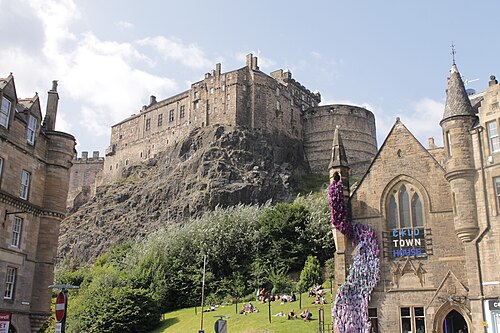 Edinburgh CastleRestored · prime 1520
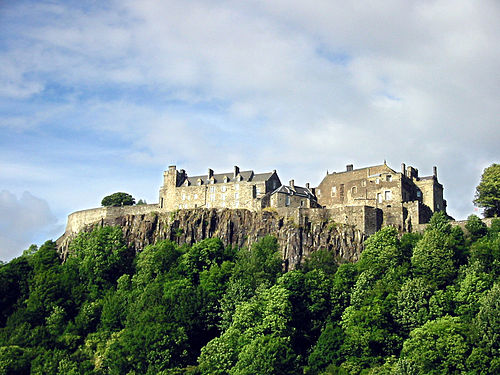 Stirling CastleRestored · prime 1542
 Glamis CastleStill standing · prime 1900
All castles in Scotland → · Strongest castles in Scotland → · Castles of Europe
Play As Your Clan
Hold a real castle against whatever you choose to send at it, take a ship out in her own service years, or stand at the shoulder of someone the record remembers. The chronicler sets the scene; the deeds are yours.
Notable bearers of the Munro name
- Sir Hector Munro of Novar (1726–1805), commander at Buxar
- James Monroe (1758–1831), fifth President of the United States
- Saki / H. H. Munro (1870–1916), short-story writer
- Sir Hugh Munro (1856–1919), geographer; the 282 Munros bear his name