Clan Rising
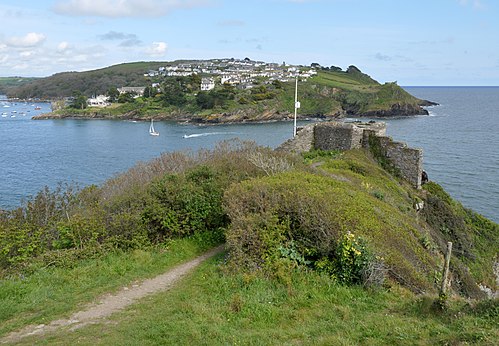
Hartley Castle today

England · Demolished

Hartley Castle

Hartley Castle was a medieval manor-house fortress near Kirkby Stephen in Cumbria, held and fortified from the 14th century and altered in the 17th century. It comprised concentric courts with a thick curtain wall, an inner quadrangle of multi-storey ranges including a hall, chapel and gallery. The castle was demolished for building stone in the early 18th century; only earthworks and short lengths of wall and the vaulted kitchen cellar survive on the site today.

Photograph via Wikimedia Commons

First raised

1353

Its prime

1615

Today

Demolished

As it stood in 1615

What Hartley Castle looked like in its prime.

Perched on a rocky outcrop in the Eden valley, the castle comprised a square outer court enclosed by a thick, high crenellated curtain wall to the north, and an inner quadrangle surrounded on three and four storeys by stone ranges. The east range contained kitchen and buttery spaces with an external stair to the adjacent hall; the west contained a long gallery lit by a large oriel window facing the quadrangle; the south end housed a chapel and withdrawing rooms. Entrances were reached by a flight of steps from the road.

Its story

The story of Hartley Castle.

Hartley Castle, near Kirkby Stephen in Cumbria, was taken from Roger de Clifford around 1315 and granted to Andrew de Harcla, the name anglicised as Harclay or Hartley. It was later granted to Ralph de Neville, who sold it on through three further hands to Thomas de Musgrave, granted a licence to crenellate by Edward III on 4 October 1353.

The fortified manor house comprised concentric courts behind a thick curtain wall, with an inner quadrangle of multi-storey ranges holding a hall, chapel and gallery, and was altered in the 17th century. In the early 18th century it was demolished for building stone; only earthworks, short lengths of wall and the vaulted kitchen cellar survive on the site.

Step inside

10 places to explore in 1615.

The record describes 10 distinct spots at Hartley Castle, including 5 interiors: great hall and external stair, kitchen and buttery (east range), vaulted cellar beneath the kitchen and more. Create your own photoreal reconstruction and explore every one, more scenes means more rooms, more angles, and more of the place to stand in.

Approach: flight of steps to gatewayOuter court, northern curtain wallArchway into the inner quadrangleInner quadrangleGreat hall and external stairKitchen and buttery (east range)Vaulted cellar beneath the kitchenChapel and withdrawing rooms (south end)Western long gallery and oriel windowWalkway on the curtain wall

Build Your Own Castle

Recreate Hartley Castle with AI to explore it.

The artist rebuilds it as it stood in 1615, a photoreal reconstruction that belongs to you alone. Pay with coins, no subscription needed.

Recreate this castle →Defend this castle →

Whose castle

Clans who held Hartley Castle.

The families that held Hartley Castle for a decade or more across its history, follow a name to its clan.

  • Musgrave

    Granted to Thomas de Musgrave, licensed to crenellate by Edward III in 1353.

Nearby

Landmarks within reach of Hartley Castle.

Questions about Hartley Castle

What is the history of Hartley Castle?

Hartley Castle was established as a fortified manor house in the 14th century because it stood near the Scottish Marches and had previously been burned and destroyed by Scottish enemies. It passed from Andrew de Harcla to Ralph de Neville and then to Thomas de Musgrave, who received a licence to crenellate in 1353. It was improved in the 17th century and abandoned around 1677.

What is inside Hartley Castle?

Hartley Castle contained a great hall, kitchen and buttery, chapel, withdrawing rooms and a western long gallery. The kitchen lay in the east range beneath a vaulted cellar, while the hall was reached by an external stair. The gallery was lit by a large oriel window facing the inner quadrangle.

Why was Hartley Castle built, and what was it used for?

Hartley Castle was built as a fortified manor house near Kirkby Stephen in Cumbria. Its position near the Scottish Marches gave it a defensive purpose, particularly because the site had previously been burned and destroyed by Scottish enemies. It later served as a substantial residence with a hall, chapel, withdrawing rooms and gallery.

Where is Hartley Castle?

Hartley Castle is near Kirkby Stephen in Cumbria, in the Eden valley. The site lies at Hartley, on a rocky outcrop, and the castle was positioned near the Scottish Marches. Kirkby Stephen is the nearest named town in the supplied material.

When was Hartley Castle built?

Hartley Castle was first raised in 1353, placing its documented construction in the 14th century. The existing manor house had already been fortified some time before 1323, so the castle developed in phases rather than appearing as a single entirely new building. It was altered in the 17th century, including additions in 1615.

Was Hartley Castle ever attacked or besieged?

Hartley Castle was attacked and destroyed by Scottish enemies before 1353. The licence to crenellate was granted because the manor stood near the Scottish Marches and had often been burned and destroyed. The material does not give dates for individual attacks or state whether the castle held or fell in a particular assault.

Which family or clan held Hartley Castle?

Hartley Castle was held by the Musgrave family in the documented later phase of its history. Thomas de Musgrave received the manor and was granted a licence to crenellate by Edward III on 4 October 1353. The curated family record identifies Musgrave as the family associated with this holding.

What did Hartley Castle look like in its prime?

Hartley Castle was a stone quadrangular fortress with concentric courts. A square outer court had a thick, high crenellated curtain wall, while an inner quadrangle was enclosed by stone ranges of three and four storeys. Entrances were approached by steps from the road, and the western range included a long gallery and large oriel window.

Is Hartley Castle still standing, or is it a ruin?

Hartley Castle is demolished rather than standing as a complete ruin. It was dismantled for building stone in the early 18th century, with the material also dating demolition between 1704 and 1744. Earthworks, a few metres of wall, stairs and the vaulted cellar beneath the former kitchen survive on the site.
All castles of England · Castles of Europe · the best castles in Europe · explore the finished reconstructions.