Clan Rising
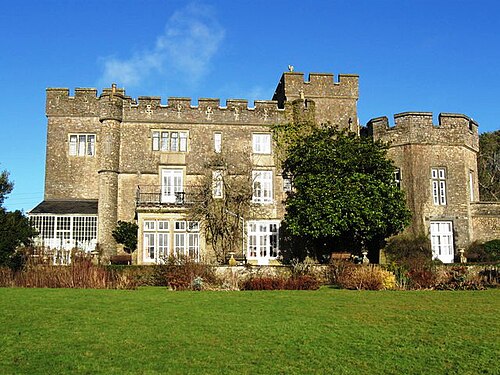
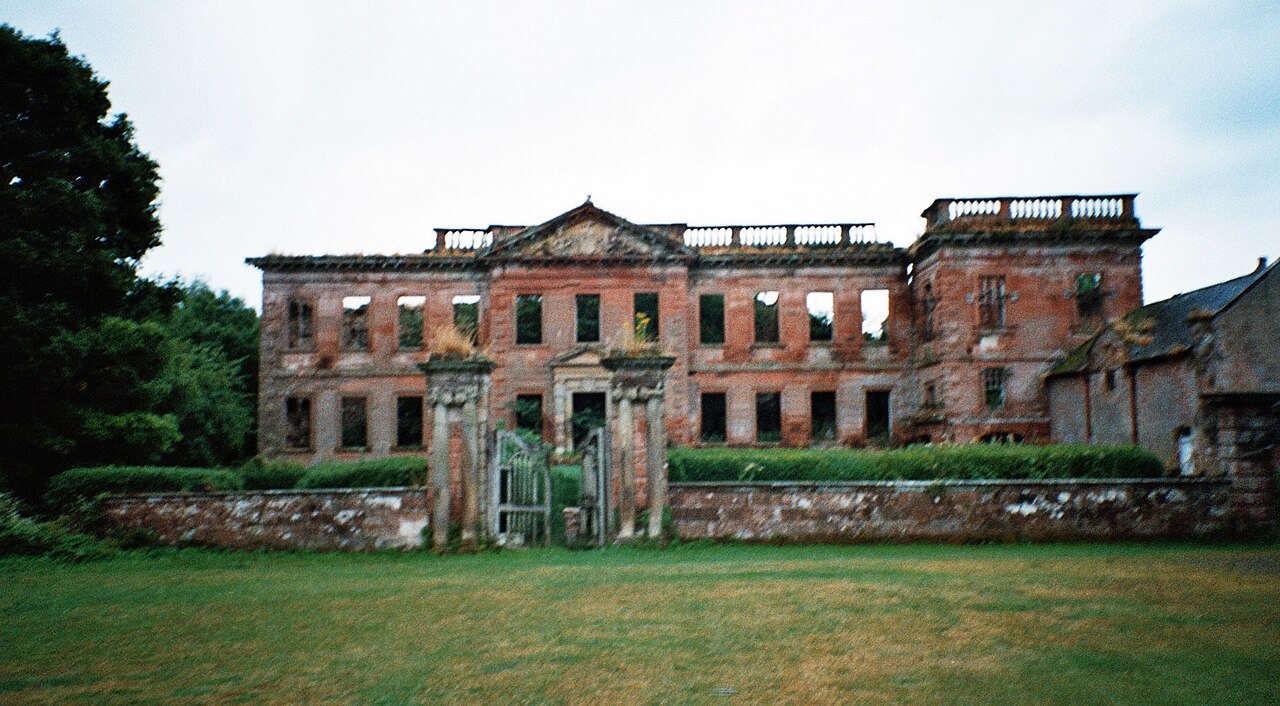
High Head Castle today

England · Ruin

High Head Castle

High Head Castle is a country house on a site with medieval origins, located between Carlisle and Penrith in Cumbria. The present building received a new eleven-bay Georgian façade with a pedimented three-bay centre in 1744–1748; the house was largely destroyed by fire in 1956 and today survives mainly as a shell. The house and its medieval wing are Grade II* listed and the site is privately owned and on the Heritage at Risk Register.

Photograph via Wikimedia Commons

Its prime

1748

Today

Ruin

As it stood in 1748

What High Head Castle looked like in its prime.

Long, rectangular two-storey Georgian block eleven bays wide with a central pedimented three-bay projection and a low balustraded parapet along the roofline; red-brown sandstone walls with regularly spaced window openings. A low stone garden wall and wrought-iron central gate lead across a lawn to the façade, where paired Ionic columns mark the walled front garden. At the west end a surviving older wing shows straight-headed mullioned windows with round-arched lights under hood moulds and the basement of a square stone tower.

Its story

The story of High Head Castle.

High Head Castle stands between Carlisle and Penrith in Cumbria, a Georgian country house on the site of a medieval castle. Sir William L'Engleys, descended from the family who held Little Asby, acquired it, and the Richmond family bought and extended the house in the 16th century before it was sold to the Barons Brougham and Vaux, who made alterations.

Henry Richmond Brougham gave the house its eleven-bay Georgian façade with a pedimented three-bay centre in 1744–1748. By the mid-19th century, and until at least 1909, it was occupied by the Hills family, the childhood home of the soldier and astronomer Edmond Hills, while census records show the Thornborrow family renting and farming the land between at least 1851 and 1881, and the Cavaghan family, co-founders of Cavaghan & Gray, living there from about 1921 to 1929.

Fire largely destroyed the house in 1956, leaving mainly a shell of exterior walls and foundations, though the right-hand wing has since been re-roofed. Grade II* listed along with its medieval wing, privately owned and on the Heritage at Risk Register, it is closed to the public while its owners work towards restoration.

Step inside

6 places to explore in 1748.

The record describes 6 distinct spots at High Head Castle, including 1 interior: stable quadrangle courtyard. Create your own photoreal reconstruction and explore every one, more scenes means more rooms, more angles, and more of the place to stand in.

Front approach from the lawn and gatePedimented three-bay centre of the façadeWalled front garden with coupled Ionic columnsWestern wing with mullioned windowsBasement of the southwest square towerStable quadrangle courtyard

Build Your Own Castle

Recreate High Head Castle with AI to explore it.

The artist rebuilds it as it stood in 1748, a photoreal reconstruction that belongs to you alone. Pay with coins, no subscription needed.

Recreate this castle →Defend this castle →

Whose castle

Clans who held High Head Castle.

The families that held High Head Castle for a decade or more across its history, follow a name to its clan.

  • Richmond

    The Richmond family bought and extended the house in the 16th century.

  • Brougham

    Held by the Barons Brougham and Vaux; Henry Richmond Brougham added the Georgian façade in 1744–48.

Questions about High Head Castle

What is the history of High Head Castle?

High Head Castle has medieval origins, with the earliest written record dating from 1272. It was originally a square pele tower within a curtain wall and formed the king’s castle in the Forest of Inglewood. The Richmond family extended the house in the 16th century, while Henry Richmond Brougham added the eleven-bay Georgian façade in 1744–1748. Fire largely destroyed it in 1956.

What is inside High Head Castle?

Inside High Head Castle, the documented surviving interior space is the stable quadrangle courtyard. It is adjacent to the main building and has heavy rustication, a steep pediment gable and a cupola. The principal house itself survives mainly as a shell, so the supplied description does not identify surviving rooms.

Why was High Head Castle built, and what was it used for?

High Head Castle was originally a medieval royal castle in the Forest of Inglewood. Its first recorded form was a square pele tower within a curtain wall, serving as a fortified site. It later became a country house: the Richmond family extended it, and the Broughams made further alterations before adding the Georgian façade.

Which family or clan held High Head Castle?

High Head Castle was held by the Richmond family and later by the Barons Brougham and Vaux. The Richmond family bought and extended the house in the 16th century. Henry Richmond Brougham, of the Brougham family, added the Georgian façade in 1744–1748.

What did High Head Castle look like in its prime?

High Head Castle’s prime appearance was a long, rectangular two-storey Georgian block eleven bays wide, with a pedimented three-bay centre and a low balustraded parapet. It had red-brown sandstone walls and regularly spaced windows. A walled front garden with coupled Ionic columns stood before the façade, while the western wing retained mullioned windows and the basement of a square tower.

When was High Head Castle built?

High Head Castle was built in phases, with medieval origins and a Georgian rebuilding in the 18th century. The earliest written record of the original castle is from 1272. The present house received its new eleven-bay Georgian façade between 1744 and 1748, so the site belongs to both the medieval and 18th-century building periods.

Is High Head Castle still standing, or is it a ruin?

High Head Castle is now a ruin, surviving mainly as exterior walls and foundations. Fire largely destroyed the house in 1956, although the right-hand wing has since had its roof re-instated. The medieval wing and principal house remain Grade II* listed, and the building is on the Heritage at Risk Register.

Where is High Head Castle?

High Head Castle is between Carlisle and Penrith in Cumbria, near Skelton. It stands in the English county of Cumbria on the site of a medieval castle. The location is therefore in the countryside between the two recognised cities, rather than within Carlisle or Penrith itself.

Can you visit High Head Castle?

High Head Castle is not currently open to the public. It is privately owned, and its owners have been trying to restore the building. The house is largely a ruin and is on the Heritage at Risk Register.
All castles of England · Castles of Europe · the best castles in Europe · explore the finished reconstructions.