Clan Rising
Château de Tonquédec today

France · Ruin

Château de Tonquédec

Château de Tonquédec is a medieval fortress in Tonquédec, Côtes d'Armor, Brittany, built chiefly in the 15th century on a 12th‑century site. Perched on a rocky cliff above the Léguer valley, the castle features a detached cylindrical keep and an enclosing curtain wall with multiple towers. Today the site is a ruin and a listed monument historique, visited for its medieval fabric and views over the surrounding wooded countryside.

Photograph via Wikimedia Commons

Its prime

1450

Today

Ruin

As it stood in 1450

What Château de Tonquédec looked like in its prime.

Perched on a rocky cliff above a wooded valley, the castle is enclosed by a continuous pale‑grey stone curtain wall pierced by many round towers (eleven in the ensemble) and battlemented walkways. A large detached cylindrical keep with very thick walls rises behind the curtain, its round form and smaller attached turret prominent on the skyline. In prime condition the curtain and towers were intact and crenellated, enclosing an inner courtyard and an outer basse‑cour approached by a defended gate.

Its story

The story of Château de Tonquédec.

The first castle at Tonquédec was the work of the Coëtmen-Penthièvre family in the 12th century, set on a rocky cliff above the Léguer valley in Brittany. It was partially dismantled in 1395 by order of Jean IV, Duke of Brittany, during his conflict with the Penthièvres.

The present castle was built in the 15th century on the older site, a detached cylindrical keep and an enclosing curtain wall studded with towers. By the reign of Henri IV its owners, the Protestant Goyon de La Moussaye family, found themselves at odds with the king.

Standing in green forested country about 8.5 km south of Lannion, Tonquédec is now a listed monument historique and one of the most visited monuments in the Côtes-d'Armor. The ruin still belongs to descendants of its original builders: Count and Countess Bertrand de Rougé.

Step inside

7 places to explore in 1450.

The record describes 7 distinct spots at Château de Tonquédec, including 1 interior: keep ground chamber. Create your own photoreal reconstruction and explore every one, more scenes means more rooms, more angles, and more of the place to stand in.

Approach and outer gate (basse-cour)Postern, moat and drawbridgeInner courtyardDetached cylindrical keep (exterior)Keep ground chamberCurtain wall walkway and battlementsView from the top of the keep over the Léguer valley

Build Your Own Castle

Recreate Château de Tonquédec with AI to explore it.

The artist rebuilds it as it stood in 1450, a photoreal reconstruction that belongs to you alone. Pay with coins, no subscription needed.

Recreate this castle →

Castle Siege

Play Castle Siege at Château de Tonquédec.

A strategy game played on Château de Tonquédec’s real ground plan: the same surveyed walls shown in the archive below. Post your finite garrison on the battlements between assaults, then hold out as rams, siege towers, trebuchets and sappers arrive in ever-worse waves.

Sign in free to see the garrison muster. One castle costs 150 Clan Coins and is yours forever.

Sign in to take command →

See every castle’s leaderboard →

Whose castle

Clans who held Château de Tonquédec.

The families that held Château de Tonquédec for a decade or more across its history, follow a name to its clan.

  • Coëtmen-Penthièvre

    Built by the Coëtmen-Penthièvre family in the 12th century; their descendants, the Counts de Rougé, own the castle today.

  • Goyon de La Moussaye

    The Protestant Goyon de La Moussaye family owned Tonquédec in the reign of Henri IV.

From the archive

Château de Tonquédec on paper: the measured plan and period views.

The survey plan and photographs below are the ground truth this page's reconstructions are checked against, drawn and photographed while the castle was still a working garrison. Every image is public-domain or openly licensed, with its source named.
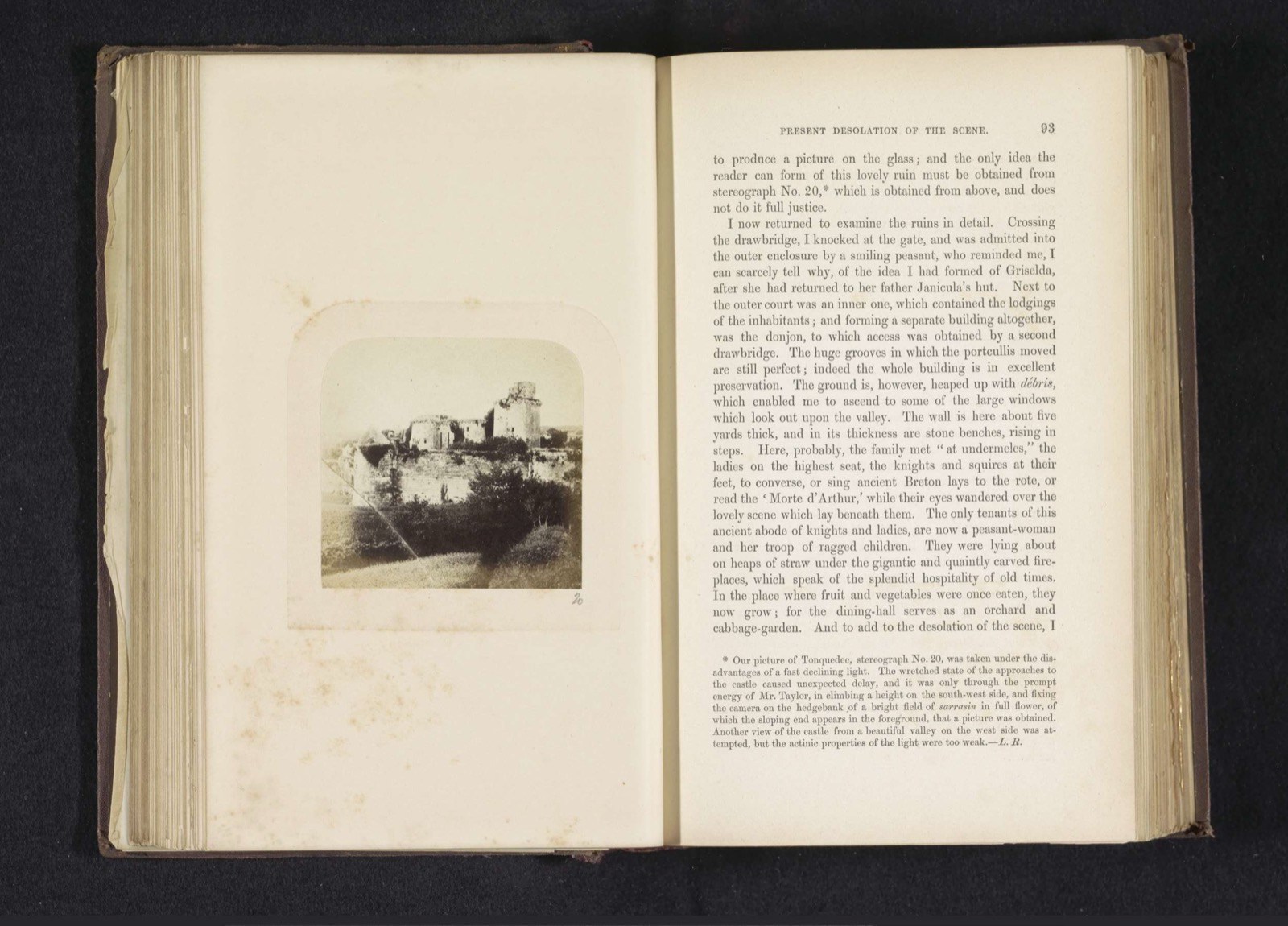
Gezicht op de ruïne van het kasteel van de burggraaf van Tonquédec, Château de Tonquédec

Gezicht op de ruïne van het kasteel van de burggraaf van Tonquédec

· Rijksmuseum (via Europeana)

Public domain

Questions about Château de Tonquédec

What is the history of Château de Tonquédec?

Château de Tonquédec was first established in the 12th century by the Coëtmen-Penthièvre family on a rocky cliff above the Léguer valley. Jean IV, Duke of Brittany, ordered its partial dismantling in 1395 after conflict with the Penthièvres. Reconstruction began in 1406, and the present fortress was built largely in the 15th century. It was finally partly dismantled in the 17th century.

What is inside Château de Tonquédec?

Château de Tonquédec contains surviving defensive and domestic spaces, including the inner courtyard, the keep ground chamber and parts of the Grand Logis. The west wing had three large living rooms, while the north-east curtain housed rooms, a large bread oven and a chapel. A vaulted cellar beneath the Grand Logis contains an opening through which large barrels could be moved.

Why was Château de Tonquédec built, and what was it used for?

Château de Tonquédec was built as a fortified stronghold controlling and defending the Léguer valley. Its curtain walls, towers, gates, moat, drawbridges and detached keeps provided several layers of defence, while the basse-cour could shelter people and animals in danger. During the Wars of Religion it became an isolated Huguenot bastion and later served as an artillery base.

Where is Château de Tonquédec?

Château de Tonquédec is in Tonquédec, in Brittany’s Côtes-d’Armor, about 8.5 km south of Lannion. It stands on a rocky cliff above the wooded valley of the Léguer. The castle is in the commune of Tonquédec and lies in green, forested countryside.

When was Château de Tonquédec built?

Château de Tonquédec was built chiefly in the 15th century on a 12th-century site. The first stone castle was probably built in the middle of the 12th century, while reconstruction of the later castle began in 1406. The present plan and its continuous defensive level date from this rebuilding and subsequent 15th-century work.

Was Château de Tonquédec ever attacked or besieged?

Château de Tonquédec was attacked and captured in 1614 after a raid on the northern keep. The baron of Marcé had seized the castle and conspired against the king; on the night of 17–18 April, a group led by Jonathan de Kergariou took it on the orders of Marie de Médicis. Its garrison also took part in the sieges of Île Tristan in 1595 and 1597.

Which family or clan held Château de Tonquédec?

The Coëtmen-Penthièvre family held Château de Tonquédec in its early history, and their descendants, the Counts de Rougé, own the castle today. The Protestant Goyon de La Moussaye family also owned Tonquédec during the reign of Henri IV. These families are associated with the castle’s medieval and later military history.

What did Château de Tonquédec look like in its prime?

In its prime, Château de Tonquédec had a continuous pale-grey stone curtain wall with eleven round towers and battlemented walkways. A large detached cylindrical keep with very thick walls rose behind the curtain, with a smaller attached turret visible on the skyline. The defences enclosed an inner courtyard and an outer basse-cour reached through a defended gate.

Is Château de Tonquédec still standing, or is it a ruin?

Château de Tonquédec is now a ruin, but its medieval defensive fabric survives. The ruins include the curtain wall, eleven towers, the detached keep, courtyards, gates and parts of the former living quarters. From 1950 onwards, the Rougé family restored parts of the monument, including the Acigné tower, some floors and drawbridges.

Can you visit Château de Tonquédec?

Château de Tonquédec can be visited as a historic castle ruin, and the ruins are open to visitors from April to October. The entrance leads through an outer fortified courtyard to the inner courtyard, while the keep provides views over the Léguer valley. It has been listed as a monument historique since 1862.
All castles of France · Castles of Europe · the best castles in Europe · explore the finished reconstructions.