Clan Rising
Neues Schloss Baden-Baden today

Germany · Restored

Neues Schloss Baden-Baden

The New Castle (Neues Schloss) in Baden-Baden is a late-medieval and Renaissance castle complex on the Florentinerberg that served as the residence of the Margraves of Baden-Baden. The surviving ensemble includes a three-storey main castle, several 16th-century wings (carriage house, kitchen building, archive tower), a 15th-century western gatehouse and formal gardens with a long terrace.

Photograph via Wikimedia Commons

First raised

1370

Its prime

1670

Today

Restored

As it stood in 1670

What Neues Schloss Baden-Baden looked like in its prime.

A three-storey rectangular main castle block of light-coloured masonry with a steep hipped roof pierced by regularly spaced dormer windows; adjoining to the left a long, lower carriage-house wing with a row of tall, arched windows and a pitched roof; a compact Renaissance archive tower and kitchen block attached to the main mass; a western gatehouse providing access to an enclosed courtyard with a cavalier house; a 130-metre-long terrace to the east leading down to terraced formal gardens on the hillside.

Its story

The story of Neues Schloss Baden-Baden.

Around 1479 Margrave Christopher I converted the complex on the Florentinerberg into a residence, the successor to Hohenbaden Castle; the New Castle was the seat of the Margraves of Baden from the late 15th century, and of the Margraves of Baden-Baden from 1535. After troops of the French king Louis XIV destroyed the palace in the Nine Years' War, Margrave Louis William moved the seat of government to Rastatt, building Schloss Rastatt as his new residence.

In the 19th century it served as a summer residence for the Grand Dukes, and Grand Duke Leopold had it restored by Friedrich Theodor Fischer in 1843–47. The ensemble takes in the three-storey main castle, the Renaissance carriage house, kitchen building and archive tower, entered through a 15th-century western gatehouse, with a palace garden whose 130-metre terrace was laid out in 1670.

In 1919 the New Castle was granted to the House of Baden as private property, after the separation of house and state assets that followed the November Revolution. Sotheby's auctioned the family's collections and large parts of the inventory to great media interest in 1995, the "Margrave Auction", and in October 2003 the von Baden family sold the castle to the Kuwaiti Al-Hassawi group, which wanted to convert it into a luxury hotel.

Step inside

11 places to explore in 1670.

The record describes 11 distinct spots at Neues Schloss Baden-Baden, including 3 interiors: banqueting hall / state rooms (interior), cellar vaults and stone-iron doors (dungeons), dagobert tower pavilion and spiral staircase. Create your own photoreal reconstruction and explore every one, more scenes means more rooms, more angles, and more of the place to stand in.

Approach from the market square below / Florentinerberg riseMain castle façade (three-storey block)Carriage house (exterior)Western gatehouse and entranceCastle courtyard with cavalier house130-metre-long terraceTerraced gardens and palace gardenArchive tower (exterior)Banqueting hall / state rooms (interior)Cellar vaults and stone-iron doors (dungeons)Dagobert Tower pavilion and spiral staircase

Build Your Own Castle

Recreate Neues Schloss Baden-Baden with AI to explore it.

The artist rebuilds it as it stood in 1670, a photoreal reconstruction that belongs to you alone. Pay with coins, no subscription needed.

Recreate this castle →Defend this castle →

Whose castle

Clans who held Neues Schloss Baden-Baden.

The families that held Neues Schloss Baden-Baden for a decade or more across its history, follow a name to its clan.

  • Baden

    Seat of the Margraves of Baden from c.1479 and of the Margraves of Baden-Baden from 1535; private property of the House of Baden from 1919 until sold in 2003.

From the archive

Neues Schloss Baden-Baden on paper: the measured plan and period views.

The survey plan and photographs below are the ground truth this page's reconstructions are checked against, drawn and photographed while the castle was still a working garrison. Every image is public-domain or openly licensed, with its source named.
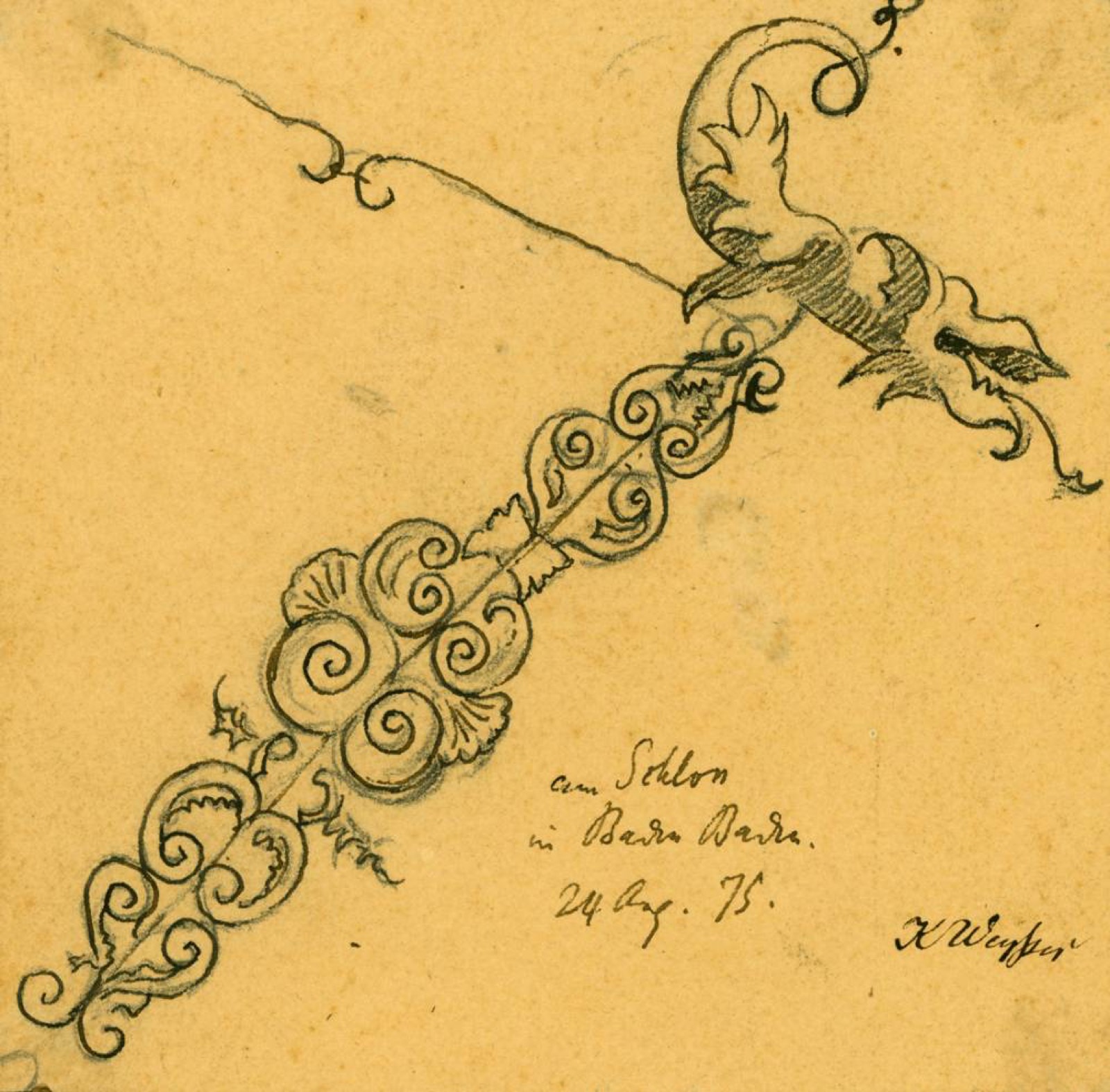
Baden-Baden Wasserspeier Neues Schloss Baden-Baden, Neues Schloss Baden-Baden

Baden-Baden Wasserspeier Neues Schloss Baden-Baden

· State Archives of Baden-Württemberg (via Europeana)

CC BY

Questions about Neues Schloss Baden-Baden

What is the history of Neues Schloss Baden-Baden?

Neues Schloss Baden-Baden began as a late-medieval castle complex and became a residence around 1479. Margrave Christopher I converted it into the successor to Hohenbaden Castle, and it became the seat of the Margraves of Baden-Baden from 1535. French troops destroyed the palace in the Nine Years’ War, after which Margrave Louis William moved the seat of government to Rastatt. It was rebuilt in the early 18th century and restored in 1843–47.

What is inside Neues Schloss Baden-Baden?

Neues Schloss Baden-Baden contains documented state rooms and a banqueting hall, as well as cellar vaults with stone and iron doors described as probably former dungeons. The Dagobert Tower was a pavilion with a spiral staircase dating from after 1575, although it was destroyed in the Second World War. Around 1900, visitors were shown the banqueting halls and grand-ducal living quarters.

Why was Neues Schloss Baden-Baden built, and what was it used for?

Neues Schloss Baden-Baden was raised as a residence for the Margraves of Baden. Around 1479, Margrave Christopher I converted the existing complex into a residence and successor to Hohenbaden Castle. It later served as a summer residence for the Grand Dukes, while its role as a seat of government ended when the court moved to Rastatt after the destruction of the palace in the Nine Years’ War.

Where is Neues Schloss Baden-Baden?

Neues Schloss Baden-Baden is in Baden-Baden, on the Florentinerberg above the town’s market square. The castle complex stands beside formal and terraced gardens on the hillside, with its long terrace extending to the east. Baden-Baden is the recognised nearby city and administrative area associated with the castle.

When was Neues Schloss Baden-Baden built?

Neues Schloss Baden-Baden was built in the 14th century. The site record gives 1370 as the year it was first raised, while the construction of the castle complex on older walls is dated more specifically to between 1388 and 1399. The surviving ensemble was built and extended in several phases, including Renaissance buildings from the 16th century.

Was Neues Schloss Baden-Baden ever attacked or besieged?

Neues Schloss Baden-Baden was attacked and destroyed by French troops during the Nine Years’ War. The attackers served the French king Louis XIV, and the palace was destroyed before Margrave Louis William moved the seat of government to Rastatt. The German account dates the burning to 1689, in the Palatine War of Succession. The castle was subsequently rebuilt using the remaining outer walls.

Which family or clan held Neues Schloss Baden-Baden?

Neues Schloss Baden-Baden was held by the Margraves of Baden from around 1479 and by the Margraves of Baden-Baden from 1535. It remained private property of the House of Baden from 1919 until the family sold the castle in 2003. These families formed the principal dynastic holders during its use as a residence.

What did Neues Schloss Baden-Baden look like in its prime?

Neues Schloss Baden-Baden has a three-storey rectangular main block of light-coloured masonry beneath a steep hipped roof with regularly spaced dormer windows. A long, lower carriage-house wing with tall arched windows adjoins it, while the Renaissance archive tower and kitchen block attach to the main building. A western gatehouse leads into the courtyard, and a 130-metre terrace descends towards the formal gardens.

Is Neues Schloss Baden-Baden still standing, or is it a ruin?

Neues Schloss Baden-Baden is still standing and is described as restored rather than a ruin. The complex has been rebuilt and extended several times, including a rebuilding in the early 18th century using the remaining outer walls. Grand Duke Leopold commissioned a restoration by Friedrich Theodor Fischer in 1843–47, and the surviving ensemble includes the main castle, Renaissance wings, gatehouse, courtyard and gardens.
All castles of Germany · Castles of Europe · the best castles in Europe · explore the finished reconstructions.