
Italy · Still standing
Aragonese Castle
Castello Aragonese
Aragonese Castle (Castello Aragonese) in Reggio Calabria, Italy is a coastal-era fortified castle dominated by very large cylindrical drum towers and thick curtain walls. The surviving exterior presents continuous corbelled bands below the parapets and broad, low towers placed along a raised stone scarp.
Its prime
1540
Today
Still standing
As it stood in 1540
What Aragonese Castle looked like in its prime.
A compact fortress composed of two very large cylindrical drum towers linked by a thick curtain wall; masonry is coarse, light-grey stone with horizontal corbel bands (a row of projecting corbels) forming the support for the parapet walk. Towers are broadly rounded with a low, flat roofline and crenellated parapets; the base sits on a raised stone scarp above street level. Trees and planted palms lie at the foot of the walls; the silhouette is dominated by the round towers and the continuous corbel table.
Its story
The story of Aragonese Castle.
A castle is documented on this hill from 536, when Justinian's general Belisarius, finding Reggio without defences, ordered its walls restored to guard the harbour linking Italy to Constantinople. The fortress passed from the Byzantines to the Normans in 1059, who kept court here, and to Charles I of Anjou in 1266; under Emperor Frederick II it was rebuilt as a square fort with four corner towers.
Restored in 1327 after the Angevin–Aragonese wars and refortified in 1381 on the orders of Queen Joanna I, the castle took its present character in 1458, when King Ferdinand had Baccio Pontelli add two great crenellated drum towers, a ravelin and a moat. In 1539 Pedro Álvarez de Toledo enlarged it to shelter nearly a thousand people during Turkish raids.
In the Risorgimento it served as a political prison and execution ground, and Garibaldi took city and castle in 1860. The town bought it in 1874 intending demolition; a compromise in 1892 levelled much of the fort but spared the two Aragonese towers, declared a national monument in 1897. The 1908 earthquake destroyed the older Swabian core, leaving the towers that stand today.
Step inside
5 places to explore in 1540.
The record describes 5 distinct spots at Aragonese Castle, including 1 interior: parapet and wall-walk viewed from the battlements. Create your own photoreal reconstruction and explore every one, more scenes means more rooms, more angles, and more of the place to stand in.
Build Your Own Castle
Recreate Aragonese Castle with AI to explore it.
The artist rebuilds it as it stood in 1540, a photoreal reconstruction that belongs to you alone. Pay with coins, no subscription needed.
Recreate this castle →Defend this castle →From the archive
Aragonese Castle on paper: the measured plan and period views.
The survey plan and photographs below are the ground truth this page's reconstructions are checked against, drawn and photographed while the castle was still a working garrison. Every image is public-domain or openly licensed, with its source named.
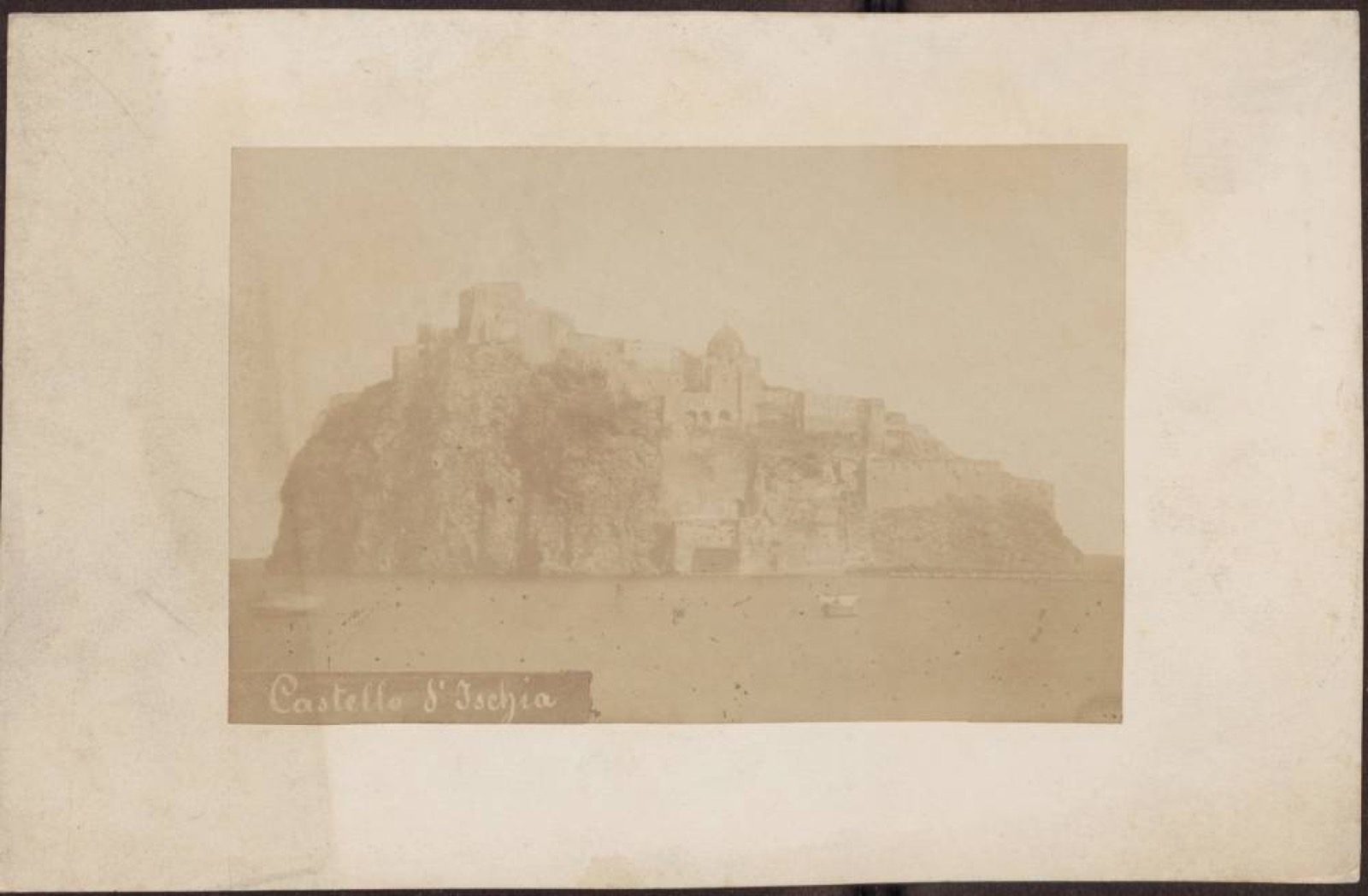
Ischia, Castello Aragonese.
· State Archives of Baden-Württemberg (via Europeana)
CC BY
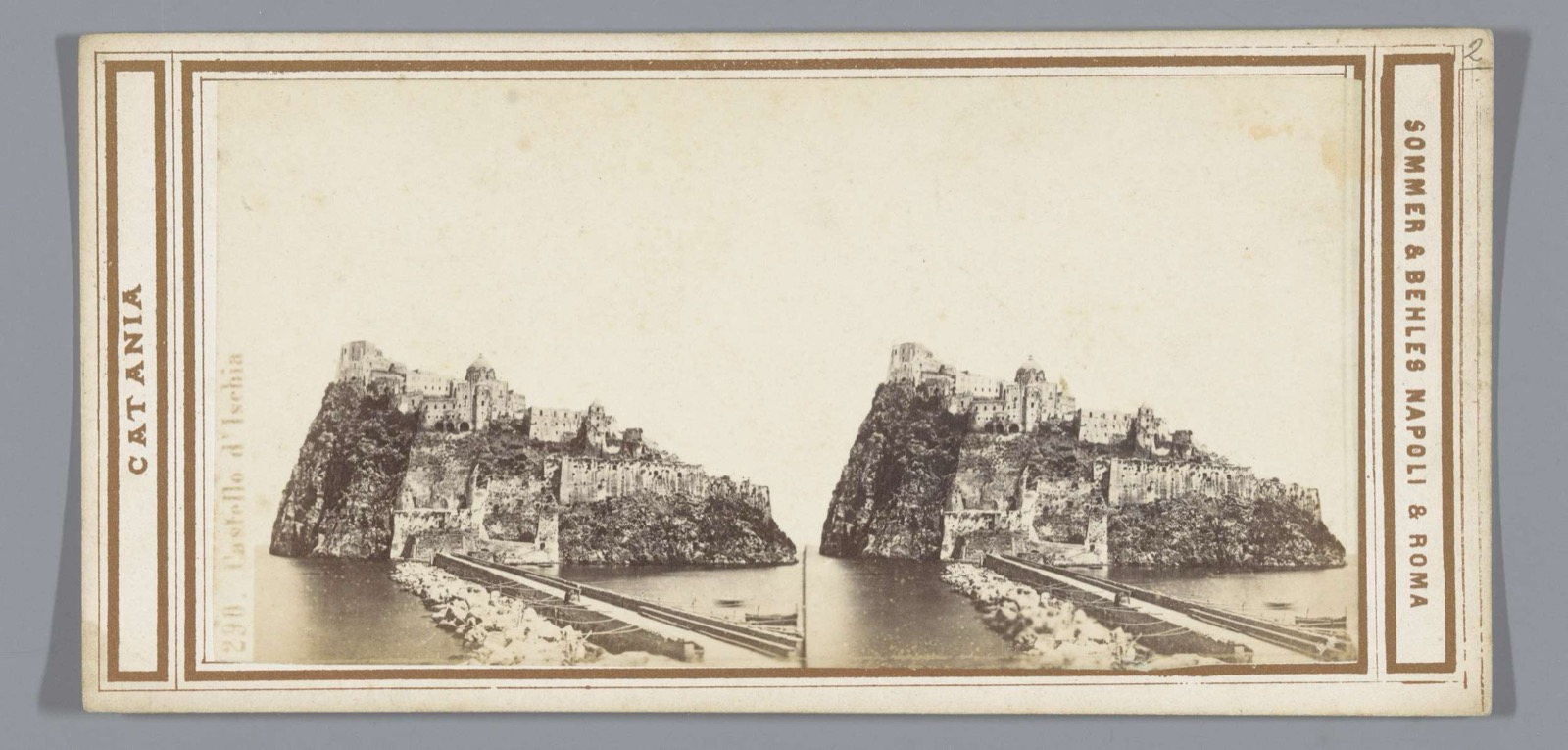
Gezicht op het Castello Aragonese bij Ischia
· Rijksmuseum (via Europeana)
Public domain


