Clan Rising
Aragonese Castle today

Italy · Partial ruin

Aragonese Castle

Castello aragonese

The Castello Aragonese of Ortona is a Renaissance fortress built by the Aragonese over earlier Angevin and Caldora structures; it was adapted as a noble residence in the 17th century and heavily damaged in World War II and by a 1946 landslide. The surviving perimeter walls, rounded towers and inner site now house a small museum and a rehabilitated garden area.

Photograph via Wikimedia Commons

First raised

1452

Its prime

1650

Today

Partial ruin

As it stood in 1650

What Aragonese Castle looked like in its prime.

Trapezoidal plan raised on a pronounced scarp with thick pale-beige tuff or limestone curtain walls and four cylindrical corner towers (only three survive today); the towers have wide battered "shoe" bases and taller cylindrical shafts pierced by Gothic-arched windows (west tower with rectangular openings). The entrance side has a low arcade running along the base and evidence of a former water-filled ditch; inside the curtain walls stood a noble palace with tiled roof and multiple floors.

Its story

The story of Aragonese Castle.

The Castello Aragonese of Ortona was built by the Aragonese over the old Caldora structure of the 14th century. Almost trapezoidal at its base, it was defended by four cylindrical corner towers, three survive, with curtain walls on a scarp, and the paving at the entrance side makes clear the castle once had a water-filled ditch.

The castle remained defensive until the 17th century, when it was bought by the Baglioni family as a noble residence; photographs from the early 1900s still show the baronial palace inside the 18th-century walls. Heavily damaged in the Second World War and by a landslide in 1946, the interior has been rehabilitated as a garden, and the West Tower houses a small museum of historical photographs and furnishings of the noble families that possessed the castle.

Step inside

9 places to explore in 1650.

The record describes 9 distinct spots at Aragonese Castle, including 3 interiors: west tower interior / museum hall, inner courtyard of the noble palace, staircase to the basement. Create your own photoreal reconstruction and explore every one, more scenes means more rooms, more angles, and more of the place to stand in.

Approach from Matteotti Course (main exterior)Grand circular corner tower (exterior)Arcaded entrance and former ditchWest Tower interior / museum hallInner courtyard of the noble palaceStaircase to the basementLadder above the side tower (access point)Sea-facing curtain wall and parapetSmall western cylindrical tower and window

Build Your Own Castle

Recreate Aragonese Castle with AI to explore it.

The artist rebuilds it as it stood in 1650, a photoreal reconstruction that belongs to you alone. Pay with coins, no subscription needed.

Recreate this castle →Defend this castle →

Whose castle

Clans who held Aragonese Castle.

The families that held Aragonese Castle for a decade or more across its history, follow a name to its clan.

  • Caldora

    The castle rose over the 14th-century structure of the Caldora family.

  • Baglioni

    Bought by the Baglioni family in the 17th century as a noble residence.

From the archive

Aragonese Castle on paper: the measured plan and period views.

The survey plan and photographs below are the ground truth this page's reconstructions are checked against, drawn and photographed while the castle was still a working garrison. Every image is public-domain or openly licensed, with its source named.
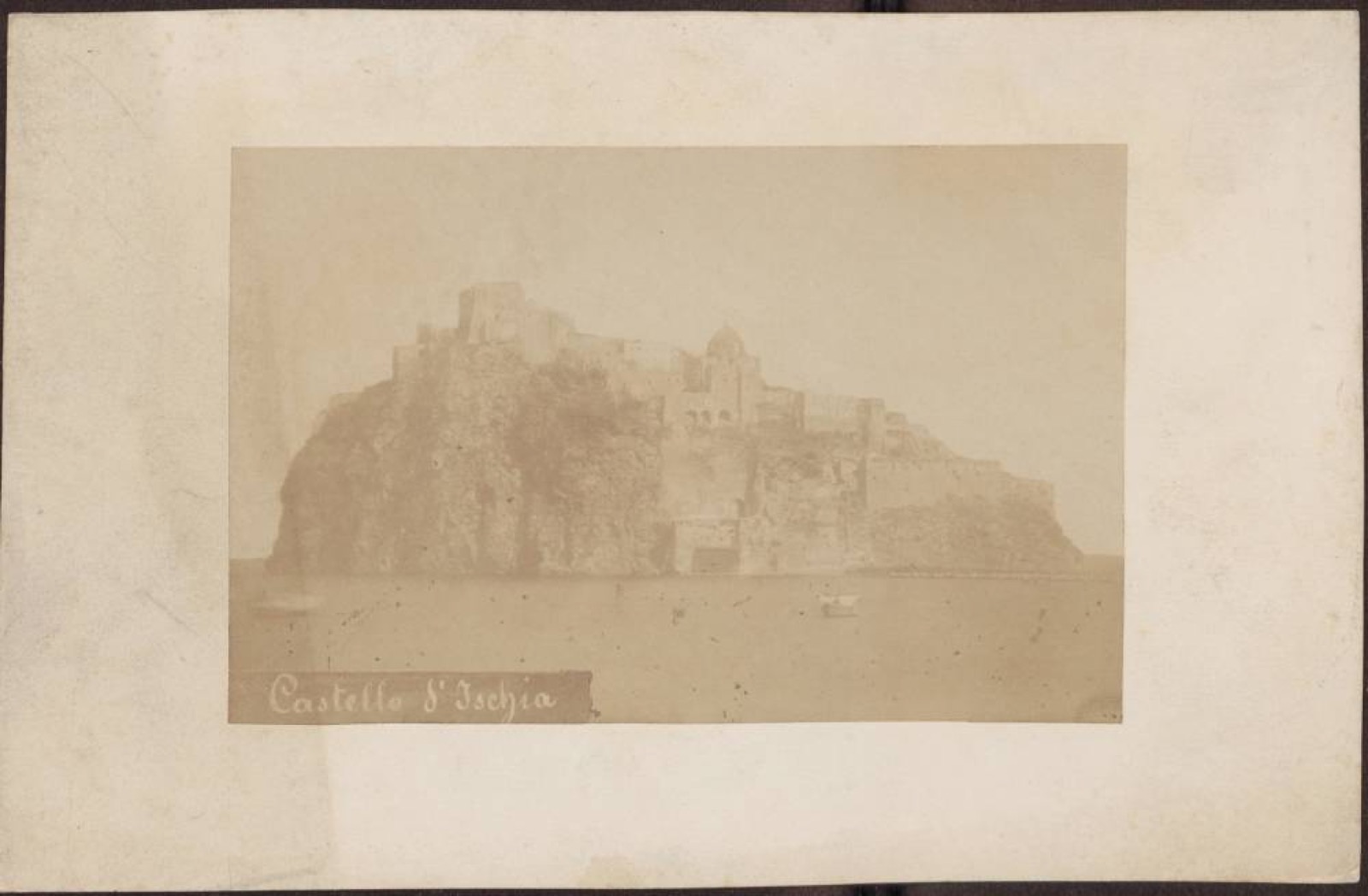
Ischia, Castello Aragonese., Aragonese Castle

Ischia, Castello Aragonese.

· State Archives of Baden-Württemberg (via Europeana)

CC BY
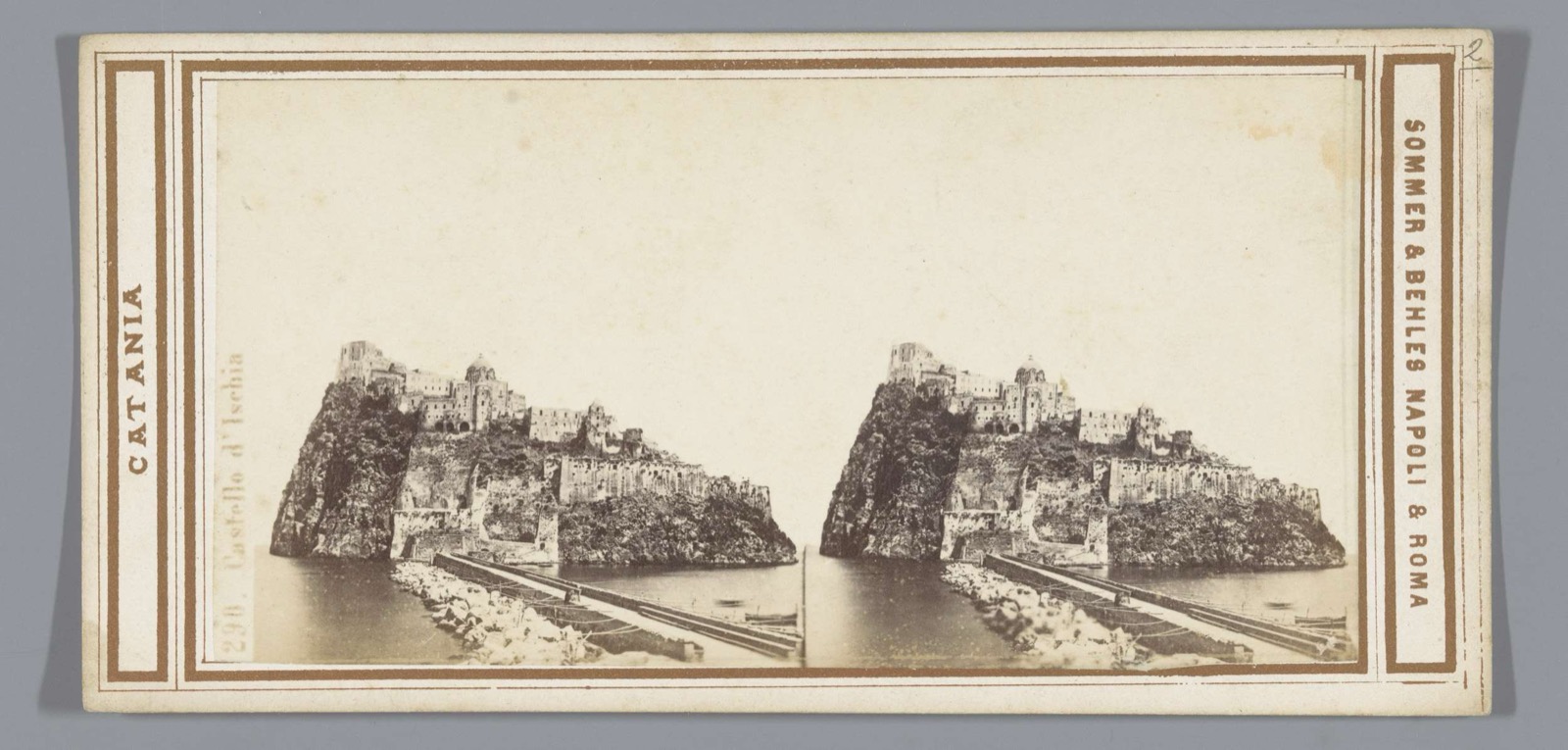
Gezicht op het Castello Aragonese bij Ischia, Aragonese Castle

Gezicht op het Castello Aragonese bij Ischia

· Rijksmuseum (via Europeana)

Public domain

Questions about Aragonese Castle

What is the history of Aragonese Castle?

Aragonese Castle was built in the 15th century as a fortress over an earlier Caldora structure. It remained defensive until the 17th century, when the Baglioni family bought it as a noble residence. The castle was heavily damaged during the Second World War and by a landslide in 1946.

What is inside Aragonese Castle?

Inside Aragonese Castle are a rehabilitated garden, the remains of the noble palace, basement stairways and the West Tower museum. The museum contains historical photographs and furnishings of the noble families that possessed the castle. The east tower is empty and is used as a panoramic viewpoint.

Why was Aragonese Castle built, and what was it used for?

Aragonese Castle was built as a defensive fortress, then became a noble residence in the 17th century. The Baglioni family bought it for this purpose, and a noble palace was built inside the walls. It was later used as a workshop and powder magazine.

Where is Aragonese Castle?

Aragonese Castle is in Ortona, in the Abruzzo region. It stands at the edge of the town, above the sea, and is located in the administrative territory of Ortona. The entrance side is reached from Matteotti Course.

When was Aragonese Castle built?

Aragonese Castle was first raised in the 15th century. The site's recorded first-raised year is 1452, while the English account gives 1492 for the first building. It was built over an older Caldora structure dating from the 14th century, itself associated with the Angevin era.

Was Aragonese Castle ever attacked or besieged?

Aragonese Castle was attacked in 1943 during the Battle of Ortona. German bombs and Allied grenades struck the castle, and stored gunpowder caused the upper walls and noble palace to explode. A landslide then destroyed almost half of the sea-facing section in 1946.

Which family or clan held Aragonese Castle?

Aragonese Castle stood over the 14th-century structure of the Caldora family and was bought by the Baglioni family in the 17th century. The Baglioni acquired it as a noble residence, and a noble palace was built inside the walls.

What did Aragonese Castle look like in its prime?

Aragonese Castle had an almost trapezoidal plan, thick pale-beige tuff or limestone curtain walls and four cylindrical corner towers, of which three survive. The towers had broad battered shoe bases and cylindrical shafts with Gothic-arched windows. A water-filled ditch once ran along the entrance side.

Is Aragonese Castle still standing, or is it a ruin?

Aragonese Castle is a partial ruin, with its surviving perimeter walls, rounded towers and inner site still standing. War damage and a 1946 landslide destroyed much of the noble palace and the sea-facing section. The interior has since been rehabilitated as a garden, while the West Tower houses a small museum.

Can you visit Aragonese Castle?

Aragonese Castle can be visited, with access through a small garden and by a ladder above the remains of a side tower. Its West Tower contains a small museum, and the site also includes a rehabilitated garden and visible basement stairs.
All castles of Italy · Castles of Europe · the best castles in Europe · explore the finished reconstructions.