
Netherlands · Restored
Loevestein Castle
Slot Loevestein
Loevestein Castle is a medieval water castle in Zaltbommel, Gelderland, built in the late 14th century by Dirk Loef of Horne. Located at the junction of the Maas and Waal rivers, it was later expanded into a fortress and used as a prison from 1619. Today it functions as a museum and cultural venue.
First raised
1368
Its prime
1575
Today
Restored
As it stood in 1575
What Loevestein Castle looked like in its prime.
A compact square brick keep with high, nearly blind curtain walls and a steep slate roof punctuated by gabled rooflines, small dormer vents and weather vanes. The masonry is reddish-brown brick with narrow vertical slit windows and a few larger shuttered openings; a metal access ramp meets a low door at water level. The castle stands surrounded by a broad moat and low grassy earthen banks, with a separate cylindrical tower with a conical roof visible across the water.
Its story
The story of Loevestein Castle.
Dirc Loef's Toll Castle, 1357–1372
Loevestein was built by the knight Dirc Loef of Horne between 1357 and 1368, on the point where the Maas and Waal rivers meet in Gelderland: hence the name, "Loef's stein", Loef's stone house. It began as a plain square brick building, from which Dirc Loef raided river traffic and levied illegal tolls on trading vessels working the rivers below. By 1372 he had lost the castle, which passed to the Counts of Holland and was thereafter run by a castellan on the count's behalf.
Sieges of the Eighty Years' War, 1570–1589
On 9 December 1570, soldiers of the rebel Geuzen leader Herman de Ruyter, disguised as monks, seized Loevestein on the orders of William of Orange and killed the Spanish-loyal castellan when he refused to surrender it. Spanish troops sent from 's-Hertogenbosch besieged the castle; after their artillery breached the wall on 19 December, the defenders were overrun, and de Ruyter and eight other men were killed in the fighting, with twelve captured men later put to death as well. According to legend de Ruyter, cornered inside, lit a powder keg to blow himself up with the attacking Spanish, though the story is thought to have grown in the telling to burnish his reputation as a hero.
The Spanish held the castle for a further two years until the Geuzen recovered it, along with Gorinchem, in June 1572. Only afterwards was the old curtain wall capped and replaced: from the summer of 1575, on the orders of William the Silent, earthen ramparts and stone bastions were raised (two, later three, on the north side) along with two moats, an arsenal and barracks, folding Loevestein into the developing Hollandic Water Line. In 1589 a Spanish force under the Duke of Parma tried to take the fortress, by then garrisoned with three hundred men, but was held off by high water in the rivers.
State Prison and Hugo Grotius's Escape, 1619–1830s
From 1619 Loevestein served as a prison for political prisoners. Its most famous inmate was the jurist, poet and statesman Hugo Grotius (Hugo de Groot), later regarded as a father of international law, who began a life sentence there that year over his part in the religious-policy controversies of the Dutch Republic; Rombout Hogerbeets was imprisoned alongside him. In 1621 Grotius's wife, Maria van Reigersberch, who was staying at the castle, hid him inside a book chest that was regularly carried in and out, and he escaped, later serving ten years as Swedish ambassador to France. Another notable prisoner was the English vice-admiral George Ayscue. Loevestein continued as a state prison until after the Belgian Revolution.
Waterline Fort to Rijksmonument
Loevestein remained part of the Dutch Waterline, the defence system that worked by flooding the land south and east of the western provinces, until its military role ended in 1951. The complex was restored between 1925 and 1986 and has held Rijksmonument status since 1971. Today the water castle is run as a museum and function centre.
Step inside
9 places to explore in 1575.
The record describes 9 distinct spots at Loevestein Castle, including 3 interiors: prison cell (interior), arsenal (interior), commander's barracks / soldiers' quarters (interior). Create your own photoreal reconstruction and explore every one, more scenes means more rooms, more angles, and more of the place to stand in.
Build Your Own Castle
Recreate Loevestein Castle with AI to explore it.
The artist rebuilds it as it stood in 1575, a photoreal reconstruction that belongs to you alone. Pay with coins, no subscription needed.
Recreate this castle →Defend this castle →Whose castle
Clans who held Loevestein Castle.
The families that held Loevestein Castle for a decade or more across its history, follow a name to its clan.
Horne
Built by the knight Dirk Loef of Horne between 1357 and 1397; under the Counts of Holland by 1372.
From the archive
Loevestein Castle on paper: the measured plan and period views.
The survey plan and photographs below are the ground truth this page's reconstructions are checked against, drawn and photographed while the castle was still a working garrison. Every image is public-domain or openly licensed, with its source named.
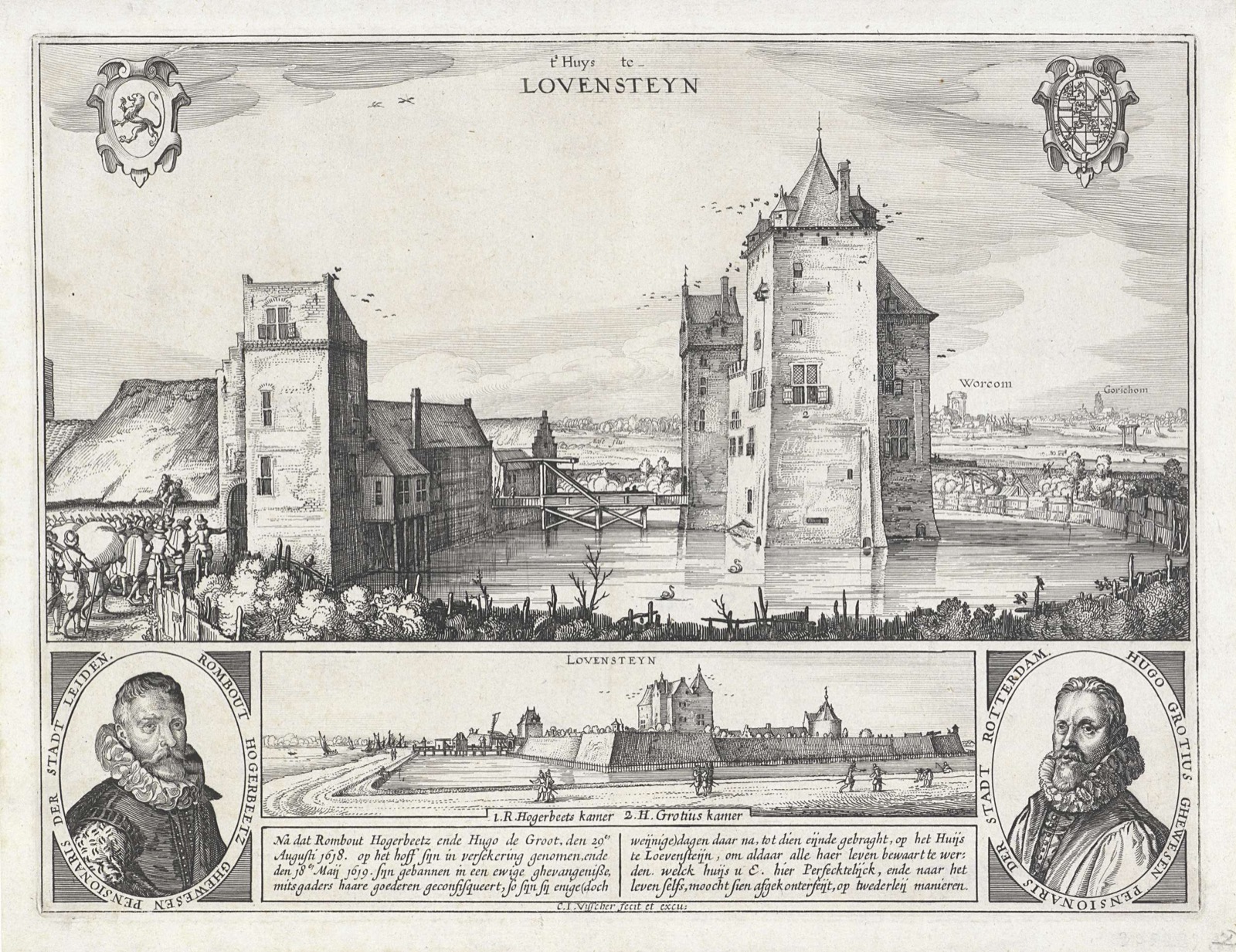
Loevestein Castle
1619 · Rijksmuseum (via Europeana)
Public domain
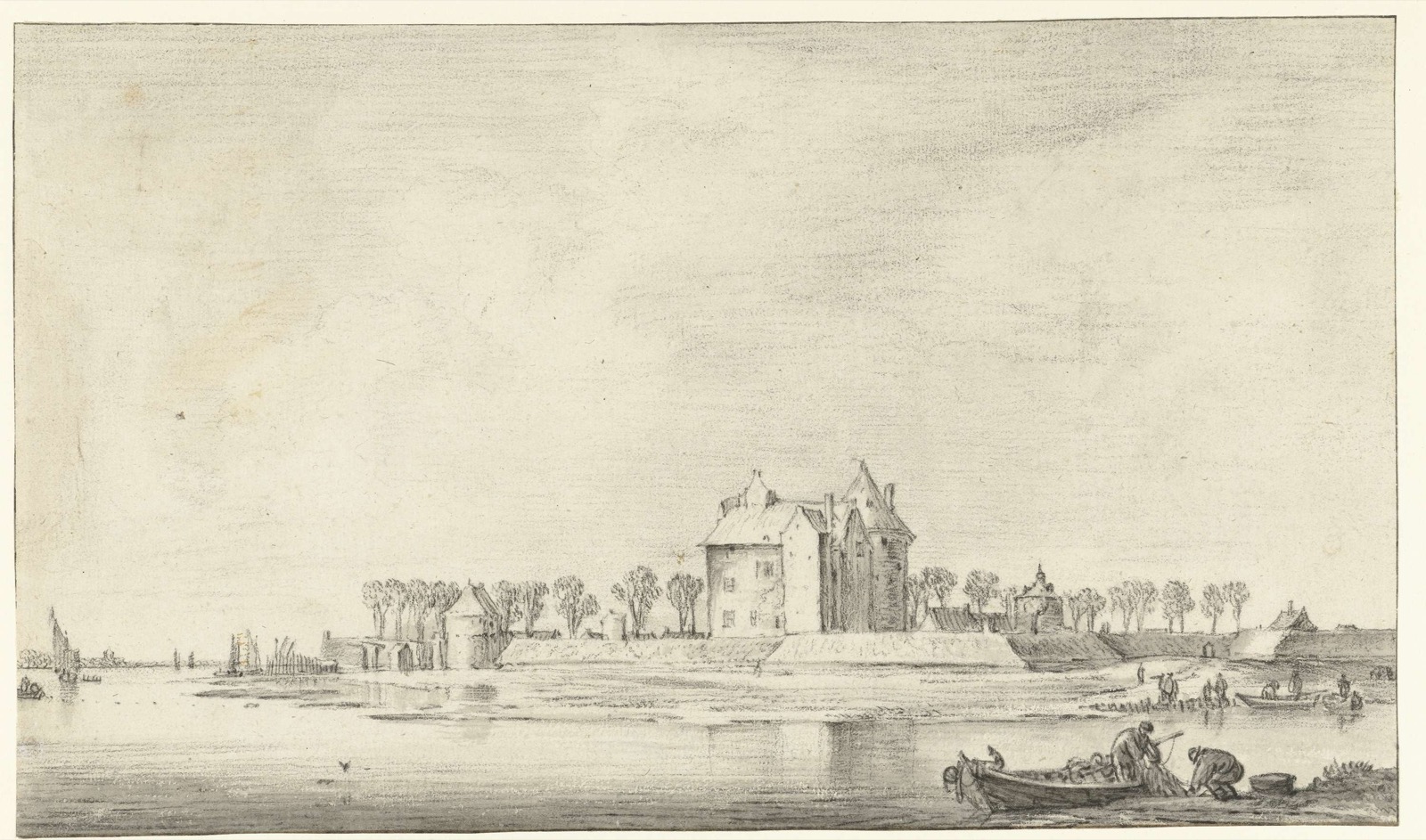
View of Loevestein Castle
· Rijksmuseum (via Europeana)
Public domain
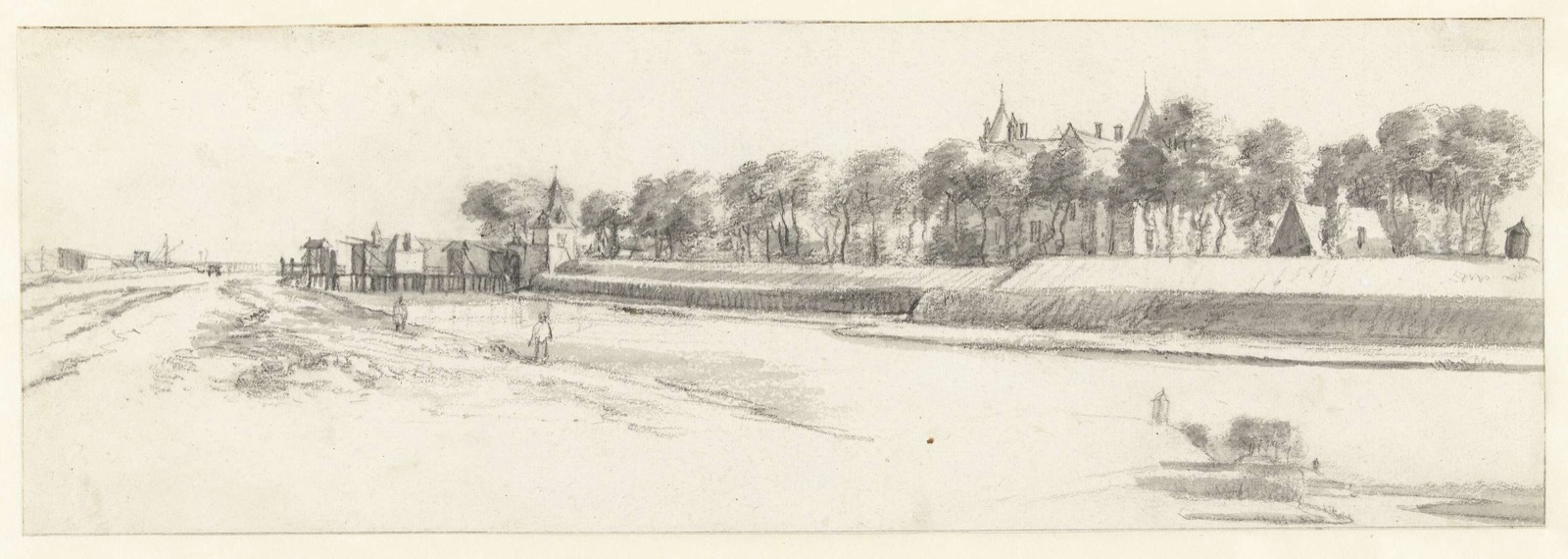
Two views of Loevestein Castle
· Rijksmuseum (via Europeana)
Public domain


