Clan Rising
Hatton Castle today

Scotland · Still standing

Hatton Castle

Hatton Castle (formerly Balquholly) is a castellated mansion near Turriff in Aberdeenshire, Scotland. The present stone-built, crenellated house was constructed 1812–1814 and incorporates sections of an earlier building; the estate and gardens are recognised for their historic interest and the house is a category A listed building.

Photograph via Wikimedia Commons

Its prime

1814

Today

Still standing

As it stood in 1814

What Hatton Castle looked like in its prime.

A rectangular three-storey stone mansion with an attic and basement, the façade arranged in a symmetrical five-bay composition and a central entrance porch. A round drum tower anchors each corner, each topped by a battlemented parapet; a low roofline sits behind the crenellation. Walls are rendered pale (light stone or limewashed) with vertically aligned sash windows. The house stands in parkland entered by a circular gravel drive and lawn, the coach house and sundial sited nearby.

Its story

The story of Hatton Castle.

In the early 14th century Robert the Bruce granted the lands, then known as Loscraigie, to Patrick de Monte Alto. The estate, later called Balquholly, sometimes spelt Balquollie, lies almost three miles south-east of Turriff in Aberdeenshire, and ownership remained with members of the family into the 21st century, until the estate was sold in 2020 to an undisclosed buyer.

The present castellated mansion was built in 1812–1814, incorporating sections of an earlier building, and renamed Hatton in 1814. The stone-built, crenellated house of nearly 18,000 square feet was designated a category A listed building in 1972, and its gardens are included in the Inventory of Gardens and Designed Landscapes in Scotland.

Step inside

10 places to explore in 1814.

The record describes 10 distinct spots at Hatton Castle, including 5 interiors: ground-floor hall with glass cupola, stone staircase under the cupola, basement wine cellar and more. Create your own photoreal reconstruction and explore every one, more scenes means more rooms, more angles, and more of the place to stand in.

Exterior approach from the circular driveCentral entrance and porchGround-floor hall with glass cupolaStone staircase under the cupolaBasement wine cellarBasement gun roomInterior landing in a round corner towerCrenellated parapet and rooflineLate-18th-century coach house and forecourtBaluster sundial on the front lawn

Build Your Own Castle

Recreate Hatton Castle with AI to explore it.

The artist rebuilds it as it stood in 1814, a photoreal reconstruction that belongs to you alone. Pay with coins, no subscription needed.

Recreate this castle →Defend this castle →

Whose castle

Clans who held Hatton Castle.

The families that held Hatton Castle for a decade or more across its history, follow a name to its clan.

  • de Monte Alto

    Granted the lands by Robert the Bruce in the early 14th century; ownership remained in the family into the 21st century.

From the archive

Hatton Castle on paper: the measured plan and period views.

The survey plan and photographs below are the ground truth this page's reconstructions are checked against, drawn and photographed while the castle was still a working garrison. Every image is public-domain or openly licensed, with its source named.
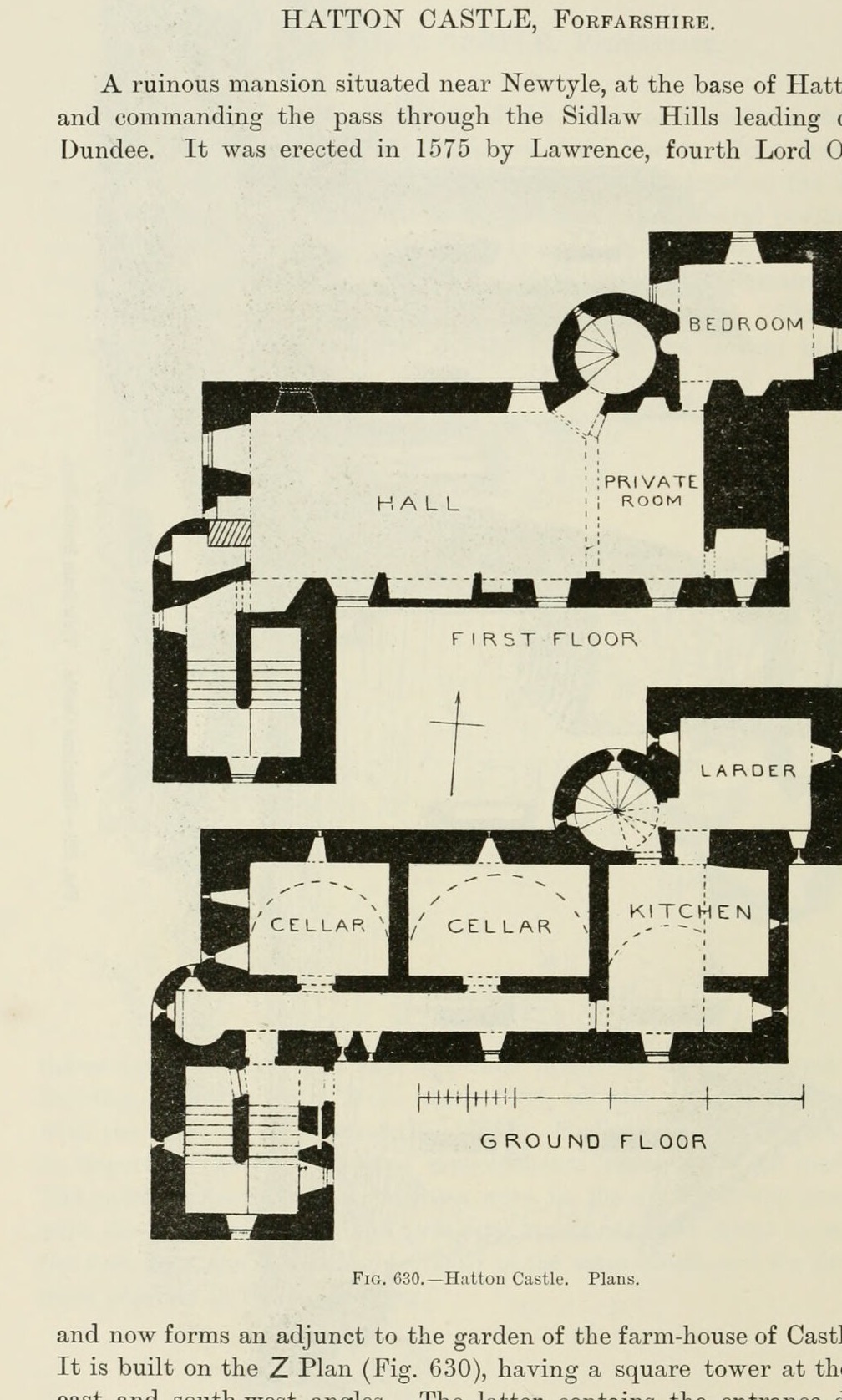
Fig. 630. — Hatton Castle. Plans., Hatton Castle

Fig. 630. — Hatton Castle. Plans.

1892 · MacGibbon & Ross, vol. 4 (1892)

Public domain
Questions about Hatton Castle

What is the history of Hatton Castle?

Hatton Castle’s history begins in the early 14th century, when Robert the Bruce granted the lands then known as Loscraigie to Patrick de Monte Alto. The estate later became known as Balquholly, and a castle was recorded there in the early 1500s. Alexander Duff of Hatton purchased it in 1709, with contracts finalised in 1729. The present mansion was built between 1812 and 1814 and renamed Hatton Castle.

What is inside Hatton Castle?

Inside Hatton Castle are a ground-floor hall with a glass cupola above a stone staircase, along with a basement wine cellar and gun room. The first floor has two bedrooms, while the second floor has seven. The attic contains four additional bedrooms, a bathroom and storage space, and a landing occupies one of the round corner towers.

Where is Hatton Castle?

Hatton Castle is almost three miles south-east of Turriff in Aberdeenshire. It stands in the north-east of Scotland, within the administrative area of Aberdeenshire. The estate and gardens are associated with the surrounding parkland and designed landscape.

When was Hatton Castle built?

Hatton Castle was built in the early 19th century, with construction of the present mansion beginning in 1812 and finishing in 1814. It incorporates sections of an earlier building, and the name changed to Hatton Castle in 1814. A castle had already been recorded on the lands in the early 1500s.

Which family or clan held Hatton Castle?

Hatton Castle was held by the de Monte Alto family, who received the lands from Robert the Bruce in the early 14th century. The family name was anglicised as Mowat. Ownership remained with members of the family into the 21st century, before the estate was sold in 2020 to an undisclosed buyer.

What did Hatton Castle look like in its prime?

Hatton Castle is a rectangular, three-storey stone mansion with an attic and basement. Its symmetrical façade has five bays and a central entrance porch, while a round drum tower anchors each corner. Battlemented parapets crown the towers, and a low roofline sits behind the crenellation. Pale rendered walls, vertically aligned sash windows and a circular gravel drive complete the setting.

Is Hatton Castle still standing or is it a ruin?

Hatton Castle is still standing and intact. The present stone-built mansion was constructed between 1812 and 1814, incorporating sections of an earlier building. It has three storeys, a basement and an attic, with four round corner towers and crenellated detailing. The building was designated a category A listed building in 1972.
All castles of Scotland · Castles of Europe · the best castles in Europe · explore the finished reconstructions.