
Austria · Restored
Burg Mauterndorf
Mauterndorf Castle is a medieval hilltop fortress in the municipality of Mauterndorf, Salzburg, Austria, set above the Radstädter Tauern pass. Its 13th-century keep and extensive 15th-century enlargements by the Prince-Archbishops of Salzburg produced the compact white-plastered tower complex visible today. The state owns the castle and it now houses a regional museum and cultural events.
First raised
1253
Its prime
1500
Today
Restored
As it stood in 1500
What Burg Mauterndorf looked like in its prime.
Mauterndorf Castle is a compact whitewashed hilltop complex of interconnected rectangular buildings and towers set on a stone base and low curtain wall. Two prominent square towers (one a tall bergfried with steep pyramidal roof, one lower with a broad hipped roof) and several smaller turreted projections punctuate a skyline of dark slate roofs. Thick rough limestone curtain walls with crenellated parapets enclose an inner ward; the castle sits on a grassy spur above the valley with steep forested mountains beyond.
Its story
The story of Burg Mauterndorf.
The Roman Fort and the Toll of 1002
A Roman fort dating to AD 326 or earlier probably stood on the height, guarding the mountain road that ran from Teurnia over the Radstädter Tauern pass to Iuvavum, present-day Salzburg, and serving as the seat of the Roman administrator of the province of Noricum. It was destroyed during the Migration Period. A deed of gift issued by Emperor Henry II in 1002 records that an installation for collecting the road toll (the Maut that gives the village its name) was afterwards set up on the site, and the toll paid for the castle that followed. The castle itself is not mentioned until 1253, the year its keep was raised; from then it secured the crossing of the Radstädter Tauern on the renewed Roman road.
The Archbishops of Salzburg on the Tauern Road
The fortress was held by the Prince-Archbishops of Salzburg and served the cathedral chapter as an administrative centre. In the 15th century it was substantially enlarged under Leonhard von Keutschach and Burkhard von Weißpriach, taking the form it has kept since. The toll on the Radstädter Tauern road supported both castle and village until 1803, when collection was given up during the Napoleonic Wars; in 1806 the castle passed to the Austrian state.
Hermann Epenstein and the Göring Family
In 1894 the decayed castle was bought by Hermann Epenstein (1851–1934), a Berlin military surgeon whose father was a Catholic convert of Jewish descent, who restored it at great effort as a residence; Emperor Franz Joseph I raised him to the knighthood as Ritter von Mauternburg. Serving in German South-West Africa in the late 1880s, Epenstein had become friends with Commissioner Heinrich Ernst Göring, and back in Germany he offered the family the hospitality of his houses, becoming physician to Göring's wife Franziska and godfather and mentor to the children. The Göring family, the younger sons Hermann and Albert among them, were frequent guests at Mauterndorf, and Albert grew up largely in the castle. Epenstein took Austrian citizenship and retired to Mauterndorf after the First World War; in 1923 he received Hermann Göring there after his flight from Germany to evade prosecution over the failed Beer Hall Putsch.
Epenstein died in 1934 and his widow left the castle to his godson Hermann Göring, but the required entry in the land register was never made and Göring never became the formal owner, a question settled only after a long lawsuit. At the end of the Second World War he meant to reach what he called the castle of his youth; fearing Red Army troops advancing up the Mur valley towards Mauterndorf, he did not, and surrendered to United States forces at nearby Bruck.
Salzburg's Castle and the Lungau Museum
Since 1968 the building has belonged to the state of Salzburg. A castle museum was established in 2003, and the Lungau Regional Museum reopened in May 2007 after several stages of building work under the curator Helga Gappmayer, to the motto 'Tradition with a new look'. The castle also hosts scientific conferences and cultural events, and it appears on the reverse of the Austrian fifty-schilling note of the 1956 series.
Step inside
8 places to explore in 1500.
The record describes 8 distinct spots at Burg Mauterndorf, including 2 interiors: gatehouse passage, bergfried interior chamber. Create your own photoreal reconstruction and explore every one, more scenes means more rooms, more angles, and more of the place to stand in.
Build Your Own Castle
Recreate Burg Mauterndorf with AI to explore it.
The artist rebuilds it as it stood in 1500, a photoreal reconstruction that belongs to you alone. Pay with coins, no subscription needed.
Recreate this castle →Defend this castle →From the archive
Burg Mauterndorf on paper: the measured plan and period views.
The survey plan and photographs below are the ground truth this page's reconstructions are checked against, drawn and photographed while the castle was still a working garrison. Every image is public-domain or openly licensed, with its source named.
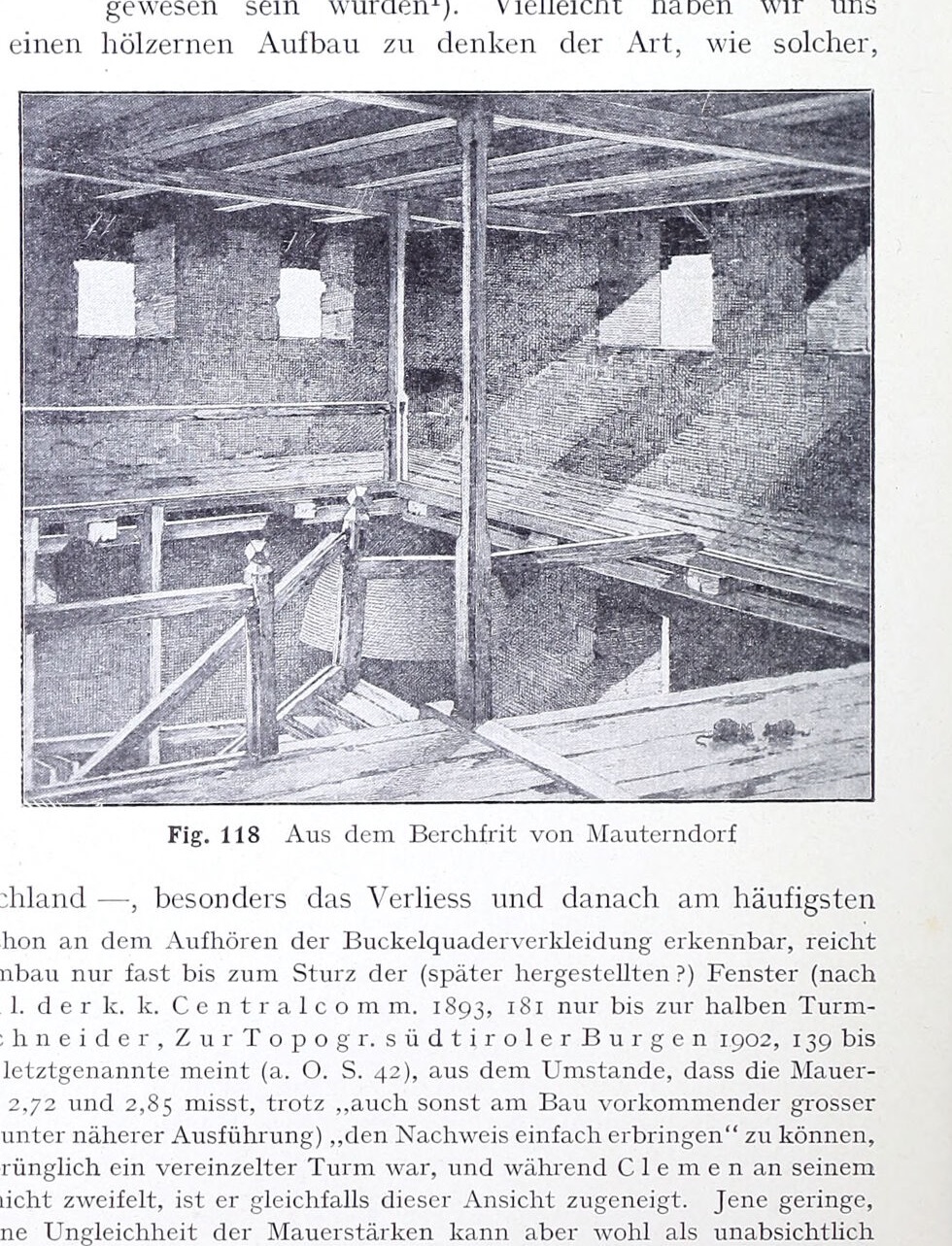
Fig. 118 Aus dem Berchfrit von Mauterndorf
1912 · Otto Piper, Burgenkunde (1912)
Public domain


