Clan Rising
Château de Montbéliard today

France · Restored

Château de Montbéliard

The Château de Montbéliard is a fortress on a rocky outcrop overlooking the town of Montbéliard in Doubs, France, long associated with the dukes of Württemberg. The complex combines a long multi-storey residential block and several massive cylindrical towers and today houses a history museum and is listed as a monument historique.

Photograph via Wikimedia Commons

Its prime

1750

Today

Restored

As it stood in 1750

What Château de Montbéliard looked like in its prime.

Perched on a rocky spur above the town, the castle presents a long rectangular corps de logis with regular rows of tall rectangular windows and a pedimented central bay, flanked by several thick cylindrical towers of differing diameters. Towers rise in stacked stone stages with rounded profiles and steep, bulbous conical roofs topped by small cupolas and finials. High ashlar curtain walls and terraces step down the slope; roofs are slate, masonry is pale beige limestone; the main entrance sits on the western face.

Its story

The story of Château de Montbéliard.

The fortress on its outcropping rock above Montbéliard belonged to the Montfaucon family until 1397. The marriage of Henriette d'Orbe to Eberhard IV, son of Count Eberhard III of Württemberg, then carried it to the Württembergs, hence its other name, the Château des ducs de Württemberg. It was later the home of Sophia Dorothea of Brandenburg-Schwedt, mother of Empress Maria Feodorovna of Russia.

The castle was once divided in two around the church of Saint-Maimbœuf. The Châtel-Derrière to the east, with two ancient towers, held the reception rooms and private apartments of the successive counts and dukes, cut off by a wide, deep ditch and drawbridge; the Châtel-Devant to the west guarded the single entrance with its drawbridge and portcullis, enclosing the garrison buildings, stables, falconry and arsenal beneath the imposing mass of the bailiff's lodging, the Hôtel du Baili.

By the end of the 18th century the castle was said to be in advanced decay, and buildings were demolished and rebuilt through the 18th and 19th centuries, the church of Saint-Maimbœuf itself came down in 1810. Classified a monument historique since 1996 and the property of the commune, it houses the museum of the dukes of Württemberg's castle and is open to the public.

Step inside

8 places to explore in 1750.

The record describes 8 distinct spots at Château de Montbéliard, including 2 interiors: private apartments of the counts and dukes, chancellery immediately past the entrance. Create your own photoreal reconstruction and explore every one, more scenes means more rooms, more angles, and more of the place to stand in.

Approach from the town (west)Main gate with drawbridge and portcullisChâtel-Devant inner courtyard and garrison buildingsFaçade of the Hôtel du Baili (bailiff's lodging)Châtel-Derrière with the twin towers and private apartmentsPrivate apartments of the counts and dukesEsplanade and the Church of Saint-Maimbœuf with its belltowerChancellery immediately past the entrance

Build Your Own Castle

Recreate Château de Montbéliard with AI to explore it.

The artist rebuilds it as it stood in 1750, a photoreal reconstruction that belongs to you alone. Pay with coins, no subscription needed.

Recreate this castle →Defend this castle →

Whose castle

Clans who held Château de Montbéliard.

The families that held Château de Montbéliard for a decade or more across its history, follow a name to its clan.

  • Montfaucon

    Held by the Montfaucon family until 1397.

  • Württemberg

    Seat of the counts and dukes of Württemberg from the marriage of Henriette d'Orbe to Eberhard IV of Württemberg.

From the archive

Château de Montbéliard on paper: the measured plan and period views.

The survey plan and photographs below are the ground truth this page's reconstructions are checked against, drawn and photographed while the castle was still a working garrison. Every image is public-domain or openly licensed, with its source named.
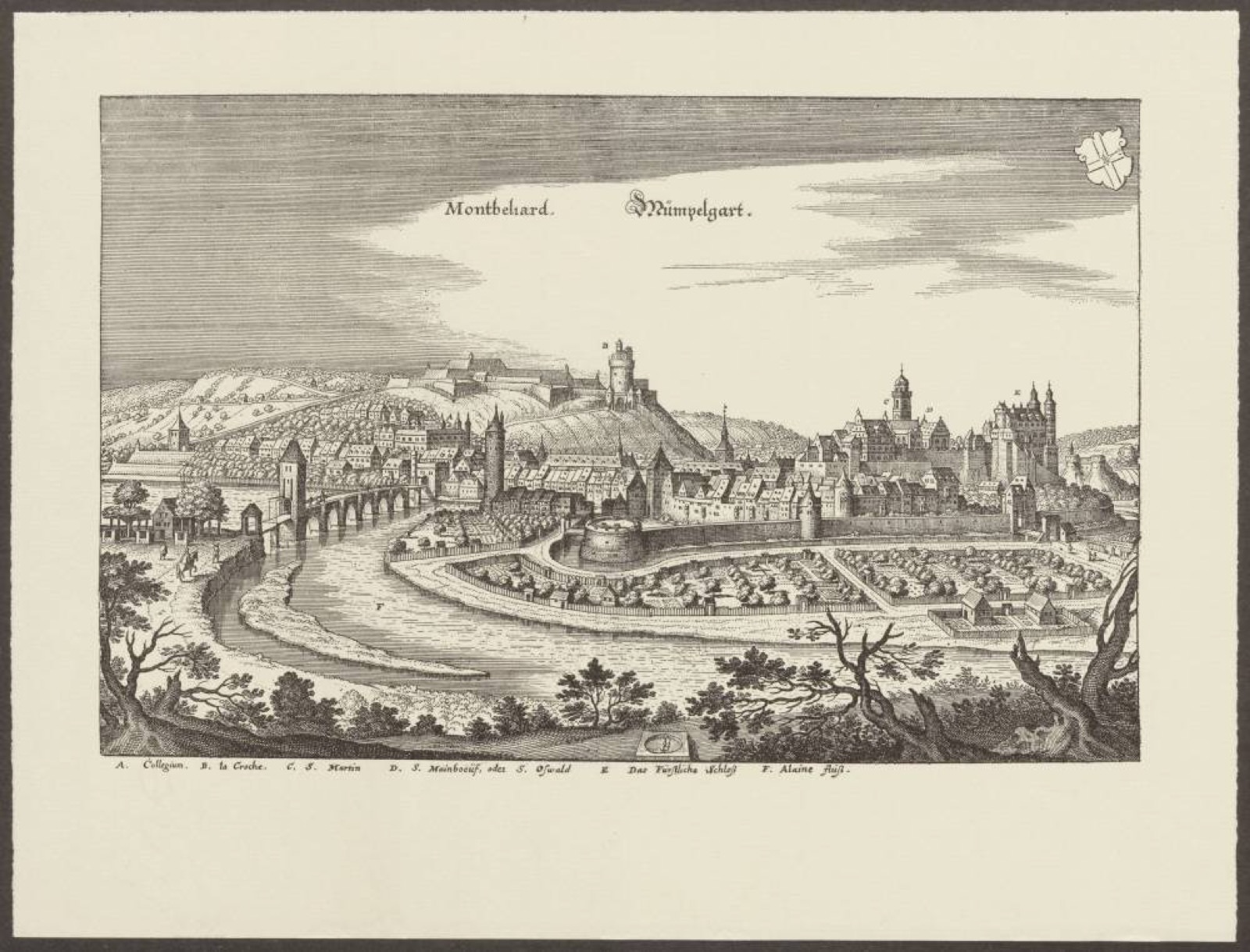
Mömpelgard - Montbéliard, Château de Montbéliard

Mömpelgard - Montbéliard

· State Archives of Baden-Württemberg (via Europeana)

CC BY
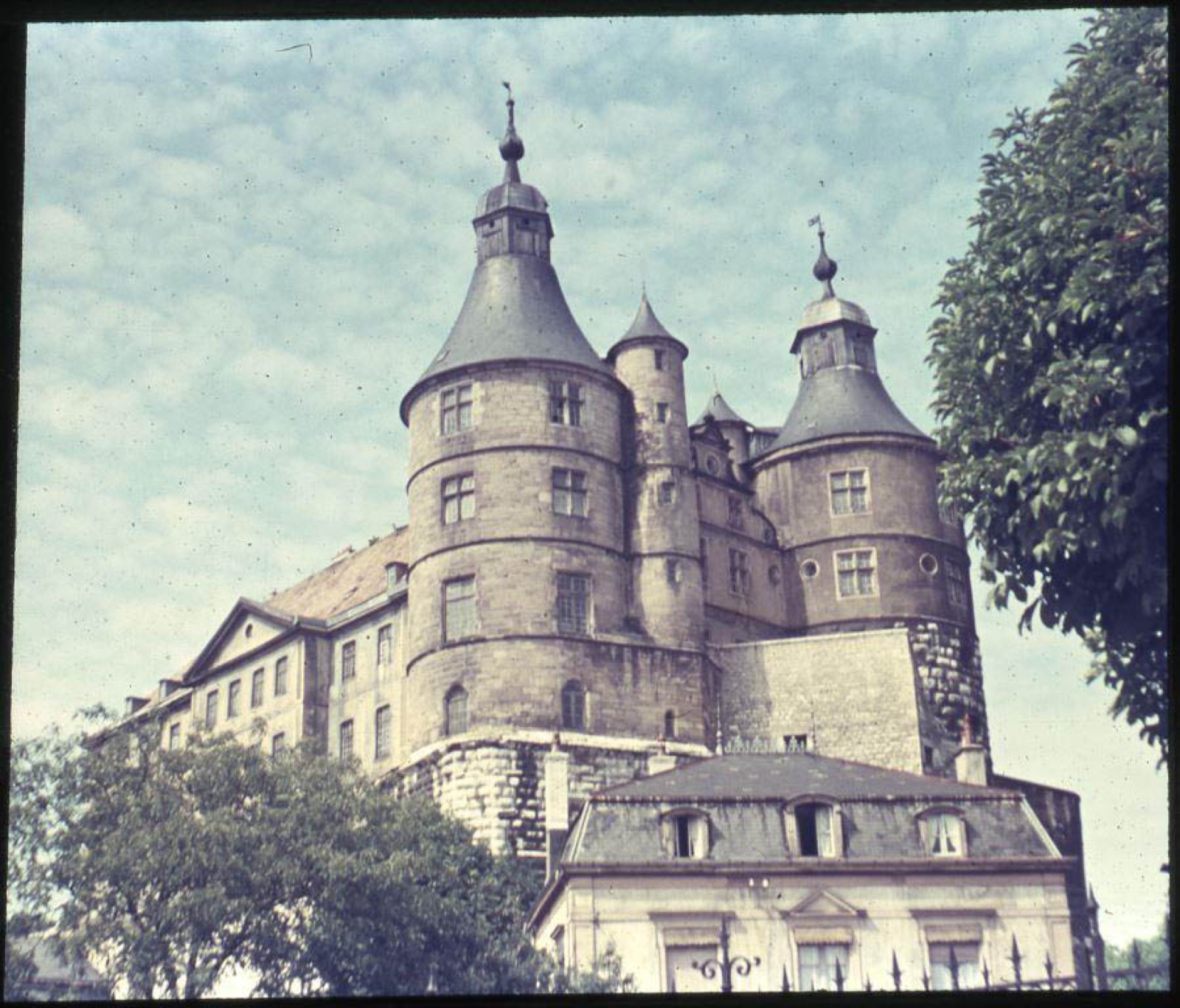
Schloss Montbéliard (Mömpelgard), Château de Montbéliard

Schloss Montbéliard (Mömpelgard)

· Badisches Landesmuseum Karlsruhe (via Europeana)

CC0 (no rights reserved)

Questions about Château de Montbéliard

What is the history of Château de Montbéliard?

Château de Montbéliard began as a fortress in the 13th century, belonging to the Montfaucon family. In 1397, the marriage of Henriette d’Orbe to Eberhard IV of Württemberg transferred it to the Württemberg family. The castle later underwent demolitions and rebuilding during the 18th and 19th centuries, including the removal of Saint-Maimbœuf Church in 1810.

What is inside Château de Montbéliard?

Inside Château de Montbéliard are the former reception rooms and private apartments of the successive counts and dukes, along with the Chancellery immediately past the entrance. The former Châtel-Devant also contained garrison buildings, stables, a falconry and an arsenal. The complex now houses a history museum and a museum of archaeology and natural history.

Who owns Château de Montbéliard now?

Château de Montbéliard is owned by the commune. It has been classified as a monument historique since 1996 and houses the museum of the dukes of Württemberg’s castle.

Why was Château de Montbéliard built, and what was it used for?

Château de Montbéliard was built as a fortress to defend the town and its approaches. Its western Châtel-Devant guarded the single entrance, while the eastern Châtel-Derrière contained the counts’ and dukes’ reception rooms and private apartments. It later served as a garrison until 1933 and was then transformed into a history museum.

Where is Château de Montbéliard?

Château de Montbéliard overlooks the town of Montbéliard from a rocky outcrop in the Doubs department. It stands above the centre of Montbéliard, in the Bourgogne-Franche-Comté region.

When was Château de Montbéliard built?

Château de Montbéliard dates from the 13th century. Its origins may reach back to the Gallo-Roman period, when the site was thought to have held a wooden watchtower, while the present castle developed in later phases.

What did Château de Montbéliard look like in its prime?

Château de Montbéliard has a long rectangular residential block with regular rows of tall windows and a pedimented central bay. Several massive cylindrical towers flank it, rising in pale beige limestone stages beneath steep, bulbous conical roofs. High ashlar curtain walls and terraces step down the rocky slope, with slate roofs and the main entrance on the western face.

Is Château de Montbéliard still standing or is it a ruin?

Château de Montbéliard is still standing and has been restored, rather than surviving as a ruin. Several buildings were demolished and rebuilt during the 18th and 19th centuries, and the Church of Saint-Maimbœuf was demolished in 1810. The castle was classified as a monument historique in 1996.

Which family or clan held Château de Montbéliard?

Château de Montbéliard was held by the Montfaucon family until 1397. It then became the seat of the counts and dukes of Württemberg after Henriette d’Orbe married Eberhard IV of Württemberg. This Württemberg connection gave the castle its other name, the Château des ducs de Württemberg.

Can you visit Château de Montbéliard?

Château de Montbéliard can be visited because it is open to the public. It houses a history museum, including the museum of the dukes of Württemberg’s castle and the museum of archaeology and natural history of Montbéliard. The castle is also classified as a monument historique.
All castles of France · Castles of Europe · the best castles in Europe · explore the finished reconstructions.