
France · Restored
Château des ducs de Bretagne
The Château des ducs de Bretagne is the historic fortified residence of the Dukes of Brittany in Nantes, occupying a compact rectangular site on the right bank of the Loire. Built and remade between the 13th and 16th centuries, its ensemble combines a white ducal palace facing an inner courtyard with lower medieval curtain walls, round artillery towers and a surrounding ditch. Today it houses the Nantes History Museum after a late-20th-century restoration.
First raised
1207
Its prime
1500
Today
Restored
As it stood in 1500
What Château des ducs de Bretagne looked like in its prime.
A compact stone fortress with a low curtain wall punctuated by large cylindrical bastion towers at the corners and flanking the gate; an inner, lighter-coloured ducal palace block with tall, steep slate roofs and a crenellated gabled façade facing a broad central sandy courtyard; moats/ditches around the outer bailey fed historically by the Loire; ramparts walk encircling the walls; urban streets and dense town fabric immediately adjacent to the castle.
Its story
The story of Château des ducs de Bretagne.
The Tour Neuve, 1207-1248
A tower raised in this quarter in 937 by Duke Alain Barbetorte was seized and plundered soon afterwards by Budic, count of Nantes. The archives record a ditch being dug on the site in 1207, and the work is usually credited to Guy de Thouars, widower of Duchess Constance and regent of Brittany, though the true patron is uncertain: Philip II Augustus, who was in Nantes in 1206, has also been proposed. The château de la Tour Neuve went up between 1207 and 1248 in the south-eastern corner of the Gallo-Roman walls, on ground the bishop had to surrender against compensation.
It took its name from its keep, a circular grey-schist tower of at least 35 metres on the pattern of the round donjons Philip Augustus was raising elsewhere. It guarded the Loire port and the ducal position against the count of Nantes at the Bouffay, and rose just as the Plantagenets lost Normandy to Philip Augustus in 1204. Dukes Pierre I and Jean I added a second court towards the river; Pierre was there often enough that some credit him, rather than Guy, with beginning the castle between 1216 and 1237.
Jean IV de Montfort and the Trial of Gilles de Rais
The Breton war of succession set the house of Penthièvre against the house of Montfort until Jean IV won it in 1365. He took the Tour Neuve and rebuilt hard: entrances were blocked or better protected, the buildings redistributed, and a platform thrown up against the curtain along the Loire. It became a first-rank piece of Breton defence, controlling the way into the duchy from the river. The Montfort court still travelled, but the dukes gave judgement here, Gilles de Rais was tried at the castle in 1440. The tower called the Vieux Donjon is what survives of their work.
François II Rebuilds, 1466
In 1466 François II wrote that his castle at Nantes was in decay and in great need of repair. He rebuilt it outright, calling on Mathurin Rodier, already master of works on Nantes cathedral. Halfway through, the inner court was backfilled and levelled: the ground floors of the Grand Logis, already standing, were buried and became cellars while a new ground floor was built above them, leaving the court some 3.5 metres higher than the Tour Neuve's and beyond the reach of the Loire floods.
The work answered a defensive need first, but also declared his independence and the duchy's wealth. Nantes was the richest town in Brittany and its gateway through the Loire port; he added the chancellery, the ducal Council and, in 1460, a university. The wing he wanted along the Loire to close the buildings into a U was never built: after 1480, with the French threat sharpening, ducal money went to other castles.
The Siege of 1487 and the Betrayal of 1491
Called in by Françoise de Dinan and the Breton barons, Charles VIII invaded the duchy and laid siege to the castle on 19 June 1487. The Nantes troops held, and on 6 August the king abandoned the siege; a cannonball is said to have landed in the duke's chamber, though François had already left the city. Artillery had battered the upper buildings and brought down stretches of rampart. Defeat at Saint-Aubin-du-Cormier on 28 July 1488 ended the Mad War, and François II died on 9 September after a fall from his horse.
His daughter Anne inherited in the absence of a son. Her marriage by proxy to Maximilian of Austria in 1490 brought Charles VIII's armies back, and in 1491 the castle's own governor, Alain d'Albret, betrayed her and handed it to the king. Rennes, where she had taken refuge, fell after it, and Anne was forced to marry Charles, himself betrothed to Maximilian's daughter Marguerite, a repudiation paid for by the Treaty of Senlis in 1493. Charles died at Amboise in 1498, and under her marriage contract Anne then married his successor Louis XII.
Royal Fortress, Arsenal and the Explosion of 1800
Brittany's union with France was sealed by the edict François I signed in the castle in 1532. From then it was a royal fortress rather than a ducal seat, and the official residence of the province's governors, though only the duc de Mercœur, who kept a court here through the Wars of Religion, stayed long. Under the Ancien Régime it served as a state prison and, above all, as barracks and military arsenal.
The Revolution left it undamaged, but in 1800 the powder stores blew up and destroyed a good part of the monument. It stayed in military hands through the nineteenth century, was classified as a monument historique in 1840, and was ceded to the city of Nantes in 1915, opening as a museum in 1924. A restoration begun in 1990 ended with the site's reopening on 9 February 2007, since when thirty-two of its rooms have held the Nantes History Museum.
Step inside
9 places to explore in 1500.
The record describes 9 distinct spots at Château des ducs de Bretagne, including 2 interiors: ducal chambers (interior), tower chamber (interior). Create your own photoreal reconstruction and explore every one, more scenes means more rooms, more angles, and more of the place to stand in.
Build Your Own Castle
Recreate Château des ducs de Bretagne with AI to explore it.
The artist rebuilds it as it stood in 1500, a photoreal reconstruction that belongs to you alone. Pay with coins, no subscription needed.
Recreate this castle →Defend this castle →From the archive
Château des ducs de Bretagne on paper: the measured plan and period views.
The survey plan and photographs below are the ground truth this page's reconstructions are checked against, drawn and photographed while the castle was still a working garrison. Every image is public-domain or openly licensed, with its source named.
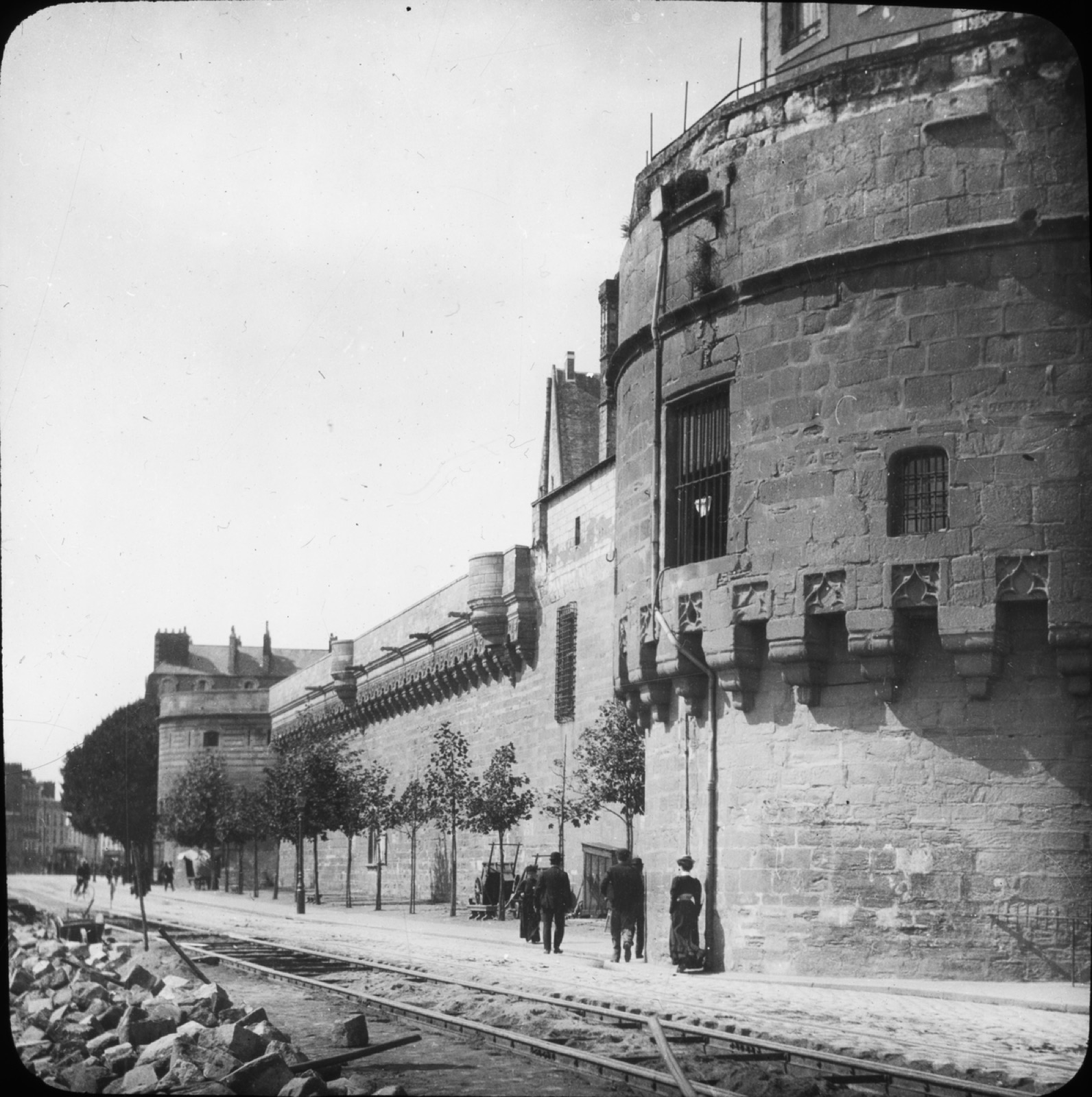
Skioptikonbild med motiv av slottet Le Château des Ducs de Bretagne i Nantes. Bilden har förvarats i kartong m
· Swedish National Museum of Science and Technology (via Europeana)
Public domain
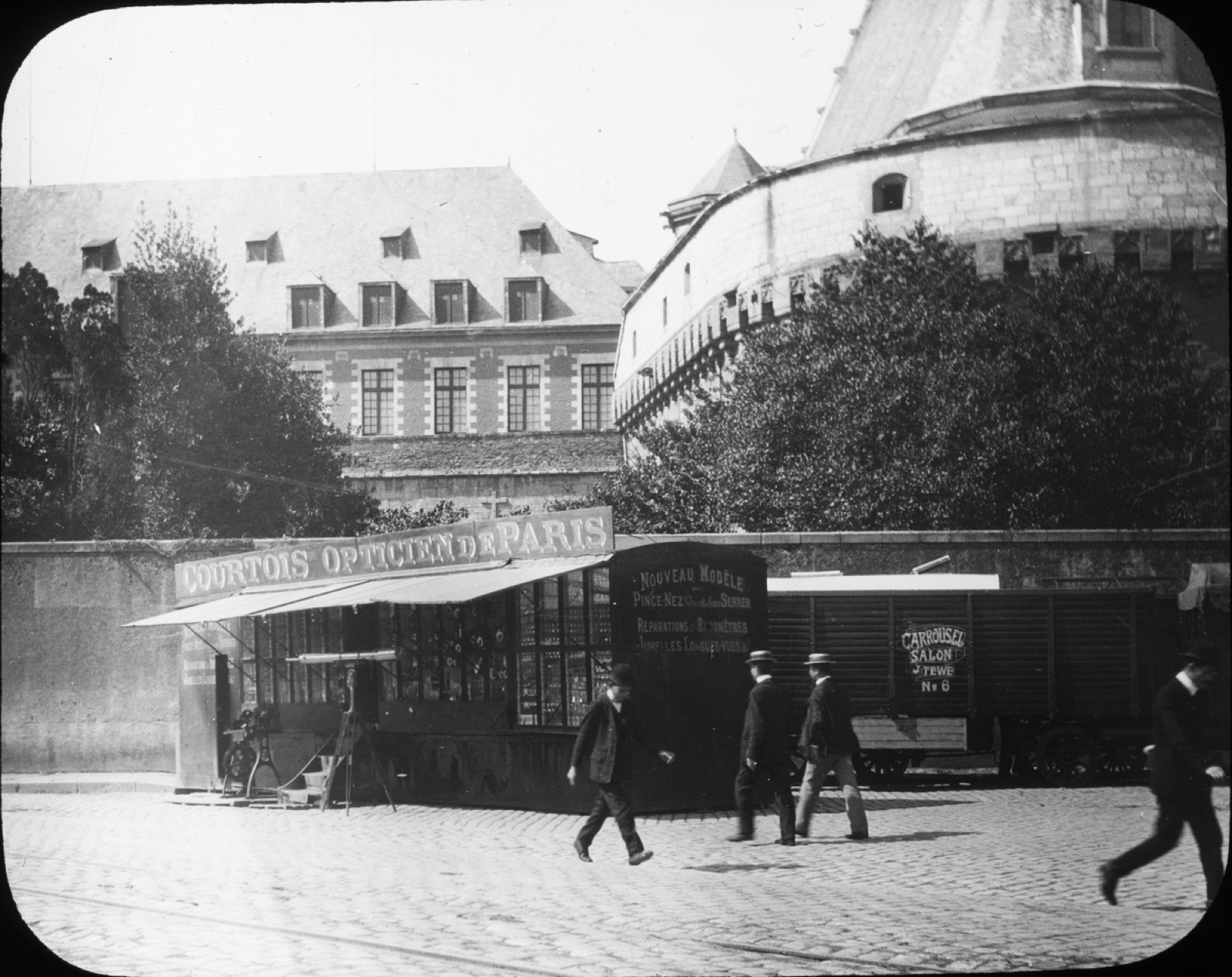
Skioptikonbild med motiv av handelsbod vid slottet Le Château des Ducs de Bretagne i Nantes. Bilden har förvar
· Swedish National Museum of Science and Technology (via Europeana)
Public domain
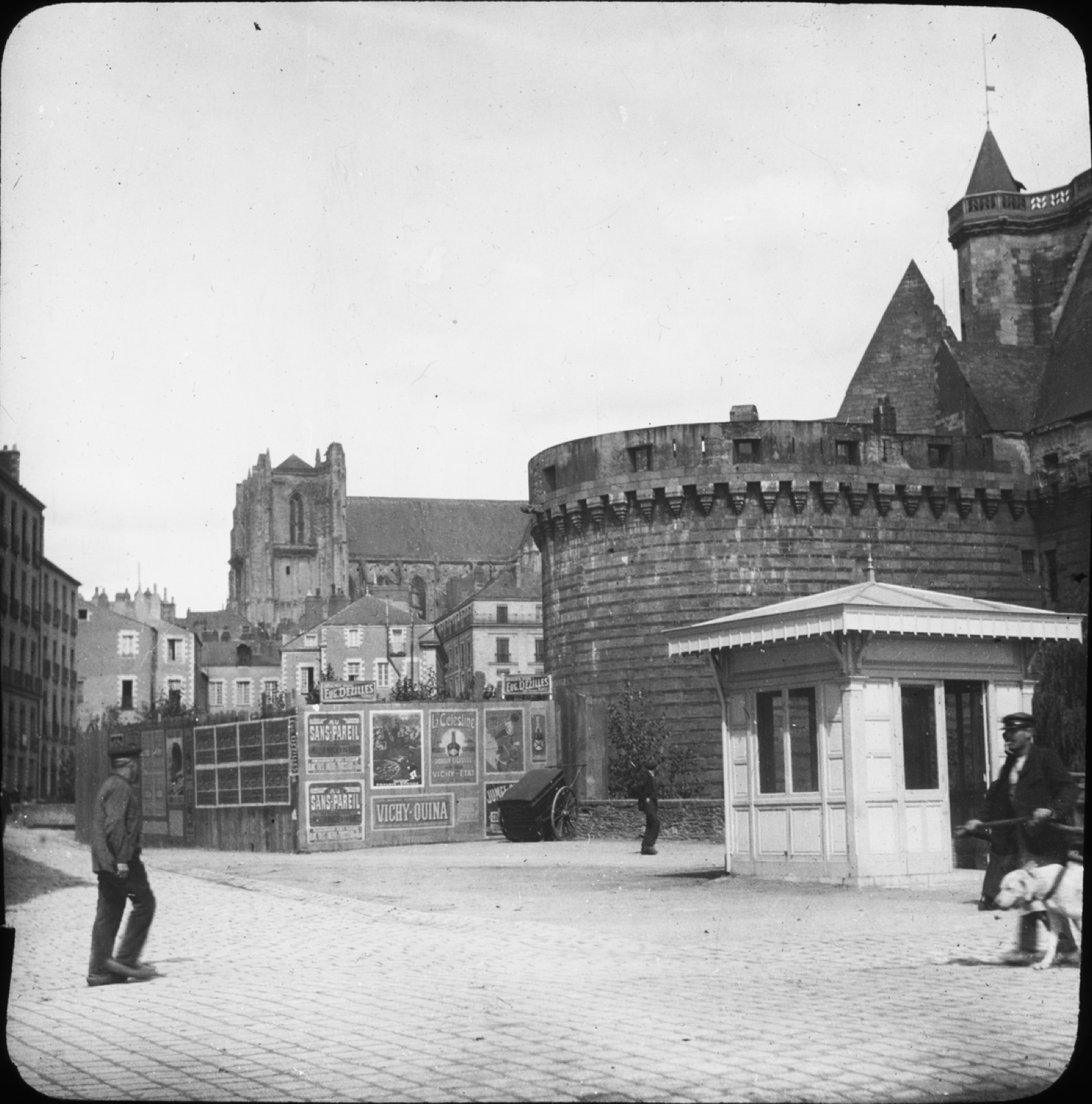
Skioptikonbild med motiv av slottet Le Château des Ducs de Bretagne och katedralen Cathédrale St. Pierre (St.
· Swedish National Museum of Science and Technology (via Europeana)
Public domain


