Clan Rising
Drachenfels Castle today

Germany · Ruin

Drachenfels Castle

Burg Drachenfels

Drachenfels Castle is a ruined hill castle on a 150-metre-long sandstone rock ridge near Busenberg in Rhineland-Palatinate, Germany. The site preserves a prominent tooth‑shaped rock keep and dispersed remains of lower wards, gate systems and rock‑hewn chambers.

Photograph via Wikimedia Commons

Its prime

1510

Today

Ruin

As it stood in 1510

What Drachenfels Castle looked like in its prime.

Perched on a long bunter sandstone ridge, the castle crown is a tooth‑shaped rock keep (the 'Backenzahn') of reddish, weathered sandstone rising above lower curtain walls and terraces. Steps and access routes are partially cut into the rock; numerous putlog holes and rock‑hewn rooms are visible on the cliff faces. The lower ward contains ruined walls, a gate/tower complex and courtyard remains; surrounding landscape is dense forest with a village at the ridge foot.

Its story

The story of Drachenfels Castle.

Drachenfels Castle sits on a 150-metre sandstone ridge near Busenberg in the Wasgau, the southern Palatinate Forest, its most striking remnant a tooth-shaped keep hewn from the rock itself. The historian Johann Lehmann named a Burkhard of Drachenfels, in service to the House of Hohenstaufen between 1219 and 1221, though he gave no references.

The lords of Drachenfels kept rough company. In 1314 they were promised compensation after Strasbourg's campaign against Berwartstein Castle, in which Drachenfels too was besieged and damaged; in 1335 came open conflict with Strasbourg, the lords accused of being robber barons, and the castle was besieged and partially destroyed. From 1344 its impoverished lords gradually sold off shares, and Drachenfels became a Ganerbenburg, a castle divided among several families and individuals.

In 1510 the rebellious imperial knight Francis of Sickingen also bought a share in the castle. The ruin today preserves the rock keep and dispersed remains of lower wards, gate systems and rock-hewn chambers.

Step inside

9 places to explore in 1510.

The record describes 9 distinct spots at Drachenfels Castle, including 4 interiors: bergfried plateau with cistern, rock‑hewn great hall with dragon carving, lower ward courtyard and outbuildings and more. Create your own photoreal reconstruction and explore every one, more scenes means more rooms, more angles, and more of the place to stand in.

Exterior approach from the valleyBergfried plateau with cisternRock‑hewn great hall with dragon carvingStairway carved into the rockLower ward courtyard and outbuildingsGate tower and access routeGuardroom on the western rockFlanking tower with embrasuresView toward the village and surrounding forest

Build Your Own Castle

Recreate Drachenfels Castle with AI to explore it.

The artist rebuilds it as it stood in 1510, a photoreal reconstruction that belongs to you alone. Pay with coins, no subscription needed.

Recreate this castle →

Castle Siege

Play Castle Siege at Drachenfels Castle.

A strategy game played on Drachenfels Castle’s real ground plan: the same surveyed walls shown in the archive below. Post your finite garrison on the battlements between assaults, then hold out as rams, siege towers, trebuchets and sappers arrive in ever-worse waves.

Sign in free to see the garrison muster. One castle costs 150 Clan Coins and is yours forever.

Sign in to take command →

See every castle’s leaderboard →

Whose castle

Clans who held Drachenfels Castle.

The families that held Drachenfels Castle for a decade or more across its history, follow a name to its clan.

  • Drachenfels

    Seat of the lords of Drachenfels, recorded from the early 13th century; forced to sell off shares in the castle from 1344 after Strasbourg's sieges.

  • Sickingen

    The imperial knight Francis of Sickingen bought a share in the jointly held castle in 1510.

From the archive

Drachenfels Castle on paper: the measured plan and period views.

The survey plan and photographs below are the ground truth this page's reconstructions are checked against, drawn and photographed while the castle was still a working garrison. Every image is public-domain or openly licensed, with its source named.
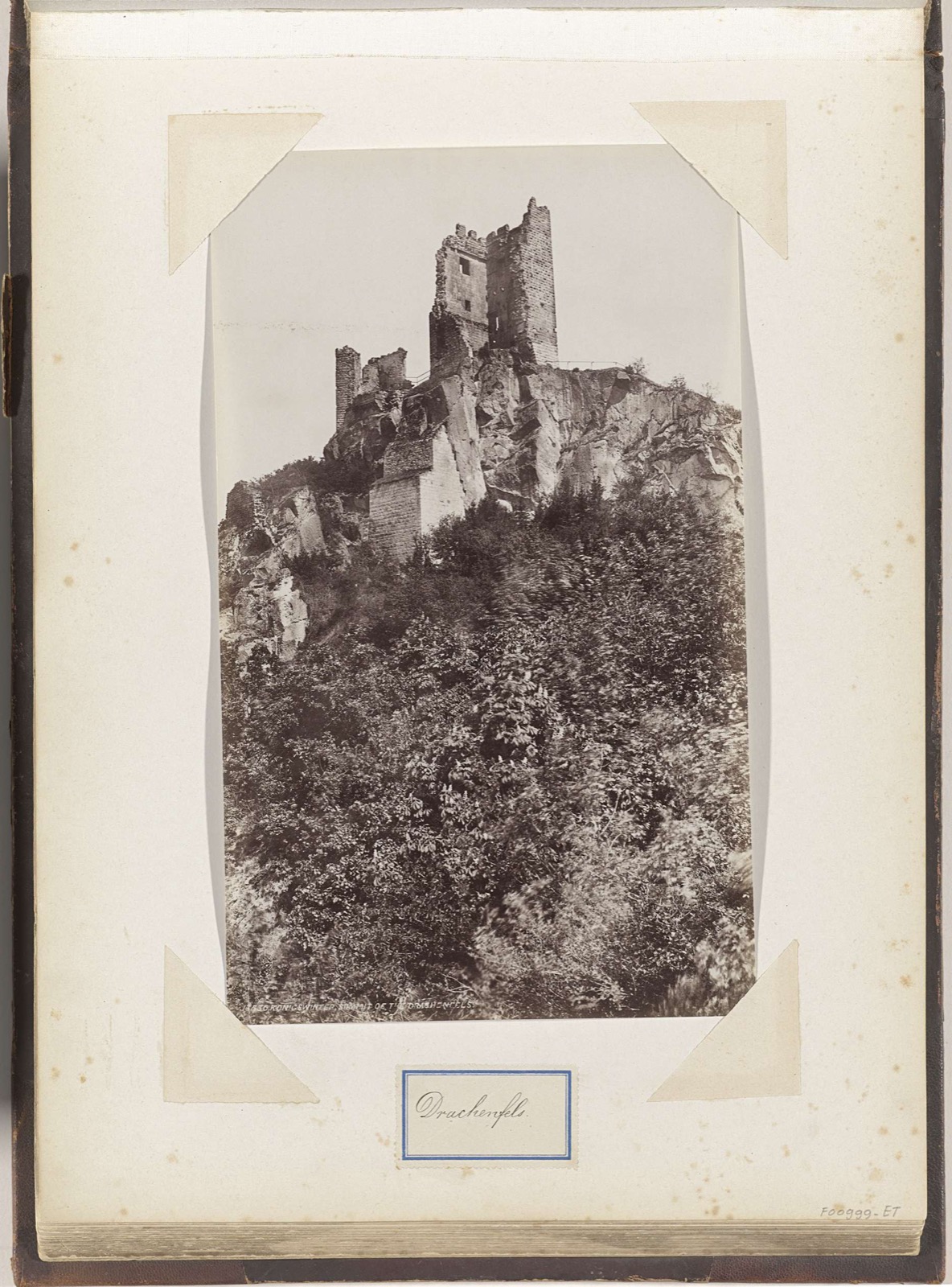
Gezicht op de Drachenfels bij Königswinter, Drachenfels Castle

Gezicht op de Drachenfels bij Königswinter

· Rijksmuseum (via Europeana)

Public domain

Nearby

Landmarks within reach of Drachenfels Castle.

Questions about Drachenfels Castle

What is the history of Drachenfels Castle?

Drachenfels Castle’s history begins with an existence documented by the early 12th century, although its origins are unclear. The lords of Drachenfels were besieged and damaged during Strasbourg’s campaign in 1314, then accused of being robber barons after another siege in 1335. From 1344 they sold shares, turning the castle into a jointly owned Ganerbenburg. Francis of Sickingen bought a share in 1510, and the castle was finally destroyed in 1523.

What is inside Drachenfels Castle?

Inside Drachenfels Castle are the Bergfried plateau with the remains of a cistern, rock-hewn chambers and a former great hall with a dragon carving. The lower ward retains a courtyard, parts of two outbuildings, a gate-tower complex and the filled-in castle well. A guardroom survives on the western rock, alongside putlog holes and other marks cut into the sandstone.

Where is Drachenfels Castle?

Drachenfels Castle is near Busenberg in the Wasgau, in the southern Palatinate Forest. It stands on a 150-metre-long sandstone ridge, about 7 kilometres north of the Franco-German border. The castle rocks rise to about 368 metres above sea level.

When was Drachenfels Castle built?

Drachenfels Castle was already in existence in the early 12th century, but its origins are unclear and its first raising is not recorded. Archaeological finds can be dated to the mid-13th century, while Walter of Drachenfels is the first lesser nobleman securely connected with the castle, in 1245.

Was Drachenfels Castle ever attacked or besieged?

Yes, Drachenfels Castle was attacked and besieged. Strasbourg’s campaign against Berwartstein in 1314 also damaged Drachenfels, and Strasbourg besieged and partially destroyed it in 1335. After Francis of Sickingen’s defeat, allied imperial princes destroyed the castle on 10 May 1523; its small garrison had surrendered without a fight.

Which family or clan held Drachenfels Castle?

The lords of Drachenfels held Drachenfels Castle from the early 13th century, but were forced to sell shares from 1344 after Strasbourg’s sieges. The castle then became jointly held by several families and individuals. Francis of Sickingen bought a share in 1510.

What did Drachenfels Castle look like in its prime?

In its prime, Drachenfels Castle was a rock castle on a long bunter sandstone ridge, dominated by a tooth-shaped rock keep known as the Backenzahn. Lower curtain walls, terraces, gate and tower structures surrounded the rock. Steps were partly carved into the stone, with rock-hewn rooms, putlog holes and embrasures visible across the site.

Is Drachenfels Castle still standing or is it a ruin?

Drachenfels Castle is a ruin, with the tooth-shaped rock keep and dispersed remains of the lower wards, gate systems and rock-hewn chambers surviving. The castle was finally destroyed in 1523 and was later used as a quarry. Parts of the lower ward, towers, walls and buildings have nevertheless survived.
All castles of Germany · Castles of Europe · the best castles in Europe · explore the finished reconstructions.