Clan Rising
Fürstenberg Castle today

Germany · Ruin

Fürstenberg Castle

Burg Fürstenberg

Fürstenberg Castle stands on the Fürstenberg hill in the Baar region near Hüfingen, Baden-Württemberg. First mentioned in 1175 and made a residence around 1250 by the Counts of Fürstenberg, the castle was devastated in the Thirty Years' War and never rebuilt; only earthworks and a solitary stone structure remain today.

Photograph via Wikimedia Commons

Its prime

1250

Today

Ruin

As it stood in 1250

What Fürstenberg Castle looked like in its prime.

The castle occupies the rounded summit of Fürstenberg hill, with visible circular earthworks, raised banks and a shallow surrounding ditch cutting into the grassy slope. At the crest a cluster of stone-built ranges and steeply pitched roofs formed the castle's skyline, partly set among scattered trees. Stonework would have been local rubble or ashlar; defensive banks and enclosed courtyards defined the plan. The overall silhouette is low on the horizon, tied closely to the hilltop.

Its story

The story of Fürstenberg Castle.

First mentioned in a deed of 1175 as a possession of the House of Zähringen, the castle on the Fürstenberg hill in the Baar passed on the death of Duke Berthold V, with whom the Zähringen line became extinct. Around 1250 his heir, Count Henry of Urach, made it his residence and was the first to call himself a Count of Fürstenberg.

The castle was devastated in the Thirty Years' War and never rebuilt; only earthworks and a solitary stone structure remain on the hill near Hüfingen that gave the princely House of Fürstenberg its name.

Step inside

5 places to explore in 1250.

The record describes 5 distinct spots at Fürstenberg Castle, including the full exterior approach. Create your own photoreal reconstruction and explore every one, more scenes means more rooms, more angles, and more of the place to stand in.

Approach from the base of the hillEarthen ramparts and ditchSummit stone range (steep-roofed building)Inner bailey / castle crestView from the crest over the Baar

Build Your Own Castle

Recreate Fürstenberg Castle with AI to explore it.

The artist rebuilds it as it stood in 1250, a photoreal reconstruction that belongs to you alone. Pay with coins, no subscription needed.

Recreate this castle →Defend this castle →

Whose castle

Clans who held Fürstenberg Castle.

The families that held Fürstenberg Castle for a decade or more across its history, follow a name to its clan.

  • Zähringen

    Recorded as a possession of the House of Zähringen from 1175 until the line's extinction with Duke Berthold V.

  • Fürstenberg

    Residence from around 1250 of Count Henry of Urach, the first Count of Fürstenberg, whose house took its name from the castle.

From the archive

Fürstenberg Castle on paper: the measured plan and period views.

The survey plan and photographs below are the ground truth this page's reconstructions are checked against, drawn and photographed while the castle was still a working garrison. Every image is public-domain or openly licensed, with its source named.
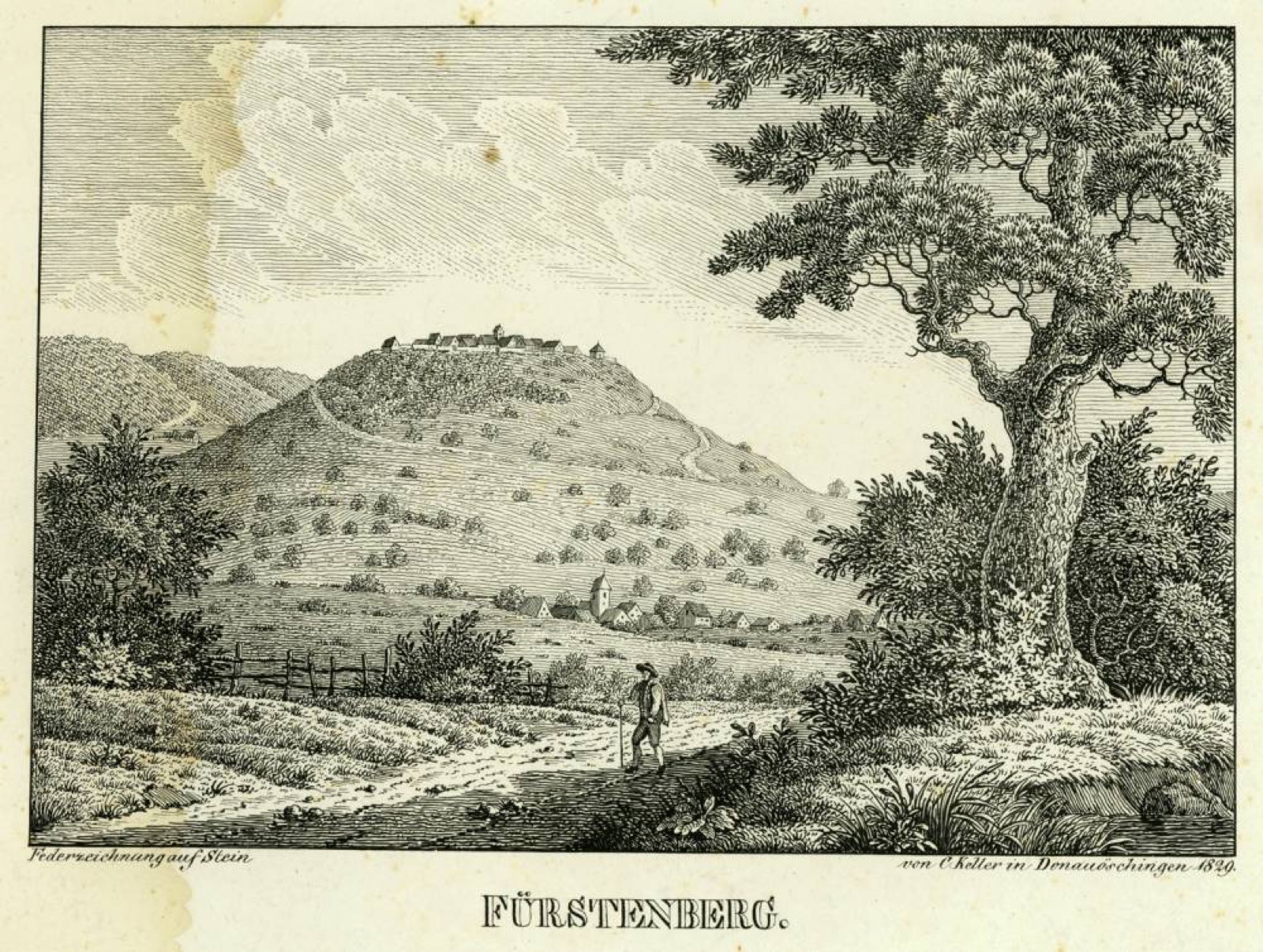
Fürstenberg, Fürstenberg Castle

Fürstenberg

· State Archives of Baden-Württemberg (via Europeana)

CC BY
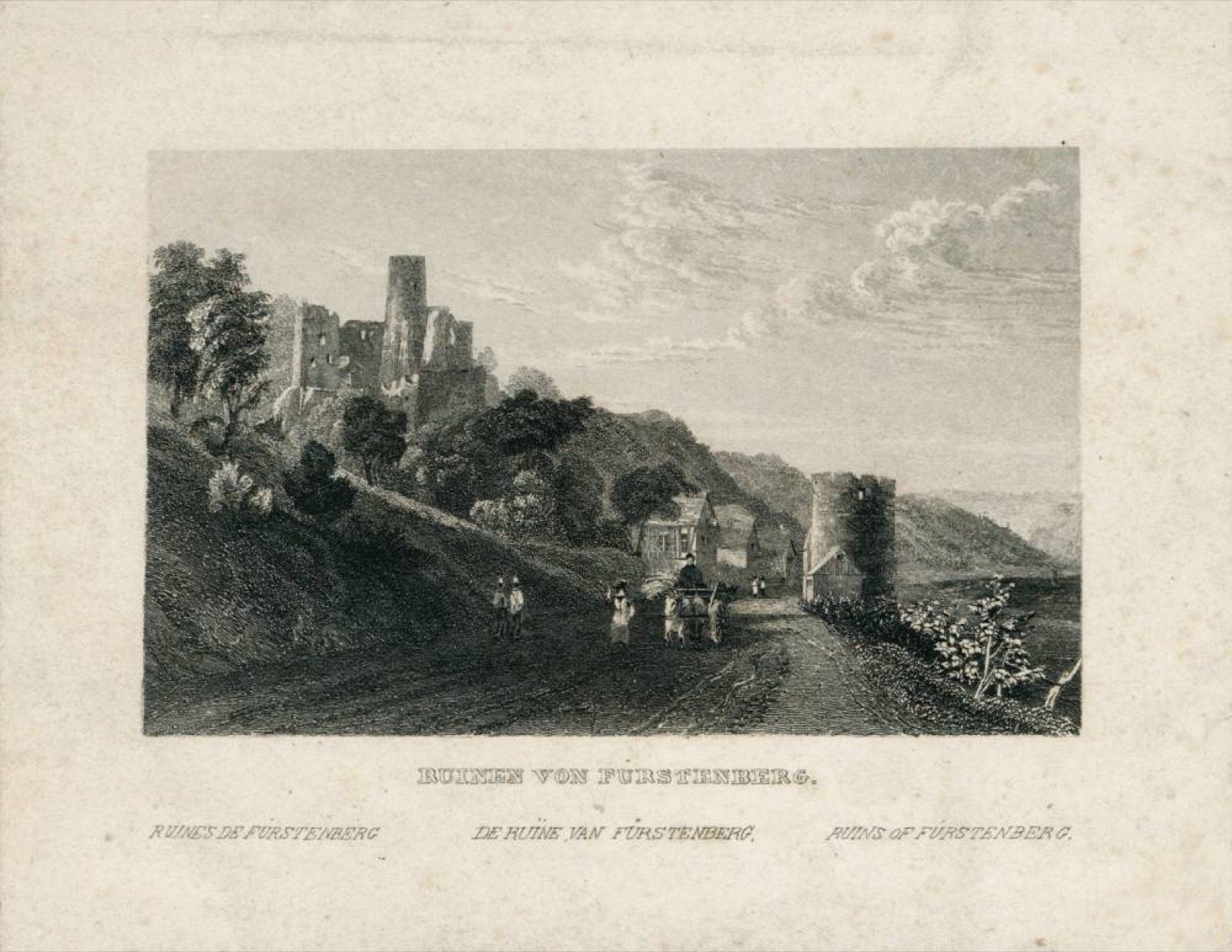
Ruinen von Fürstenberg. Ruines de Furstenberg. De Ruine van Fürstenberg. Ruins of Fürstenberg [bei Rheindiebac, Fürstenberg Castle

Ruinen von Fürstenberg. Ruines de Furstenberg. De Ruine van Fürstenberg. Ruins of Fürstenberg [bei Rheindiebac

· State Archives of Baden-Württemberg (via Europeana)

CC BY

Questions about Fürstenberg Castle

What is the history of Fürstenberg Castle?

Fürstenberg Castle was first mentioned in the 12th century and became a residence around 1250. It was recorded in 1175 as a possession of the House of Zähringen; after that line ended with Duke Berthold V, Count Henry of Urach took residence there and became the first Count of Fürstenberg. The castle was devastated during the Thirty Years' War and never rebuilt.

Why was Fürstenberg Castle built, and what was it used for?

Fürstenberg Castle served as a residence from around 1250, when Count Henry of Urach moved his residence there and began calling himself a Count of Fürstenberg. The material does not state why the castle was originally raised, but it later formed the centre of the count's residence and the settlement on the hill.

Where is Fürstenberg Castle?

Fürstenberg Castle stands on Fürstenberg hill in the Baar region near Hüfingen, Baden-Württemberg. The hill is near the town of Hüfingen, and the castle site is associated with Fürstenberg in the administrative territorial entity.

When was Fürstenberg Castle built?

Fürstenberg Castle's exact construction date is not recorded, but it existed by the 12th century and was first mentioned in 1175. The site was developed further around 1250, when Count Henry of Urach made it his residence.

Was Fürstenberg Castle ever attacked or besieged?

Fürstenberg Castle was attacked by insurgents in the Peasants' War of 1524–25, when they stormed the Fürstenberg. In 1632, during the Thirty Years' War, the castle and town were largely destroyed. It was never rebuilt after this devastation.

Which family or clan held Fürstenberg Castle?

Fürstenberg Castle was held first by the House of Zähringen, recorded as its possession from 1175 until the line became extinct with Duke Berthold V. From around 1250, it was the residence of Count Henry of Urach, the first Count of Fürstenberg, whose house took its name from the castle.

What did Fürstenberg Castle look like in its prime?

Fürstenberg Castle had a low hilltop silhouette, with circular earthworks, raised banks and a shallow surrounding ditch cut into the grassy slope. Stone-built ranges with steeply pitched roofs stood at the crest, with enclosed courtyards and defensive banks shaping the plan. Local rubble or ashlar would have formed the stonework.

Is Fürstenberg Castle still standing or is it a ruin?

Fürstenberg Castle is a ruin, and only earthworks and a solitary stone structure remain today. The castle was devastated during the Thirty Years' War and never rebuilt. By the 19th century, the remaining parts of the castle complex had also been removed, leaving only very slight traces of the former structure.
All castles of Germany · Castles of Europe · the best castles in Europe · explore the finished reconstructions.