Clan Rising
Königsburg today

Germany · Ruin

Königsburg

Ruine Königsburg

The Königsburg is a ruined medieval castle site on a wooded plateau above the confluence of the Warme Bode and Kalte Bode in the Harz Mountains, Saxony-Anhalt, Germany. First recorded in 1312, only the remnant of the bergfried (tower) together with earthworks, ditches and ramparts survive today; the site is part of the Harzer Wandernadel hiking checkpoint system.

Photograph via Wikimedia Commons

First raised

1312

Its prime

1324

Today

Ruin

As it stood in 1324

What Königsburg looked like in its prime.

A thick, roughly coursed cylindrical stone bergfried occupies a rocky outcrop on a wooded plateau; the tower rises as a stout circular mass of grey-brown rubble with a small arched ground-level doorway and a few narrow openings. The top is now overgrown but in plan is a clear round tower. Low lengths of curtain wall and visible earthwork ramparts and ditches run from the tower across the plateau toward the surrounding beech and mixed woodland.

Its story

The story of Königsburg.

The Königsburg was first recorded in 1312, a medieval castle set at 460 metres on the edge of a wooded plateau above the confluence of the Warme Bode and Kalte Bode rivers in the Harz Mountains, southeast of the village of Königshütte in Saxony-Anhalt.

Only remnants of the bergfried and several ditches and ramparts bear witness to the former castle. The site commands a view of the Wurmberg and the Brocken, the highest mountains of Lower Saxony and the Harz respectively, and the ruins form checkpoint No. 41 in the Harzer Wandernadel hiking network.

Step inside

7 places to explore in 1324.

The record describes 7 distinct spots at Königsburg, including 1 interior: interior of the bergfried (ground chamber). Create your own photoreal reconstruction and explore every one, more scenes means more rooms, more angles, and more of the place to stand in.

Approach along the plateau path (exterior)Foot of the bergfried and arched entranceInterior of the bergfried (ground chamber)Top of the bergfried and viewing platformRamparts and ditches encircling the siteOuter face of the bergfried where the modern plaque standsPlateau edge view toward the river confluence

Build Your Own Castle

Recreate Königsburg with AI to explore it.

The artist rebuilds it as it stood in 1324, a photoreal reconstruction that belongs to you alone. Pay with coins, no subscription needed.

Recreate this castle →Defend this castle →

From the archive

Königsburg on paper: the measured plan and period views.

The survey plan and photographs below are the ground truth this page's reconstructions are checked against, drawn and photographed while the castle was still a working garrison. Every image is public-domain or openly licensed, with its source named.
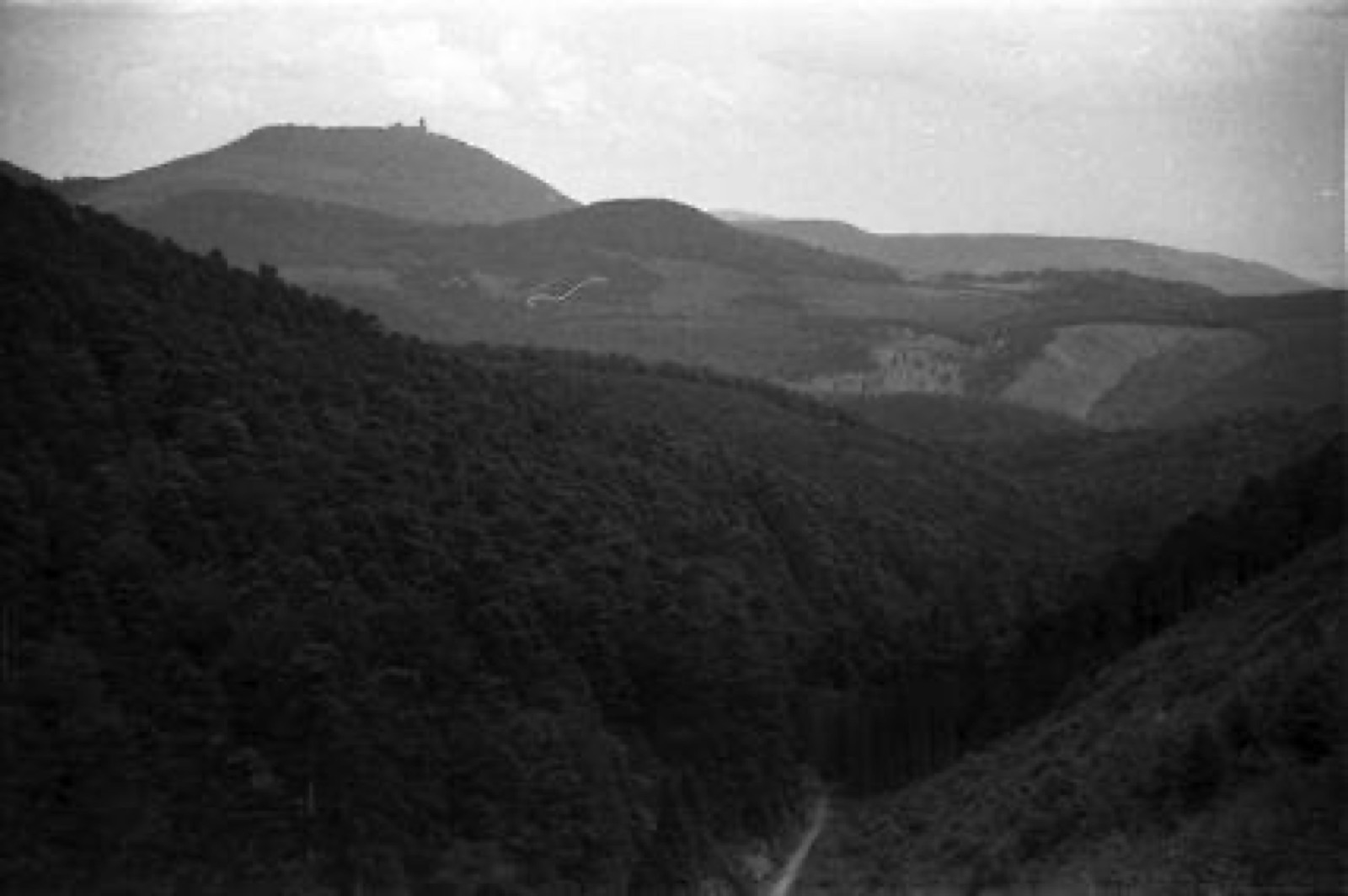
Tannenkirch: Blick auf die Königsburg, ohne Vordergrund, Königsburg

Tannenkirch: Blick auf die Königsburg, ohne Vordergrund

· State Archives of Baden-Württemberg (via Europeana)

CC BY
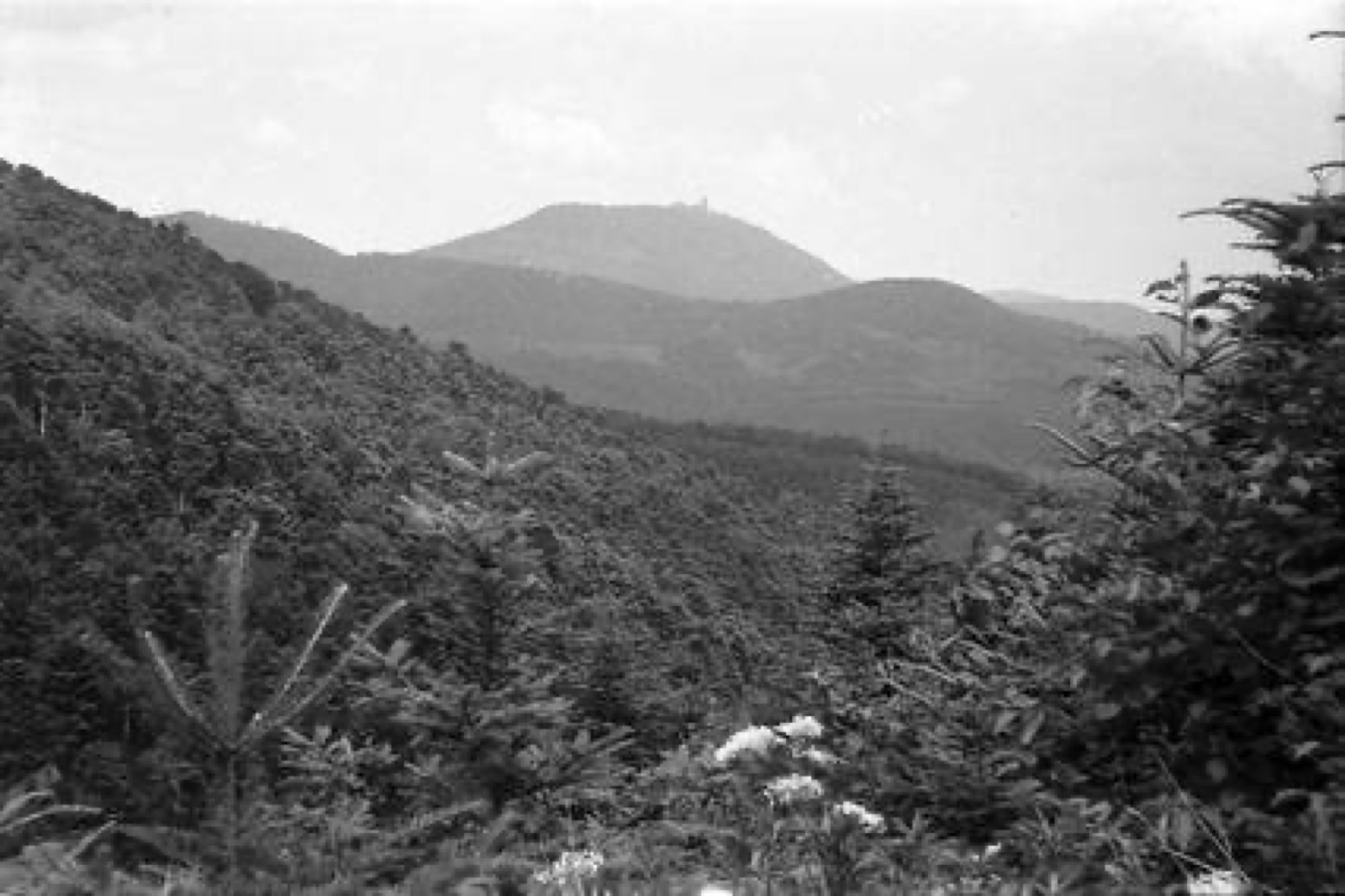
Tannenkirch: Blick auf die Königsburg, mit Vordergrund, Königsburg

Tannenkirch: Blick auf die Königsburg, mit Vordergrund

· State Archives of Baden-Württemberg (via Europeana)

CC BY

Questions about Königsburg

What is the history of Königsburg?

Königsburg was first recorded in the 14th century, when Bishop Albrecht von Halberstadt purchased it from Knappen Heinrich von Botvelde in 1312. It was mentioned again in 1324, then fell from the records until 1709, when it was already in ruins. Excavations from 1898 to 1901 wrongly identified it as the palace of Bodfeld; research in the 1930s rejected that identification.

Where is Königsburg?

Königsburg is on the edge of a wooded plateau above the confluence of the Warme Bode and Kalte Bode rivers, southeast of Königshütte in the Harz Mountains. It stands at about 460 metres above sea level, in the borough of Oberharz am Brocken, Saxony-Anhalt. The site looks towards the Wurmberg and the Brocken.

When was Königsburg built?

Königsburg dates from the 14th century, with its first recorded mention in 1312. A further reference appears in 1324, but the supplied material does not give a separate construction date or describe multiple building phases. The castle was already in ruins by 1709.

What did Königsburg look like in its prime?

In its prime, Königsburg had a thick, roughly coursed cylindrical stone bergfried on a rocky outcrop. The stout grey-brown rubble tower had a small arched doorway at ground level and a few narrow openings. Curtain-wall remnants, ramparts and ditches extended across the wooded plateau, with the wider setting including beech and mixed woodland.

Is Königsburg still standing or is it a ruin?

Königsburg is a ruin. Only the remnant of the bergfried survives, together with earthworks, ditches and ramparts that mark the former castle. The site had already fallen into ruins by 1709, and later excavations did not rebuild it.

What is inside Königsburg and what can you see in it?

The documented interior of Königsburg is the ground chamber of the bergfried. The surviving tower remnant is accompanied by exterior earthworks, ditches and ramparts, but the supplied material gives no further description of rooms or interior fittings.
All castles of Germany · Castles of Europe · the best castles in Europe · explore the finished reconstructions.