Clan Rising
Waldburg Castle today

Germany · Restored

Waldburg Castle

Schloss Waldburg

Waldburg is the ancestral hilltop castle of the House of Waldburg, dating from the 11th–12th centuries and later remodelled as a residence. It stands on a rounded drumlin above the village of Waldburg in Upper Swabia and today houses a museum open to visitors.

Photograph via Wikimedia Commons

Its prime

1550

Today

Restored

As it stood in 1550

What Waldburg Castle looked like in its prime.

Perched on a rounded grassy drumlin, the castle is a compact cluster of whitewashed stone buildings surrounded by a low curtain wall. A long low service range with a red clay-tile roof fronts a taller rectangular palas crowned by a steep red gabled roof and a small square roof lookout. To the right rises a stout square tower with narrow window slits and a hipped roof. The walls and buildings present smooth plastered facades with regularly spaced windows and wooden shutters.

Its story

The story of Waldburg Castle.

The Waldburg, literally 'forest castle', is the ancestral castle of the stewards, Imperial Counts and later Imperial Princes of the House of Waldburg. Dating from the 12th century, it stands on a rounded drumlin above the village of Waldburg, the highest point in Upper Swabia, and counts among the best preserved medieval buildings of the region.

The Waldburg family received the castle as an official fief from the Guelphs. In the middle of the 16th century, under the steward Georg IV of Waldburg, it was developed into a residence resembling a palace; from the 17th century the family lived here only sporadically and building activity fell away.

The family's three-lion crest was in use by 1222, under the Hohenstaufen Emperor Frederick II, after the beheading of Conradin, the last Hohenstaufen, the Waldburgs adopted and carried on the Hohenstaufen lions. Today the castle houses a museum, with guided tours on weekends and holidays.

Step inside

10 places to explore in 1550.

The record describes 10 distinct spots at Waldburg Castle, including 4 interiors: chapel of st. magnus (interior), burgschenke (former kitchen), vaults and cellars and more. Create your own photoreal reconstruction and explore every one, more scenes means more rooms, more angles, and more of the place to stand in.

Approach from the southern slopePalas (main residential block) exteriorSquare tower (eastern)Curtain wall and parapetInner courtyard / baileyChapel of St. Magnus (interior)Burgschenke (former kitchen)Vaults and cellarsThird upper-floor gallery (collections)Roof ridge and rooftop lookout

Build Your Own Castle

Recreate Waldburg Castle with AI to explore it.

The artist rebuilds it as it stood in 1550, a photoreal reconstruction that belongs to you alone. Pay with coins, no subscription needed.

Recreate this castle →

Castle Siege

Play Castle Siege at Waldburg Castle.

A strategy game played on Waldburg Castle’s real ground plan: the same surveyed walls shown in the archive below. Post your finite garrison on the battlements between assaults, then hold out as rams, siege towers, trebuchets and sappers arrive in ever-worse waves.

Sign in free to see the garrison muster. One castle costs 150 Clan Coins and is yours forever.

Sign in to take command →

See every castle’s leaderboard →

Whose castle

Clans who held Waldburg Castle.

The families that held Waldburg Castle for a decade or more across its history, follow a name to its clan.

  • Waldburg

    Ancestral seat of the House of Waldburg, stewards, Imperial Counts and later Imperial Princes, from the 12th century, held as a fief from the Guelphs.

From the archive

Waldburg Castle on paper: the measured plan and period views.

The survey plan and photographs below are the ground truth this page's reconstructions are checked against, drawn and photographed while the castle was still a working garrison. Every image is public-domain or openly licensed, with its source named.
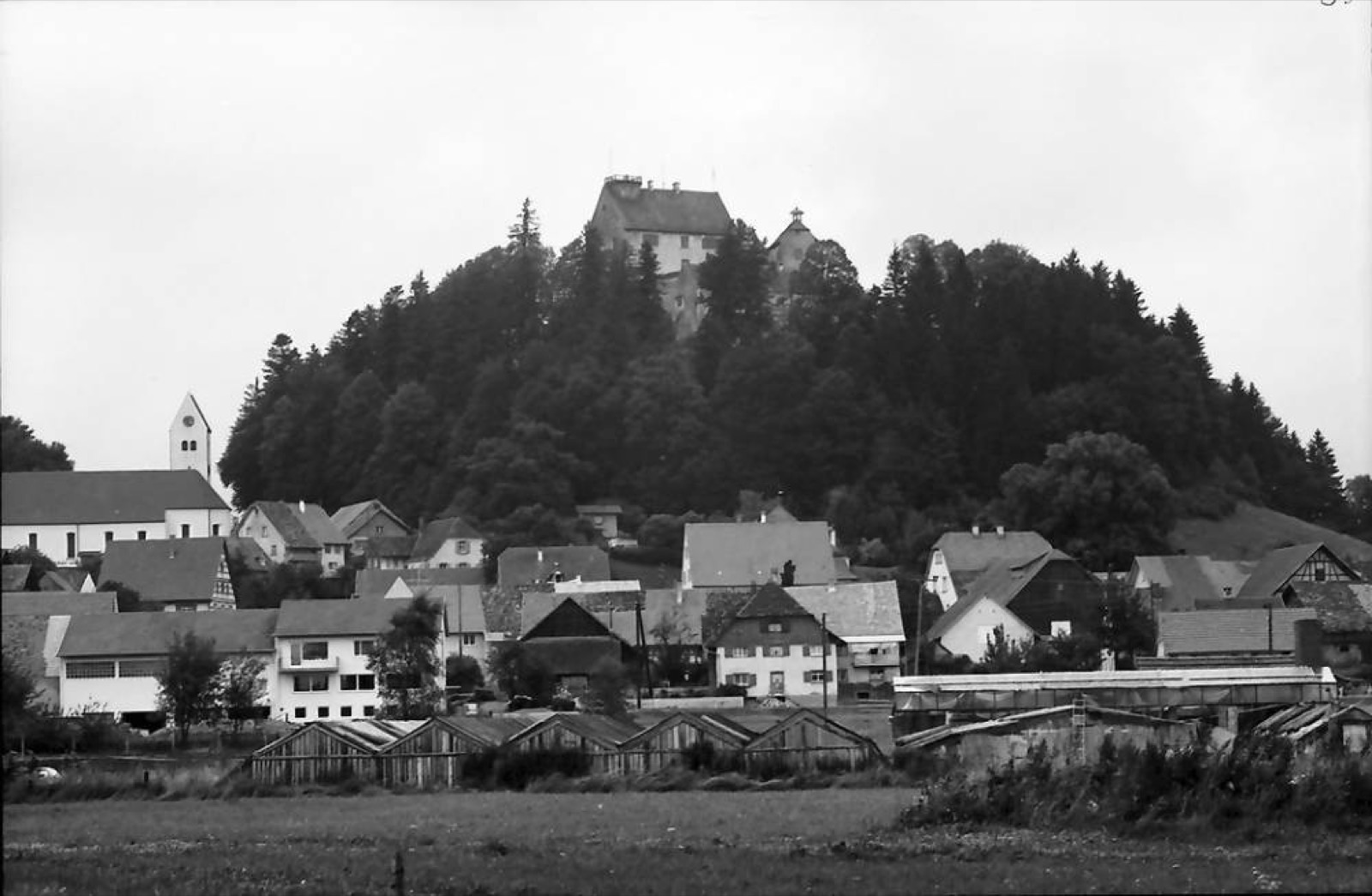
Waldburg: Die Waldburg vom Ort aus, Waldburg Castle

Waldburg: Die Waldburg vom Ort aus

· State Archives of Baden-Württemberg (via Europeana)

CC BY
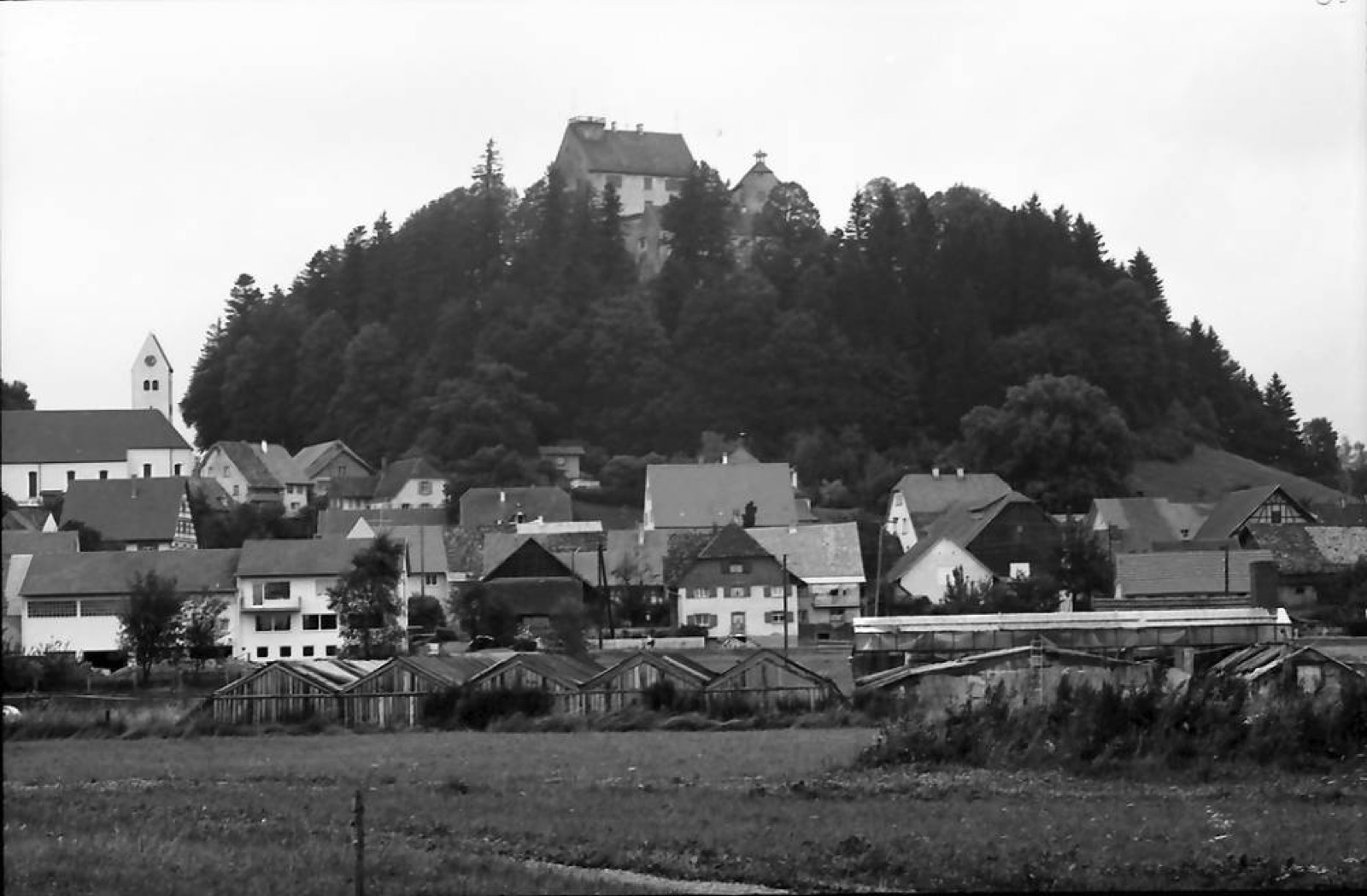
Waldburg: Die Waldburg vom Ort aus, Waldburg Castle

Waldburg: Die Waldburg vom Ort aus

· State Archives of Baden-Württemberg (via Europeana)

CC BY
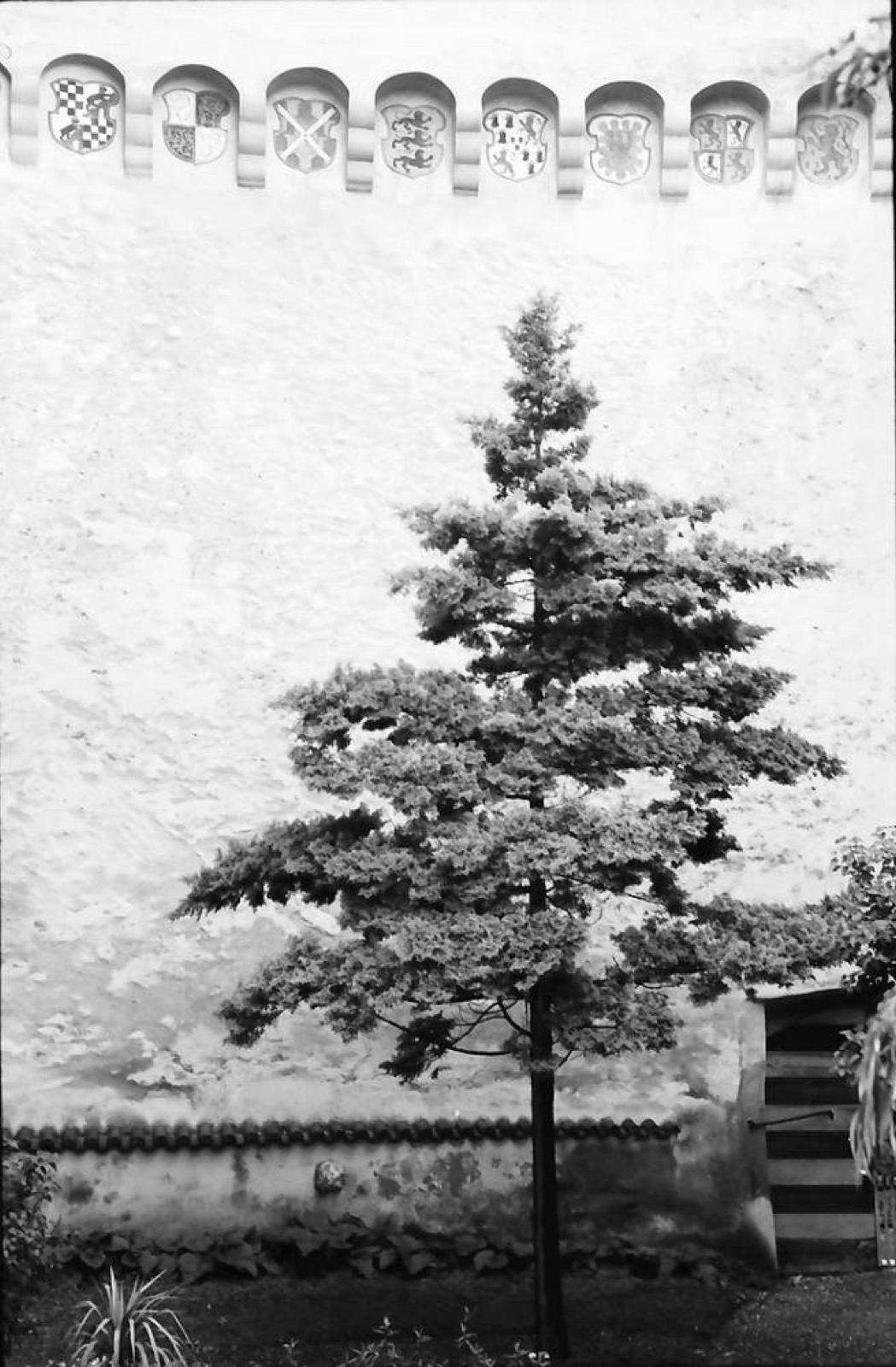
Waldburg: Die Waldburg, Wappen am Giebel im Hof, Waldburg Castle

Waldburg: Die Waldburg, Wappen am Giebel im Hof

· State Archives of Baden-Württemberg (via Europeana)

CC BY

Questions about Waldburg Castle

What is the history of Waldburg Castle?

Waldburg Castle dates from the 11th–12th centuries and began as the ancestral hilltop castle of the House of Waldburg. It was held as a fief from the Guelphs, rebuilt substantially in the first half of the 13th century, and remodelled as a palace-like residence around the middle of the 16th century under Georg IV of Waldburg. From the 17th century, the family lived there only sporadically.

What is inside Waldburg Castle?

Waldburg Castle contains a museum, the Chapel of St Magnus, vaults and cellars, and the former kitchen known as the Burgschenke. The palas includes a rittersaal with wall panelling and a sculpted wooden ceiling, along with chambers and rooms with wooden ceilings and wall coverings. A rooftop viewing platform is also accessible.

Why was Waldburg Castle built, and what was it used for?

Waldburg Castle was built as a defensible hilltop seat and the ancestral castle of the House of Waldburg. Its steep drumlin provided military protection and a commanding view, while the compact site encouraged the buildings to develop upwards. In the 16th century it changed into a palace-like residence, and it now houses a museum.

Where is Waldburg Castle?

Waldburg Castle stands on a rounded drumlin above the village of Waldburg in Upper Swabia. It is in the municipality of Waldburg, in the district of Ravensburg, and rises to 772 metres above sea level. The castle is also described as the highest point and a landmark of Upper Swabia.

When was Waldburg Castle built?

Waldburg Castle was first raised in the 11th–12th centuries, with its construction and development taking place in several phases. The earliest foundation dates to the 11th century, while the castle is also dated to the 12th century. Major rebuilding followed in the first half of the 13th century, and further residence works took place in the 16th century.

Was Waldburg Castle ever attacked or besieged?

Waldburg Castle was plundered by Swedish forces in 1632, but they caused no major damage to its structure. A claim that the castle was destroyed during the German Peasants’ War is not confirmed, and the complex remained intact. The 1632 attack therefore affected its contents more than its surviving fabric.

Which family or clan held Waldburg Castle?

Waldburg Castle was held by the House of Waldburg, whose members were stewards, Imperial Counts and later Imperial Princes. The family held it from the 12th century as an official fief from the Guelphs. It is described as the ancestral seat of the Waldburg family.

What did Waldburg Castle look like in its prime?

Waldburg Castle is a compact cluster of whitewashed stone buildings on a rounded grassy drumlin, enclosed by a low curtain wall. A long, low red-tiled service range fronts the taller palas, which has a steep red gabled roof and a small square lookout. A stout square tower with narrow window slits and a hipped roof rises to the right.

Is Waldburg Castle still standing, or is it a ruin?

Waldburg Castle is still standing and is described as restored rather than a ruin. The surviving complex is considered completely original, and it was never destroyed or burned. Some roof timbers date to 1399, while later work included replacing the palas roof around 1686 and restoring the castle for its public reopening in 1996.

Can you visit Waldburg Castle?

Waldburg Castle is open to the public as a museum. Visitors can see exhibitions on the castle’s history, the Imperial Regalia and ordnance surveying, as well as a facsimile of Martin Waldseemüller’s world map. The castle chapel is also used for church weddings, and a viewing platform is accessible on the palas roof.
All castles of Germany · Castles of Europe · the best castles in Europe · explore the finished reconstructions.