
Greece · Partial ruin
Methoni Castle
Methoni Castle is a medieval coastal fortress occupying a headland and a small fortified islet (the Bourtzi) at the port of Methoni in Messenia, Greece. The complex combines long sea-facing curtain walls, a landward acropolis, multiple towers and a fortified gate sequence developed by Venetians and modified after 1500 by the Ottomans.
Its prime
1500
Today
Partial ruin
Ranked among Europe’s castles
As it stood in 1500
What Methoni Castle looked like in its prime.
Long, low curtain walls of roughly dressed local limestone run along a rocky cape to a small fortified islet; a central, rectangular gatehouse with crenellated parapet and a very large arched opening dominates the seaward face. A stone causeway and an arched multi-span bridge cross a defensive moat on the landward side. The islet bears a two-storey octagonal tower with a domed top; interior buildings within the walls survive as low ruined stone houses and cisterns.
Its story
The story of Methoni Castle.
The Venetians Take Methoni, 1205-1209
When the fortifications on the cape of Agios Nikolaos began is not known. Frankish crusaders are said to have thrown up rough defences there in 1205; the Venetians, who seized Methoni in 1206, pulled that work down, and when they took the town for good in 1209 they built the castle that stands there now, along with the harbour of the settlement of the day.
In the Middle Ages the town was a staging post for Christians sailing to the Holy Land, and the fortress that guarded it runs the length of the cape in a long ellipse of some 700 metres, with the sea on three sides and a dry moat and bridge closing the landward approach. Towers studded the circuit, extra works covered the land gate, and the gate of St Mark opened onto the harbour. A pier ran parallel to the east wall as far as the Bourtzi islet to form a small fortified harbour, the mandrachio, while the larger anchorage lay to the northeast, where ships could be hauled out.
Bayezid's Siege and the Fall of 1500
In 1499 the Venetians put up fresh defences and walled in the settlement of Methoni itself. The Bembo battlement was raised just before 1500; a plaque on the north wall, right of the main entrance, carries the arms of the Foscarini, Foscolo and Bembo families and records its construction.
The castle was reckoned impregnable when Bayezid laid siege to it, but a mistake by the garrison let the Ottomans inside and the place fell. Many soldiers and inhabitants of Methoni were killed on the stone-paved crossing to the Bourtzi when the Turks took the fort in 1500. The new masters then set about reinforcing both the population and the works: the low cross-wall with its five towers, four square and one octagonal, dates from after 1500, and the two-storey octagonal tower on the Bourtzi, of small defensive value and later used at various times as a prison, belongs to the first period of Turkish occupation.
Loredan's Battlement and the Venetian Return
The long east wall was patched repeatedly over the original Venetian battlements of the thirteenth century, chiefly during the second Venetian occupation and under the Turks; one of its towers still preserves part of the Byzantine fortification. Venetian emblems with the winged lion of St Mark and their inscriptions were set about the defences, among them a plaque on the north face of the battlement raised by general Antonio Loredan, cut while he commanded in the Peloponnese. The arched entrance gate, framed by pilasters with Corinthian capitals, is held to be Venetian work carried out after 1700.
Russians, Revolutionaries and General Maison, from 1770
In 1770, during the Orlov revolt, a Russian force besieged the castle and failed to take it. Greek forces tried during the War of Independence and also failed. Ibrahim used a building on the left of the entrance as his residence in 1826. In early October 1828, after negotiations and a small-scale attack, the Ottoman garrison surrendered to the French troops of general Maison, who were operating in the Peloponnese under the Treaty of London that provided for the creation of a Greek state.
The bridge to the gate had until then been a wooden one on masonry piers. The technicians of the Expédition scientifique de Morée, who accompanied Maison, replaced it with the stone bridge of fourteen arches that crosses the moat. The French of the liberating corps stayed in the area until 1833, and the church of Santa Sotira is still credited to them. A century later the war returned: an explosion during the Second World War brought to light finely cut stones from the ancient walls of Methoni buried in the west side, and the remains of a British prisoners' cemetery from that war lie inside the castle.
Step inside
9 places to explore in 1500.
The record describes 9 distinct spots at Methoni Castle, including 4 interiors: domed entrance passage and inner gate sequence, inner habitable quarter and paved street to sea gate, byzantine church of st. sophia (ruins) and more. Create your own photoreal reconstruction and explore every one, more scenes means more rooms, more angles, and more of the place to stand in.
Build Your Own Castle
Recreate Methoni Castle with AI to explore it.
The artist rebuilds it as it stood in 1500, a photoreal reconstruction that belongs to you alone. Pay with coins, no subscription needed.
Recreate this castle →Defend this castle →From the archive
Methoni Castle on paper: the measured plan and period views.
The survey plan and photographs below are the ground truth this page's reconstructions are checked against, drawn and photographed while the castle was still a working garrison. Every image is public-domain or openly licensed, with its source named.
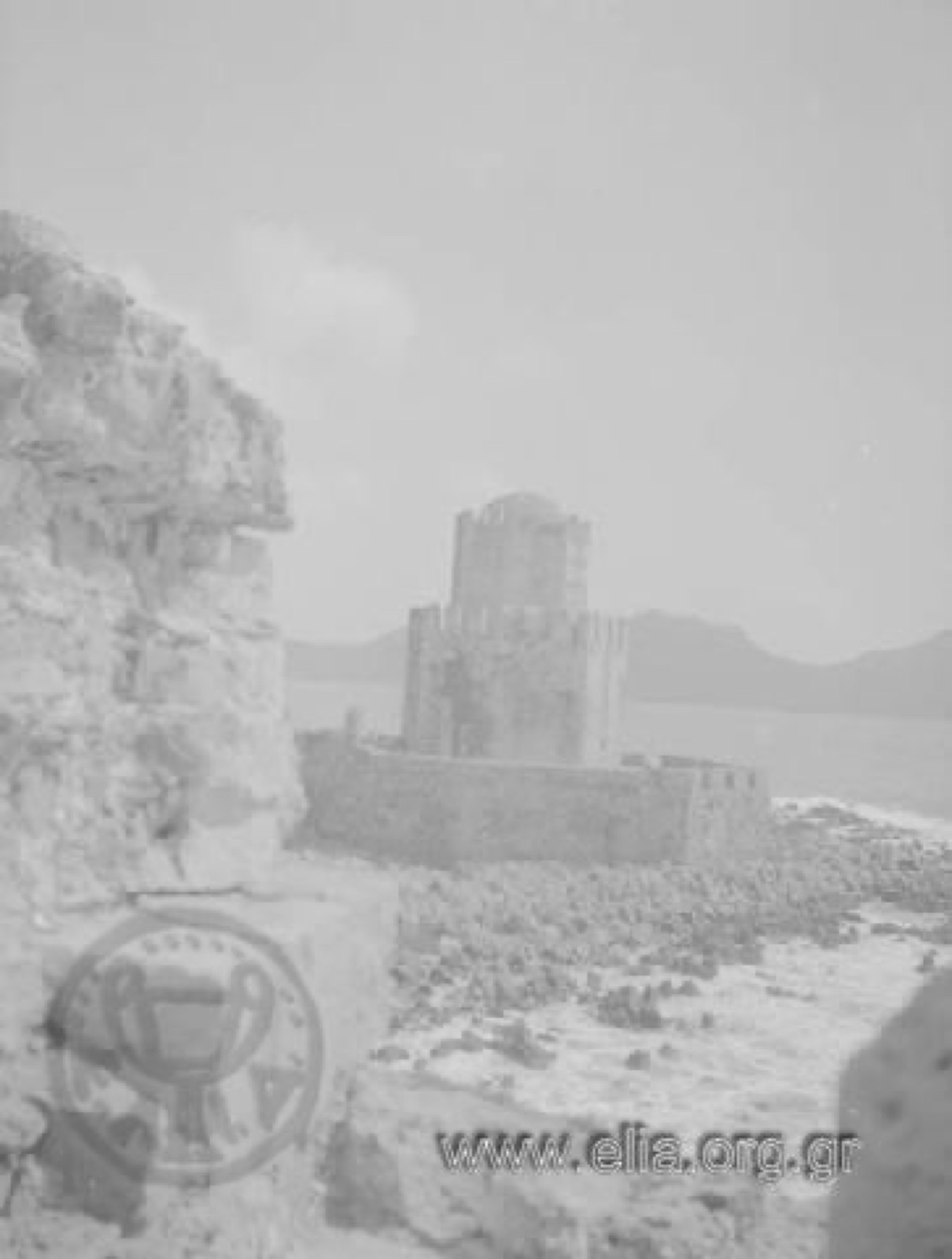
Το παρατηρητήριο του Κάστρου της Μεθώνης.
1939 · Hellenic Literary and Historical Archive - Cultural Foundation of the National Bank Of Greece (via Europeana)
CC BY
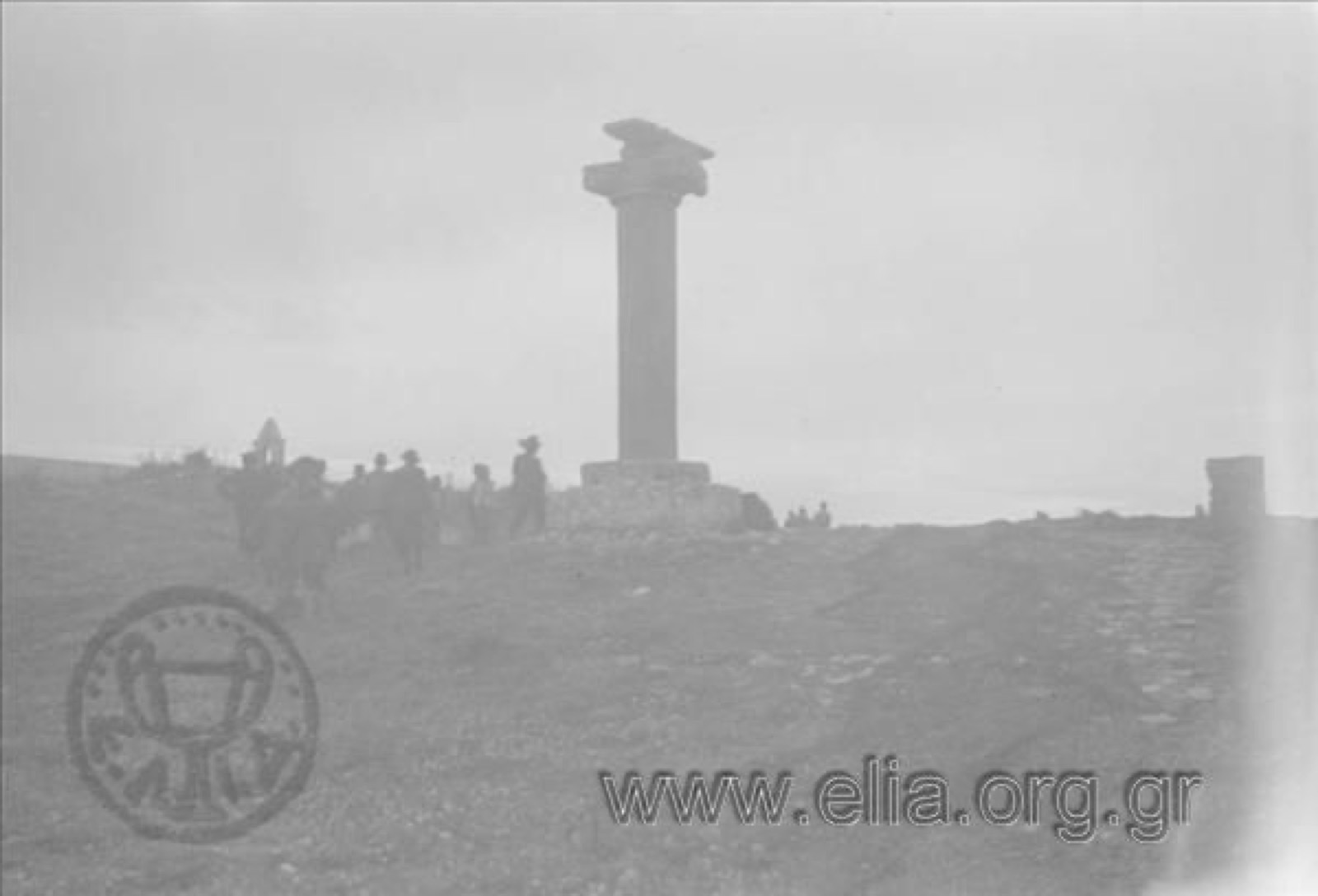
Ο γρανιτένιος αιγυπτιακός μονόλιθος γνωστός ως "κολώνα του Μοροζίνη" στο κάστρο της Μεθώνης.
1935 · Hellenic Literary and Historical Archive - Cultural Foundation of the National Bank Of Greece (via Europeana)
CC BY
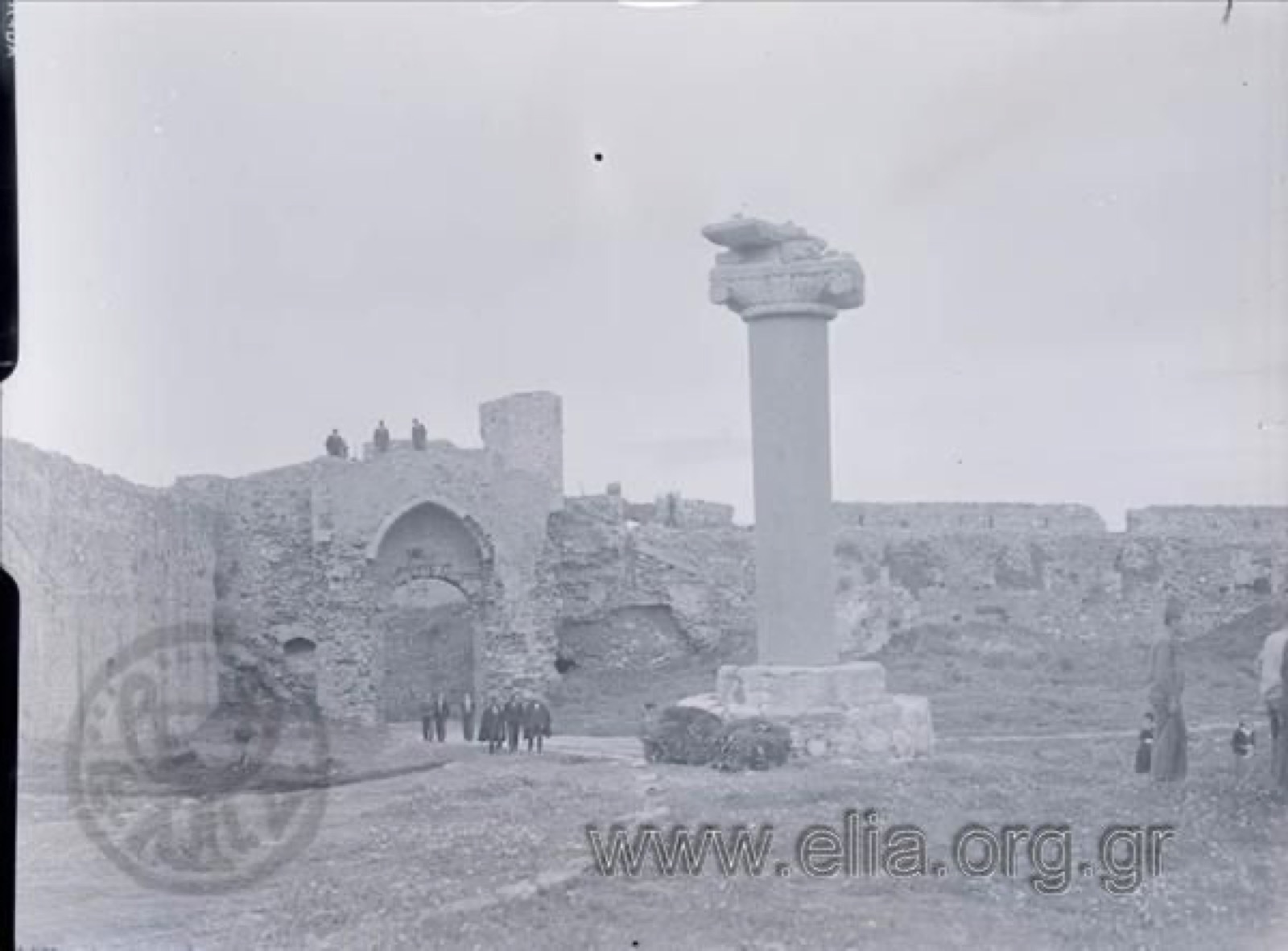
Ο γρανιτένιος αιγυπτιακός μονόλιθος γνωστός ως "κολώνα του Μοροζίνη" στο κάστρο της Μεθώνης.
1935 · Hellenic Literary and Historical Archive - Cultural Foundation of the National Bank Of Greece (via Europeana)
CC BY


